Disclosure: This post contains affiliate links. If you book through our links, we may earn a small commission at no extra cost to you. Thanks for supporting Faceted Travel!
Table of Contents
Sibenik is the Dalmatian city that most itineraries drive straight past, and we did exactly that ourselves the first time. We were headed from Zadar to Split, we had a national park to get to, and Sibenik was a name on a motorway sign. Coming back to stay two nights was one of the better decisions we have made in Croatia.
Here is the pitch. Sibenik has a cathedral that is genuinely one of the great buildings in Europe, four fortresses on the hills above the old town, a maze of stepped stone lanes with almost no cruise traffic in them, and it sits at the mouth of a river gorge that opens into the Adriatic. It is also the single best base in the country for visiting two national parks in two days. And because it is not Dubrovnik or Split, you can afford to eat well and sleep near the water.
What Makes Sibenik Different
Every other city on this coast was founded by Greeks, Romans or Venetians. Sibenik was founded by Croats, first mentioned in 1066, which makes it the oldest native Croatian city on the Adriatic. That matters less as a history fact than as an explanation for why the place feels different: it is not built on a Roman street grid like Split and it does not have the planned Venetian order of Zadar. It grew organically up a steep hillside, and the result is a knot of stairways, arches and dead ends that is genuinely fun to get lost in.
The city sits behind a narrow sea channel called St. Anthony’s Passage, which is why it survived so long. Ships have to thread a gap barely a few hundred meters wide to reach the harbor, and there is a fortress sitting on the cliff watching them do it.
The Cathedral of St. James
This is the reason to come, and it is a much bigger deal than its visitor numbers suggest.
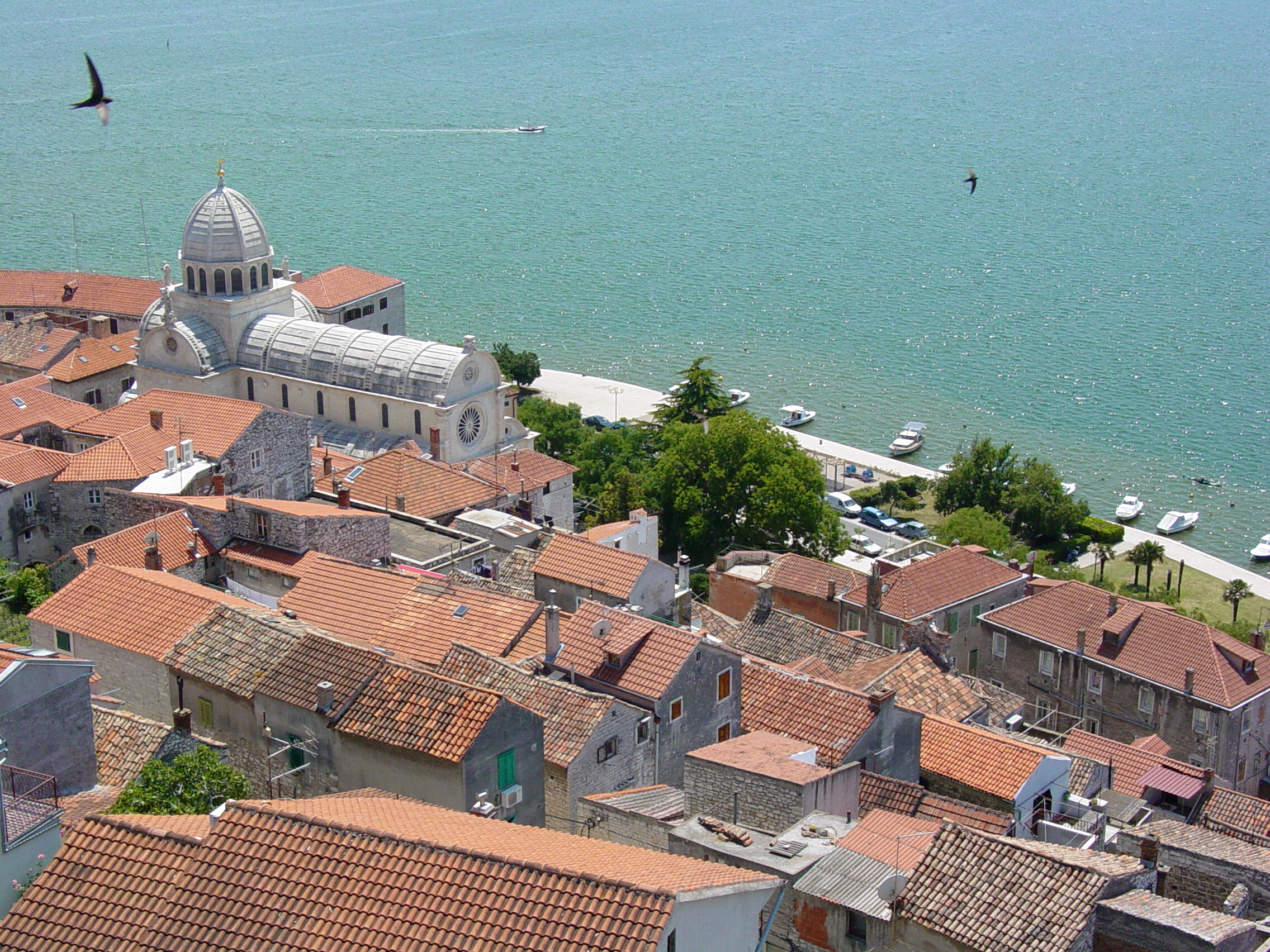
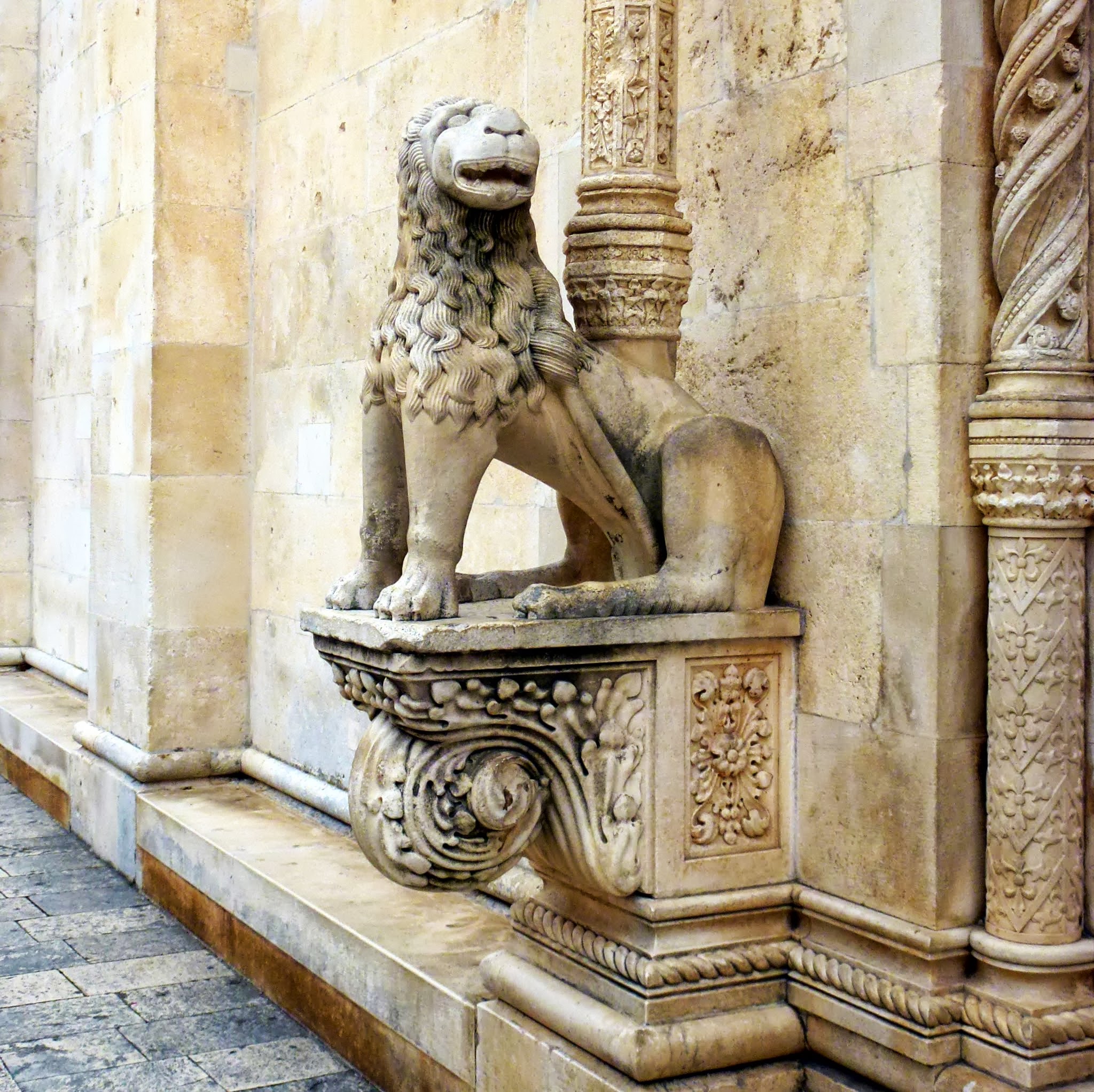
The Cathedral of St. James is a UNESCO World Heritage Site, built between 1431 and 1535, and it is constructed entirely of stone. Not stone facing over brick. Stone, the whole way, including the roof and the dome, assembled from interlocking slabs with no mortar and no wooden framing anywhere in the structure. It is the largest church in the world built that way, and architects still come specifically to look at how it was done.
The architect who solved it was Juraj Dalmatinac, and around the outside of the apse he carved a frieze of seventy one human heads. They are not saints. They are portraits of ordinary fifteenth century Sibenik residents, and they are startlingly individual: a worried man, a woman looking sideways, someone clearly annoyed at having to sit still. Standing in front of them is the closest thing to eye contact with the 1400s that we have experienced anywhere.
The baptistery inside, also Dalmatinac’s work, is a small carved stone room that is worth the entry on its own.
The Four Fortresses
Sibenik has four, which is an unusual number for a city this size, and three of them are open.
St. Michael’s Fortress sits directly above the old town and is the easy one, a fifteen minute climb up stairs from the cathedral. It has been converted into an open air concert venue with a stage inside the walls, and the view over the terracotta roofs to the channel and the islands is the postcard shot of the city. Go at sunset.
Barone Fortress is a little higher and was built in a hurry in 1646 against an Ottoman siege. It has an augmented reality tour that is better than it has any right to be, and a small bar on the ramparts.
St. John’s Fortress is the highest, largest and most atmospheric, a star shaped structure that has been partially restored and left partially raw. The walk up is steeper and it is worth doing.
St. Nicholas Fortress is the fourth and the strangest. It is a Venetian sea fortress built on a tiny island in the middle of St. Anthony’s Passage, reachable only by boat, and it is a UNESCO site in its own right as part of the Venetian Works of Defence listing. Boat trips run from the Sibenik waterfront.
Two National Parks in Two Days
This is Sibenik’s practical trump card and the reason we now recommend basing here rather than day tripping from Split.
Krka National Park is fifteen kilometers away. The main entrance at Skradin is a short drive or a park boat ride up the estuary, and Skradinski Buk is the wide, terraced travertine waterfall that most people picture when they think of Croatian waterfalls. It is far easier to reach from here than from anywhere else. Our full breakdown is in the Krka National Park guide.
Kornati National Park is an archipelago of about ninety mostly uninhabited limestone islands off the coast, and it is one of the more otherworldly landscapes in the Mediterranean. Bare pale rock, no trees, and cliffs on the seaward side dropping straight into deep blue. It is boat access only and full day trips leave from Sibenik and nearby Murter.
Add Plitvice Lakes at roughly two hours inland if you want a third, though we would not try to do that as a day trip from here in high season. We cover it separately in our Plitvice Lakes guide.
Getting to Sibenik
By car is easiest. Sibenik is directly on the A1 motorway, about an hour from Split, an hour from Zadar, and roughly four hours from Zagreb. Parking near the old town is paid and the old town itself is pedestrian.
By bus the coastal services are frequent and cheap, with regular connections from Split, Zadar, Dubrovnik and Zagreb. The bus station is a short walk from the waterfront.
By air, Split airport is about fifty minutes away and Zadar airport is about an hour. Split is the better connected of the two.
There is no train worth using and no catamaran connection to the southern islands, which is the one weakness in Sibenik’s position. If you want to combine this stop with Hvar, Brac or Korcula, you will be routing through Split, so plan Sibenik as part of the mainland coastal drive rather than as an island staging post. Our full route logic is in the Croatia island hopping itinerary.
A Perfect Two Days in Sibenik
Day one is the city. Start at the Cathedral of St. James before the tour groups arrive, then take twenty minutes to walk the frieze of heads around the outside of the apse rather than photographing it and moving on. Wander up through the old town without a map, which is the correct way to see it, and stop at the Prince’s Palace and the small city museum inside.
After lunch, climb to St. John’s Fortress while you still have energy, then come back down and do St. Michael’s for sunset. That order matters: St. John’s is the harder walk and St. Michael’s has the better evening view. Eat in the upper town and finish on the Riva.
Day two is a park. Leave early for Krka and enter at Skradin so you can take the park boat up the estuary, which is a lovely approach and beats the parking lot at Lozovac. Swimming below Skradinski Buk was banned in 2021, so do not plan your day around it. Walk the boardwalk loop, then continue upriver to Roski Slap and the island monastery at Visovac if you have the time and the legs.
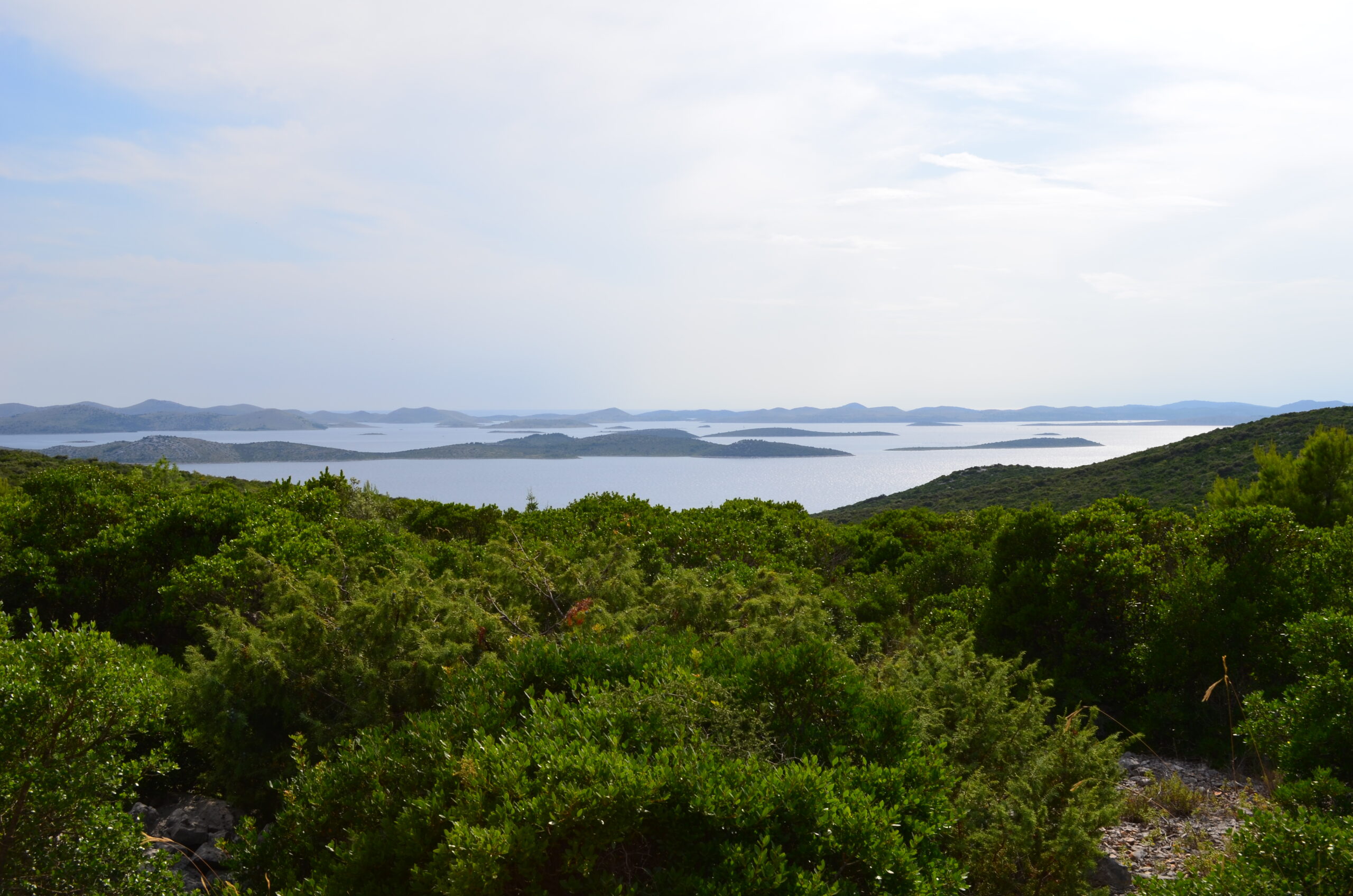
Get back to Sibenik for a late dinner. If you have a third day, swap Krka for a Kornati boat trip, which is a full day out and a completely different landscape.
Where to Eat and Swim
Sibenik has quietly become a good food city. The Sibenik hinterland grows the country’s best known variety of sweet onion, the offshore waters produce excellent shellfish, and the local white wine, Debit, is inexpensive and dry. Look for restaurants in the upper old town rather than directly on the Riva.
For swimming, the city itself does not have a great beach because it sits behind the channel. Banj beach just north of the old town is the convenient option with a good view back at the fortresses. For real swimming, drive fifteen minutes to Solaris or out to the Zablace and Brodarica stretch, or take a boat out toward the Kornati.
Where to Book
- Hotels and apartments: Booking.com for Sibenik has old town apartments at noticeably better prices than Split or Dubrovnik, plus the resort hotels at Solaris just outside town.
- National park and boat tours: Viator’s Sibenik listings cover Krka waterfall day trips, Kornati archipelago sailings and the St. Nicholas Fortress boat.
- Travel insurance: national park boat trips are weather dependent and plans do move, which is one of the reasons we cover in best travel insurance for Europe.
When to Visit Sibenik
May, June and September are the sweet spot, and Sibenik holds up better in shoulder season than the island towns do because its main attractions are a cathedral, four fortresses and two national parks rather than a beach.
July and August are hot and Krka in particular gets genuinely uncomfortable with crowds by mid morning. If you come then, be at the park gate when it opens and be back in town for lunch.
October and April are excellent for the fortresses and the city itself, and Krka is at its best in spring when the water volume is high. November through March is quiet, most tourist infrastructure thins out, and the boat trips to Kornati and St. Nicholas largely stop, but the cathedral and the fortresses stay open and you will have them essentially to yourself.
Our month by month breakdown for the whole country is in best time to visit Croatia.
Our Honest Take
Sibenik is a two night city, and we think it is one of the best value stops in Croatia. You get a world class building, four fortresses, a genuinely atmospheric old town, and the easiest access in the country to two national parks, at prices that are a real step below Split and a long way below Dubrovnik.
It is not a beach destination and it does not connect to the islands, so it does not work as the centerpiece of a trip. Where it works beautifully is as the middle chapter, slotted between Zadar and Split on a coastal drive, taking the pressure off both of them and giving you the park days without the day trip commute.
If you are driving the Dalmatian coast and you were planning to pass Sibenik on the motorway, stop. We did not the first time, and it is the one Croatian regret we still bring up.
More Croatia planning: build the trip with how to plan a trip to Croatia, pair this with our Zadar guide just up the coast, and price the whole thing out in how much does a trip to Croatia cost.