Disclosure: This post contains affiliate links. If you book through our links, we may earn a small commission at no extra cost to you. Thanks for supporting Faceted Travel!
Table of Contents
We had been on the Montenegrin coast for four days, sweating through Kotor’s staircases and swimming off pebble beaches, when we drove north into Durmitor and had to stop the car to put on jackets. In ninety minutes we had gone from Adriatic beach town to alpine plateau at 1,450 meters, surrounded by black pines and limestone peaks with snow still sitting in the north-facing gullies in June.
That contrast is the whole argument for northern Montenegro. Almost everyone who visits this country stays on the coast, which means the mountains that cover most of its landmass go largely unseen. Durmitor National Park is a UNESCO World Heritage Site containing 48 peaks over 2,000 meters, eighteen glacial lakes, and the second-deepest river canyon on Earth. It is roughly three hours from Budva and it feels like a different country.
Why Durmitor Deserves Two Days of Your Trip
Montenegro’s coast is beautiful and very similar to the Croatian coast just north of it. Durmitor is not similar to anything else in the region. This is high karst plateau country, more Dolomites than Dalmatia, and it is what makes a Montenegro trip feel distinct from a Croatia trip.
The park covers about 390 square kilometers around the town of Zabljak, the highest town in the Balkans at 1,456 meters. The Tara River Canyon forms its northern boundary, cutting 1,300 meters deep over 82 kilometers. Only the Grand Canyon is deeper. Standing at the Djurdjevica Tara Bridge looking straight down at a river the color of green glass is one of those moments that recalibrates what you thought the Balkans looked like.
It is also, refreshingly, not crowded. Even in August the trails here have a fraction of the traffic of Plitvice Lakes or the Kotor walls.
Getting to Durmitor
Zabljak is the base town for the park and everything runs from there.
From the coast (Budva, Kotor, Tivat): roughly three to three and a half hours by car. The scenic route goes via Niksic and up through the Piva Canyon, which is spectacular and involves a long series of rough single-lane tunnels carved straight out of the rock. The faster route runs via Podgorica and Niksic.
From Podgorica: about two and a half hours, and this is the most straightforward drive.
From Dubrovnik: four to five hours depending on the border.
By bus: there are daily services from Podgorica and Niksic to Zabljak, and seasonal services from the coast. They work, but they take longer and they leave you dependent on taxis inside the park.
We strongly recommend a car here. Durmitor’s highlights are spread across a wide plateau, the Sedlo Pass road is one of the best drives in the Balkans, and public transport simply does not reach most of it. A standard car is fine on the paved roads; a few gravel spurs will want ground clearance.
The Sedlo Pass Loop
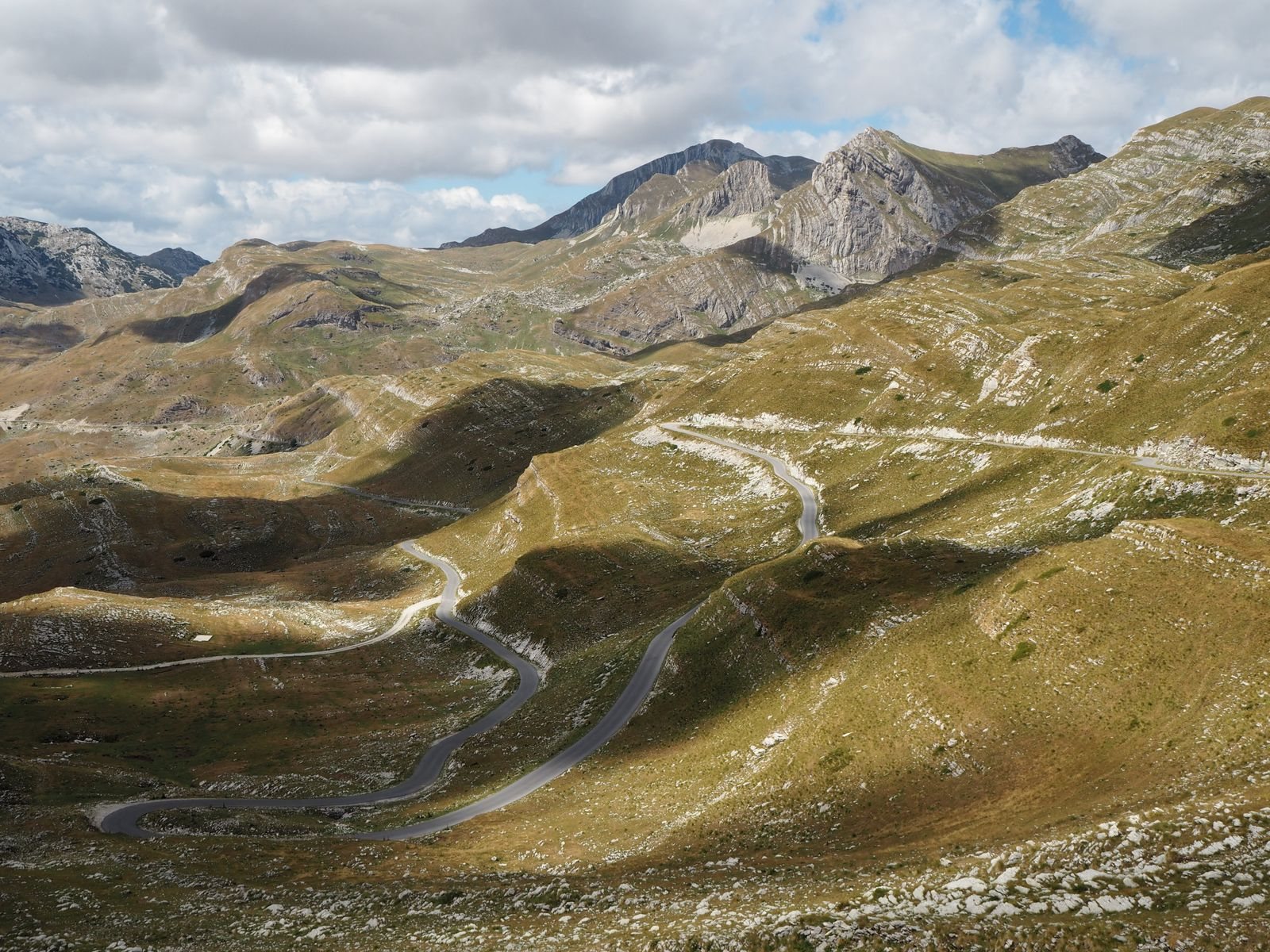
If you do nothing else with a car, drive the Durmitor Ring Road. It is a roughly 80-kilometer loop out of Zabljak over the Sedlo Pass at 1,907 meters, past Bobotov Kuk and back down through the villages on the west side. It takes two to three hours with stops and the section over the pass is genuinely one of the most dramatic paved roads we have driven anywhere. It is normally open from late May or June through October, and closed by snow the rest of the year.
The Best Things to Do in Durmitor
Walk Around Black Lake
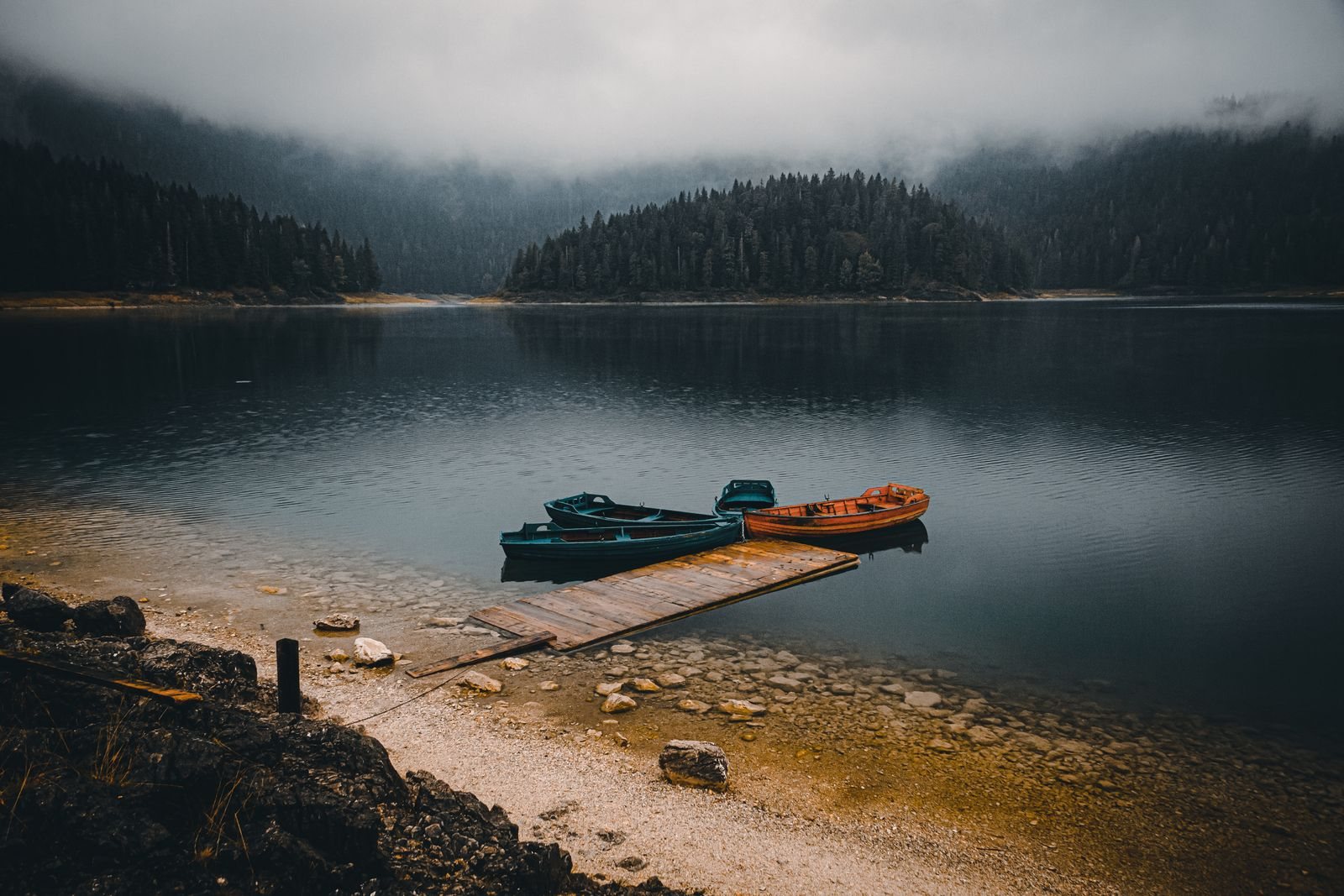
Crno Jezero sits three kilometers from Zabljak, and it is the park’s signature image: a dark glacial lake ringed by pine forest with the Medjed peak rising straight out of the far shore. There is a small entry fee to the park at the gate.
The full loop is about 3.6 kilometers, flat, easy, and takes an hour with photo stops. It is actually two lakes joined by a narrow neck that dries out in late summer, which is why the water level looks so different in different photographs. Go early or late for the reflection.
See the Djurdjevica Tara Bridge
About 23 kilometers north of Zabljak, this 1940 concrete arch bridge spans the Tara Canyon 172 meters above the river. You can walk across it, look straight down, and read the plaque about the engineer who helped blow up his own bridge to slow the Italian advance in 1942 and was executed for it.
There are zip lines strung across the canyon at both ends of the bridge, and several cafes with terraces looking down the gorge. It is touristy in the way that a genuinely extraordinary thing attracts tourists.
Raft the Tara River
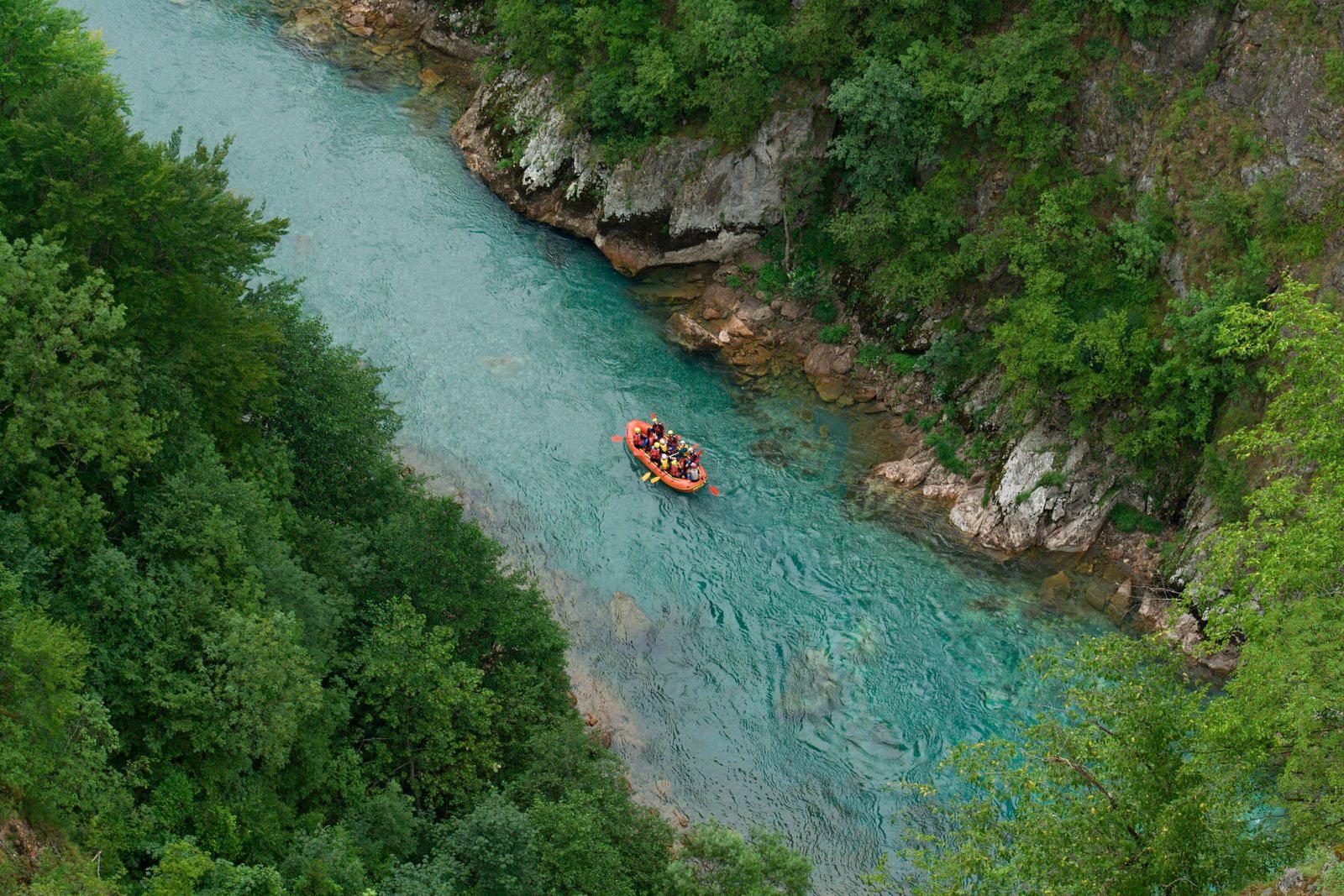
This is the single best activity in northern Montenegro. Half-day trips run the calmer 18-kilometer stretch from Brstanovica to Scepan Polje with grade II and III rapids, and they are suitable for anyone reasonably fit including older kids. Full-day and multi-day trips go further upstream into the wilder sections.
The season runs roughly from May to early October, with the highest water and biggest rapids in May and June. Operators supply wetsuits, helmets and guides. We did the half day and it was worth every euro, not so much for the whitewater as for the hours spent floating between thousand-meter cliff walls with nothing else in sight.
Hike to Bobotov Kuk
At 2,523 meters, Bobotov Kuk is Durmitor’s most famous summit and one of the highest points in Montenegro. The standard route starts at the Sedlo Pass and takes five to seven hours round trip, with a genuinely exposed scramble and some fixed cables near the top. It is not a casual walk. If you are an experienced hiker with a clear weather window, it is the best day in the park.
Easier Hikes That Still Deliver
Not everyone wants a 2,500-meter scramble, and Durmitor is generous to people who do not.
The Ice Cave (Ledena Pecina) trail climbs from Sedlo to a cave holding ice formations year-round, about three to four hours round trip.
Zabojsko Lake is a beautiful, quiet glacial lake with an easy walk from a nearby road, and it sees almost no one.
The Curevac viewpoint is a short walk from a parking area to a promontory looking straight down the Tara Canyon. Twenty minutes of effort for one of the great views in the country.
Skrcka Lakes sit in a deep valley below the high peaks, a longer day but on well-marked trail with a mountain hut at the end.
Visit Ostrog Monastery on the Way
If you drive between the coast and Durmitor via Niksic, Ostrog Monastery is a reasonable detour. It is a white church built directly into a vertical cliff face at 900 meters and it is the most important pilgrimage site in Montenegro. Go early, dress modestly, and expect crowds of pilgrims rather than tourists.
Where to Eat
Zabljak is a small mountain town and the food matches: hearty, meat-heavy and cheap. Look for kacamak, a cornmeal and potato dish beaten with kajmak and cheese that is essentially the mountain equivalent of comfort food, and cicvara, its richer cousin. Lamb and veal cooked ispod saca, under an iron bell buried in embers, is the regional specialty and usually needs ordering a few hours ahead.
The restaurants around Zabljak’s main street all do a version of the same menu competently. Several of the katun (shepherd hut) operations on the plateau serve fresh cheese, kajmak and homemade rakija in summer, and those are the meals we remember.
Where to Stay
Zabljak is the obvious base. It has hotels, guesthouses, apartments and a cluster of wooden chalets, and everything in the park is within 30 minutes.
The plateau lodges and eco-villages scattered around the park offer log cabins with wood stoves and no light pollution. Charming, but you will want a car.
Scepan Polje, at the Tara and Piva confluence near the Bosnian border, is where most rafting camps sit. Basic, riverside, and convenient if rafting is your priority.
Book ahead for July and August. Zabljak has limited beds and the town fills up.
Where to Book
- Accommodation: We use Booking.com for Zabljak, which lists the guesthouses and cabin operations that have no other online presence. Filter for free parking.
- Rafting, canyoning and jeep tours: Viator runs Tara rafting trips and Durmitor day tours, including full-day options that collect you from the coast if you are not driving.
- Travel insurance: Mountain activities, rafting and hiking above 2,000 meters are exactly the situations where policy exclusions matter. Read the adventure sports section before you buy, and see our take on whether travel insurance is worth it.
When to Visit Durmitor
June through September is the season. Trails are clear, the Sedlo Pass is open, rafting runs, and daytime temperatures on the plateau sit in a pleasant high teens to mid twenties Celsius while the coast bakes.
May is beautiful and green with high water for rafting, but snow lingers on the high routes and the pass may still be closed.
October brings gold larches and empty trails, with a real risk of early snow.
Winter turns Zabljak into a small ski town. Lifts are modest by Alpine standards, but the prices are a fraction and the setting is superb. Most hiking is off the table.
Always check a mountain forecast rather than the coastal one. The plateau makes its own weather and afternoon thunderstorms in summer are common.
How to Fit Durmitor Into a Montenegro Trip
The mistake we see most often is trying to do Durmitor as a day trip from the coast. It is six to seven hours of driving round trip and you will see the bridge and nothing else.
Give it two nights in Zabljak. Day one: drive up via the Piva Canyon, walk Black Lake, settle in. Day two: the Sedlo Pass loop plus a hike, or rafting. Day three: drive out via the Tara Bridge and Ostrog, back to the coast or on to Podgorica.
That structure slots neatly into the eight to ten day Montenegro route we sketch in how to plan a trip to Montenegro, and it is the addition that turns a Montenegro beach holiday into an actual Montenegro trip.
Practical Notes
There is a park entry fee, paid at the Black Lake gate and valid for the day.
Mobile coverage is patchy on the plateau and absent in the canyons. Download offline maps before you leave Zabljak.
Fuel up in Zabljak or Niksic. Stations inside the park area are few and close early.
Bring layers regardless of season. We wore fleeces in June evenings at a time when Budva was at 30 degrees.
Trail marking is generally good (red and white Balkan blazes) but some routes are exposed and weather changes fast. For anything above the treeline, tell your accommodation where you are going.
Building out the rest of the trip? Our Kotor, Montenegro travel guide covers the bay, how to plan a trip to Montenegro puts the whole route together, and if you are adding neighboring mountains, the Soca Valley and Triglav National Park guide covers Slovenia’s version of this same alpine drama.