Disclosure: This post contains affiliate links. If you book through our links, we may earn a small commission at no extra cost to you. Thanks for supporting Faceted Travel!
Table of Contents
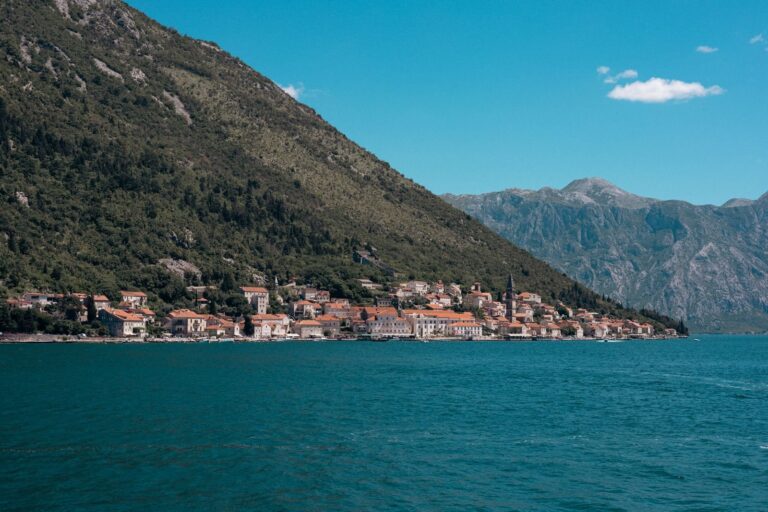
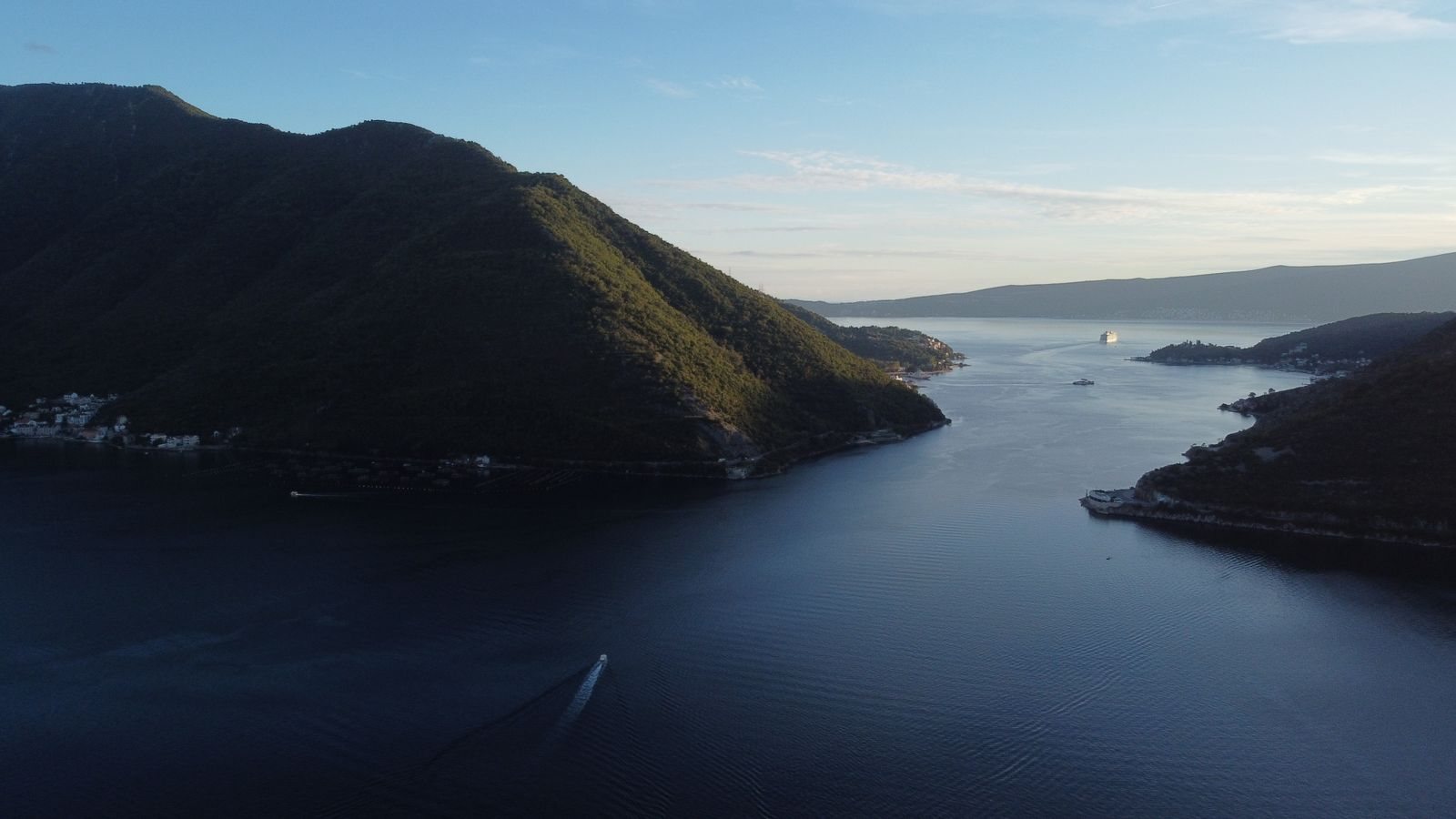
The first sight of the Bay of Kotor does something to people. We came around a headland on the coastal road, the water narrowed into what looks unmistakably like a fjord, and mountains rose straight out of it on both sides with red roofs stacked at the waterline. Todd actually said “wait, this is Montenegro?” out loud, which is exactly the reaction the country keeps getting.
Kotor is a walled medieval town at the far end of that bay, wedged against a limestone cliff so steep that the town’s fortifications climb 1,350 steps up the mountain behind it. It is a UNESCO World Heritage site, it is 90 minutes from Dubrovnik, and it is the single best introduction to a country that most Americans still cannot place on a map.
Here is what we learned about visiting Kotor well, including the timing problem that ruins it for a lot of people and how to work around it.
Why Kotor Is Worth the Detour
Three things make Kotor unusual. The setting is genuinely dramatic in a way that photographs undersell, because no single frame captures both the height of the mountains and the stillness of the water. The old town is compact, lived in, and free to enter, with no ticket gate and no set route, so you wander until you are lost, which takes about four minutes. And the whole place is still meaningfully cheaper than the Croatian coast an hour north.
The bay itself is not technically a fjord. It is a submerged river canyon, a ria, which is why the water is calm and warm rather than glacial. That distinction matters if you plan to swim, and you should.
If you are already planning Croatia, Kotor is the obvious add on. Our day trips from Dubrovnik guide covers the border crossing in detail, though we would argue Kotor deserves nights rather than hours.
The Best Things to Do in Kotor
Climb to the Fortress of San Giovanni
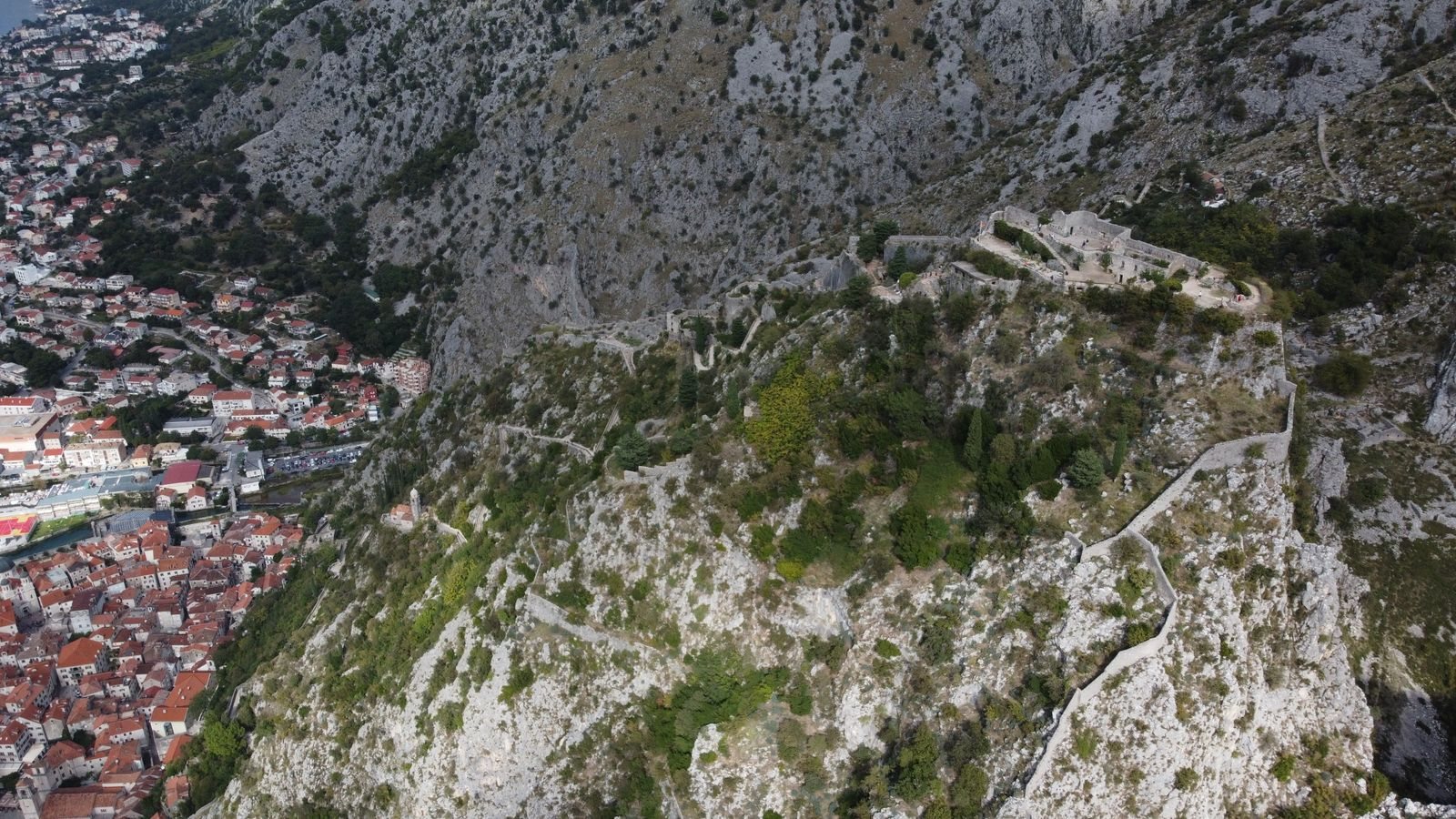
This is the thing to do, and it is harder than the guidebooks let on. The path switchbacks up the cliff behind the old town to the Castle of San Giovanni at 260 meters, passing the Church of Our Lady of Remedy about two thirds of the way. There are roughly 1,350 steps, they are uneven medieval stone, and there is no shade.
Go at 7am or after 5pm. In July the midday heat on that rock face is dangerous, not just unpleasant. Bring a liter of water per person, more than you think. The entry fee is a few euros in season and the ticket booths are unstaffed early, which is one more reason to go at sunrise.
The view from the top, with the bay curling away below and the town reduced to a triangle of terracotta, is the image you will keep.
Wander the Old Town
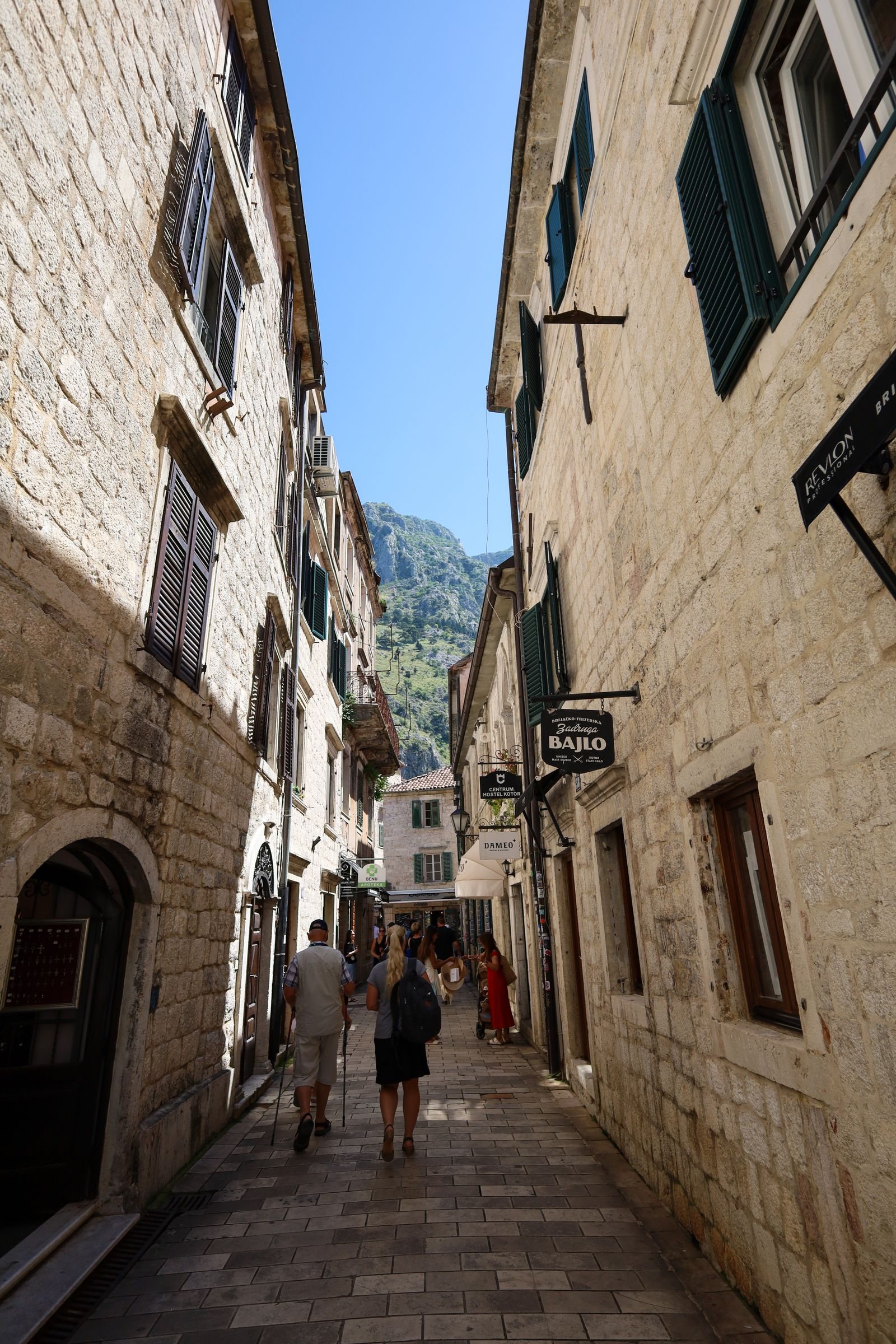
Kotor’s old town is a knot of squares and alleys inside a wall that runs 4.5 kilometers. The Cathedral of Saint Tryphon dates to 1166 and has survived two major earthquakes, most recently in 1979, and the mismatched bell towers are a result of that. The Maritime Museum in a Baroque palace on Square of Flour is small but it explains why a town this size once had one of the Adriatic’s largest merchant fleets.
Look for the cats. Kotor’s cat population is semi official, there is a cat museum, and they are on the souvenirs for a reason.
Take the Boat to Our Lady of the Rocks
Out in the bay near Perast sits an artificial island built, according to local tradition, by sailors dropping a rock after every safe voyage across 500 years. The church on it holds a remarkable collection of votive silver plaques and a tapestry embroidered by a local woman using her own hair over 25 years.
Boats leave constantly from Perast for a few euros. Combine it with an hour in Perast itself, which is a single street of Venetian palaces and, in our opinion, the prettiest village on the bay.
Drive the Bay Loop
The full circuit of the bay is about 90 minutes of driving without stops, and it is one of the best short drives in Europe. Going counterclockwise from Kotor takes you through Perast, Risan with its Roman mosaics, then Herceg Novi, and back via the Kamenari to Lepetane ferry, which cuts the narrows in five minutes and saves an hour.
The Ladder of Kotor
If the fortress climb was not enough, the old Austro Hungarian mule track above it, the Ladder of Kotor, switchbacks up to around 900 meters and the village of Skurda. It is a serious half day hike with the best views on the bay and almost no one on it.
Where to Stay in Kotor
Inside the old town puts you in the middle of everything, and it is atmospheric in a way modern hotels cannot match. The tradeoff is real: the bars in the squares run late, the walls trap sound, and you cannot drive to your door. Bring earplugs and ask about noise before booking.
Dobrota, just north along the waterfront, is where we would stay again. It is a ten to twenty minute walk into the old town along the water, the apartments have parking and often a swimming ladder into the bay, and prices drop noticeably.
Perast is quieter and more beautiful, but it is 25 minutes away and you will want a car.
Budva, 25 minutes south, has the beaches and the nightlife. It also has development that Kotor does not, so we would use it as a beach day rather than a base.
Getting There and Getting Around
From Dubrovnik: about 2 hours to 2 hours 30 minutes by car including the border, which is the variable. In July and August the Debeli Brijeg crossing can back up badly, and we have heard of two hour waits at midday. Cross before 9am or after 6pm.
Flying: Tivat airport is 20 minutes from Kotor and takes seasonal European flights. Podgorica is 90 minutes. Dubrovnik is the biggest option and works fine.
Rental cars: confirm with your rental company that the car is permitted to cross into Montenegro and that you have the green card insurance document. This catches people out constantly. Cars rented in Croatia often carry a cross border fee.
Cruise ships: Kotor is a port call, and this is the timing problem. On a heavy day, several thousand passengers land in a town whose old town you can cross in six minutes. Check the port schedule before you plan your day, and use the ship hours for the bay drive or a boat trip.
Currency: Montenegro uses the euro despite not being in the European Union. Cards are widely accepted, but small konobas and boat operators prefer cash.
Day Trips from Kotor
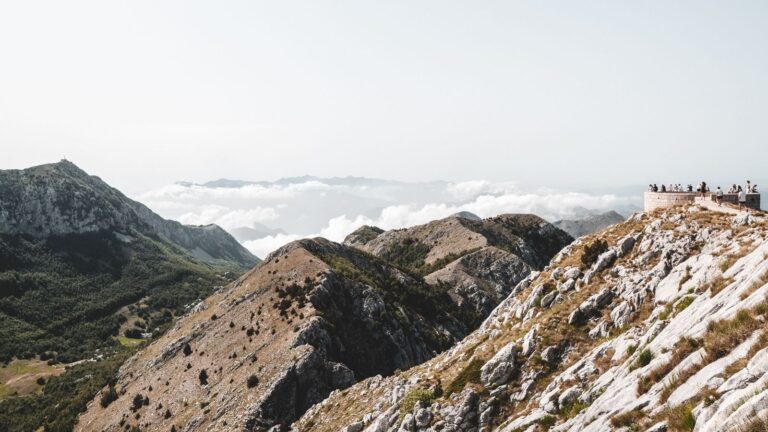
Lovcen National Park and the Njegos Mausoleum. The serpentine road up from Kotor climbs 25 hairpin bends to about 1,200 meters, and the view back down over the bay from around bend 15 is the single best photograph in Montenegro. At the top, 461 steps inside the mountain lead to Petar II Petrovic Njegos’s tomb, which honors the poet and prince bishop who effectively founded modern Montenegro. Allow half a day.
Cetinje. The old royal capital sits just beyond Lovcen and it is a strange, affecting little town of former embassies from an era when Montenegro was a recognized kingdom. It pairs naturally with Lovcen on the same loop.
Budva and Sveti Stefan. Twenty five minutes south for beaches, a compact walled old town and the most photographed islet on the coast. Sveti Stefan itself is a private resort, but the viewpoint on the road above it is free and open.
Lake Skadar. Ninety minutes inland to the largest lake in southern Europe, shared with Albania. Boat trips out of Virpazar run through lily fields and past island monasteries, and the surrounding hills are a working wine region.
Dubrovnik. The trip runs both directions. If you are basing in Montenegro, a day in Dubrovnik is easy, and the border is quieter heading north early in the morning.
When to Visit
May, June, September and early October are the best months. Warm water, open everything, manageable crowds.
July and August are hot, expensive and crowded, with the cruise traffic at its peak. Swimming is excellent and the town is lively, but you will be sharing it.
April and late October are pleasant for walking and the fortress climb, with cooler water and some seasonal closures.
November through March is quiet and often rainy. Kotor sits at the head of a bay ringed by mountains and it is one of the wetter spots in Europe in winter. Some restaurants close entirely.
Practical Tips We Wish We Had Known
The fortress ticket booth closes but the path does not. Early and late climbs are free and cooler. This is not a secret but it is underused.
Kotor is walkable, the bay is not. Budget for a car, a scooter or organized boat trips if you want to see beyond the walls.
Swimming near the old town is mediocre. The good water is in Dobrota, Perast and around Herceg Novi. The bay is warm, calm and clean, but the town waterfront is a working quay.
Restaurant prices inside the walls run 30 to 40 percent above Dobrota. The food two streets outside the gate is usually better anyway.
Montenegro is not in the Schengen area. Your Schengen days do not tick down here, which is useful on a long European trip.
Mosquitoes at dusk near the water are real. Pack repellent.
Where to Book
- Accommodation: we search Booking.com’s Montenegro listings and filter Dobrota and Kotor separately, since the price gap is significant.
- Boat trips, bay tours and day trips from Dubrovnik: Viator’s Montenegro listings cover Our Lady of the Rocks, bay cruises and cross border transfers.
- Travel insurance: worth carrying anywhere involving a border crossing in a rental car and a 1,350 step climb. Our reasoning is in our travel insurance guide.
Our Honest Take
Kotor rewards the traveler who stays. As a shore excursion or a day trip it is a pretty walled town with a hard climb, and you will leave thinking it was fine. Stay two or three nights in Dobrota, climb the fortress at dawn, drive the bay, spend an afternoon in Perast, and it becomes one of the best value stops in southern Europe.
The comparison people want is with Dubrovnik, so here it is. Dubrovnik is grander, better preserved and considerably more expensive, and it is drowning in visitors. Kotor is smaller, rougher at the edges, set in far more dramatic landscape, and it still feels like a town where people live. We would not choose between them. We would do both, in that order, with the drive between them as part of the trip.
Planning the wider region? Start with how to plan a trip to Croatia for the northern half, use our Dubrovnik guide for the city an hour up the coast, and see how much a trip to Croatia costs for a budget baseline that Montenegro comes in slightly under.