Disclosure: This post contains affiliate links. If you book through our links, we may earn a small commission at no extra cost to you. Thanks for supporting Faceted Travel!
Table of Contents
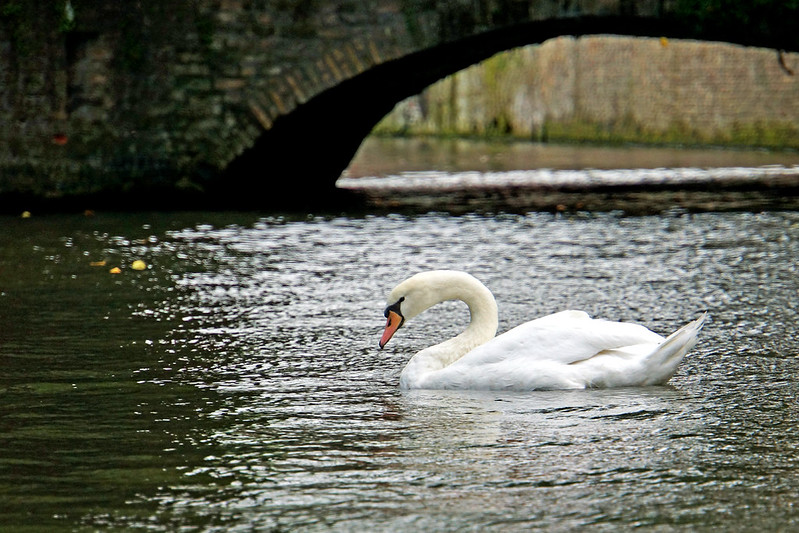
We crossed a little stone bridge just after sunrise, before the day-trippers arrived, and the whole city seemed to be holding its breath. Swans drifted on a canal the color of pewter, a bell tower leaned into the mist, and the only sound was our own footsteps on the cobbles. If you have ever wondered whether a place can actually look like a storybook, Bruges is our answer, and it is even prettier in person than in the photos.
Here is the happy surprise: you do not need a week to fall for it. Bruges is compact, walkable, and made for a slow weekend of canals, chocolate, and medieval squares. This guide covers when to go, how to get here, where to stay, and exactly how we would spend two unhurried days in Belgium’s most beautiful little city.
Why Visit Bruges?
Bruges (Brugge in Flemish) is the kind of place that makes you slow down whether you meant to or not. The historic center is a UNESCO World Heritage Site, and it has kept its medieval bones almost perfectly intact: gabled houses, quiet canals, cobbled lanes, and a skyline pierced by a 13th-century belfry. Walking here feels like stepping into another century, minus the plague and plus very good waffles.
What we love most is the scale. Bruges is small enough to explore entirely on foot, yet dense with things to see, so you are never far from a photogenic bridge or a cafe worth sitting in. It is also gloriously indulgent. This is the land of Belgian chocolate, crisp frites, and centuries of beer-brewing tradition, all served in a setting that looks like a painting. If you are building a broader European itinerary, Bruges pairs naturally with Amsterdam and Paris, both of which are quick train rides away.
When to Visit Bruges
Bruges is a year-round destination, but the season you choose changes the mood entirely. Our favorite times are late spring (April into June) and early fall (September into October). The weather is mild, the gardens and canals look their best, and the crowds are lighter than in peak summer.
Summer (July and August) brings the warmest weather and the longest days, which is lovely, but it is also the busiest and most expensive stretch, and the central squares can feel packed by midday. If you visit then, lean hard into early mornings and evenings when the day-trippers have gone home.
Winter has its own quiet magic. Bruges does Christmas beautifully, with a festive market on the Markt square, ice skating, and twinkling lights reflected in the canals. It is cold and often gray, but the city feels intimate and storybook-like, and hotel rates drop outside the holiday peak. For a fuller breakdown of how the seasons compare across the continent, our guide on the best time to visit Europe walks through the trade-offs.
Getting to Bruges
One of the best things about Bruges is how easy it is to reach, because it sits right on the fast European rail network. You almost certainly will not need a car.
Most travelers arrive by train. From Brussels, Bruges is only about an hour away, and Brussels itself connects to London (via the Eurostar under the Channel), Paris, Amsterdam, and beyond on high-speed lines. If you are coming from Paris or Amsterdam, you will typically change trains in Brussels or Antwerp, and the whole journey is comfortable and scenic. Bruges’ train station sits just southwest of the historic center, a pleasant 15-minute walk or a short bus ride from the main squares.
If you are flying in, the nearest major hub is Brussels Airport, with a straightforward train connection onward. Once you arrive, leave the car keys behind. The historic center is largely pedestrian-friendly, parking is limited and pricey, and everything worth seeing is within a 20-minute walk. For help sequencing Bruges into a longer trip, our post on how to plan a trip to Europe lays out our whole system.
The Best Things to Do in Bruges
The joy of Bruges is that the city itself is the main attraction. Still, these are the experiences we would not skip.
Climb the Belfry of Bruges
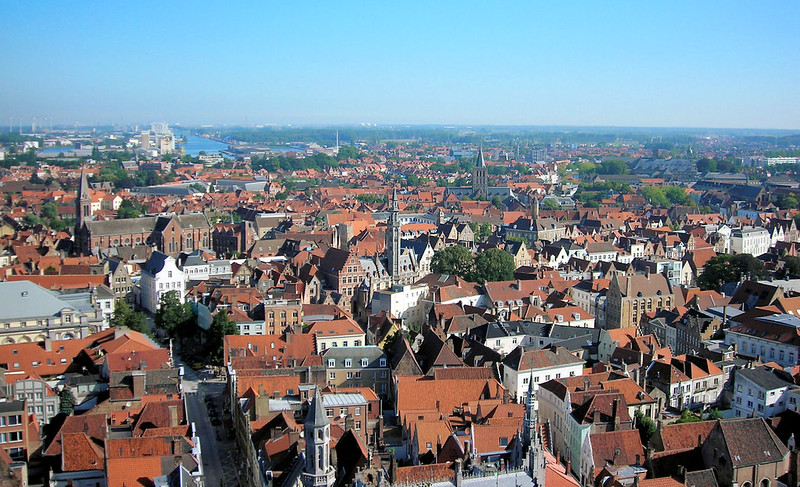
The medieval belfry towering over the Markt is the city’s icon, and climbing its 366 narrow, winding steps is a rite of passage. The staircase is tight and the going is slow when it is busy, but the reward is a sweeping view over the red rooftops, canals, and countryside beyond. Go early to beat both the crowds and the midday heat in summer.
Wander the Markt and the Burg
The Markt is the beating heart of Bruges, ringed by colorful stepped-gable guild houses and anchored by the belfry. Just steps away, the Burg square is smaller but even more historic, home to the ornate Gothic City Hall and the Basilica of the Holy Blood. We like to simply sit at a cafe on the Markt with a coffee and watch the horse-drawn carriages clatter past.
Take a canal boat cruise
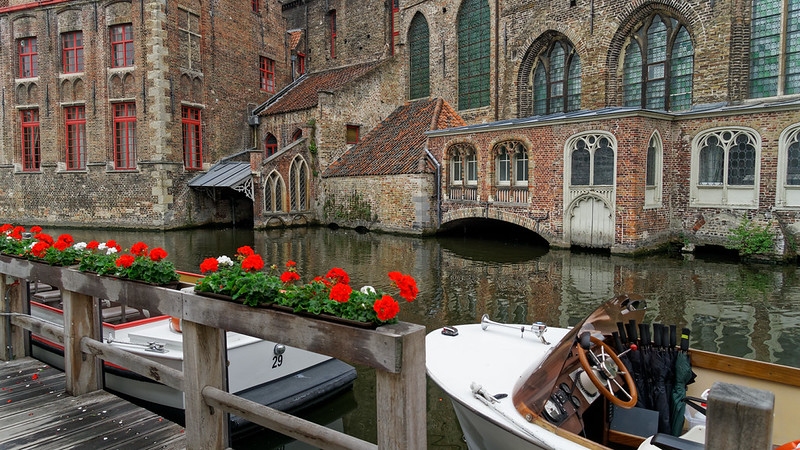
Bruges is often called “the Venice of the North,” and a half-hour canal cruise is the best way to understand why. Gliding under low stone bridges, past hidden gardens and the backs of centuries-old houses, gives you a completely different perspective on the city. The boats run from several docks in the center, and it is worth every euro.
Visit the Beguinage and Minnewater
For a peaceful contrast to the busy squares, walk south to the Beguinage (Begijnhof), a tranquil walled courtyard of white houses once home to a community of lay religious women, now shaded by trees and, in spring, carpeted with daffodils. Right beside it lies Minnewater, the “Lake of Love,” a swan-filled pond that is one of the most romantic corners of the city.
Taste your way through the city
Bruges is a paradise for anyone with a sweet tooth or a love of comfort food. Duck into a chocolate shop (there are dozens, many artisanal) and pick up a box of pralines. Order a paper cone of frites with mayonnaise from a friterie. And find a cozy bar to sample Belgian beer, from Trappist ales to the city’s own Bruges Zot. We recommend a guided chocolate or beer tasting to really understand the craft behind it all.
Where to Stay in Bruges
Bruges is small, so almost anywhere in or near the historic center puts you within easy walking distance of the sights. The main choice is about atmosphere and budget.
Inside the historic center
Staying within the old town is the dream: you wake up to canal views and quiet cobbled streets, and you get the city to yourself before and after the day-trippers arrive. Accommodations range from romantic boutique hotels in converted historic buildings to charming bed and breakfasts. It is the priciest area, but the location is unbeatable, and those early-morning and late-evening hours alone in the center are worth a lot.
Near the train station or the edges
If you are watching your budget, the streets just outside the central squares and near the train station offer more affordable hotels and guesthouses while still being a short, walkable distance from the action. You trade a bit of the postcard atmosphere for a friendlier rate, and Bruges is compact enough that the walk is never a burden. If you are weighing accommodation costs against the rest of your trip, our guide to how much a trip to Europe costs can help you budget.
Where to Book
- Hotels: We use Booking.com to compare boutique hotels and B&Bs inside the historic center, most with free cancellation.
- Tours and experiences: Viator has canal cruises, chocolate and beer tastings, walking tours, and day trips from Brussels.
Sample 2-Day Bruges Itinerary
Two days is the sweet spot for Bruges: enough to see the highlights and still have time to linger. Here is how we would spend a perfect weekend.
Day 1: The classic center. Start early on the Markt before the crowds, then climb the belfry for your first big view. Wander over to the Burg square to admire the City Hall and the Basilica of the Holy Blood. After lunch (frites, obviously), take a canal boat cruise to see the city from the water, then spend the late afternoon getting happily lost in the side streets. Cap the day with a Belgian beer and an unhurried dinner.
Day 2: Gardens, chocolate, and slow mornings. Begin with a walk south to the peaceful Beguinage and the swan-filled Minnewater. Circle back through the quieter eastern neighborhoods, stopping at a chocolate shop or two along the way. Book a chocolate or beer tasting to understand the craft, then finish with one last stroll across your favorite bridge as the light turns golden. This is when Bruges is at its most magical.
How Many Days Do You Need in Bruges?
Bruges is famous as a day trip from Brussels, and you can technically see the highlights in a single busy day. But we would gently push you to stay at least one night. The city transforms after the day-trippers leave in the late afternoon: the squares empty out, the lamplight comes on, and you get those quiet, misty mornings that are the whole reason to come.
Two days and one or two nights is our ideal. It lets you see the belfry, the squares, the canals, and the Beguinage without rushing, with time left over for the slow pleasures (a long lunch, a chocolate tasting, an aimless wander) that make Bruges special. If you have three days, you could add a half-day trip to nearby Ghent, another gorgeous Flemish city just a short train ride away.
Practical Tips for Visiting Bruges
Stay overnight if you can. The city is a completely different, quieter, more romantic place once the day-trippers go home. Those early mornings and late evenings are worth the extra night.
Wear comfortable shoes. Bruges is all cobblestones, all the time. They are beautiful and murder on flimsy soles, so leave the fashion-first footwear at home.
Carry some cash. Most hotels and larger restaurants take cards, but smaller friteries, market stalls, and some cafes prefer cash. Keep a few euros on hand.
Book the belfry and popular tours ahead in summer. Timed slots and guided tastings can sell out in peak season, so reserve online to skip the longest lines.
Go early to the Markt and belfry. The central squares fill up by late morning. If you want that storybook, crowd-free photo, set an early alarm; you will thank yourself.
Learn a few Flemish pleasantries. Bruges is in Dutch-speaking Flanders, not the French-speaking south. A friendly “dank u” (thank you) goes a long way, and most people also speak excellent English.
Is Bruges Worth Visiting?
Absolutely, without hesitation. Bruges delivers exactly what it promises: a perfectly preserved medieval city that looks like it was lifted from a fairytale, wrapped around canals and served with world-class chocolate and beer. It is compact, walkable, welcoming, and endlessly photogenic, which makes it one of the easiest and most rewarding short breaks in all of Europe.
Is it touristy? In the middle of a summer day, yes, and there is no pretending otherwise. But the fix is simple: stay overnight, wake up early, and let the quiet hours show you the real Bruges. Do that, and this little Belgian city will win you over completely. It certainly won us.
Planning a bigger European adventure? Bruges pairs beautifully with our guides to Amsterdam and Paris, and if you love historic Old World cities, do not miss our Prague travel guide.