Disclosure: This post contains affiliate links. If you book through our links, we may earn a small commission at no extra cost to you. Thanks for supporting Faceted Travel!
Table of Contents
We stepped off the train in Interlaken, looked up, and there it was: the snow-capped triple peak of the Eiger, Monch, and Jungfrau glowing pink in the last of the evening light, framed by green hills and two impossibly blue lakes. We had seen mountains before, but something about that first view made us both go quiet. Interlaken has a way of doing that to people.
The name means “between the lakes,” and that is exactly where this little town sits, wedged between Lake Thun and Lake Brienz with the giants of the Bernese Alps rising just behind. It is the adventure capital of Switzerland and the perfect basecamp for exploring the whole Jungfrau region. This guide covers when to go, how to get here, the best things to do, and how we would spend a few unforgettable days in the Swiss Alps.
Why Visit Interlaken?
Interlaken is not really about the town itself, which is pleasant but modest. It is about everything the town gives you access to. Sitting at the gateway to the Jungfrau region, Interlaken is the launchpad for some of the most spectacular mountain scenery on the planet: glaciers, waterfalls, alpine villages, and cog railways that climb to snowfields you can walk on in July.
It is also Switzerland’s undisputed adventure hub. This is where people come to paragliding off grassy slopes, canyon through gorges, and hike trails that look computer-generated. But you do not have to be an adrenaline junkie to love it. The area is just as rewarding if your idea of a perfect day is a scenic train ride, a lakeside stroll, and a fondue with a view. If you are traveling Switzerland on a tighter budget, pair this guide with our post on Switzerland on a budget, because this is not a cheap country and a little planning goes a long way.
When to Visit Interlaken
Interlaken is a true four-season destination, and the right time depends on what you want to do. Summer (June through September) is peak season for good reason. The weather is warmest, the hiking trails are open and snow-free, the lakes are inviting, and the high mountain railways run full schedules. It is also the busiest and priciest time, so book ahead.
We are especially fond of the shoulder months, late May into early June and September into early October. The crowds thin out, the prices ease, and the scenery is arguably at its best, with wildflowers in early summer or golden larches in fall. Some high-altitude trails may still have snow in late spring, so check conditions.
Winter turns the region into a snow-globe playground. While Interlaken itself sits low, nearby resorts like Grindelwald, Wengen, and Murren offer world-class skiing, and the mountain scenery under snow is breathtaking. If your trip spans several countries, our guide on the best time to visit Europe can help you line up the seasons.
Getting to Interlaken
Switzerland has one of the best rail networks in the world, and Interlaken sits right on it, so getting here is a scenic pleasure rather than a chore. You do not need a car, and honestly we would recommend against one given the excellent trains and the cost of parking.
Most travelers arrive by train via Zurich, Bern, or Lucerne. From Zurich Airport, it is roughly two hours by direct or single-change train; from Bern, it is under an hour. The journey itself is gorgeous, winding past lakes and green valleys. Interlaken has two stations, Interlaken Ost (East) and Interlaken West, and the one you want depends on your hotel and onward mountain connections. Interlaken Ost is the hub for trains up into the Jungfrau region and boats on Lake Brienz, so it is often the more useful of the two.
If you are combining Switzerland with Italy or Germany, the connections are seamless. Interlaken links smoothly toward Venice and Lake Como to the south, and north toward Munich. A Swiss Travel Pass or a regional pass can save real money if you plan to ride a lot of trains, cable cars, and boats.
The Best Things to Do in Interlaken
Here are the experiences that make this region legendary. You will not fit them all into one trip, and that is a good excuse to come back.
Ride to Jungfraujoch, the “Top of Europe”
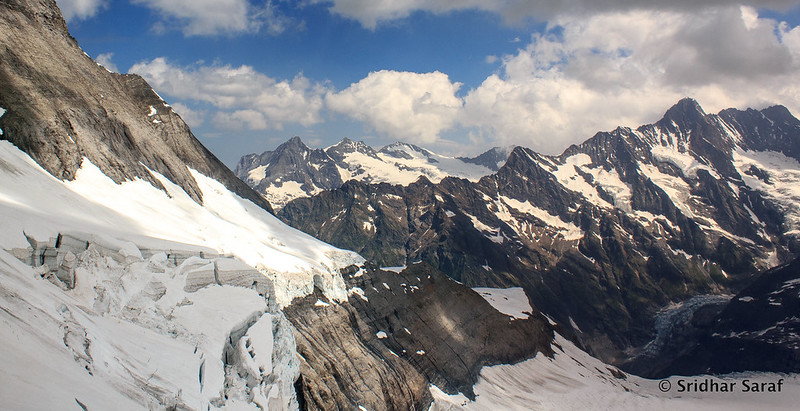
The Jungfraujoch is the headline act: at 3,454 meters, it is home to the highest railway station in Europe, reached by a remarkable cog railway that tunnels right through the Eiger. Up top you will find a glacier, an ice palace carved into the ice, viewing platforms, and snow year-round. It is expensive and it takes most of a day, but standing on a glacier in the middle of summer with the Aletsch, the longest glacier in the Alps, stretching out below is unforgettable.
Explore Grindelwald and the alpine villages
The villages tucked into the mountains around Interlaken are destinations in their own right. Grindelwald is the most famous, a picture-perfect alpine town beneath the north face of the Eiger, and a hub for hiking, the First cliff walk, and gondola rides. Nearby, the car-free villages of Wengen and Murren cling to the mountainsides with jaw-dropping views. We love spending a day just riding the trains and cable cars between them.
See Lauterbrunnen Valley and its waterfalls
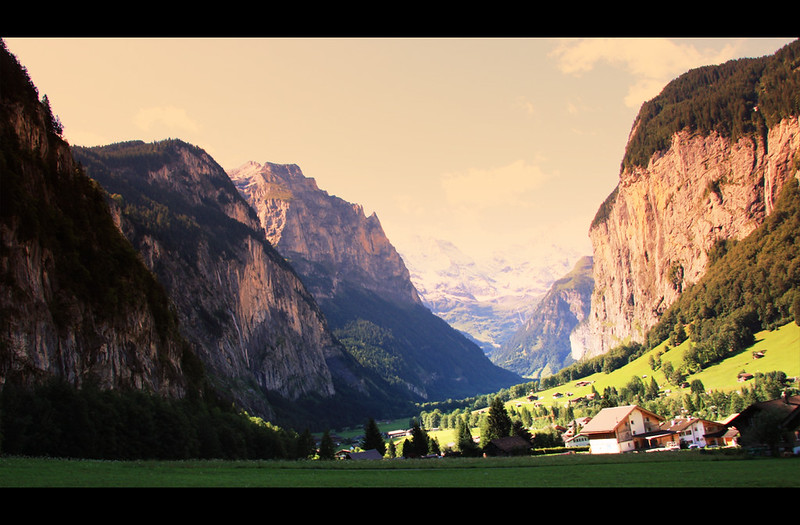
If you have seen one photo of Switzerland, it may well have been Lauterbrunnen. This deep glacial valley, walled by sheer cliffs with 72 waterfalls tumbling down, is said to have inspired Tolkien’s Rivendell, and in person it lives up to the hype. The Staubbach Falls plunge nearly 300 meters right beside the village. It is a short, scenic train ride from Interlaken and one of our favorite spots on Earth.
Cruise the two lakes
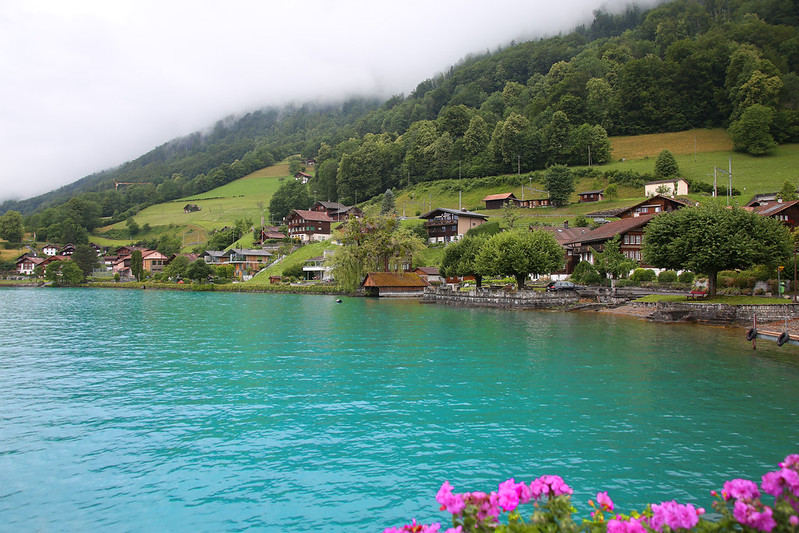
The lakes that give Interlaken its name are stunning and often overlooked in the rush to the peaks. Lake Thun and Lake Brienz are both a vivid turquoise, ringed by mountains and dotted with castles and charming villages. A relaxing boat cruise is a lovely counterpoint to a big mountain day, and it is included with many rail passes.
Try an adventure sport
Interlaken earned its adventure-capital reputation honestly. Paragliding over the town and lakes is the signature thrill, a tandem flight that is surprisingly accessible for first-timers. There is also canyoning, white-water rafting, skydiving, and via ferrata for the truly bold. Even if you just watch the paragliders drift down to the meadow, it is part of the fun.
Where to Stay in Interlaken
Where you base yourself shapes your whole trip, so it is worth a little thought.
Interlaken town
Staying in Interlaken itself is the most convenient choice, especially if you want to make day trips in several directions. You get easy access to both train stations, a good range of hotels and restaurants, and that iconic view of the Jungfrau from the Hohematte meadow in the center of town. It is the practical pick for first-timers and anyone who wants to explore the whole region rather than one valley.
Up in the mountain villages
For a more magical, immersive stay, base yourself up in the mountains in Grindelwald, Wengen, Murren, or Lauterbrunnen. You trade a bit of convenience (and sometimes a higher price) for waking up surrounded by peaks, with trailheads at your doorstep and quiet evenings after the day-trippers leave. We have done both, and a night or two up high is something we always remember. Because Switzerland is genuinely expensive, our guide to how much a trip to Europe costs can help you plan realistically.
Where to Book
- Hotels: We use Booking.com to compare hotels in Interlaken town and the surrounding mountain villages, most with free cancellation.
- Tours and experiences: Viator has Jungfraujoch excursions, paragliding, canyoning, lake cruises, and guided day trips.
Sample 3-Day Interlaken Itinerary
Three days lets you sample the peaks, the valleys, and the lakes without feeling rushed. Here is our ideal.
Day 1: Get your bearings and go up high. Settle in and take the train up to Grindelwald or the First for your first taste of the high country, with a cliff walk or an easy alpine hike. Ride the gondolas between viewpoints, then come back down for a relaxed dinner and, if the timing is right, watch the sunset paint the Jungfrau.
Day 2: Jungfraujoch or Lauterbrunnen. Dedicate today to a headline experience. If the weather is clear, make the pilgrimage to the Jungfraujoch, the Top of Europe, for glaciers and snow in summer. If you would rather stay lower (and save some money), spend the day in the Lauterbrunnen valley among the waterfalls and cliffs, perhaps riding up to car-free Murren for the views.
Day 3: Lakes and adventure. Slow down with a morning boat cruise on Lake Brienz or Lake Thun, then choose your own afternoon: a tandem paragliding flight for the thrill-seekers, or a lazy lakeside lunch and a stroll for everyone else. Toast your trip with a fondue and one last look at the mountains.
How Many Days Do You Need in Interlaken?
You could see the absolute highlights in two full days, enough for one big mountain excursion and a day exploring the villages and valleys. But the Jungfrau region rewards time, and there is far more here than most people expect.
Three days is our sweet spot: one day up high, one in the valleys and waterfalls, and one for the lakes and a little adventure. If you have four or five days, you will never run out of things to do, from longer hikes to more distant peaks like the Schilthorn (of James Bond fame). This is a place we always wish we had booked another night for.
Practical Tips for Visiting Interlaken
Check the mountain webcams and weather before committing to a peak day. The high excursions like Jungfraujoch are expensive and only worth it on clear days. Stay flexible and save the big-ticket trips for good weather.
Consider a rail pass. If you plan to ride trains, cable cars, and boats (and you will), a Swiss Travel Pass or regional pass can save significant money and hassle. Do the math for your itinerary.
Budget accordingly. Switzerland is one of the most expensive countries in Europe. Groceries and picnics, tap water instead of bottled, and a rail pass all help. Our Switzerland on a budget guide has more money-saving strategies.
Pack layers, even in summer. It can be warm by the lakes and near-freezing on the glaciers on the same day. Bring a warm layer, a rain shell, and real shoes for the mountains.
Start early. The first trains and cable cars are quieter and often clearer, before afternoon clouds roll in. Early risers get the best of the mountains.
Book big excursions and paragliding ahead in summer. Popular activities and the Jungfraujoch railway can fill up in peak season, so reserve online in advance.
Is Interlaken Worth Visiting?
Completely, yes. Interlaken and the Jungfrau region deliver the Switzerland of your imagination: soaring snow-capped peaks, turquoise lakes, thundering waterfalls, and storybook villages, all knit together by some of the finest trains in the world. Whether you come for heart-pounding adventure or peaceful scenery, it is one of the most beautiful corners of Europe we have ever set foot in.
Is it expensive? Yes, and we will not pretend otherwise. But with a rail pass, a few picnics, and smart timing, you can experience the magic without emptying your savings. Stand on a glacier in July, or watch the alpenglow light up the Jungfrau at dusk, and you will understand why people fall so hard for this place. We did, and we cannot wait to go back.
Building a bigger European trip? Pair Interlaken with our guides to Munich and Vienna, and if the Alps have you dreaming of Italy, do not miss our Lake Como travel guide.