Disclosure: This post contains affiliate links. If you book through our links, we may earn a small commission at no extra cost to you. Thanks for supporting Faceted Travel!
Table of Contents
- What Plitvice Lakes Actually Is
- When to Visit Plitvice Lakes
- Buying Tickets: Do Not Skip This Part
- Entrance 1 or Entrance 2: The Decision That Matters Most
- Choosing a Route
- Things to Know Before You Go
- How to Get to Plitvice Lakes
- Where to Stay Near Plitvice
- Where to Book
- A Sample Day That Works
- Final Thoughts
Plitvice Lakes is the single most photographed place in Croatia that is nowhere near the sea, and it is the one stop on a Croatian itinerary that people most often get wrong. Not because the park disappoints, but because they show up at noon in August with no ticket, no plan, and no idea that the boardwalks only run one direction.
We have spent more hours than we would like to admit untangling Plitvice logistics for our own route planning, and the park rewards preparation more than almost anywhere else we research. Get the timing and the entrance right and it is a genuinely astonishing half day. Get them wrong and it is a slow shuffle behind a tour group with a selfie stick.
Here is everything we would tell a friend before they book.
What Plitvice Lakes Actually Is
Plitvice is a chain of sixteen terraced lakes in the karst mountains of central Croatia, connected by waterfalls and separated by natural travertine dams that are still growing. The mineral rich water deposits calcium carbonate on moss and fallen wood, and over thousands of years that process built the barriers holding the lakes at their different levels. It is one of the few places where you can watch a landscape actively building itself.
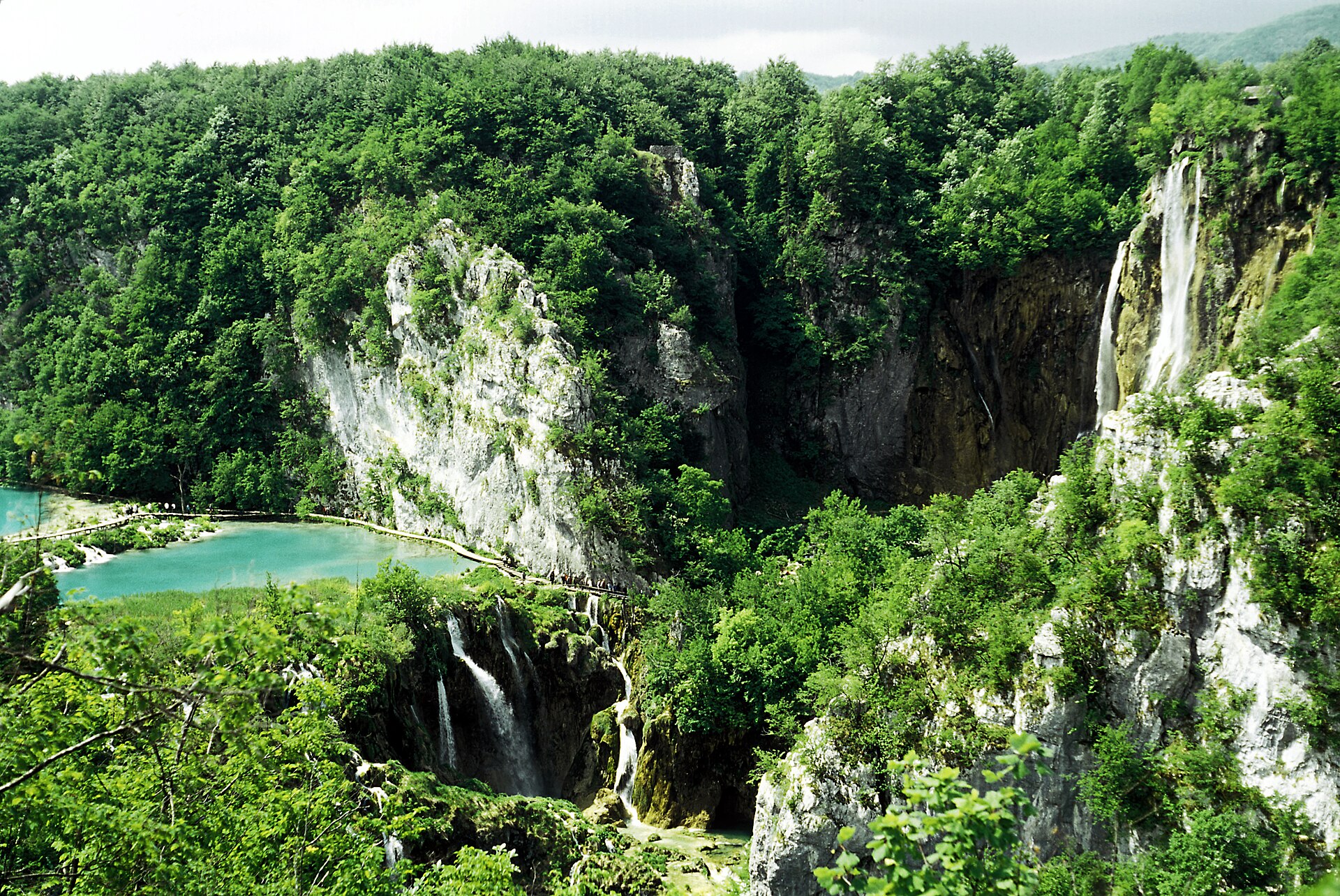
The lakes split into an Upper section, which is broader, greener, and more spread out, and a Lower section, which is narrower and contains the big drama, including Veliki Slap, the tallest waterfall in Croatia at around 78 meters. The whole park became a UNESCO World Heritage Site in 1979, making it one of the earliest natural sites on the list.
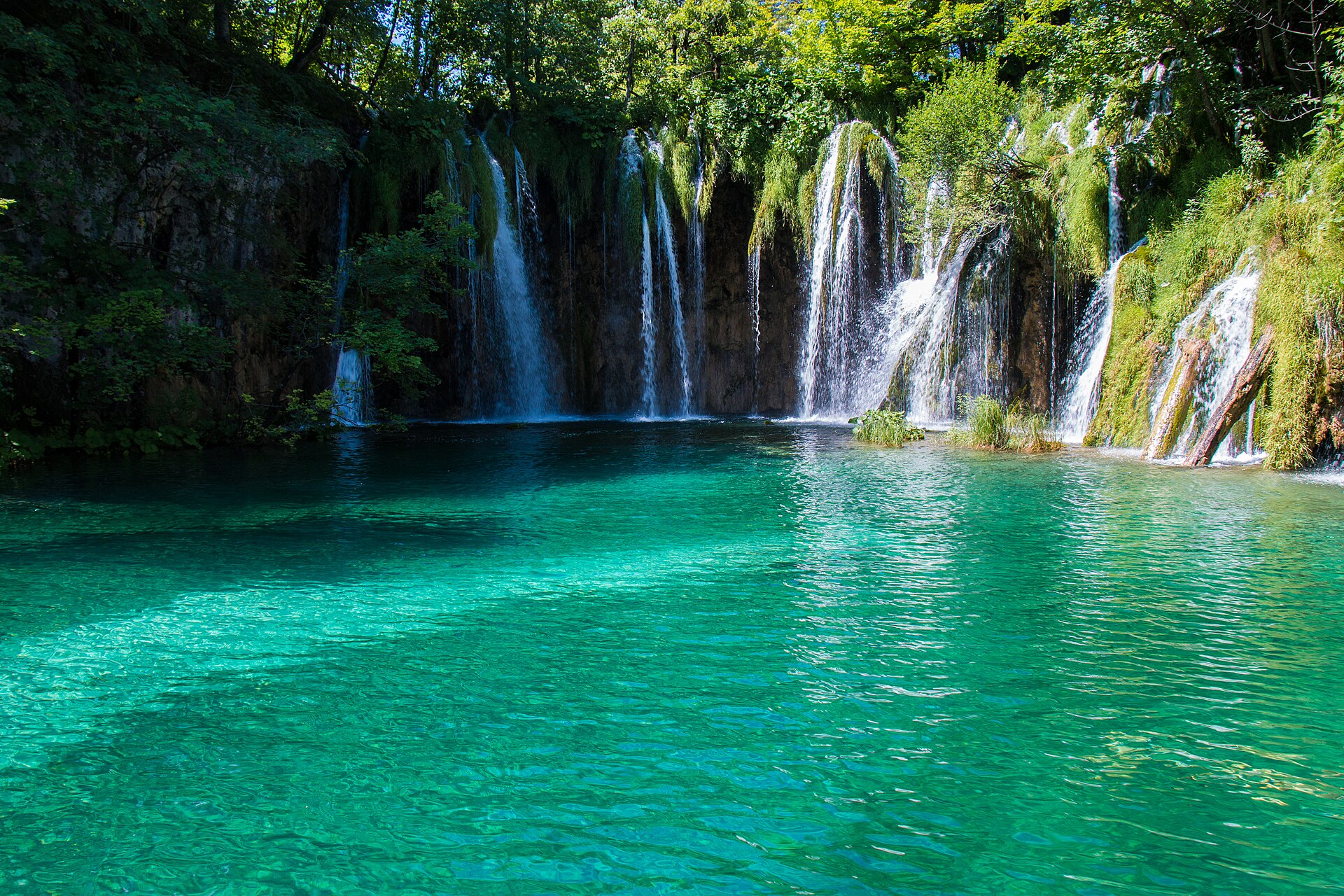
The color is the thing nobody is prepared for. Depending on the mineral content, the angle of the light, and the depth, the water shifts through turquoise, jade, deep blue, and an almost unreal green. It is not a filter.
When to Visit Plitvice Lakes
Spring, roughly late April through early June, is our top pick. Snowmelt has the waterfalls running at full volume, the forest is bright green, and the crowds have not fully arrived. Mid May is close to ideal.
Autumn, mid September through late October, is the other great window. The beech and hornbeam forest turns gold and copper, temperatures are comfortable for walking, and visitor numbers drop off sharply after the first week of September. Water levels are lower than spring, so the falls are less thunderous.
July and August are extremely busy. The park now caps daily entries, which helps, but the boardwalks still bottleneck badly between 10am and 3pm. If summer is your only option, book the earliest entry slot available and be at the gate when it opens.
Winter is quietly spectacular and almost nobody goes. Frozen waterfalls, snow on the boardwalks, and a fraction of the visitors. The tradeoff is that the boat and shuttle services may not run, some trails close for safety, and daylight is short. Check the official park site before committing.
Buying Tickets: Do Not Skip This Part
Plitvice uses a timed entry system with a daily visitor cap, and in high season tickets genuinely sell out. Buy online in advance from the national park’s official website. Your ticket is tied to a specific entrance and a specific one hour arrival window.
A few things worth knowing:
- Prices vary substantially by season. Summer tickets are the most expensive, and there are discounted afternoon entry rates that can be good value if you are willing to visit later in the day.
- Your ticket includes the electric boat across Lake Kozjak and the panoramic shuttle buses. You do not pay extra for those.
- Children and students get reduced rates, and there are family tickets.
- If you are staying at one of the park’s own hotels, you can often get a multi day ticket, which is useful if you want to split the Upper and Lower lakes across two mornings.
Entrance 1 or Entrance 2: The Decision That Matters Most
This is the choice that shapes your whole day, and it confuses almost everyone.
Entrance 1 puts you at the northern end, right above the Lower Lakes. You start with a viewpoint over Veliki Slap, descend to the canyon floor, and walk the most dramatic section first. The downside is that Entrance 1 gets the tour buses, so it is the busier gate.
Entrance 2 puts you further south near Lake Kozjak, closer to the Upper Lakes. It is generally the calmer entrance and it works well if you want to walk the Upper Lakes in relative quiet and reach the Lower Lakes later in the day when the morning coaches have cleared out.
Our default recommendation for a first visit in shoulder season: Entrance 2, early, walking the Upper Lakes first, then boat across Kozjak and finish with the Lower Lakes and Veliki Slap. You end on the highlight rather than starting with it, and you move against the main flow of crowds for most of the day.
Choosing a Route
The park publishes lettered routes from A through K, and the letters mean nothing intuitive, so here is the plain English version.
Route A is the shortest, around two to three hours, covering only the Lower Lakes from Entrance 1. Good if you have a tight schedule or limited mobility, and it includes Veliki Slap.
Route B adds the boat and part of Lake Kozjak, roughly three to four hours from Entrance 1.
Route C is the one most people should take. Around four to six hours from Entrance 1, it covers both the Lower and Upper Lakes with the boat and shuttle. It is the complete picture without being a full expedition.
Route H is the Entrance 2 equivalent of Route C, running four to six hours and covering the same ground in the opposite direction. This is our pick.
Route K is the full traverse, seven to eight hours, and it is a serious day of walking. Beautiful, but only if you actively want the mileage.
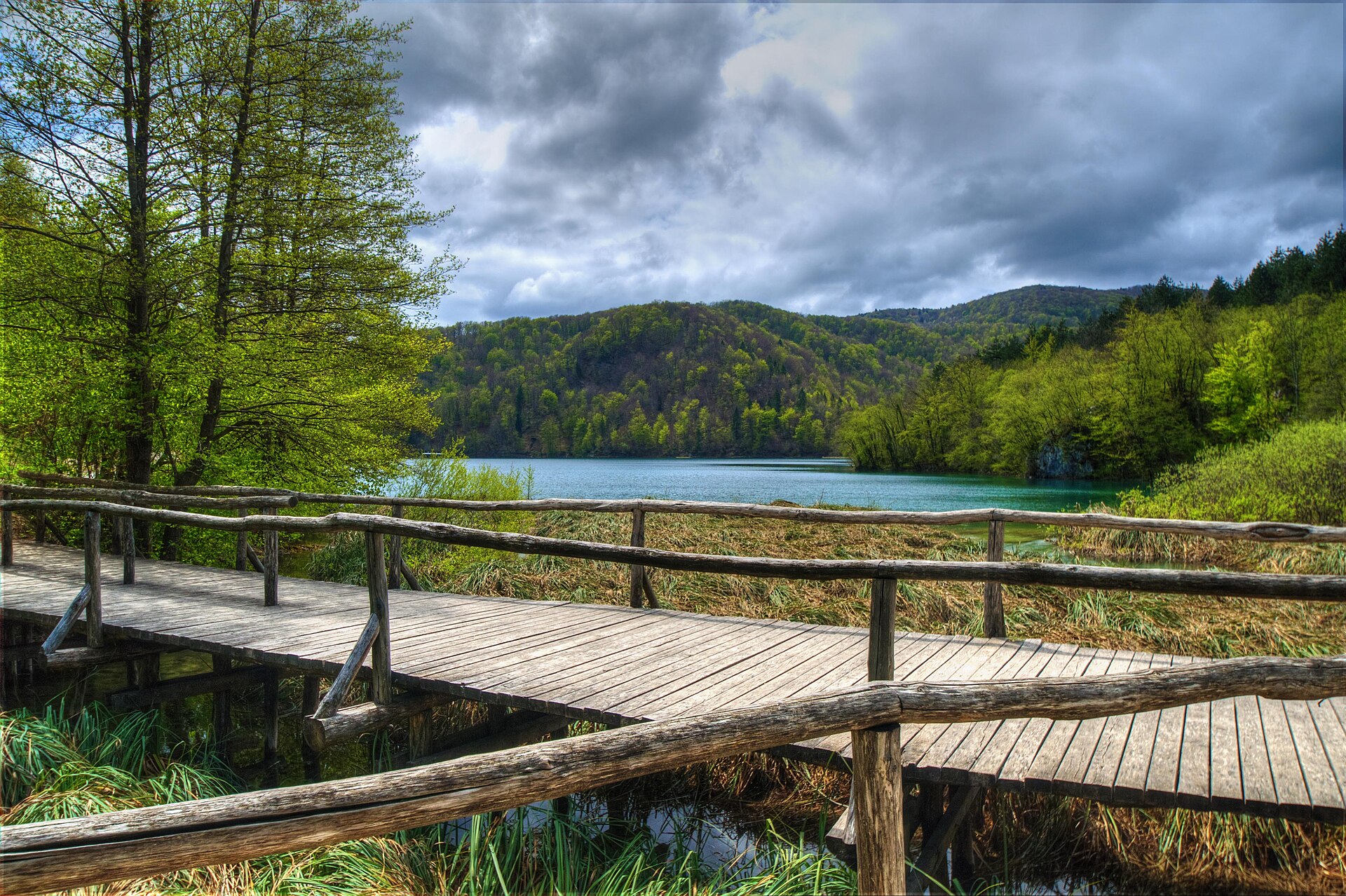
Whatever route you pick, note that most of the boardwalk sections are one way only. You cannot double back. Plan accordingly, because realizing you missed something and cannot return is a genuinely common Plitvice frustration.
Things to Know Before You Go
Swimming is not allowed anywhere in the park. This has been strictly enforced for years. The travertine barriers are fragile and sunscreen damages them.
Drones are prohibited without a permit that is difficult to obtain.
The boardwalks have no railings in many sections and they get slick when wet. This is worth thinking about carefully if you are visiting with small children.
Wear real shoes. Not sandals. The paths are wooden planks, packed dirt, gravel, and stone steps, and there is more elevation change than the photos suggest.
Bring water and snacks. There are a few cafes and a restaurant near the boat dock, but they are limited and pricey, and long stretches of trail have nothing at all.
Strollers and wheelchairs are very limited. Some short sections near Entrance 1 are accessible, but the majority of the boardwalk network is not.
How to Get to Plitvice Lakes
Plitvice sits roughly halfway between Zagreb and Zadar on the old road, which makes it a natural stop when you are moving between the capital and the coast rather than a destination you backtrack to.
From Zagreb: about two hours by car, or two and a half to three hours by bus.
From Zadar: about two hours by car, similar by bus.
From Split: about three and a half to four hours by car. Doable as a very long day trip, but we would not recommend it. Break the drive instead.
By bus: Intercity buses stop at both entrances. Buy tickets in advance in summer, and be aware that buses arriving from the coast are sometimes full and may not stop.
By car is by far the easiest option, and it lets you arrive at opening time, which is the single biggest quality of life upgrade available at this park. Parking is paid and located at both entrances.
If you are working out how Plitvice fits into a longer route, our Croatia trip planning guide covers the driving distances and where the park slots in naturally.
Where to Stay Near Plitvice
Staying overnight nearby is the move that transforms this visit. It gets you to the gate at opening, before the day trip coaches from Zagreb and Zadar arrive around mid morning.
Inside the park, the national park operates a few hotels. They are dated but the location is unbeatable and multi day tickets are easier to arrange.
Mukinje and Jezerce are small villages a few minutes from Entrance 2 with a cluster of guesthouses and apartments, generally the best value.
Rastovaca sits right by Entrance 1 and is the most convenient for Route A or C starts.
Grabovac and Korenica are slightly further out, roughly ten to twenty minutes by car, with more choice and lower prices.
Where to Book
We use Booking.com for the guesthouses and apartments around the park, which is where most of the good value sits. Filter for free parking and check the exact distance to your chosen entrance, because “near Plitvice” in a listing title can mean anything from two minutes to half an hour.
For guided day trips from Zagreb, Zadar, or Split with transport included, Viator is where we compare operators. A guided trip is genuinely worth considering if you do not want to drive, though it does lock you into arriving during the busiest window.
A Sample Day That Works
Here is the plan we would run in shoulder season:
- 7:00am breakfast at your guesthouse near Entrance 2
- 8:00am at the gate for opening, ticket already purchased online
- 8:15am to 11:00am walk the Upper Lakes while the boardwalks are still nearly empty
- 11:00am electric boat across Lake Kozjak
- 11:30am quick lunch from your pack near the dock
- 12:00pm to 2:30pm the Lower Lakes canyon, finishing at Veliki Slap
- 2:30pm panoramic shuttle back, out of the park by three
That leaves you the afternoon to drive on toward the coast, which is exactly how Plitvice fits best into a Croatian itinerary.
Final Thoughts
Plitvice is one of those places that survives its own popularity because the landscape is simply bigger than the crowds. The water really is that color. The falls really do roar in May. And if you arrive at opening with a ticket in hand and a route picked out, you get a couple of hours where the boardwalk ahead of you is empty and the only sound is water moving over travertine.
That is worth setting an alarm for.
Continuing through Croatia? Read our Croatia trip planning guide for the full route logic, our Split travel guide for the Dalmatian coast base most travelers use, and our Dubrovnik travel guide for the southern end of the coast.