Disclosure: This post contains affiliate links. If you book through our links, we may earn a small commission at no extra cost to you. Thanks for supporting Faceted Travel!
Table of Contents
We almost skipped Verona. It was supposed to be a quick stop between Venice and Lake Como, a place to break up the drive and stretch our legs for an afternoon. Two days later we were still there, sipping Amarone in a sun-drenched piazza and wondering why nobody had told us this was one of the most romantic and underrated cities in all of Italy.
Verona has a little of everything we love about this country: a 2,000-year-old Roman amphitheater still hosting opera under the stars, pastel palazzos along a curving river, world-class wine, and the kind of walkable historic center where every corner deserves a photo. And yes, it is the setting of Romeo and Juliet, which gives the whole place a swoony, storybook quality. Here is our complete guide to falling for Verona the way we did.
Why Verona Belongs on Your Italy Itinerary
Most first-time visitors to Italy stick to the big three of Rome, Florence, and Venice, and those cities absolutely earn their fame. But Verona gives you the same beauty and history with a fraction of the crowds and a much more relaxed rhythm. It sits in the Veneto region in northern Italy, perfectly positioned between Venice (about an hour and ten minutes by train) and Milan, and right at the doorstep of Lake Garda.
That location makes it an ideal base or a natural stop on a northern Italy loop. We came for an afternoon and stayed because the city has a way of slowing you down. If you are building a broader itinerary, our guide on the best time to visit Italy will help you time it right.
The Best Things to Do in Verona
Stand Inside the Verona Arena
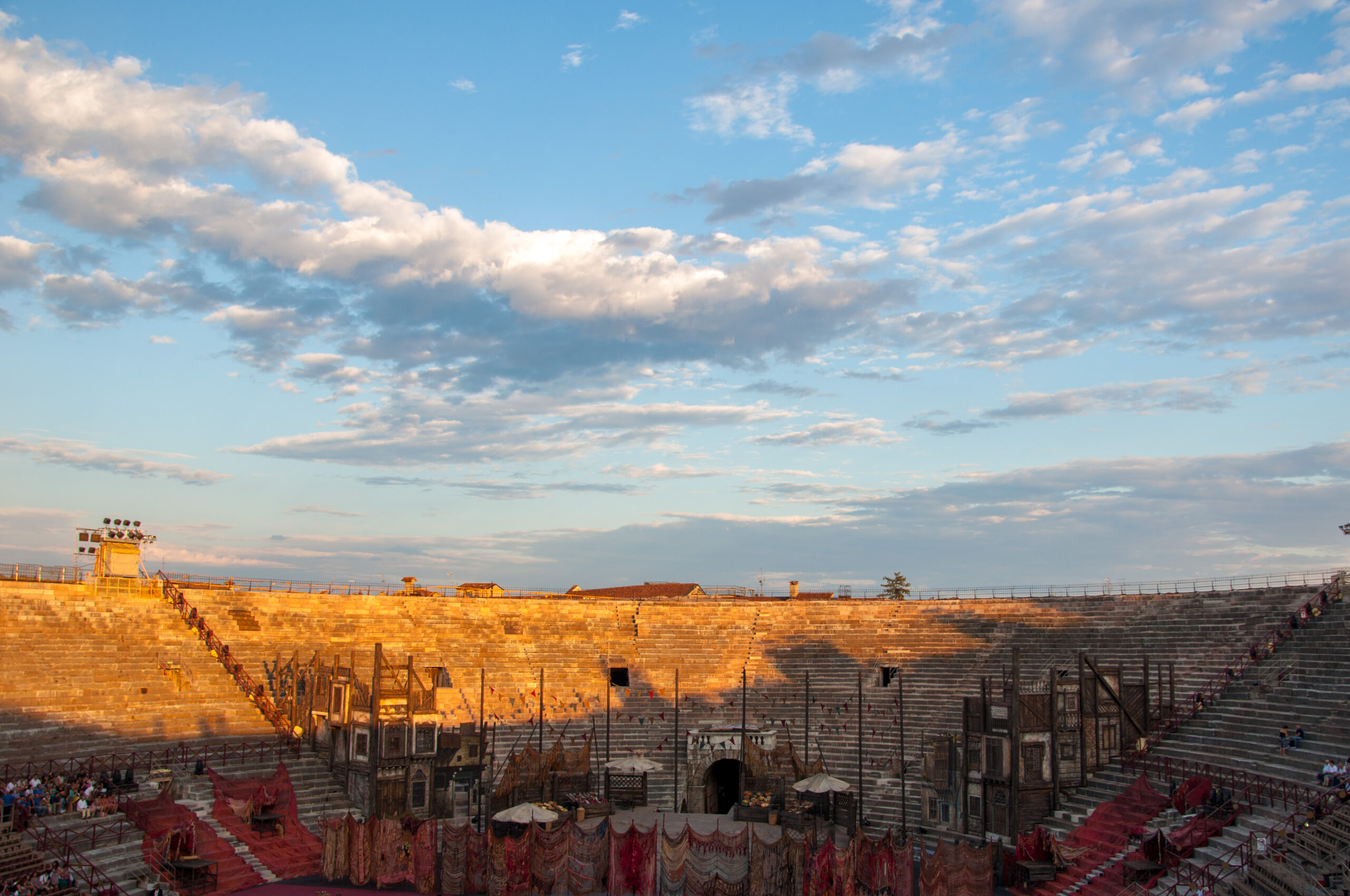
The Verona Arena is the showstopper. Built around 30 AD, this Roman amphitheater is older than the Colosseum and remarkably well preserved, and it still functions as one of the world's great opera venues. During the summer festival, more than 15,000 people fill the ancient stone tiers for performances that run late into the warm night. Even if opera is not your thing, buying a ticket to sit on those 2,000-year-old steps under the stars is one of the most magical things we have done in Italy.
If you visit outside festival season, you can still tour the interior by day. Climb to the top tier for a sweeping view over Piazza Bra and the rooftops beyond.
See Juliet's House (Casa di Giulietta)
Yes, it is touristy. Yes, it is based on a fictional character. And yes, we still loved it. The courtyard of Casa di Giulietta, complete with its famous balcony and a bronze statue of Juliet, is pure romantic theater. Tradition says rubbing the statue brings luck in love, and the walls are covered in notes and messages from visitors around the world. Go early to beat the crush, then climb up to stand on the balcony yourself.
Wander Piazza delle Erbe
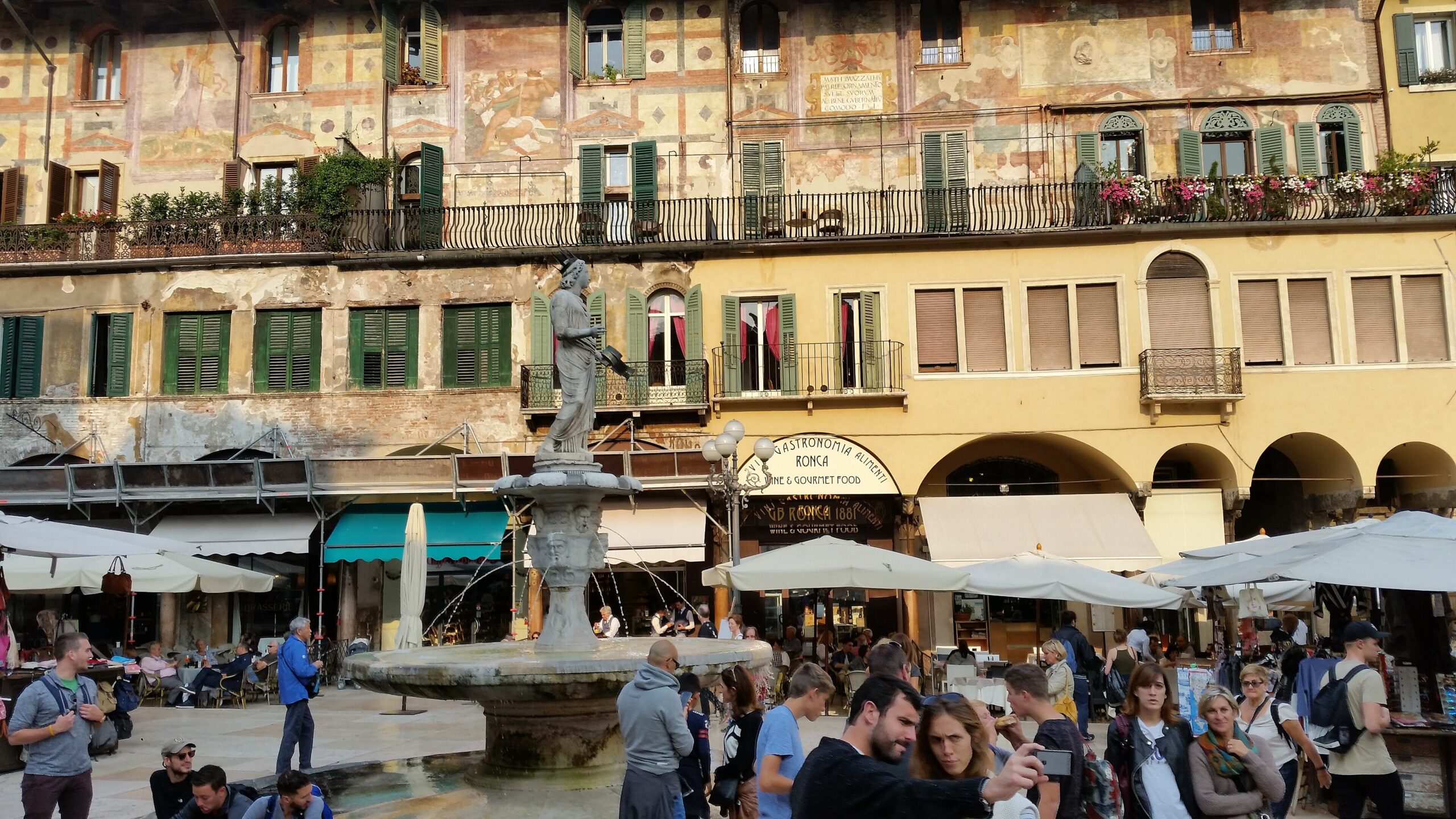
This is the soul of the city, a long market square built on the site of the ancient Roman forum and ringed by frescoed buildings, cafes, and a fountain topped by the Madonna Verona statue. We spent an entire morning here just people-watching over espresso. Stalls sell everything from produce to souvenirs, and the surrounding lanes hide some of the best gelato and wine bars in town.
Climb the Torre dei Lamberti
For the best view in Verona, head up the Torre dei Lamberti, an 84-meter medieval tower rising above Piazza delle Erbe. There is an elevator for most of the way, and the panorama at the top of terracotta roofs, church spires, and the green hills beyond is worth every step. Time your visit for late afternoon when the light turns everything gold.
Cross the Ponte Pietra
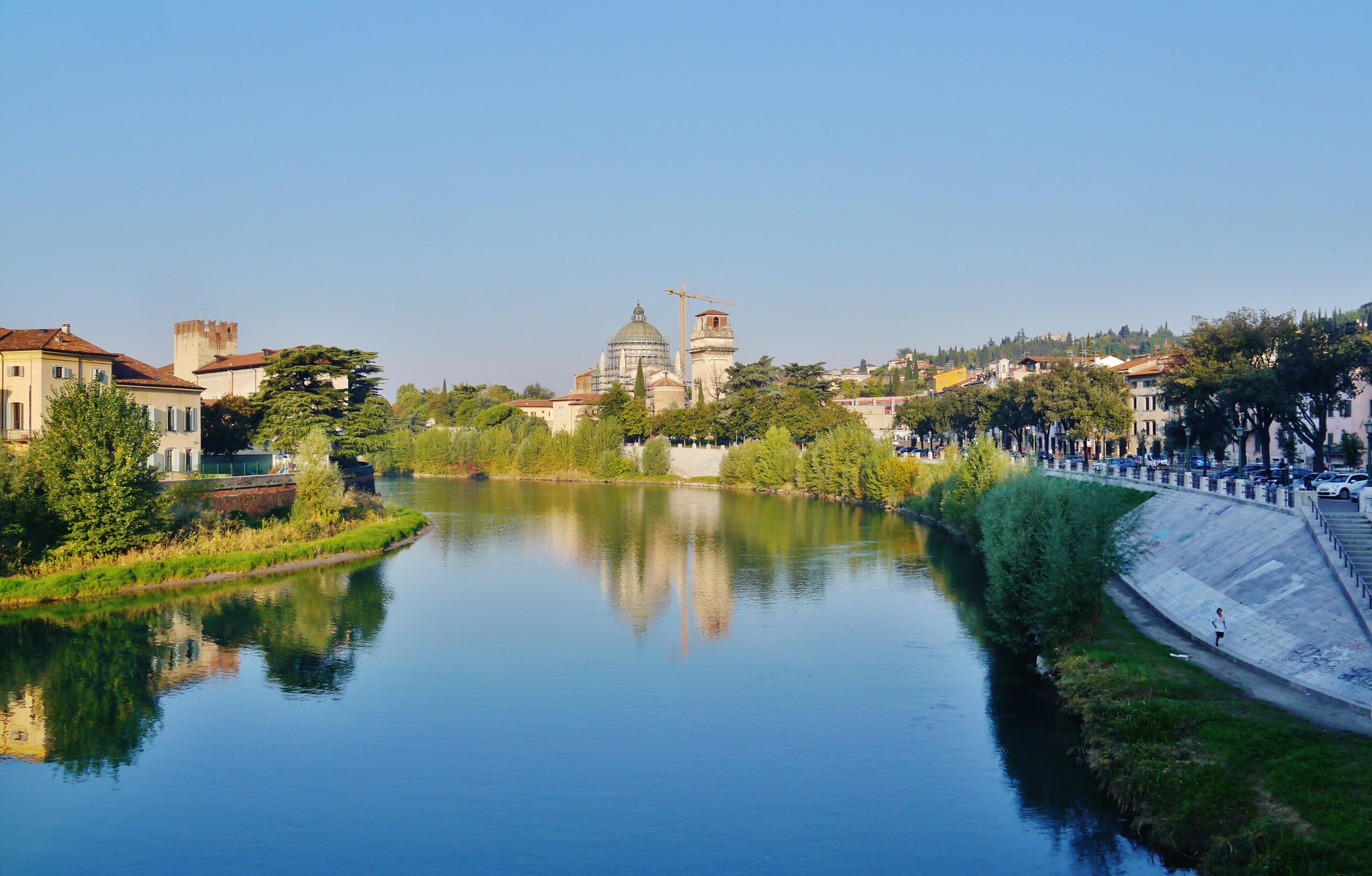
The Ponte Pietra is a Roman stone bridge arching over the Adige River, and it is one of the prettiest spots in the city, especially at sunset. Rebuilt after the war using the original stones pulled from the river, it connects the historic center to the Roman theater and the Castel San Pietro hill on the far bank. Walk across, then climb up to the castle viewpoint for a postcard panorama.
Explore Castelvecchio
This red-brick medieval castle and its fortified bridge over the river are a striking contrast to the city's Roman and Renaissance layers. Inside is an excellent art museum, but even if you skip it, walking the ramparts and the crenellated bridge is free and gorgeous.
Day Trips from Verona
Verona's position makes it a springboard for some of northern Italy's greatest hits.
Lake Garda is the obvious choice, and it is only a short train or bus ride away. The lakeside town of Sirmione, with its thermal springs and a fairy-tale castle jutting into the water, is a perfect day out. The lake district up here is stunning, and if you love it, our Lake Como, Italy travel guide covers its more famous neighbor.
Venice is just over an hour by direct train, making it entirely doable as a day trip if you cannot fit an overnight. Our Venice travel guide has everything you need to make the most of a day in the floating city.
Vicenza and Padua are both quick train rides and give you a taste of the Veneto beyond the tourist trail, with Palladian architecture and grand piazzas of their own.
What to Eat and Drink in Verona
Verona sits in the heart of one of Italy's greatest wine regions, and the food here is rich, hearty, and made for lingering.
The star is Amarone della Valpolicella, a bold, velvety red wine made from partially dried grapes in the hills just north of the city. Do a tasting at a local enoteca or, if you have a car or a tour, visit a Valpolicella winery. Soave, a crisp white, comes from the other direction and pairs beautifully with a warm afternoon.
On the plate, look for risotto all'Amarone (risotto cooked in that famous red wine), bigoli (a thick local pasta), pastissada de caval, and gnocchi, which Verona claims as its own and even celebrates with a festival. For a sweet finish, this region is the birthplace of pandoro, the golden Christmas cake. We ate very, very well here.
Where to Stay in Verona
We recommend staying inside or right beside the Città Antica, the historic center, so you can walk to everything and soak up the atmosphere in the early morning and evening after the day-trippers leave. The streets around Piazza Bra and Piazza delle Erbe put you steps from the Arena and the best restaurants.
Verona has lovely boutique hotels in restored historic buildings, plus plenty of apartments if you want more space. Rooms book up fast during the summer opera festival, so reserve well ahead if you are visiting between June and September.
Getting to and Around Verona
Verona is wonderfully easy to reach, which is part of what makes it such a smart addition to a northern Italy itinerary. The city sits on the main rail line between Milan and Venice, so fast trains connect it to Venice in about an hour and ten minutes, to Milan in around an hour and a half, and to Bologna in under an hour. Verona has its own airport, Verona Villafranca, with connections to several European cities, and Milan's larger airports are within easy reach by train.
Once you arrive, the historic center is entirely walkable, and honestly walking is the best way to experience it. From the train station, Porta Nuova, it is about a twenty-minute stroll or a short bus ride to Piazza Bra and the Arena. We never used anything but our feet inside the old town. The streets are largely pedestrianized, the distances are short, and half the fun is stumbling onto a quiet piazza or a frescoed facade you were not looking for.
If you plan to venture out to Lake Garda or the Valpolicella wine hills, local buses and regional trains cover the lake towns, while the wineries are easiest to reach on a guided tour or with a car for the day. Driving in the center itself is restricted by a ZTL (limited traffic zone), so if you do rent a car, park it outside the old town and walk in to avoid fines.
A Few Practical Tips
A Verona Card can be worth it if you plan to hit several paid sights, since it bundles entry to the Arena, Juliet's House, Castelvecchio, and the towers along with local bus travel. Italy runs on the euro, and while cards are widely accepted, carrying some cash is handy for small cafes and market stalls. Restaurants often add a small coperto (cover charge) per person, which is normal and not a scam. Finally, if you are visiting during the summer opera festival, bring a cushion or rent one for the stone seats, and check whether your evening performance affects Arena visiting hours during the day.
Where to Book
Here is how we plan and book a trip to Verona.
- Hotels and apartments: We book through Booking.com for the biggest selection in the historic center and easy free cancellation. Filter for Città Antica and sort by guest rating.
- Tours, opera tickets, and wine tastings: For Arena opera experiences, Valpolicella wine tours, and guided walking tours, we use Viator. A half-day wine tour into the hills was a highlight of our whole northern Italy trip.
- Budget planning: Curious what a trip like this actually costs? See our real-numbers breakdown of how much a trip to Italy costs.
Best Time to Visit Verona
Late spring (May and early June) and early fall (September and October) are ideal, with warm days, comfortable evenings, and the vineyards either blooming or heavy with fruit. Summer brings the famous opera festival and long, lively nights, but also heat and bigger crowds, so book everything in advance. Winter is quiet and atmospheric, and Verona's Christmas markets are genuinely charming, though some lake day trips slow down in the cold months.
How Many Days Do You Need?
You can hit the highlights of Verona in a single full day, but we think it deserves two nights. That gives you an unhurried day in the city itself, an evening at the Arena or a leisurely dinner in the piazza, and a full day for a trip out to Lake Garda or Venice. It is the kind of place where slowing down pays off.
Final Thoughts
Verona won us over completely, and it is the city we now recommend to friends who want the beauty of Italy without the wall-to-wall crowds of the headline destinations. Roman history, Shakespearean romance, exceptional wine, and a walkable center that glows at golden hour, it delivers all of it with an easy, unpretentious charm. Do not make our mistake of nearly skipping it. Give Verona a couple of days and let it work its magic.
Continuing your Italian journey? Pair Verona with our Venice travel guide for the floating city an hour away, our Florence, Italy travel guide for Renaissance splendor, and our Rome travel guide to round out the classic Italy trio. Buon viaggio!