Disclosure: This post contains affiliate links. If you book through our links, we may earn a small commission at no extra cost to you. Thanks for supporting Faceted Travel!
Table of Contents
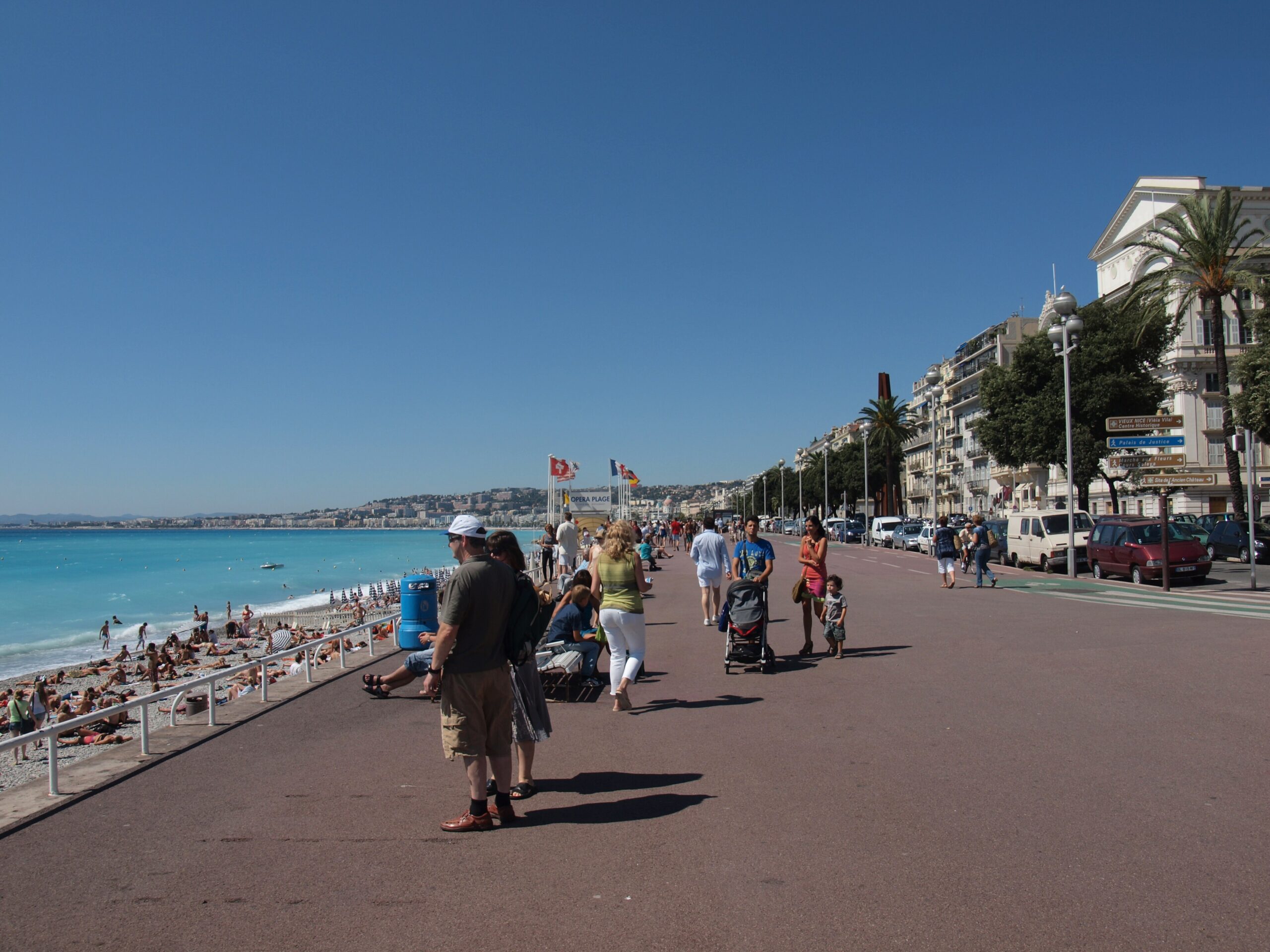
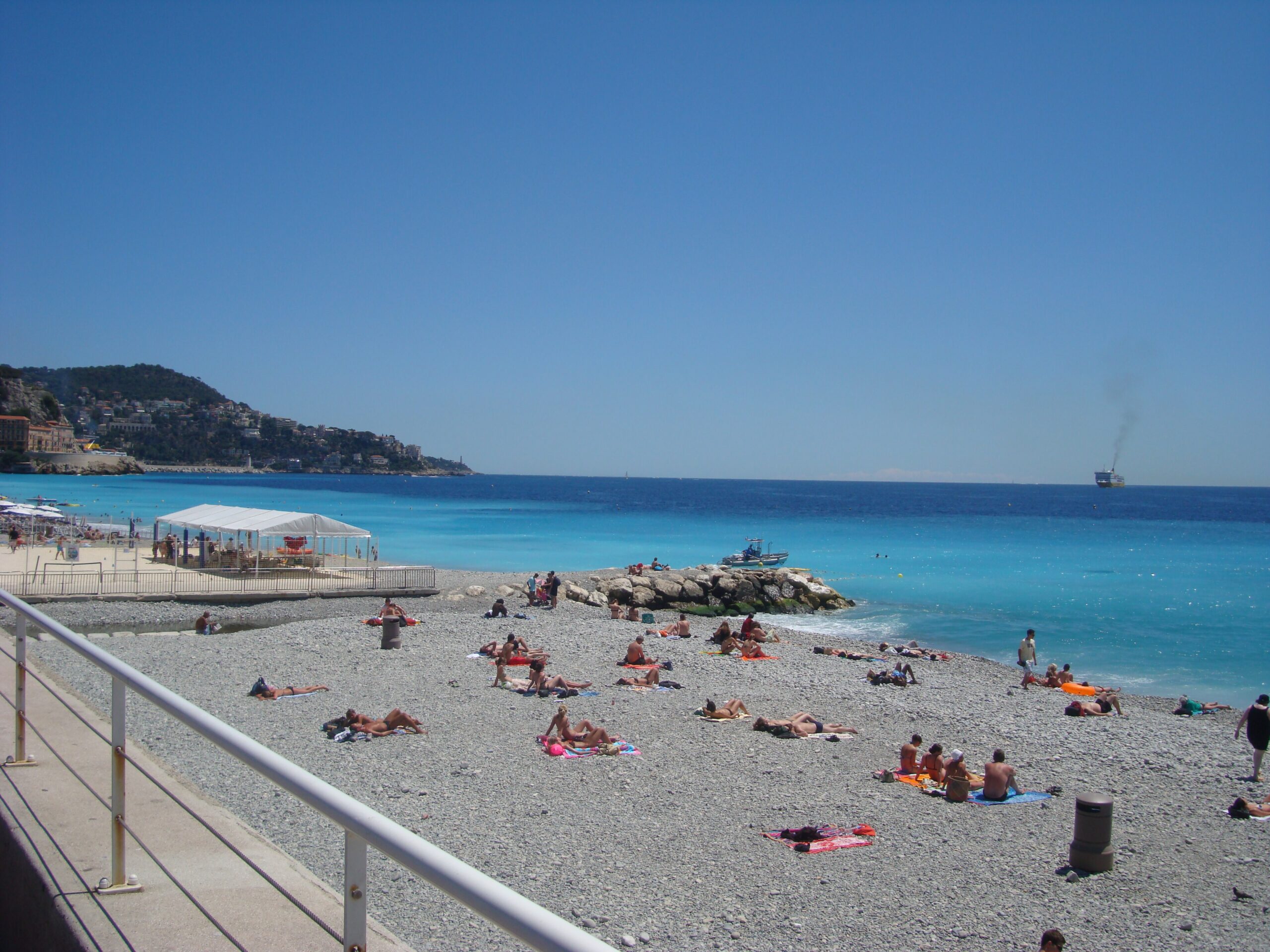
The first time we turned the corner onto the Promenade des Anglais and saw that impossible shade of blue, we both stopped walking and just stared. Nice had been on our list for years, and somehow the real thing was better than every photo we had saved, sun-warmed pebble beaches, pastel buildings glowing gold in the late light, and the whole sweep of the Baie des Anges curving off toward Italy.
Nice is the unofficial capital of the French Riviera, and after spending the better part of a week here we understand why people fall for it so hard. It is walkable, sunny nearly year round, packed with history, and it makes an unbeatable base for exploring the rest of the Côte d'Azur. Here is everything we learned, and everything we would tell a friend planning their first trip.
Why Nice Is the Perfect Riviera Base
We looked at basing ourselves in Cannes, Monaco, and Antibes, and we kept coming back to Nice for one simple reason: it has the best of everything without the eye-watering prices of its glitzier neighbors. The airport is a ten minute drive from the center, the train station connects you to the entire coast, and the city itself is big enough to have real neighborhoods and small enough to cross on foot.
It also has genuine character. Nice belonged to the Kingdom of Sardinia until 1860, and that Italian heritage still shows up everywhere, in the ochre and terracotta facades of the old town, in the local dialect, and absolutely in the food. You feel like you are somewhere with a story, not just a beach resort that sprang up for tourists.
If you are still deciding where to go in Europe this year, our guide on the best time to visit Europe breaks down the shoulder seasons that make a trip like this so much more pleasant.
Best Things to Do in Nice
Stroll the Promenade des Anglais
You cannot come to Nice and skip this. The Promenade des Anglais runs for about four miles along the waterfront, and it is the beating heart of the city. Locals jog it at dawn, families roll along it on bikes, and in the evening everyone comes out to watch the sun drop into the Mediterranean. Rent a bike or a pair of the blue rental cycles and ride the whole length at least once. We did it twice.
Get Lost in Vieux Nice (Old Town)
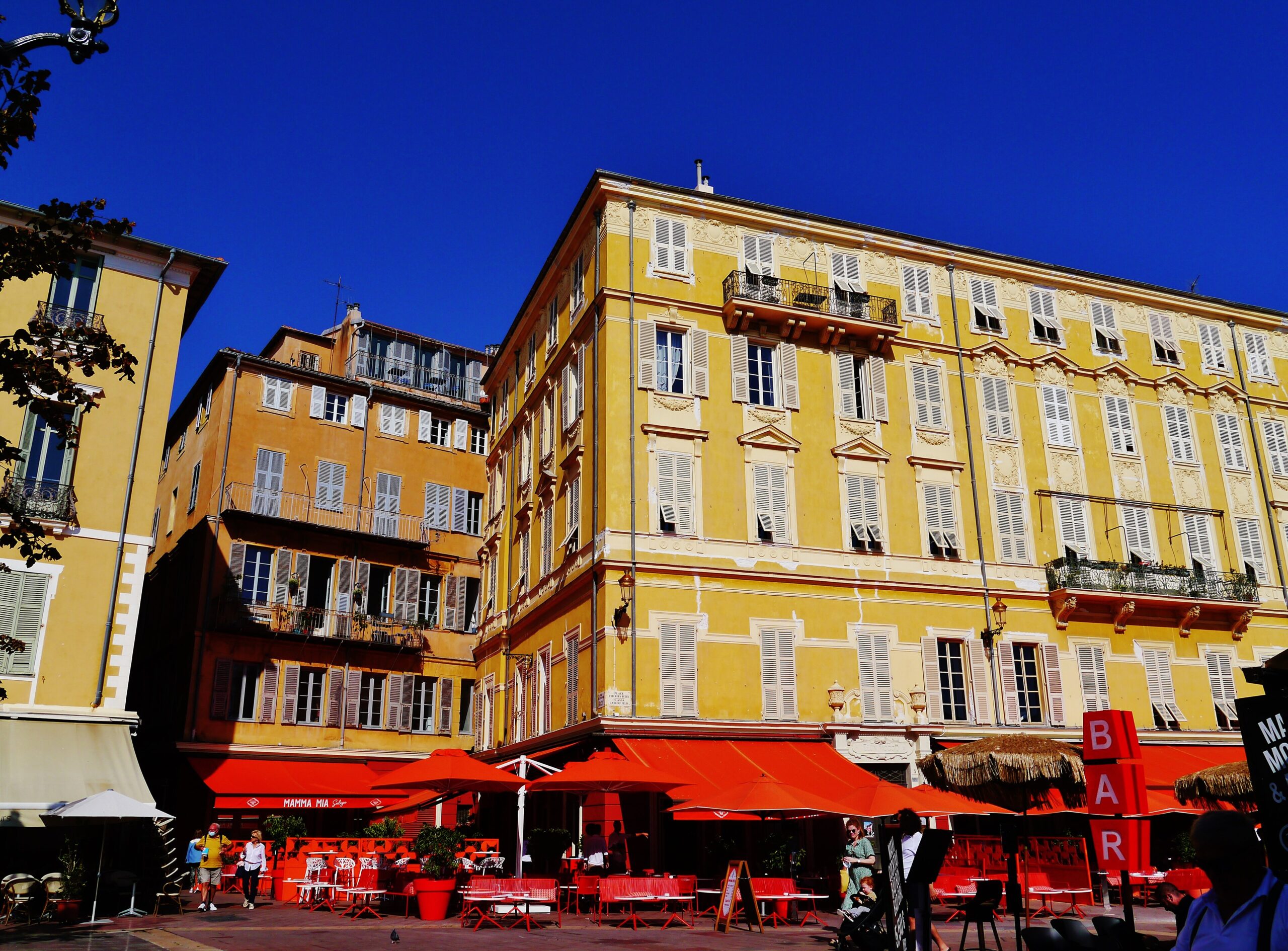
The old town is a maze of narrow lanes, baroque churches, and shuttered windows strung with laundry, and it is our favorite part of the city. Wander with no plan. Duck into Cathédrale Sainte-Réparate, grab a scoop of gelato, and browse the little shops selling olive oil, lavender, and socca flour. Early morning and just after the dinner rush are the magic hours, when the crowds thin and the light gets soft.
Climb Castle Hill (Colline du Château)
For the postcard view, you climb. Castle Hill sits at the eastern end of the bay, and from the top you get that classic panorama of the orange rooftops of the old town against the blue arc of the sea. There is no actual castle left, but there is a waterfall, shady gardens, and plenty of benches. If the climb sounds like a lot in the heat, there is a free elevator near the Hotel Suisse.
Wander the Cours Saleya Market
Every morning except Monday, the Cours Saleya fills with flower stalls, produce, and local specialties. It is a feast for the senses, buckets of roses and mimosa, fat tomatoes and stone fruit, and vendors handing out samples of tapenade and candied fruit. On Mondays the flowers give way to an antiques and brocante market, which is worth a browse if you love a good treasure hunt.
Spend an Afternoon on the Beach
Fair warning: Nice beaches are pebble, not sand. Bring or rent a pair of water shoes and a padded mat and you will be perfectly happy. The public beaches are free, and the private beach clubs rent loungers with service if you want to splurge for a day. The water is unbelievably clear, and floating out there looking back at the city is a core memory for us now.
Visit the Museums
Nice punches above its weight for art. The Musée Matisse and the Musée National Marc Chagall are both wonderful, set in leafy neighborhoods away from the coast. Matisse spent his final decades in Nice, and seeing his work in the city that inspired it hits differently. Entry is reasonable, and both make a perfect break on a hotter afternoon.
The Best Day Trips from Nice
This is where Nice really earns its keep. The regional train line hugs the coast and connects you to a string of gorgeous towns in under an hour.
Monaco is a twenty minute train ride and feels like stepping into another world of superyachts, the famous casino, and the changing of the guard at the Prince's Palace. Go even if you have no interest in gambling, just for the views over the harbor.
Èze is a stone village perched on a cliff nearly 1,400 feet above the sea, with an exotic garden at the top that delivers one of the most jaw-dropping views on the entire Riviera. It is tiny and touristy, but that view is unforgettable.
Antibes has an atmospheric old town, a Picasso museum, and one of the prettiest ports in the region. Cannes is worth a wander for the Croisette and the palm-lined waterfront. And if you have a car, the hilltop villages of the arrière-pays, places like Saint-Paul-de-Vence, are pure magic.
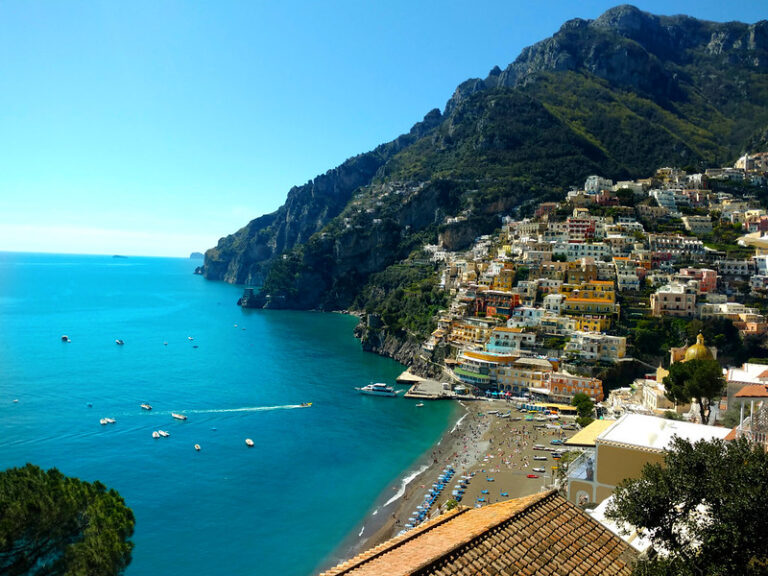
The pace and beauty here reminded us a lot of the Italian coast. If you love this style of trip, our Amalfi Coast travel guide and our Cinque Terre, Italy guide scratch the same itch.
What to Eat in Nice
Niçoise food is its own beautiful thing, a blend of Provençal and Italian traditions built around olive oil, vegetables, and the sea. Do not leave without trying these.
Socca is the local obsession, a thin pancake made from chickpea flour, cooked in a wood oven, and served hot with a crack of black pepper. It is crispy, nutty, and completely addictive. Get it from a street vendor in the old town.
Salade niçoise here bears little resemblance to the versions you have had at home. The traditional recipe uses raw vegetables, anchovies or tuna, olives, and hard-boiled eggs, and no cooked potatoes or green beans, which apparently is a point of local pride.
Also seek out pan bagnat (a stuffed sandwich that is basically a salade niçoise in a bun), pissaladière (an onion and anchovy tart), and ratatouille, which was practically invented in this corner of France. For dessert, tarte au citron and any gelato you can find.
Where to Stay in Nice
We always recommend basing yourself either in or near Vieux Nice or the Carré d'Or shopping district, so you can walk to the beach, the old town, and the restaurants without needing transport. The area near the Jean Médecin tram stop is also convenient and slightly more affordable.
Nice has accommodation for every budget, from boutique hotels in restored old town buildings to modern places along the promenade. Prices climb steeply in July and August, so if you are traveling in peak summer, book early. For a rough sense of what a European trip like this runs, our guide on how much a trip to Europe costs has real numbers from our own travels.
Getting Around Nice
One of the joys of Nice is how little you need to worry about transport. The historic center, the beach, and the old town are all walkable, and we covered most of the city on foot. When we did want to ride, the tram was fast, clean, and cheap, running from the airport straight through the center. A single ticket costs around 1.70 euros, and a ten-ride pass or a day pass saves money if you plan to hop around.
For day trips, the regional TER trains along the coast are your best friend. They are inexpensive, run frequently, and deliver you right into the centers of Monaco, Èze, Antibes, and Cannes without any parking headaches. We never once wished we had rented a car for the coastal towns. The only time a car makes sense is if you want to explore the hilltop villages of the interior, which are harder to reach by public transport.
One practical note: taxis in Nice can be pricey and are not always easy to hail on the street, so use the tram, the train, or a rideshare app instead. From the airport, the tram is by far the best value into town.
A Few Practical Tips
France uses the euro, and cards are accepted almost everywhere, though it is smart to carry a little cash for markets and small cafes. Tipping is not expected the way it is in the US, since service is included, but rounding up or leaving a euro or two for great service is a kind gesture. Most shops close for a long lunch and many stay shut on Sunday, so plan your errands accordingly. And do learn a few words of French; a simple "bonjour" when you walk into a shop goes a long way on the Riviera.
Where to Book
Ready to start planning? Here is where we book everything for a trip like this.
- Hotels and apartments: We book our Riviera stays through Booking.com, which has the widest selection in Nice and free cancellation on most rooms. Filter for the old town or the promenade and sort by review score.
- Tours and day trips: For guided day trips to Monaco, Èze, and the hilltop villages, plus food tours of Vieux Nice, we use Viator. The small-group Riviera tours are a great way to see several towns in one day without renting a car.
- Travel insurance: We never travel internationally without coverage. See our breakdown of the best travel insurance for Europe before you go.
Best Time to Visit Nice
Nice enjoys around 300 days of sunshine a year, so there is really no bad time, but each season has a personality. May, June, and September are our sweet spots: warm, sunny, and swimmable, but without the July and August crush and prices. July and August are hot, lively, and busy, ideal if you want maximum beach and nightlife energy. Winter is mild and quiet, and while the water is too cold for swimming, the city is lovely and cheap, and the February Carnival is a genuine spectacle.
How Many Days Do You Need?
We would say three to four full days is the sweet spot for Nice itself, with time built in for two or three day trips. That gives you a relaxed pace to enjoy the beach, the old town, and the museums without rushing, plus the flexibility to hop on the train to Monaco or Èze. If Nice is the anchor of a longer Riviera or European trip, you could easily stay a week and use it as your home base. Our step-by-step system for planning a trip to Europe is exactly how we mapped ours.
Final Thoughts
Nice surprised us. We expected a pretty beach city and got something with real soul, layered history, incredible food, and a coastline that stops you mid-sentence. It is easy to reach, easy to love, and it opens the door to one of the most beautiful stretches of Europe. Whether you have a long weekend or a full week, we think Nice deserves a spot near the top of your list.
Planning more of the Mediterranean? Do not miss our Amalfi Coast travel guide for the Italian side of this dreamy coastline, our Barcelona travel guide for another sun-soaked city break, and our guide to Paris in 4 days if you want to pair the Riviera with the capital. Bon voyage!