Disclosure: This post contains affiliate links. If you book through our links, we may earn a small commission at no extra cost to you. Thanks for supporting Faceted Travel!
Table of Contents
Most people plan a trip to Croatia and never make it north of Zadar, which means most people miss Istria entirely. That is a mistake we would like to help you avoid, because Istria is the part of Croatia where the food gets serious, the crowds thin out, and the whole place starts to feel more like Tuscany with a coastline attached.
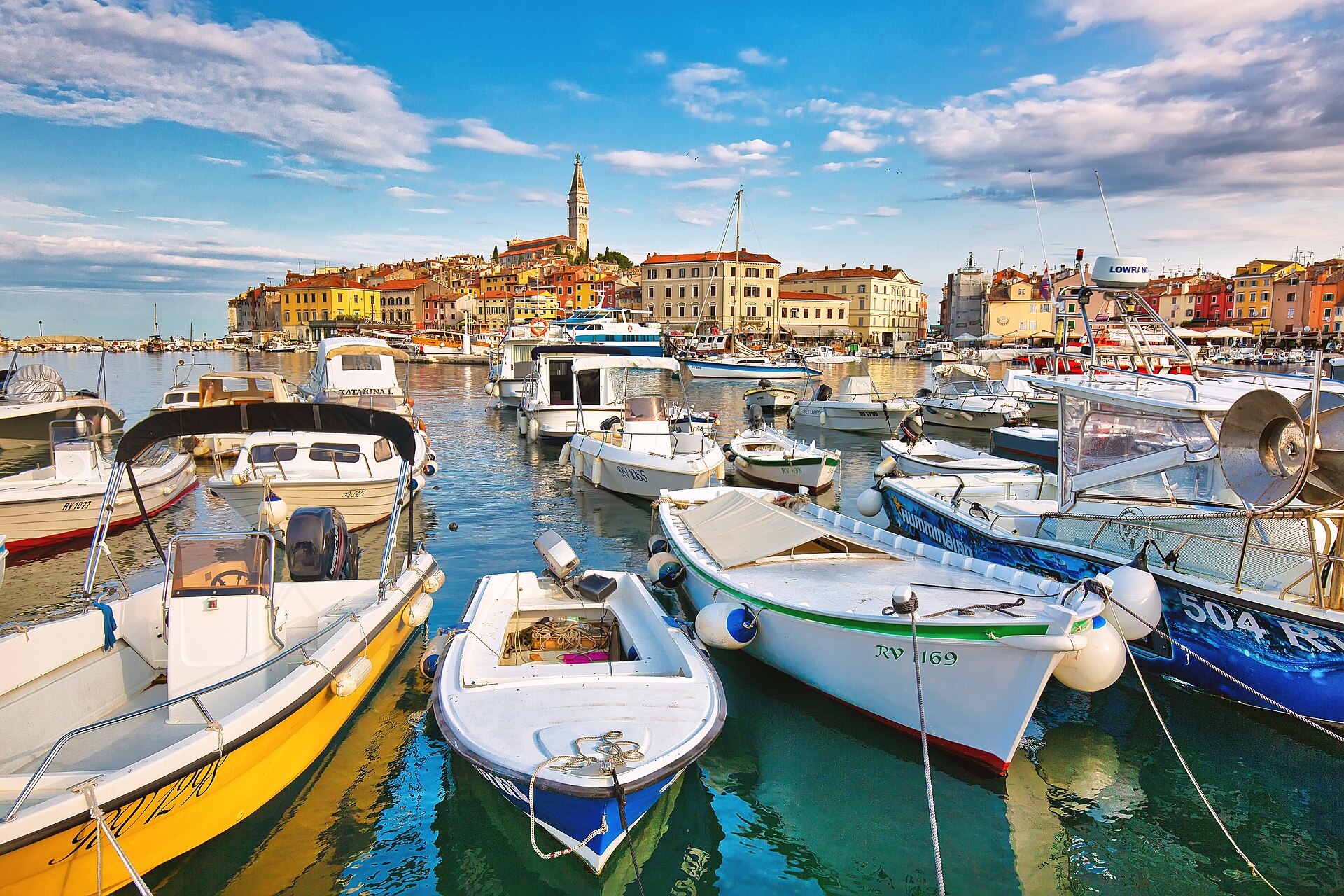
Rovinj is the anchor. A pastel colored old town packed onto a former island, a bell tower you can see from twenty kilometers away, and a working fishing harbor that has somehow not been fully swallowed by tourism. Around it sits a peninsula of hill towns, truffle forests, olive groves, and Roman ruins that almost nobody puts on a first Croatia itinerary.
Here is how we would build that trip.
Why Istria Is Different from the Rest of Croatia
Istria spent centuries under Venetian rule and then a long stretch under Austria and Italy, and the layers are still visible in everything. Signage is bilingual Croatian and Italian. The dialect borrows heavily from Venetian. Menus lean toward pasta, truffles, and olive oil rather than the grilled fish and peka you find down in Dalmatia.
Geographically it is a heart shaped peninsula at the very top of the Adriatic, closer to Venice and Ljubljana than it is to Split. The coast is rocky and pine covered rather than dramatic and mountainous, and the interior rises into rolling hills topped with fortified stone villages.
The practical upshot: Istria is a driving destination, not a ferry destination. That is the opposite of how the Dalmatian coast works, and it is why so many itineraries skip it.
When to Visit Istria
May, June, and September are the best months. Warm enough to swim by June, comfortable enough to walk hill towns without wilting, and free of the August crush.
Late September and October are our sentimental favorite. This is when the white truffle season kicks off in the Motovun forest, the grape harvest is happening, and the interior fills with festivals. The sea is still swimmable into early October most years.
July and August bring heavy Italian, Austrian, and German holiday traffic. Rovinj’s old town gets genuinely packed and coastal accommodation prices peak. The hill towns stay more manageable.
Winter is very quiet on the coast but the interior stays alive, especially around the truffle and olive oil producers. It is a legitimately good off season food trip if you do not need beach weather.
Getting to Istria
Pula Airport is the closest, with seasonal European connections. It is about forty minutes from Rovinj.
Trieste and Venice airports in Italy are often cheaper and better connected, at roughly two to three hours by car.
Ljubljana is about two and a half hours by car and a solid option if you are combining Slovenia with Croatia.
From Zagreb it is roughly three hours by car through the Ucka tunnel.
From Split it is a long day, around five and a half to six hours. This is the reason Istria and Dalmatia rarely appear on the same one week itinerary, and honestly they probably should not.
Rent a car. We say this about very few destinations, but Istria without a car means seeing Rovinj and nothing else. The hill towns have almost no useful bus service, and the whole appeal is the driving between them. Our Croatia trip planning guide has more on when a car makes sense in Croatia and when it is a liability.
Things to Do in Rovinj
Climb the bell tower of St. Euphemia
The baroque church crowns the old town and the tower is the tallest in Istria at 60 meters. The climb is up a wooden staircase that is steeper and creakier than most people expect, and the view over the terracotta roofs to the Adriatic and the offshore islands is the shot you came for. Modest fee, cash helpful.
Get lost in the old town
Rovinj’s historic core sits on what was an island until the channel was filled in the 1700s, and the streets spiral upward from the harbor in a way that makes a map briefly useless. Grisia street runs up toward the church and is lined with galleries. The laundry strung between shuttered windows is not staged, people actually live here.
Watch sunset from the western rocks
The rocky shoreline on the western edge of the old town, below the church, is where locals go in the evening. Bring something to sit on. This is the best free thing to do in Rovinj and nobody sells tickets to it.
Walk or bike Golden Cape Forest Park
Zlatni Rt, just south of town, is a peninsula of Aleppo pine, cypress, and cedar with swimming coves along the edge and a network of flat walking and cycling paths. Rent a bike in town and spend a morning. The swimming here is off rocks and concrete platforms rather than sand, which is true of essentially the entire Istrian coast.
Take a boat to Sveta Katarina or the Red Island
Small boats leave from the Rovinj harbor to the nearby islets. Sveta Katarina is a five minute hop and good for a quiet swim. Crveni Otok, the Red Island, is a bit further out and has more space to spread out.
The Istrian Hill Towns
This is the part that surprises people, and it is the reason to have a car.
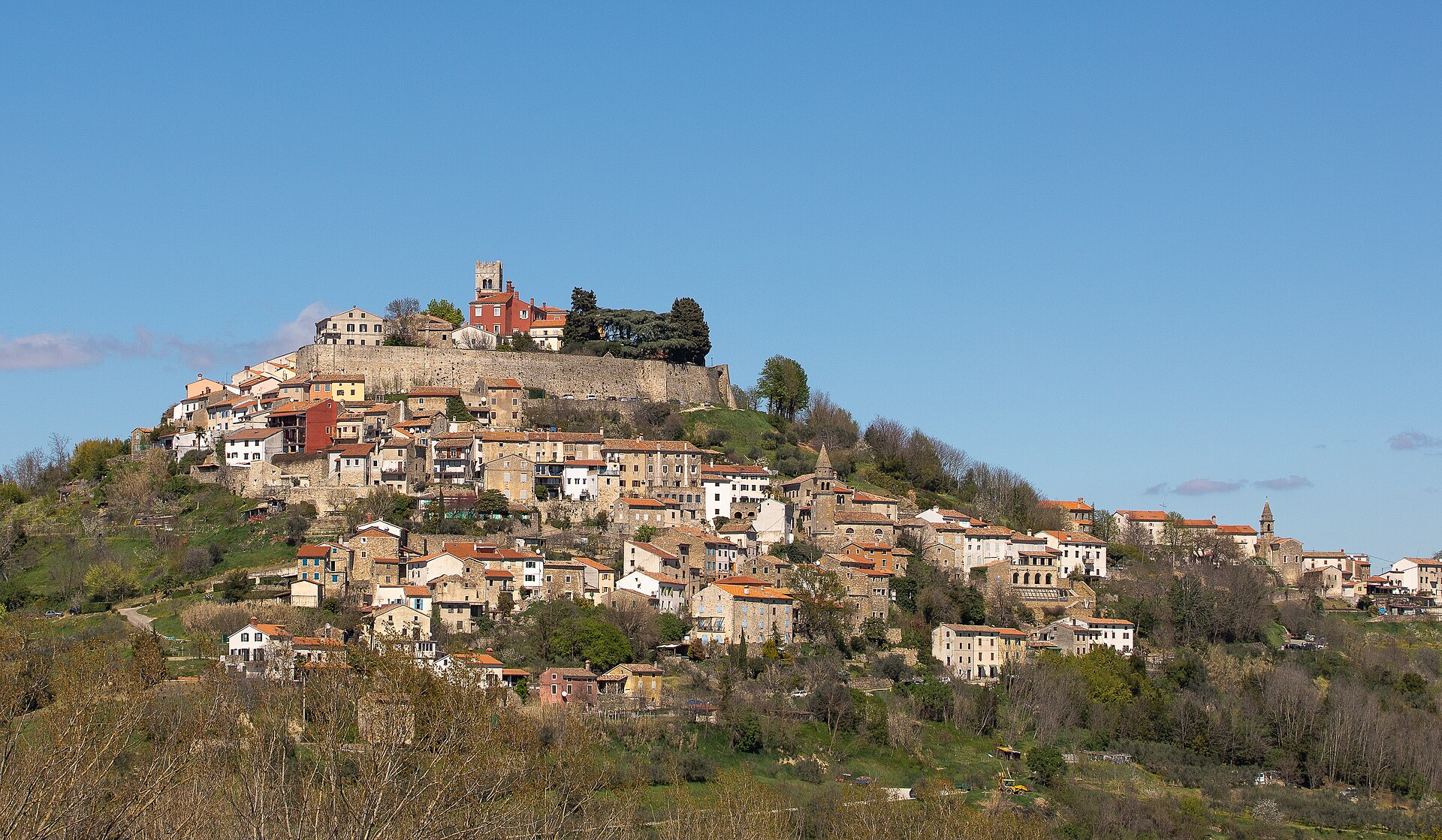
Motovun sits on a hill above the Mirna valley with intact medieval walls and a walkway around the ramparts. The forest below is one of the great truffle grounds of Europe. It is the most visited of the hill towns and still feels small.
Groznjan is an artists’ colony with galleries in nearly every building and a summer jazz program. Tiny, atmospheric, and easy to combine with Motovun.
Hum claims the title of the smallest town in the world, with a population in the low dozens. It takes about fifteen minutes to see and the drive there through the Glagolitic Alley, lined with monuments to the old Croatian script, is half the point.
Buzet is the truffle capital and the place to be in autumn when the season opens.
Vodnjan is worth a stop for the mummified saints in the parish church, which is exactly as strange as it sounds, and for the surrounding olive oil producers.
A good full day loop from Rovinj: Motovun for the morning and the walls, lunch at a truffle konoba in the valley, Groznjan in the afternoon, back by early evening. That is about 130 kilometers of very pleasant driving.
Eating in Istria
Istria is, in our view, the best eating region in Croatia, and it is not particularly close.
Truffles are the headline. Black truffles run most of the year, white truffles from roughly late September into December. Fuzi pasta with truffle is the regional dish to order.
Olive oil here regularly ranks among the best in the world. Several producers around Vodnjan and Bale offer tastings, and they are far less formal than wine tastings.
Wine means Malvazija for whites and Teran for reds, both indigenous. The wine roads around Momjan and Buje are well marked.
Boskarin is the local long horned cattle breed, once nearly extinct, now served as a delicacy in better restaurants.
Seafood on the coast leans toward scampi from the Bay of Kvarner, sea bass, and shellfish, often prepared in a more Italian style than in Dalmatia.
Beaches and Swimming in Istria
Set your expectations correctly and you will love the swimming here. Set them wrong and you will spend the week wondering where the sand is.
Istrian beaches are rock, pebble, and concrete platform. There is essentially no sand anywhere on the peninsula, and the few sandy stretches that exist are small and imported. What you get instead is exceptionally clear, clean water with easy deep entries and shade from pine trees right down to the shoreline.
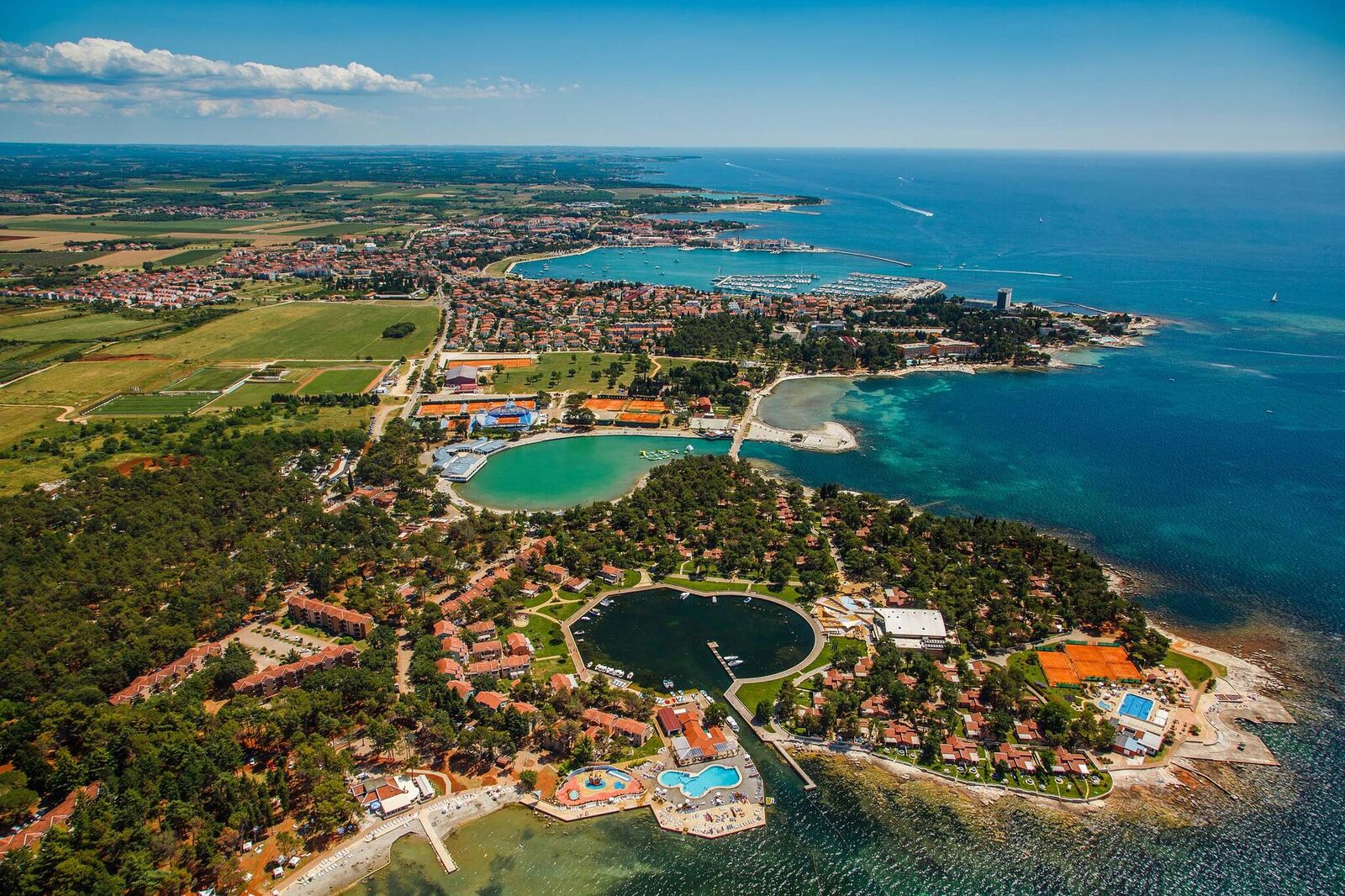
Zlatni Rt near Rovinj is the classic: pine forest, flat rock ledges, and calm coves. Lone Bay just south of the old town has facilities and is the easiest option with kids. Mulini Beach is the most developed, with loungers, a bar, and a swimming platform, and it charges accordingly.
Further afield, Kamenjak at the southern tip of the peninsula near Premantura is the wild option, a protected cape with a network of gravel tracks, hidden coves, and cliff jumping spots. It is the best swimming in Istria and it requires a car, a bit of walking, and water shoes.
Two practical notes: bring water shoes for every beach here, and if you are visiting in early summer, be aware that the northern Adriatic warms up later than Dalmatia. June water in Rovinj is noticeably cooler than June water in Hvar.
Where to Stay
Rovinj old town is romantic and walkable, mostly small apartments and boutique hotels in historic buildings. Expect stairs, no parking, and some noise in summer.
Just outside Rovinj, the resort strip south toward Zlatni Rt has larger hotels with pools and sea access, and it is a better fit for families.
A hill town or agrotourism property inland is the option we would push people toward for at least a night or two. These are converted stone farmhouses with pools, olive groves, and often a kitchen turning out food better than most restaurants. Prices are typically well below coastal rates.
Pula works if you are flying in or out and want to see the Roman amphitheater, which is one of the six best preserved in the world and hosts concerts in summer.
Where to Book
For Istria specifically, Booking.com is the strongest option because so much of the region’s best lodging is private apartments and family run agrotourism properties rather than chain hotels. Filter for free parking outside the old town and check whether a hill town property has vehicle access to the door, since many do not.
For truffle hunting experiences, olive oil tastings, and guided hill town tours, we use Viator. Truffle hunts with the dogs are the standout experience here and the good operators book out in autumn, so reserve ahead if you are visiting in season.
A Four Day Istria Itinerary
Day 1: Arrive, settle into Rovinj, walk the old town, sunset on the western rocks, dinner in town.
Day 2: Morning at Zlatni Rt on bikes with a swim, afternoon boat to Sveta Katarina, climb the bell tower before it closes.
Day 3: Hill town day. Motovun, a long truffle lunch in the Mirna valley, Groznjan in the afternoon.
Day 4: Pula for the amphitheater and the Roman forum, then an olive oil tasting near Vodnjan on the way back.
Add a fifth day and we would spend it on the wine roads around Momjan, or driving to Hum and the Glagolitic Alley.
Is Istria Worth Adding to Your Croatia Trip?
If you have ten days or more in Croatia, yes, without hesitation. If you have seven days and Dubrovnik is non negotiable, probably not, because the driving distance eats too much of your trip.
The better framing is this: Istria pairs beautifully with Slovenia and northern Italy, and awkwardly with Dalmatia. Plan it as its own trip, or as the Croatian half of a Venice and Ljubljana loop, and it goes from a logistical headache to one of the easiest and most rewarding weeks in Europe.
Rovinj at sunset, a plate of fuzi with truffle, and a farmhouse in the hills with nobody around. That is the version of Croatia most visitors never see.
Planning more of Croatia? Our Croatia trip planning guide covers routes and timing for the whole country, our Split travel guide handles the Dalmatian coast, and our Dubrovnik travel guide covers the far south.