Disclosure: This post contains affiliate links. If you book through our links, we may earn a small commission at no extra cost to you. Thanks for supporting Faceted Travel!
Table of Contents
- How Croatian Island Hopping Actually Works
- The 10 Day Route at a Glance
- Days 1 to 2: Split
- Days 3 to 4: Brac
- Days 5 to 6: Hvar
- Days 7 to 8: Korcula
- Days 9 to 10: Dubrovnik
- Cutting It Down to 7 Days
- Four Mistakes We Made So You Do Not Have To
- What This Costs, Roughly
- Where to Book
- When to Do This Trip
- What We Would Do Differently
The mistake almost everyone makes on their first Croatian island trip is treating the ferries like buses. They are not buses. They run on a seasonal schedule, half of them do not take cars, and the route map is shaped like a wheel with Split at the hub, which means the island you assumed was a short hop from the island you are standing on may actually require going back to the mainland first.
We learned that the hard way, and the itinerary below is what we wish someone had handed us. Ten days, four islands, one mainland base, no backtracking, and no day where you spend more time on a boat than you do in the water. It works in either direction and it scales down to seven days cleanly if that is what you have.
How Croatian Island Hopping Actually Works
There are two kinds of boats and the difference matters more than anything else in this post.
Car ferries are the big slow Jadrolinija vessels. They take vehicles, they run year round on the main routes, and they are cheap. They are also slow and they mostly connect islands to the mainland rather than to each other.
Catamarans are fast passenger only boats. Krilo and Jadrolinija both run them. They are roughly twice the speed of a car ferry, they cost more, they sell out in July and August, and critically, they are the boats that actually connect islands to each other in a useful chain. Krilo’s Split to Dubrovnik line calls at Brac, Hvar, Korcula and Mljet on the way, which is essentially a ready made island hopping route if you plan around it.
The practical takeaway: do this trip without a car. A rental car on this route becomes an expensive object you have to find parking for and pay to put on boats. Rent one for a mainland day if you want, but do not drag it around the islands.
We cover the wider logistics of getting into the country in how to plan a trip to Croatia, and the money side in how much does a trip to Croatia cost.
The 10 Day Route at a Glance
- Days 1 to 2: Split
- Days 3 to 4: Brac
- Days 5 to 6: Hvar
- Days 7 to 8: Korcula
- Days 9 to 10: Dubrovnik
Every leg moves south. You never repeat a boat. You fly into Split and out of Dubrovnik, which costs a little more than a round trip but saves you an entire day of backtracking, and that trade is worth making every single time.
Days 1 to 2: Split
Start on the mainland to get over the flight and to get your bearings before you commit to island schedules.
Split surprises people. They expect a ferry port and they get a Roman emperor’s retirement palace with a city grown inside it. Diocletian’s Palace is not a ruin you visit, it is a neighborhood you walk through, with apartments and bars and laundry lines built into fourth century walls.
Day one, walk the palace and the Riva, climb the bell tower of St. Domnius for the harbor view, and eat somewhere in the Varos quarter west of the center. Day two, take the morning to hike or ride the funicular up Marjan Hill for the view back over the terracotta roofs, then swim at Kasjuni beach on the far side of the peninsula, which is where locals go when Bacvice gets busy.
Book two nights near the palace but not inside it. Inside the walls is atmospheric and loud, and you have an early boat to catch.
Days 3 to 4: Brac
The ferry to Supetar takes fifty minutes and runs constantly. Brac is the closest of the big islands to Split and it is the one people skip, which is exactly why we put it here.
Brac has Zlatni Rat, the horn shaped white pebble spit at Bol that has appeared on every Croatia poster ever printed. It genuinely does shift shape with the current. It is also, and this is the part the posters leave out, on the opposite side of the island from where the ferry lands, so plan a bus or a taxi transfer of about forty five minutes.
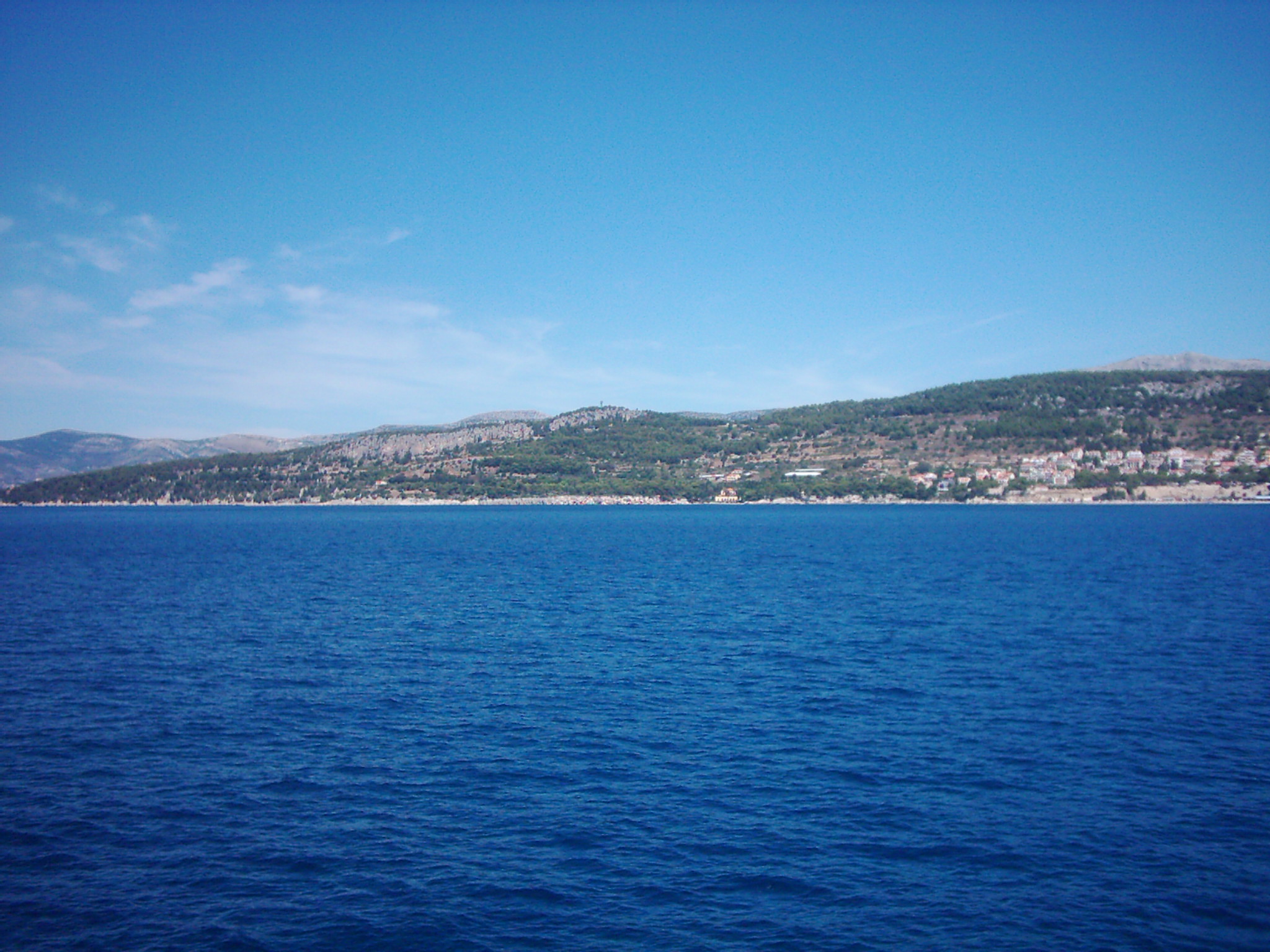
Base yourself in Bol, not Supetar. Bol is a small stone harbor town with a good waterfront and the beach a fifteen minute walk away. Spend one day at Zlatni Rat and the surrounding coves, and one day inland: the interior of Brac is a strange, beautiful limestone plateau full of dry stone walls and abandoned shepherd villages, and the road up to Vidova Gora, the highest point in the Adriatic islands, gives you the best single view of the entire trip. From up there you can see Hvar, which is where you are going next.
Days 5 to 6: Hvar
There is a direct catamaran from Bol to Jelsa and Hvar Town in season, which is the whole reason Brac comes before Hvar in this order.
Hvar is the famous one, and it has a reputation for being a party island that is only half deserved. Hvar Town has a genuine superyacht and cocktail scene, yes. It also has a thirteenth century fortress above the harbor, one of the oldest public theaters in Europe, and lavender fields inland that smell exactly as good as you are hoping.
Day one, do Hvar Town: the Spanish Fortress at sunset is worth the climb, and the Pakleni Islands are a twenty minute taxi boat away with much better swimming than the town beaches. Day two, get out of Hvar Town. Rent a scooter or take the bus over the ridge to Stari Grad, which is older, quieter and sits at the head of a long protected bay, and drive through the Stari Grad Plain, a UNESCO site that has been farmed in the same Greek field pattern for twenty four centuries.
Hvar is where accommodation prices spike hardest in July and August. If your dates are fixed in high season, book this leg first and build the rest around it.
Days 7 to 8: Korcula
The Krilo catamaran continues from Hvar to Korcula Town in about ninety minutes.
Korcula is the pace change your trip needs at this point. It is a small walled town on a peninsula, laid out in a herringbone street pattern designed to catch summer breeze and block winter wind, and you can walk the whole thing in twenty minutes. The town claims Marco Polo as a native son, which is contested by historians and enthusiastically endorsed by the gift shops.
Day one is the town: the cathedral, the walls, a drink at the bar built into the southeast tower with the sea directly below you. Day two, get on the water or go to the wine. Korcula’s white Grk grape grows nowhere else on earth in any quantity, and the Peljesac peninsula is a short boat ride away with the red Dingac and Postup vineyards climbing slopes so steep they are still worked by hand.
This is the island where we consistently tell people to add a night if they have one spare.
Days 9 to 10: Dubrovnik
The same Krilo line runs Korcula to Dubrovnik, roughly two hours, arriving at Gruz harbor.
Dubrovnik is the finale and it is worth every bit of the hype, with one enormous caveat: the timing. The old town gets four to six thousand cruise passengers on peak days, concentrated between roughly ten in the morning and four in the afternoon. Walk the city walls at eight in the morning when they open, or after five, and you will have a completely different and much better city.
Day one, walls in the early morning, then the Rector’s Palace and the Franciscan monastery pharmacy, then get out to Banje beach or take the cable car up Mount Srd for sunset. Day two, either Lokrum island, which is a fifteen minute boat ride and full of peacocks, or a day trip. Fly out from Dubrovnik airport, which is a thirty minute drive south.
Cutting It Down to 7 Days
Drop Brac and shorten Split to one night. That gives you Split 1, Hvar 2, Korcula 2, Dubrovnik 2. It is a tighter trip with the same shape and none of the backtracking, and it still hits the three islands most people come for.
If you would rather keep Brac and lose Korcula, that also works, but you lose the best wine and the quietest town, so we would not.
Four Mistakes We Made So You Do Not Have To
We booked a car for the whole trip. It cost us parking fees on four islands, a ferry surcharge on two legs, and a genuinely stressful hour trying to reverse out of a medieval street in Korcula. Rent one for a mainland day if you want the interior. Do not bring it aboard.
We assumed the catamarans ran year round. Many of the inter island connections in this itinerary are seasonal, typically from late April or May to sometime in October, and the exact dates shift annually. Check the current Krilo and Jadrolinija timetables before you lock in your route, not after.
We packed the wrong shoes. Almost every beach on this coast is pebbles, not sand, and several of the best swimming spots are flat rock ledges. Water shoes are not optional here, and the old towns are all polished limestone that gets slick, so leave the smooth soled sandals at home.
We front loaded the trip. We put the big sightseeing days at the start and arrived in Dubrovnik exhausted, which is a shame given it is the most demanding city on the route. Build the trip so the last two days have room in them.
What This Costs, Roughly
Per person, per day, in shoulder season, staying in apartments and eating one restaurant meal a day, we land around 110 to 140 euros. That breaks down to roughly 60 to 80 for accommodation split between two people, 30 to 40 for food, and 15 to 25 for boats, entry fees and buses averaged across the trip.
August pushes that to 180 or more, mostly on accommodation. Off season, if the boats were running, it would sit near 75. Full detail is in how much does a trip to Croatia cost.
Where to Book
- Hotels and apartments: Booking.com for Croatia covers all five stops, and island apartments genuinely do sell out months ahead for July and August.
- Boat trips, wine tours and day excursions: Viator’s Croatia listings are the easiest way to book the Pakleni Islands taxi boats, Peljesac wine tours and Blue Cave trips without arranging them in person.
- Ferry tickets: book catamarans directly with Jadrolinija or Krilo. In July and August book the Split to Hvar and Hvar to Korcula legs at least a week out.
- Travel insurance: ferries do get cancelled for wind, and a cancelled leg can cascade through an itinerary like this one. We explain why we always carry a policy in best travel insurance for Europe.
When to Do This Trip
June and September are the answer and it is not close. Full catamaran schedule, warm sea, everything open, and roughly half the crowds and prices of August.
July and August work but you are booking everything in advance and paying for it. May and early October are beautiful for walking and cheap for sleeping, but the sea is cold and the catamaran schedule thins out enough that this specific chain of islands starts to break. From November to March the island hopping route effectively does not exist.
Our full month by month breakdown is in best time to visit Croatia.
What We Would Do Differently
Two things.
First, we would build in one completely unscheduled day. Every version of this trip we have done, there has been one island where we wanted another twenty four hours, and it is never the island we predicted.
Second, we would stop trying to see the interior of every island from a rented scooter in a single afternoon. The islands reward slowness. The best day we have had on this route was on Korcula, and the entire plan for it was a swim, a long lunch, and a nap.
More Croatia planning: get the trip framework in how to plan a trip to Croatia, work out your budget with how much does a trip to Croatia cost, and add the mainland parks with our Plitvice Lakes guide.