Disclosure: This post contains affiliate links. If you book through our links, we may earn a small commission at no extra cost to you. Thanks for supporting Faceted Travel!
Table of Contents
Almost everyone we know who has been to Croatia flew into Zagreb, walked straight through the terminal to a rental car counter or a bus platform, and left for the coast within an hour. We did the same thing on our first trip, and we regret it. Zagreb is the one Croatian city where you are surrounded by people who actually live there, and after two weeks of cruise-ship crowds on the Dalmatian coast, that turns out to be worth an enormous amount.
Zagreb is not a postcard city. It does not have a walled old town dropping into turquoise water, and it will never out-photograph Dubrovnik. What it has instead is an Austro-Hungarian upper town full of red roofs and gas lamps, a coffee culture that borders on a competitive sport, some genuinely strange and wonderful museums, and prices that will make you double check the bill after a week in Hvar. Give it two nights on either end of your coastal trip and you will understand Croatia far better than you would have otherwise.
Why Zagreb Deserves More Than an Airport Layover
The short version: Zagreb is where Croatia is normal. On the coast in July, the ratio of visitors to locals in the old towns can feel close to one to one. In Zagreb it is not close. You are drinking coffee next to people going to work, browsing a produce market that exists to feed the neighborhood rather than to charm you, and eating in restaurants where the menu is in Croatian first.
It is also compact in a way that flatters a short visit. The area you actually want to see, the Upper Town and the Lower Town around the green horseshoe of parks, is roughly a mile end to end. We walked everywhere for three days and never took a taxi except to the airport.
One more practical argument: flights into Zagreb are frequently cheaper than flights into Split or Dubrovnik, especially in shoulder season, and the drive or train down to the coast passes right by Plitvice. If you are already comparing airfares, look at our notes on the best time to book flights before you lock anything in.
Getting to Zagreb and Getting Around
Franjo Tudman Airport sits about ten miles southeast of the center. The airport shuttle bus runs to the main bus station for a few euros and takes around thirty minutes, and a taxi or rideshare into town runs roughly twenty to twenty five euros. We have done both and honestly the bus is fine, but if you land late with luggage, take the car.
Zagreb’s tram network is one of the great small pleasures of the city. Trams are frequent, cheap, and they run on a grid that makes intuitive sense within about ten minutes of using it. Buy tickets at a kiosk or from the driver, validate them when you board, and do not skip that step because inspectors do check.
If you are continuing to the coast, you have three options. Buses are the workhorse of Croatian transport and go everywhere, with frequent departures to Split, Zadar and Rijeka. The train to Split is scenic but slow. Renting a car makes the most sense if you plan to stop at Plitvice Lakes National Park on the way down, which you absolutely should.
The Upper Town: Gornji Grad
This is the part of Zagreb that will end up on your camera roll. The Upper Town sits on a low hill above the modern center, and the classic approach is the funicular on Tomiceva Street, which claims to be one of the shortest public funiculars in the world. The ride lasts under a minute. It is a bit of a gimmick and we loved it anyway.
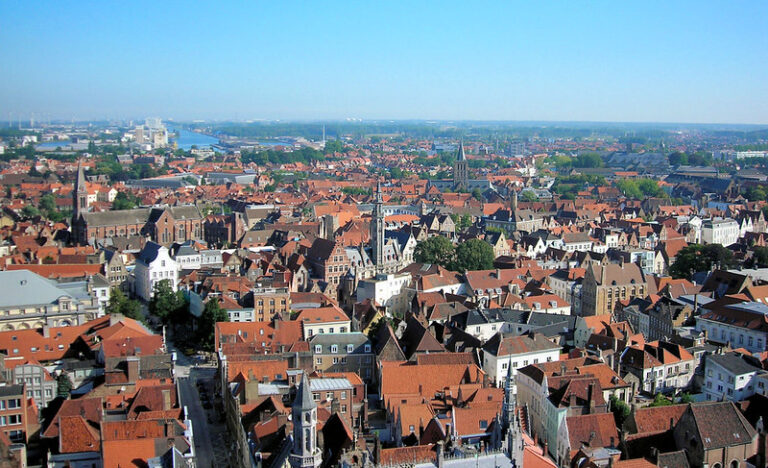
At the top you come out near the Lotrscak Tower, where a cannon has been fired at noon every day since 1877. Locals barely react. Visitors jump every single time. The tower is climbable and the view over the red rooftops toward the cathedral spires is the shot you came up here for.
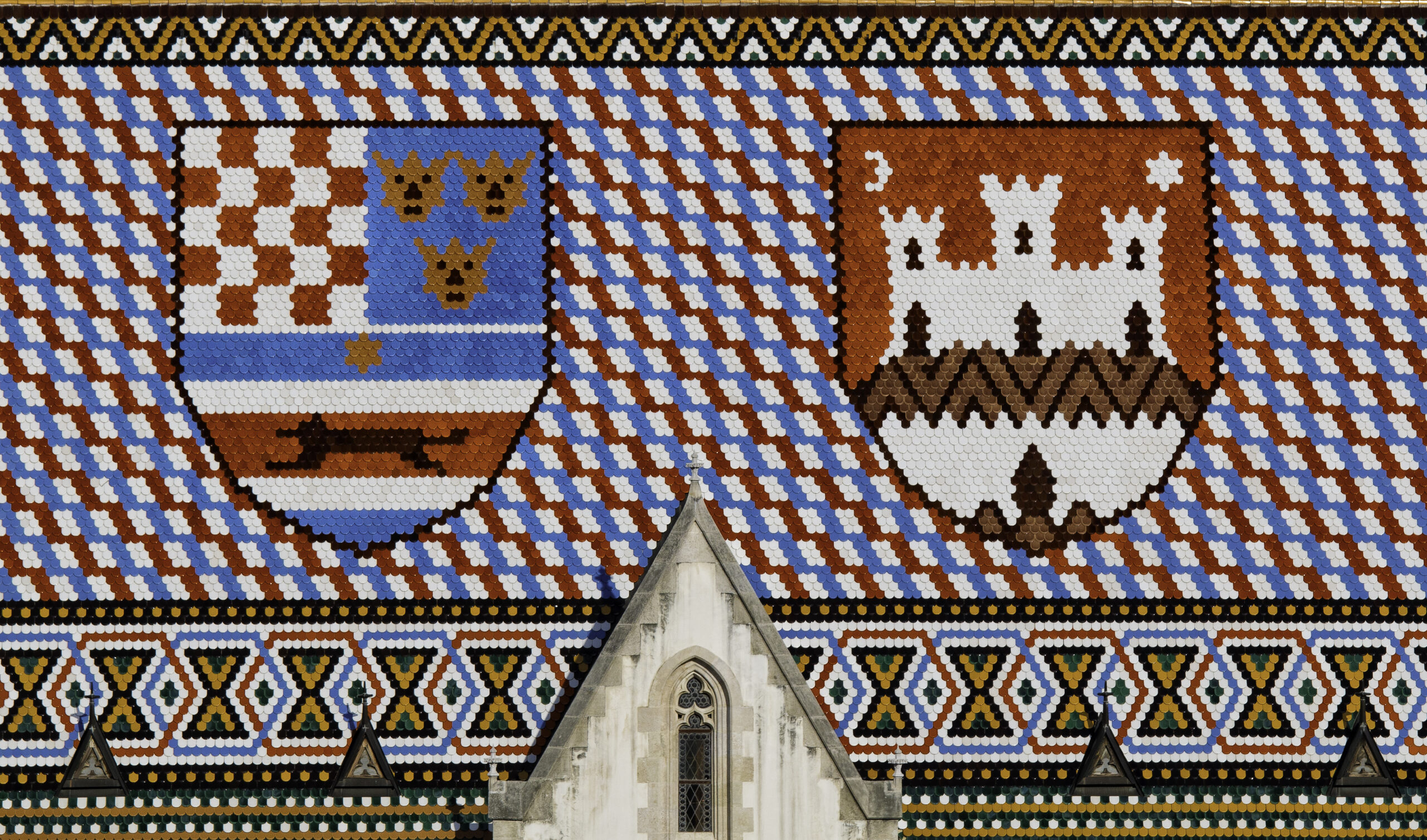
St. Mark’s Church is the single most recognizable building in Zagreb, and it is smaller than the photos suggest. The tiled roof carries the coats of arms of Croatia, Dalmatia and Slavonia on one side and the city of Zagreb on the other, and the whole thing reads like a piece of medieval graphic design. The square around it holds the Croatian parliament and is often quiet in the early morning, which is when we would go.
Zagreb Cathedral has been under scaffolding on and off since the 2020 earthquake, and its twin spires may or may not be visible depending on when you visit. Check locally before making a special trip.
The Upper Town also holds two museums that punch far above their size. The Museum of Broken Relationships is exactly what it sounds like: donated objects from ended relationships, each with a short written story from the donor. It should be a novelty and instead it is unexpectedly moving. We went in skeptical and came out quiet. The Croatian Museum of Naive Art nearby is small, bright, and takes about forty minutes.
The Lower Town, Markets and Green Spaces
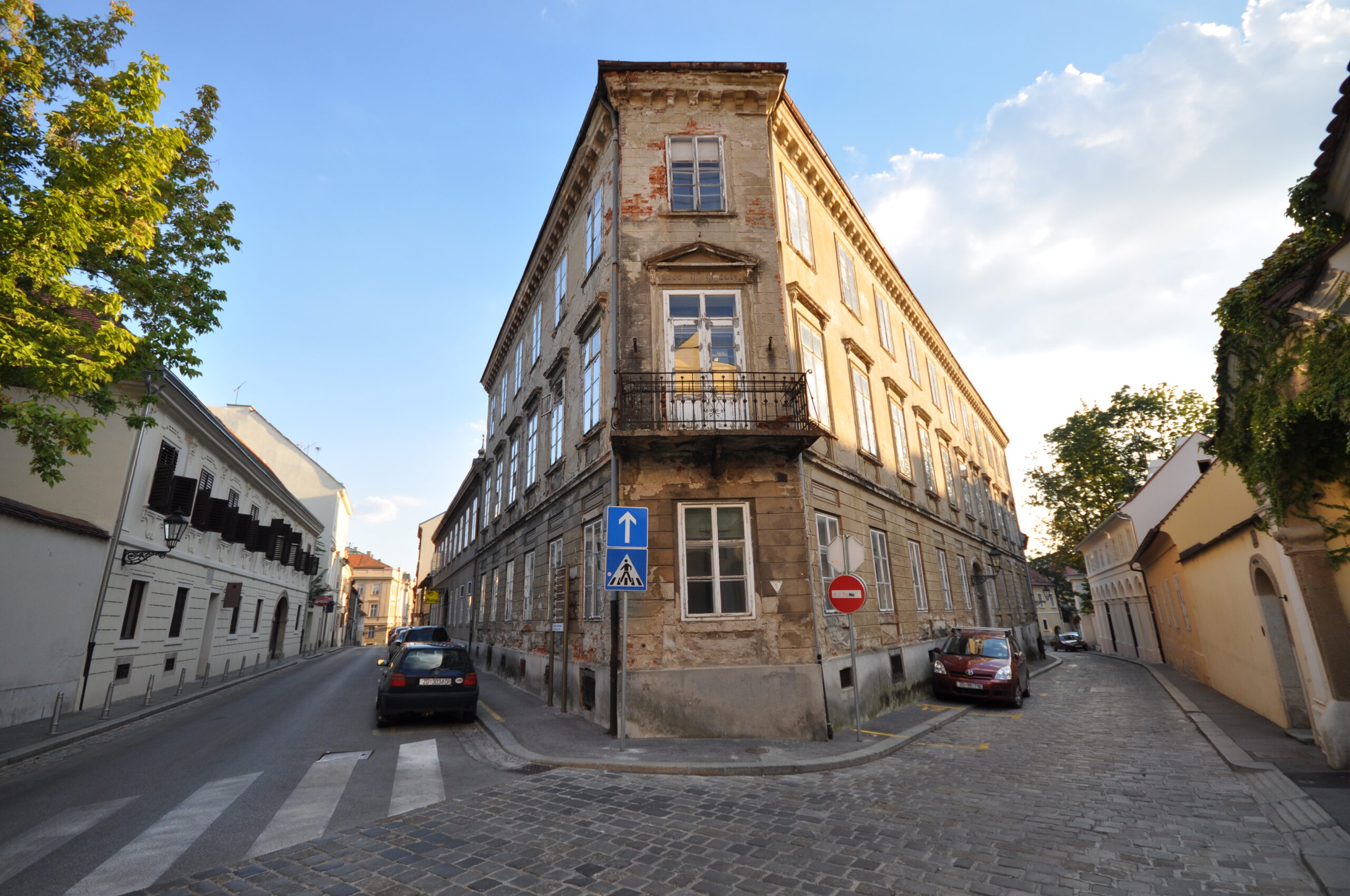
Down the hill, Zagreb turns into a nineteenth century European capital with wide boulevards, yellow facades and a chain of parks known as the Green Horseshoe. Zrinjevac is the loveliest of them, with plane trees, a bandstand and benches that fill up on any decent afternoon.
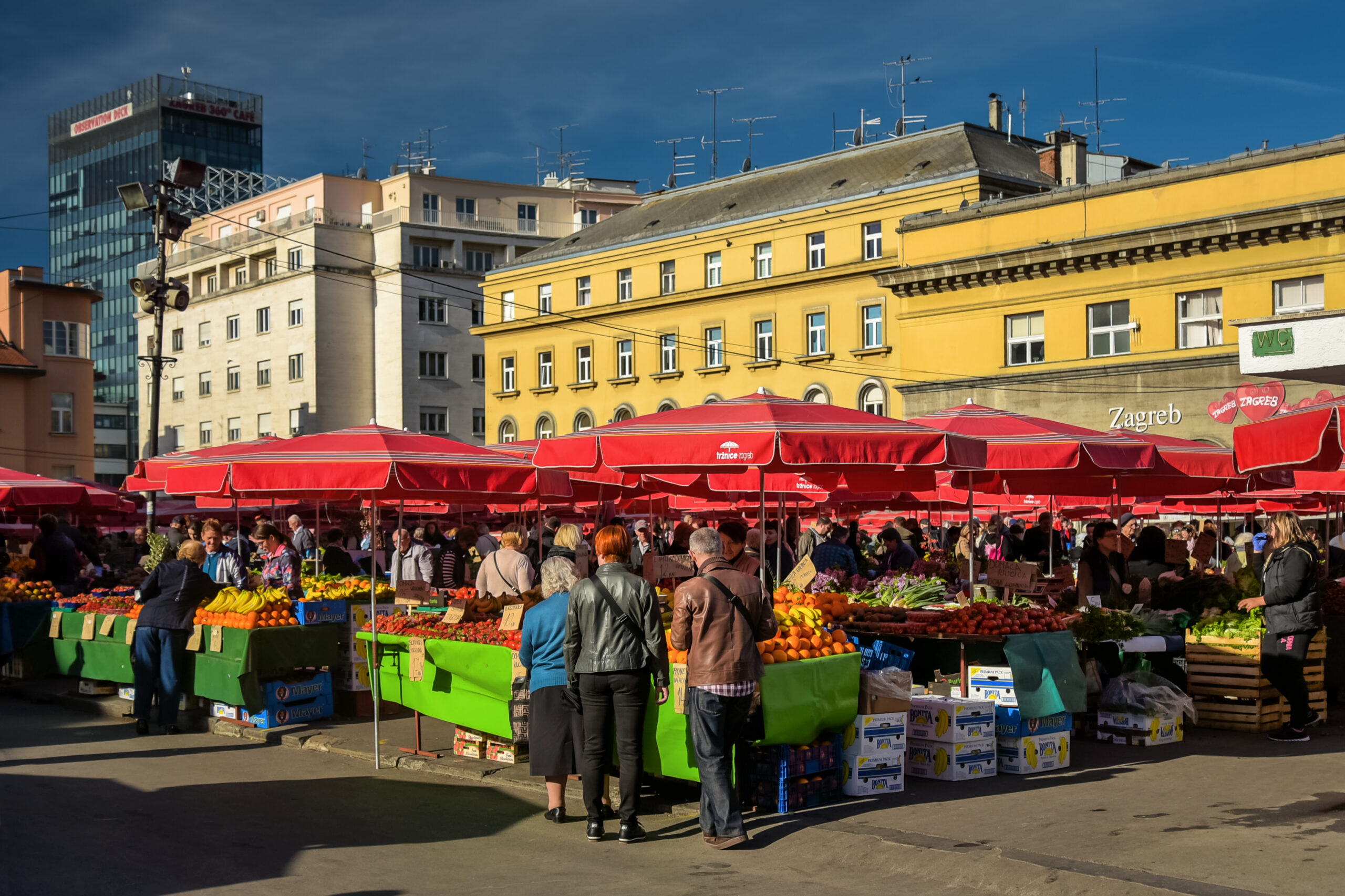
Dolac Market is the beating heart of the city and the reason to set an alarm. The upper level is open air, covered in red parasols, and full of produce, flowers and honey. The lower level, indoors, holds the butchers, cheesemongers and fishmongers. Go before ten and buy something to eat on a bench: fresh cheese, a bag of cherries in June, a slice of burek from one of the bakeries on the edge.
Ban Jelacic Square is the central plaza and the point everyone uses to meet. It is not especially beautiful but it is the city’s living room, and the trams grinding through it are half the atmosphere.
If you have a spare afternoon, Mirogoj Cemetery is a short bus ride north and is one of the most beautiful cemeteries in Europe: ivy-covered arcades, domes, and an unusual mix of Catholic, Orthodox, Jewish and Muslim graves side by side. It is peaceful rather than morbid and takes about an hour.
Coffee, Food and the Saturday Spica
Croatians take coffee seriously, and in Zagreb the Saturday morning ritual has a name: spica. From roughly ten until one, the cafes along Tkalciceva Street and Bogoviceva fill with people who have dressed up specifically to sit outside and be seen drinking coffee for two hours. Nobody is in a hurry. Nobody is working on a laptop. If you want one authentic Zagreb experience, this is it. Order a macchiato, take a seat, and settle in.
For food, Zagreb is continental rather than coastal, which means less grilled fish and more meat, cheese and freshwater dishes. Look for strukli, a baked or boiled pastry filled with fresh cheese that comes in savory and sweet versions and is the local comfort food. Purica s mlincima, turkey with baked flatbread, is the traditional Sunday dish. Sausages and grilled meats from the Slavonian tradition show up on most menus.
Prices are noticeably lower than on the coast. A proper sit-down dinner with wine that would run fifty or sixty euros a head in Hvar in August is comfortably half that in Zagreb. We break down regional price differences in detail in our Croatia cost guide.
Day Trips from Zagreb
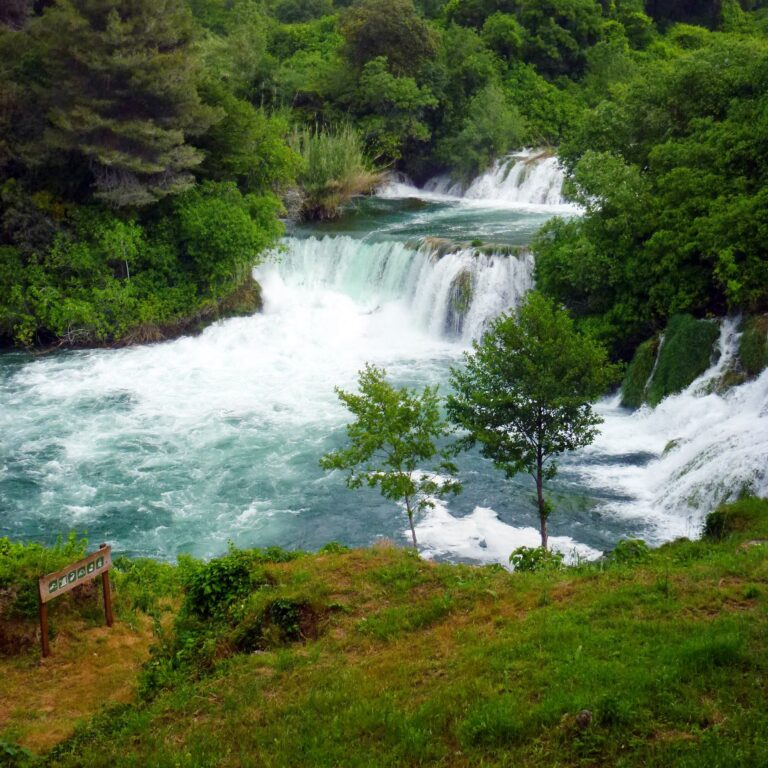
Plitvice Lakes is roughly two hours by car or bus and is the obvious choice. Go early, and read the full Plitvice guide before you buy tickets, because the entrance you choose changes the whole day.
Samobor is a small baroque town about forty minutes west, best known for a custard cream cake called kremsnita. It is a genuinely charming half day and almost entirely Croatian visitors.
Varazdin, an hour north, is a baroque town with a white castle and a color palette that photographs beautifully in soft light.
Zagorje, the rolling green region north of the city, holds hilltop castles like Trakoscan and a set of thermal spa towns. Rent a car for this one.
Where to Stay in Zagreb
We would stay in the Lower Town within a ten minute walk of Ban Jelacic Square. You are close to the trams, the market and the restaurants, and you can walk up to the Upper Town in fifteen minutes. The Upper Town itself has fewer options and involves more stairs than you might want with a suitcase.
Two or three nights is the right length. One night is enough to see the Upper Town and eat a good dinner, but you will miss the market and the coffee culture, which are the parts that actually make the city.
Where to Book
- Hotels and apartments: we use Booking.com for Zagreb because the free cancellation options make it easy to hold a room while flights firm up.
- Tours and day trips: Viator’s Zagreb listings cover Plitvice day tours, walking tours and the Zagorje castle circuits.
- Travel insurance: we do not travel without it, and our reasoning is in best travel insurance for Europe.
How Long to Spend and When to Go
Two nights minimum, three if you want a day trip. Zagreb is a genuine four season city, unlike much of the coast, which effectively closes down in winter. Spring and early autumn are ideal: mild, green, and the terraces are open. Summer is warm but not brutal, and the city empties out in August as locals head to the sea, which makes it quieter than usual. December is a real highlight, because Zagreb’s Advent market has repeatedly been voted the best in Europe and turns the entire Green Horseshoe into an outdoor party.
If you are still working out timing for the rest of your trip, our Europe timing guide covers the broader seasonal picture.
Our Honest Take
Zagreb is not going to be the highlight of your Croatia trip, and it does not need to be. It is the city that gives the rest of the trip context. After a week of walled towns built for other people to look at, spending two days somewhere that exists for its own residents was the thing that made Croatia feel like a country rather than a coastline. Plan the flights so you get those two days, and stop at Plitvice on the way south.
Planning the rest of Croatia? Start with how to plan a trip to Croatia for the full itinerary framework, work out your budget with how much does a trip to Croatia cost, and then read our guides to Split and Zadar for the coastal half of the trip.