Disclosure: This post contains affiliate links. If you book through our links, we may earn a small commission at no extra cost to you. Thanks for supporting Faceted Travel!
Table of Contents
- The Short Answer
- Flights: $500 to $1,100 Round Trip Per Person
- Hotels: The Biggest Line Item
- Food: Where the Sticker Shock Lives
- Getting Around: Cheaper Than You Fear
- Activities: The Best Stuff Is Cheap or Free
- Country by Country: Where Your Money Goes Furthest
- When to Go for the Best Value
- Sample Budget: Our 10-Day Two-Country Trip for Two
- Costs That Surprised Us (Both Directions)
- Money-Saving Rules We Actually Follow
- Where to Book
- Our Honest Take
Scandinavia has a reputation as the trip that empties your savings account, and we want to be honest with you up front: it is not cheap. But after building trips through Norway, Denmark, and Sweden over the past few years, we can also tell you the sticker shock is more manageable than the internet suggests, because the expensive parts and the surprisingly reasonable parts are not where you expect them to be.
Here is what a Scandinavia trip actually costs, with real numbers, and where we save versus where we happily spend.
The Short Answer
For a 10-day trip for two people hitting two countries (say Copenhagen plus Norway, or Stockholm plus Oslo), expect these all-in ranges including flights from the US:
- Budget: $4,500 to $6,000 (hostels or budget hotels, groceries and casual food, trains and buses, free sights)
- Mid-range: $7,000 to $10,000 (nice 3-star hotels, one sit-down meal a day, a couple of splurge activities, some internal flights)
- Comfortable: $12,000+ (4-star and design hotels, restaurants without menu-price anxiety, fjord cruises and guided everything)
Most couples we know, ourselves included, land in the middle band. Now let’s break down where the money actually goes.
Flights: $500 to $1,100 Round Trip Per Person
Transatlantic fares to Copenhagen, Stockholm, and Oslo are often cheaper than to London or Paris, especially from East Coast hubs. We have seen sub-$500 round trips in shoulder season and $900 to $1,100 in July. The airlines competing on these routes keep pressure on prices, and all three capitals work as open-jaw pairs (fly into one, home from another) for little or no premium, which saves you a backtracking day.
Booking window matters more than airline here. Our post on the best time to book flights covers the strategy, but the short version: two to five months out for Scandinavia, and be flexible by a few days around your dates.
Hotels: The Biggest Line Item
Plan on these per-night rates for a double room in the capitals during summer:
- Budget/hostel private room: $90 to $140
- Solid 3-star: $150 to $220
- 4-star or design hotel: $250 to $400
Two things soften the blow. First, Scandinavian budget chains are genuinely good: clean, well designed, and nothing like a US motel. Second, breakfast is usually included, and it is a real spread (eggs, salmon, breads, the works) that can carry you to a late lunch.
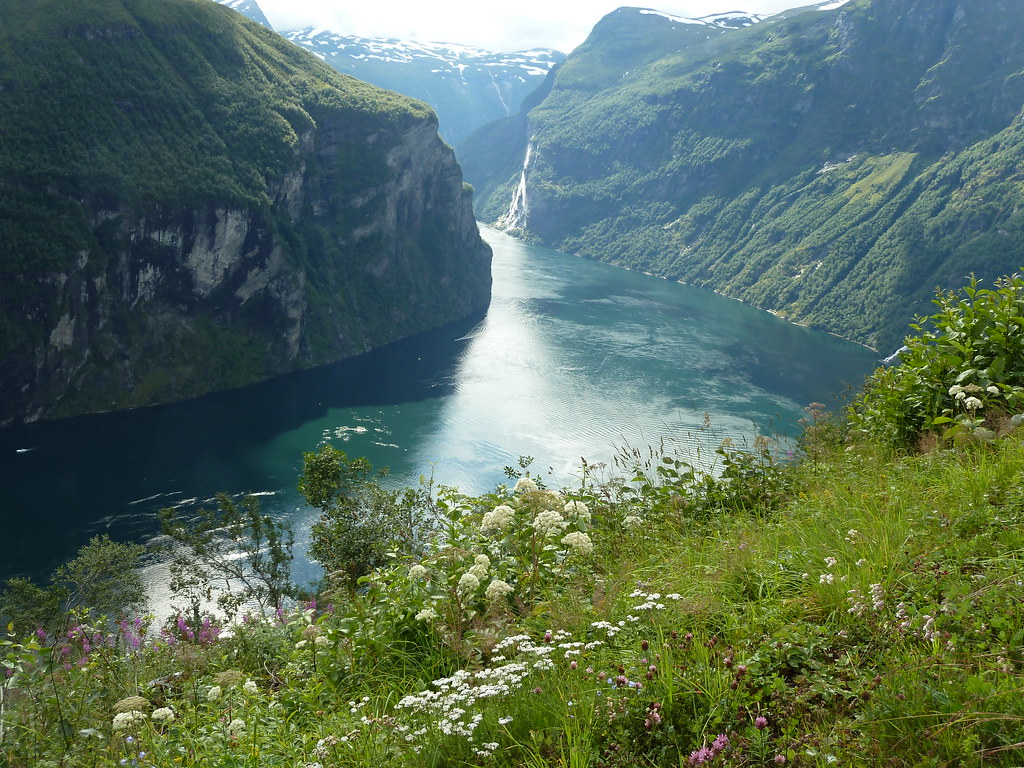
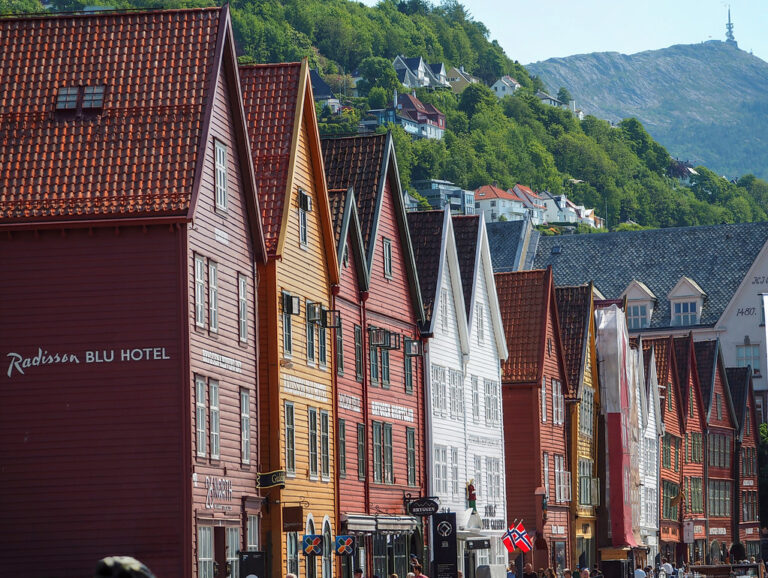
Smaller cities and towns run 20 to 30 percent cheaper than the capitals. In Norway’s fjord country, book far ahead; inventory is tight in July, as we learned researching our Bergen travel guide.
Food: Where the Sticker Shock Lives
This is the category that shocks first-timers. A casual restaurant dinner for two with one drink each lands at $80 to $120. A coffee is $5 to $7. A beer in a bar is $9 to $14, and in Norway sometimes more.
Here is how we keep food from eating the budget without eating badly:
- Make lunch the main meal. Weekday lunch specials (dagens ret in Denmark, dagens lunch in Sweden, dagens rett in Norway) get you the same kitchens at 40 to 50 percent off dinner prices.
- Lean on the included hotel breakfast. Eat like a Viking at 8am.
- Do one picnic a day. Scandinavian grocery stores are excellent, and eating smoked salmon on a harbor bench is not exactly suffering.
- Street food halls are your friend. Places like Copenhagen’s food markets or Oslo’s food halls give you high quality at $15 to $20 a plate.
- Mind the alcohol. This is the single biggest discretionary cost. In Norway and Sweden, wine and spirits are sold through state monopoly stores at high prices; buying a bottle there beats bar rounds by a mile.
Budget $60 to $80 per person per day for food if you eat smart, $120+ if you want restaurants twice a day.
Getting Around: Cheaper Than You Fear
- Trains between capitals: Copenhagen to Stockholm or Oslo runs $40 to $90 booked a few weeks out. Comfortable, scenic, no airport hassle.
- Internal flights: Oslo to Bergen or Stockholm to Copenhagen can dip under $60 on budget carriers if you pack light.
- City transit: $3 to $5 a ride, with day passes around $12 to $18. All three capitals are also wonderfully walkable and bikeable.
- The famous Norwegian fjord routes: the Bergen railway plus the Flåm branch and a fjord boat, done independently, costs a fraction of the packaged “Norway in a Nutshell” price for the identical trains and boats. We walk through the fjord logistics in our Best Time to Visit Norway guide.
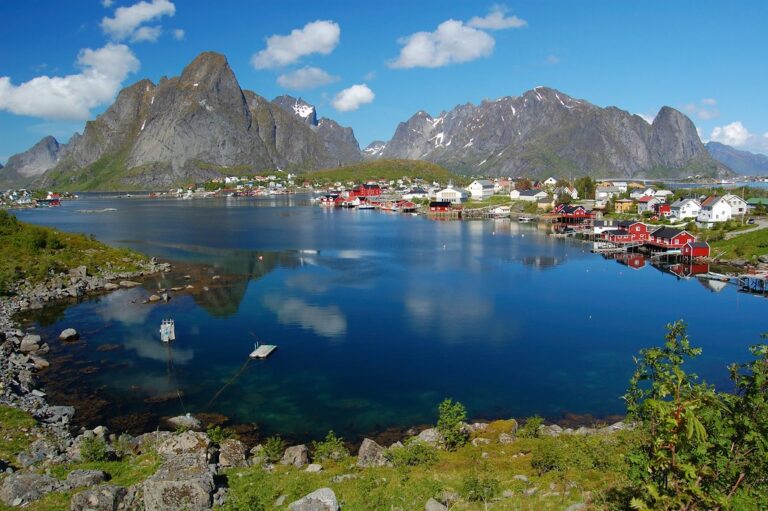
- Rental cars: $60 to $100 a day plus fuel at $7 to $8 a gallon. Worth it for the Lofoten Islands or deep fjord country, unnecessary in the cities.
Activities: The Best Stuff Is Cheap or Free
Scandinavia flips the usual equation: lodging and food cost a lot, but the headline experiences often cost little.
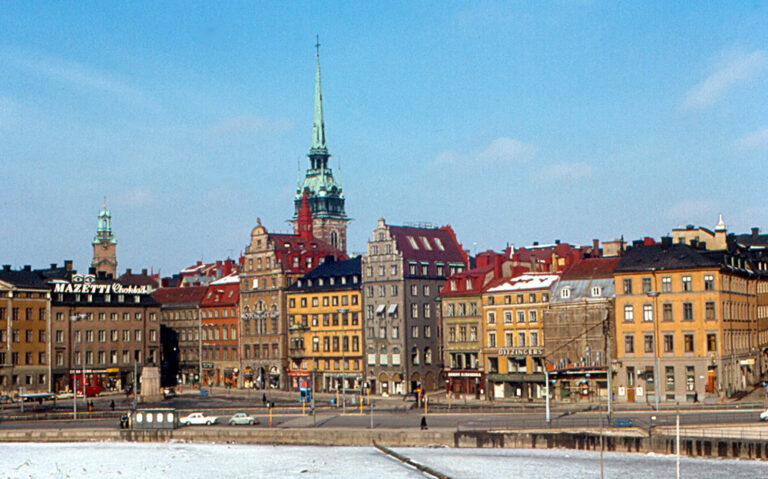
- Walking Gamla Stan in Stockholm, the Nyhavn harbor in Copenhagen, or Bergen’s Bryggen wharf: free.
- Swimming in harbors, hiking above the fjords, midnight sun in the north: free.
- World-class museums (Vasa in Stockholm, the National Museum in Oslo): $15 to $25.
- The splurges that are worth it: a fjord cruise ($50 to $120), a food tour ($90 to $130), a sauna-and-cold-plunge session ($25 to $60).
For bookable activities, Viator’s Scandinavia tours cover the fjord cruises, city walks, and day trips; we book the marquee items ahead in summer because the good time slots sell out.
Country by Country: Where Your Money Goes Furthest
The three countries are not priced equally, and routing around that fact is one of the easiest ways to control the budget.
Norway is the most expensive, full stop. Alcohol, restaurants, and rural fjord-country hotels all run 15 to 30 percent above its neighbors, and the scenery-heavy logistics (boats, mountain trains, remote lodges) add up. It is also, in our opinion, the one you should not cut. The fjords and the Lofoten Islands are the single most dramatic landscapes in the region; we walk the numbers in detail in our How Much Does a Trip to Norway Cost? guide.
Sweden is the value play. Stockholm hotels undercut Copenhagen’s by a noticeable margin for the same standard, lunch culture is strong, and the archipelago day trip (one of Scandinavia’s best experiences) costs about as much as a nice lunch.
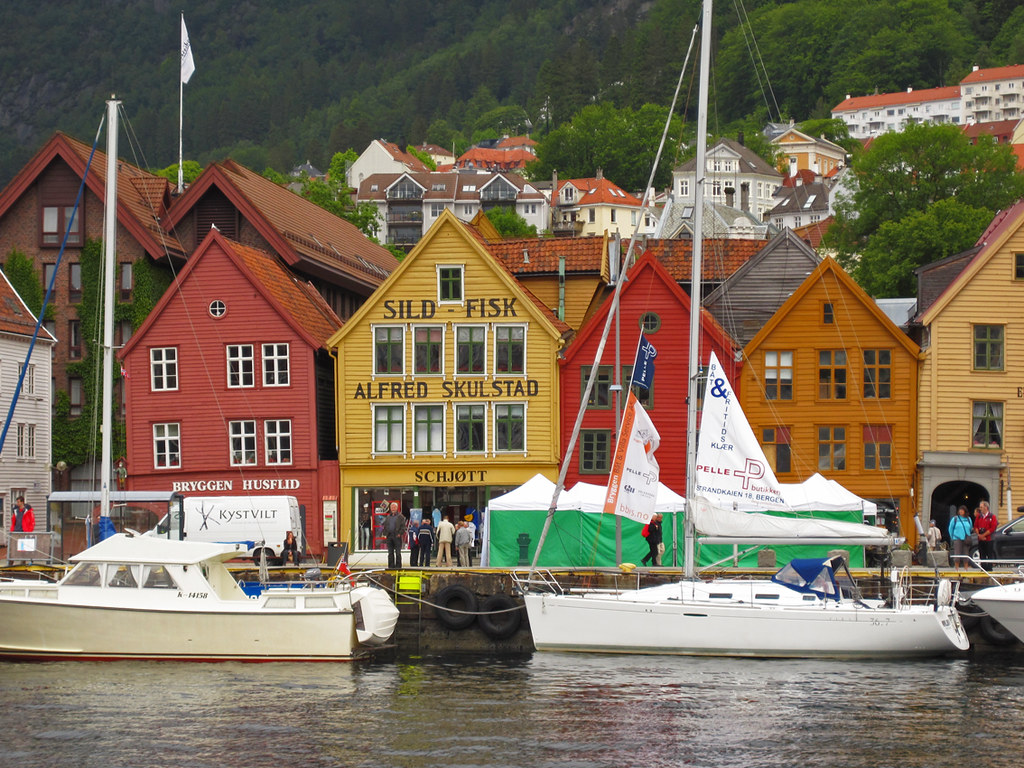
Denmark sits in between. Copenhagen’s food scene is the region’s best and prices accordingly, but the city is compact enough that you spend almost nothing on transit, and free wonders (Nyhavn, harbor swims, the palace changing of the guard) fill half a day easily.
A practical route for a first trip: fly into Copenhagen, train to Stockholm, fly home from Oslo after a fjord detour, letting each country do what it does best.
When to Go for the Best Value
June through August is peak everything: prices, crowds, and, to be fair, the weather and the endless daylight that make the region magical. If you want summer, book hotels three to four months out and flights in the two-to-five-month window.
The value sweet spots are late May to early June and the first three weeks of September. Hotel rates drop 20 to 30 percent, the capitals are still lively, and the weather is usually kind. September in the fjords adds fall color. Winter is its own trip entirely (northern lights, Christmas markets, half-price hotels) but plan around six-hour days and closed rural attractions.
Sample Budget: Our 10-Day Two-Country Trip for Two
Here is what a real mid-range trip pencils out to, based on how we actually travel:
- Flights (2 people, open-jaw): $1,700
- Hotels (9 nights, mix of 3-star and one splurge): $1,850
- Food (2 people, lunch-forward strategy): $1,300
- Trains, transit, one internal flight: $450
- Activities and museums: $500
- Coffee, buns, and miscellaneous: $250
Total: roughly $6,050 for two people, or about $300 per person per day excluding flights. Could you do it for less? Absolutely; hostel private rooms and full grocery mode gets a couple under $4,800 all-in. Could you spend triple? Scandinavia will happily let you.
Costs That Surprised Us (Both Directions)
More than we expected: restaurant alcohol (a bottle of mid-list wine at dinner can exceed the food bill), taxis (a 15-minute Oslo ride ran us nearly $40; use transit), coat checks that are mandatory and charged at clubs and some museums, and public restrooms that want $1 to $2 in stations.
Less than we expected: transatlantic flights (often the cheapest way into Europe), hotel breakfasts doing lunch’s job, museum prices compared with US equivalents, city bike rentals, and coffee refills at the classic konditori bakeries, where a $6 coffee often includes a second cup. Tipping barely exists: service is included, and rounding up is plenty. Over a 10-day trip, not tipping 20 percent on every meal quietly claws back a few hundred dollars versus a comparable US vacation.
Money-Saving Rules We Actually Follow
- Travel in shoulder season. Late May, early June, and September cut hotel rates 20 to 30 percent and the weather is usually lovely.
- Go open-jaw and skip backtracking. One-way trains beat round trips.
- Cards only. All three countries are near-cashless; a no-foreign-fee card is all you need. Decline “pay in USD” conversions every time.
- City passes only if you are a museum machine. Do the math against your actual list; two museums a day is the break-even.
- Insure the trip. Nordic trips chain prepaid hotels, tight train connections, and weather-dependent boats. Our honest breakdown of whether travel insurance is worth it applies doubly here.
Where to Book
- Hotels: Booking.com shows the Scandinavian budget-design chains alongside the classics; sort by review score and you will rarely go wrong in these countries.
- Tours and activities: Viator’s Scandinavia listings for fjord cruises, food walks, and archipelago boat tours, bookable with free cancellation on most items.
Our Honest Take
Scandinavia costs more per day than Spain or Portugal, and it delivers a kind of trip they cannot: swimming in a clean city harbor at 9pm in full sunlight, trains that glide past fjords, cities that function so smoothly the travel stress just evaporates. Budget around $300 a day for two mid-range, aim your dates at the shoulder, eat your big meal at lunch, and the “most expensive region in Europe” becomes a completely reasonable splurge. It has become one of our favorite corners of the world, and we say that as people who watch the numbers.
Planning the Nordic trip? Start with our city guides to Stockholm, Copenhagen, and Oslo, or go deeper on the fjord side with How Much Does a Trip to Norway Cost?
Keep Reading