Disclosure: This post contains affiliate links. If you book through our links, we may earn a small commission at no extra cost to you. Thanks for supporting Faceted Travel!
Table of Contents
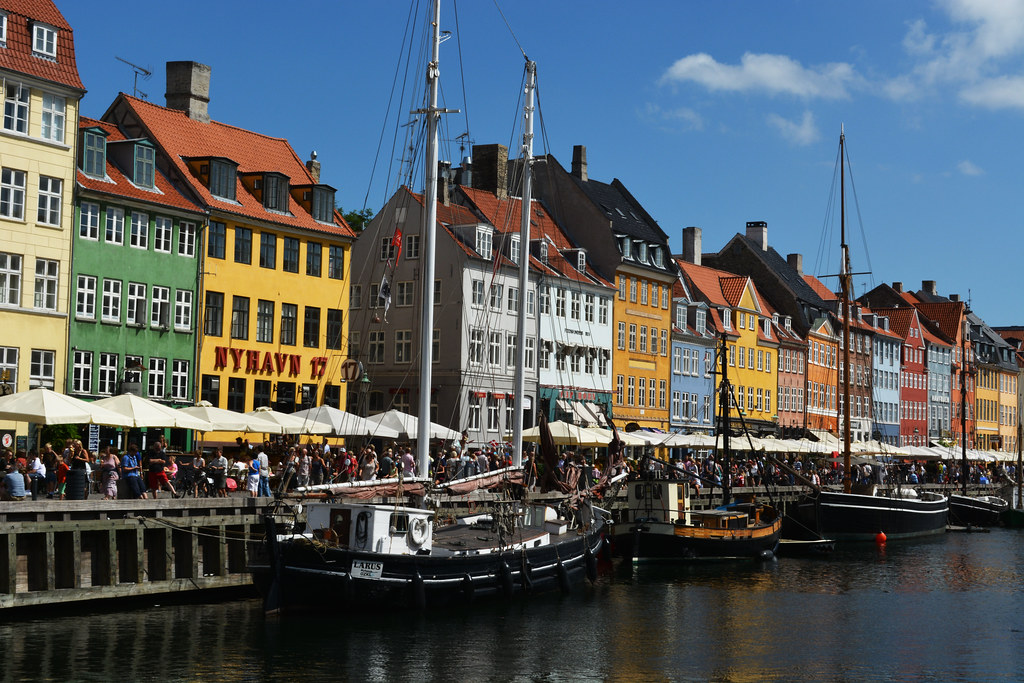
We walked out of Copenhagen Central Station expecting a tidy, slightly gray Scandinavian capital, and instead we got a city that felt like it had been designed by someone who genuinely liked people. Bikes everywhere, harbor swimmers in the middle of downtown, and a waterfront lined with candy-colored townhouses that look fake until you are standing in front of them. Copenhagen has been on our list for years, and it turned out to be the easiest European city we have ever spent five days in.
Here is everything we learned, including the things that surprised us and the mistakes we would not repeat.
Why Copenhagen Is Worth the Trip
Copenhagen is compact, walkable, and almost aggressively pleasant. The historic center fits inside a rough oval you can cross on foot in about 35 minutes, which means you can skip taxis entirely and still see the city properly. There is no single overwhelming monument that swallows your whole itinerary. Instead you get dozens of small, good things stacked close together: a canal district, a royal palace with an actual guard change, a food market in a converted ferry terminal, and one of the best-preserved amusement parks in the world sitting right next to the train station.
What we did not expect was how green it feels. Copenhagen has been building bike lanes and harbor parks for decades, and it shows. Roughly half of all commuting trips into central Copenhagen happen by bicycle. You feel that in the pace of the city. Cars are guests here, not the main event.
If you are building a wider Scandinavian trip, Copenhagen is the natural entry point. It has the busiest airport in the region, direct trains to Sweden in under 40 minutes, and cheap connections north to Norway if you want to add Oslo or Bergen to the same itinerary.
Best Time to Visit Copenhagen
We went in late spring and it was close to ideal, but every season here has a real personality.
May through June is our pick. Days stretch toward 17 hours of light, the harbor baths open, outdoor seating spills onto every square, and the crowds have not fully arrived. Temperatures sit in the high 50s to high 60s Fahrenheit.
July and August bring the warmest weather and the longest evenings, plus the biggest crowds and the highest hotel rates. If you want to swim at Islands Brygge or spend an entire day at Tivoli, this is your window. Book accommodation early.
September and October are quietly excellent. The light turns golden, the tourist volume drops sharply, and prices soften. Bring a rain shell.
November through March is cold, dark, and genuinely cozy if you lean into it. Christmas at Tivoli is one of the best holiday markets in Europe, and hotel prices outside December are the lowest of the year. Daylight can shrink to seven hours in December, so plan indoor anchors for each day.
For a broader look at how Northern Europe seasons compare, our guide to the best time to visit Europe breaks the whole continent down month by month.
How Long to Stay
Three full days is the honest minimum. Four is comfortable. Five lets you add a day trip without rushing.
Here is roughly how we would structure it:
- Day 1: Nyhavn, the canal boat tour, Amalienborg Palace, Kongens Nytorv
- Day 2: Rosenborg Castle and the crown jewels, the King’s Garden, Torvehallerne market, Strøget
- Day 3: Christiania, Christianshavn canals, Reffen or Broens Gadekøkken, sunset from a harbor bench
- Day 4: Tivoli Gardens (go late afternoon into evening), Ny Carlsberg Glyptotek
- Day 5: Day trip to Louisiana Museum of Modern Art or across the bridge to Malmö, Sweden
The Neighborhoods Worth Your Time
Nyhavn and the Inner City
Yes, Nyhavn is the postcard, and yes, it is crowded. Go anyway, but go at 8am. We had the entire canal nearly to ourselves with morning light hitting the ochre and red facades, and it was the single best photo window of our trip. By noon it is elbow to elbow.
The inner city around Strøget is where you will spend most of your walking time. Strøget itself is a long pedestrian shopping street that gets progressively more interesting as you move away from the tourist end. Duck into the side streets, especially around Gråbrødretorv, where the squares are quieter and the cafes are better.
Christianshavn and Christiania
Cross the bridge to Christianshavn and the city changes character. Narrow canals, houseboats, and a genuinely local feel. This is also where you find Christiania, the self-governing community founded in an abandoned military barracks in 1971. It is unlike anywhere else in Europe. Photography is restricted in certain areas and clearly marked, so read the signs and respect them.
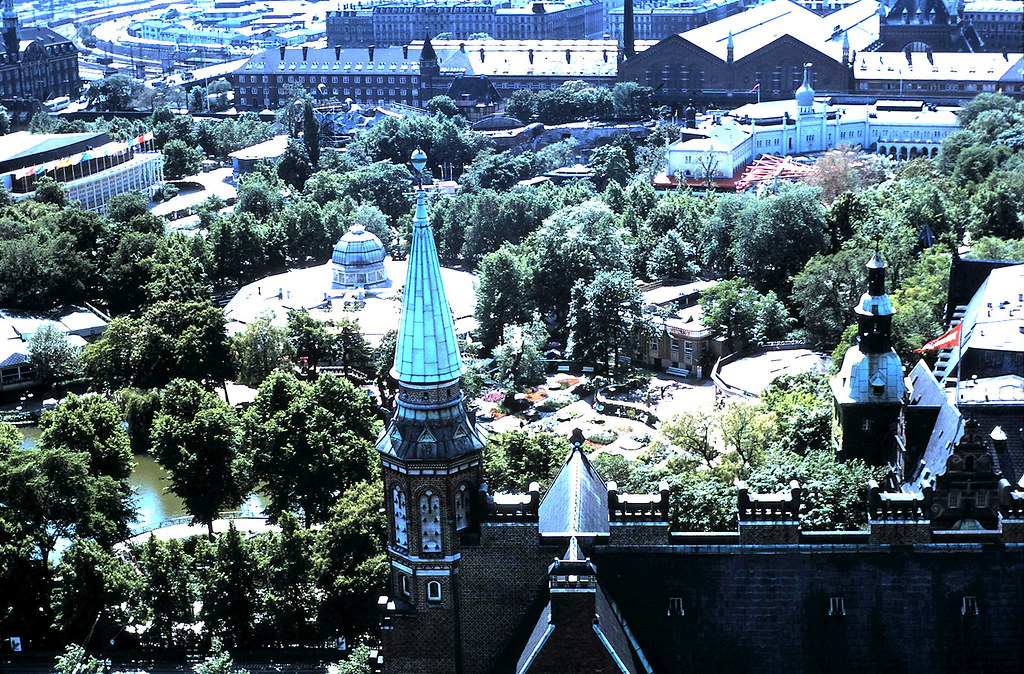
Climb the external spiral staircase of the Church of Our Saviour for the best panoramic view in the city. It is 400 steps and the last stretch is outdoors and narrow, so skip it if heights are not your thing.
Vesterbro and the Meatpacking District
The old Kødbyen meatpacking district is now the nightlife and restaurant hub. White industrial buildings, natural wine bars, and some of the most interesting food in the city. Vesterbro more broadly is where we would stay on a return trip. It is walkable to the center, cheaper than the inner city, and it feels like a neighborhood rather than a stage set.
Nørrebro
The most diverse part of Copenhagen and our favorite for eating. Jægersborggade is a single street packed with tiny shops, a great bakery, ceramics studios, and coffee roasters. Assistens Cemetery nearby is a public park where locals picnic, and Hans Christian Andersen is buried there.
What Copenhagen Costs
Copenhagen is expensive. Not Norway expensive, but it will outpace Southern Europe by a wide margin. Here is what we actually spent per person per day, in US dollars.
Budget travel: $110 to $150. Hostel dorm or a cheap room outside the center, supermarket breakfasts, one street food meal a day, walking plus a city bike pass.
Mid-range: $220 to $310. Three-star or good four-star hotel, one sit-down restaurant meal a day, a couple of paid attractions, occasional metro rides.
Comfortable: $400 and up. Central design hotel, restaurant meals, museum entries, canal tours, and a nice dinner or two.
A few specific numbers that surprised us. A sit-down lunch runs $22 to $35. A beer is $9 to $12. A single metro ride is about $3.75. Tivoli entry alone is roughly $23, and unlimited ride wristbands add about $40 on top. Museum entries generally land between $15 and $22.
The Copenhagen Card is worth doing the math on. It bundles 80-plus attractions with unlimited transit. If you plan to hit three or more paid museums in a day plus use transit, it pays for itself. If you plan a slow, walking-heavy trip, skip it.
Our full breakdown of how much a trip to Europe costs puts Copenhagen in context against other capitals.
Getting Around
Rent a bike. This is the single best piece of advice we can give. Copenhagen has more than 240 miles of protected bike lanes and the flattest terrain of any major European capital. Donkey Republic and Bycyklen both operate app-based rentals, and most hotels rent bikes directly. Ride on the right side of the bike lane, signal with your hand, and stop for the light even when nobody is coming. Locals will let you know if you do it wrong.
The metro is excellent and runs 24 hours. It connects the airport to the center in 14 minutes for about $5. There is no ticket barrier in many stations, but inspectors do check and the fines are steep, so buy a ticket.
Skip the rental car. Parking is expensive and difficult, and you genuinely do not need one inside the city.
From the airport, take the metro or the train. Both are fast and cheap. A taxi will run you $45 or more for a trip the metro does for the price of a coffee.
Where to Eat Without Wrecking Your Budget
Copenhagen has a serious fine-dining reputation, but you do not need a tasting menu to eat well here.
Torvehallerne is a covered market with about 60 stalls. Smørrebrød, fresh fish, coffee, cheese, and porridge. This was our default lunch spot three days running.
Reffen is a huge outdoor street food market on the harbor, open in the warmer months. Shipping container kitchens, picnic tables, and a sunset over the water.
Smørrebrød is the traditional open-faced rye sandwich, and it is genuinely good, not just a novelty. Aamanns and Selma both do excellent versions. Expect $12 to $18 per piece and figure two or three makes a meal.
Bakeries are Copenhagen’s underrated superpower. A kanelsnegl, the Danish cinnamon roll, from Juno the Bakery or Hart Bageri will run you about $5 and is better than most desserts you will pay four times for.
Hot dogs from a pølsevogn cart are the cheapest legitimate meal in the city at around $6.
Day Trips Worth Taking
Louisiana Museum of Modern Art is 35 minutes north by train and sits on a bluff over the Øresund strait with a sculpture garden looking toward Sweden. Even if modern art is not your thing, the setting is worth the trip.
Malmö, Sweden is 35 minutes across the Øresund Bridge. Two countries in one day, a different currency, and a completely different urban feel.
Kronborg Castle in Helsingør is the real-life setting Shakespeare used for Hamlet’s Elsinore. About 45 minutes by train.
Roskilde has a Viking Ship Museum with five original vessels recovered from the fjord, plus a UNESCO cathedral. 25 minutes by train.
Practical Things We Got Wrong
We underpacked rain gear. Copenhagen gets rain in every month. A light waterproof shell earns its space.
We assumed cash was needed. It is not. Denmark is close to cashless. Cards work everywhere, including hot dog carts. We never used the krone notes we withdrew.
We booked dinner too late. Popular restaurants fill up weeks ahead in summer. If there is somewhere you truly want to eat, reserve before you fly.
We did not check public holidays. Danish shops close on holidays and many close early on Saturdays and entirely on Sundays outside the tourist core.
One more thing: get travel insurance. Healthcare in Denmark is excellent, but you are not covered as a visitor, and trip delays in and out of Scandinavia are common in shoulder season. Our guide to the best travel insurance for Europe covers what to look for.
Where to Book
- Hotels: We use Booking.com for Copenhagen accommodation. Vesterbro and Nørrebro give you better value than the inner city, and both are an easy walk or short bike ride from everything.
- Tours and activities: Viator’s Copenhagen tours cover canal cruises, food walks, bike tours, and Louisiana day trips. The canal tour is genuinely worth doing and gives you a completely different read on the city.
- Flights: Copenhagen Airport is a major hub with good transatlantic service. Our post on the best time to book flights walks through the booking windows that have saved us the most.
Our Honest Take
Copenhagen is not a bucket-list spectacle city. There is no Colosseum, no Eiffel Tower, no single sight you have to fight crowds to see. What it has instead is a rare quality of daily life that you can step into for a few days. We spent an afternoon just sitting on the harbor at Islands Brygge watching people swim in the middle of a capital city, and it was one of our favorite hours in Europe.
Go for four days. Rent a bike on day one. Eat more pastries than you think you should. It is a city that rewards slowing down.
Planning more of Northern Europe? Start with our Oslo, Norway travel guide for the natural next stop, our Tallinn, Estonia travel guide for a Baltic pairing that flies cheap from Copenhagen, or our how to plan a trip to Europe guide for building the whole route from scratch.