Disclosure: This post contains affiliate links. If you book through our links, we may earn a small commission at no extra cost to you. Thanks for supporting Faceted Travel!
Table of Contents
- Why Valencia Works So Well
- The Old Town: Start Here
- The Turia Gardens: The Best Idea Any City Ever Had
- The City of Arts and Sciences
- Paella: Eat It Where It Was Born
- The Beaches
- When to Go and How Long to Stay
- Getting There and Getting Around
- Easy Day Trips
- Where to Stay
- Where to Book
- Our Honest Take
Valencia was the Spanish city we almost skipped, and it turned out to be the one we now recommend first. We had budgeted two days between Madrid and Barcelona, mostly to eat paella in the city that invented it, and we ended up staying five, rearranging the rest of the trip, and quietly wondering why nobody had ordered us to come here sooner.
Here is the short version: Valencia is Spain’s third-largest city, sitting on the Mediterranean about three hours south of Barcelona, and it delivers most of what people go to Barcelona for (beaches, architecture, tapas at midnight, a walkable old town) at roughly two-thirds of the price and half the crowd density. It also has a few things nobody else has: a five-mile park running through a drained riverbed, a City of Arts and Sciences that looks like it landed from another planet, and the actual birthplace of paella, where the rice is treated with the seriousness other countries reserve for wine.
Why Valencia Works So Well
Spain’s big three (Madrid, Barcelona, Seville) each demand something from you: Madrid demands late nights, Barcelona demands crowd tolerance, Seville demands heat tolerance. Valencia mostly just hands you things. The old town is compact enough to cross on foot in twenty minutes. The beach is a straight tram ride from the center. The food is arguably the best value in urban Spain. And the whole city has a lived-in, unhurried confidence that comes from not needing your tourism dollars quite as badly as its famous siblings.
We walked out of the train station on a Tuesday afternoon, and by Tuesday evening we had already eaten twice, seen a UNESCO-listed silk exchange, and watched a bride pose for photos in front of a building shaped like a giant eye. That is a normal Valencia day.
The Old Town: Start Here
Valencia’s historic center, the Ciutat Vella, is one of the largest old towns in Spain, and it rewards aimless wandering more than checklist sightseeing. That said, a few stops earn their reputations.
La Lonja de la Seda
The 15th-century silk exchange is the building that made us gasp. Twisted stone columns rise like palm trees into a vaulted ceiling, built to convince medieval merchants that Valencia was the center of the commercial world. It worked then and it works now. Entry is a few euros, and it is UNESCO-listed for good reason. Go early; tour groups arrive by mid-morning.
Valencia Cathedral and the Miguelete Tower
The cathedral claims to hold the Holy Grail, an agate cup in a side chapel that scholars take more seriously than you might expect. Grail or not, the building is a beautiful mash of Gothic, Romanesque, and Baroque. Climb the 207 steps of the Miguelete bell tower for the best rooftop view in the city: a sea of terracotta stretching to the actual sea.
The Central Market
The Mercado Central is one of the largest covered markets in Europe, a modernist cathedral of iron and stained glass where Valencians actually shop. Come hungry. Buy jamón, buy oranges (this is the region that made them famous), and grab a counter seat at Central Bar for a mid-morning bocadillo. We ate breakfast here three days out of five.
Plaza de la Virgen and the Barrio del Carmen
The Plaza de la Virgen is the old town’s living room, ringed by the cathedral, the basilica, and enough café tables to watch an entire evening unfold. From there, drift north into El Carmen, the graffiti-splashed medieval quarter where the bars get better and the streets get narrower. This is where we ended most nights.
The Turia Gardens: The Best Idea Any City Ever Had
In 1957 the Turia River flooded Valencia badly enough that the city rerouted the entire river around town. Instead of building a highway in the empty riverbed (the original plan, and a genuinely close call), Valencia turned all five miles of it into a sunken park. The result is the Jardín del Turia: a green ribbon of bike paths, orange groves, fountains, playing fields, and joggers that curls right through the city, crossed by the old stone bridges that once spanned water.
Rent a bike. This is not optional advice. Cycling the full length of the Turia, from the Bioparc at one end to the City of Arts and Sciences at the other, was the single best few hours of our trip, and it costs about the price of two coffees.
The City of Arts and Sciences
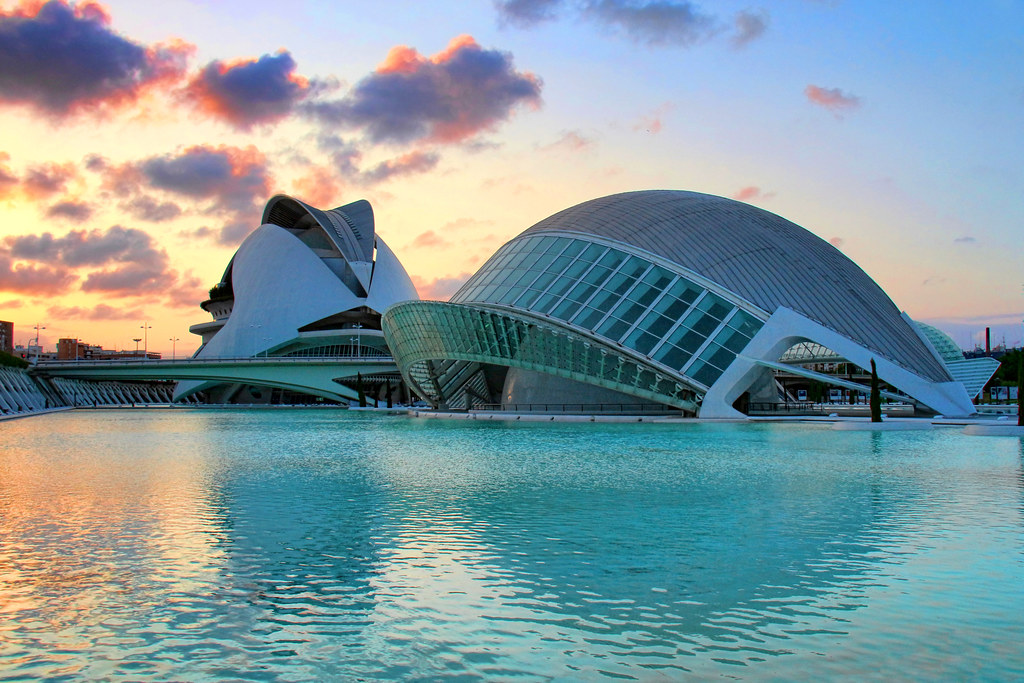
At the seaward end of the Turia sits Valencia’s showpiece: the Ciudad de las Artes y las Ciencias, a complex of white, skeletal, undeniably space-age buildings by Valencia-born architect Santiago Calatrava. Whatever you think of the budget overruns (Valencians have opinions), the place is astonishing to walk through, and it photographs like nowhere else in Europe.
Inside the complex: the Oceanogràfic, Europe’s largest aquarium, genuinely worth a half day, especially with kids; the Science Museum, interactive and fun if slightly light on depth; and the Hemisfèric, an IMAX-style planetarium shaped like a giant eye. If you only pay for one, make it the Oceanogràfic. If you pay for none, the architecture itself, reflected in the shallow turquoise pools, is free and best at sunset.
Paella: Eat It Where It Was Born
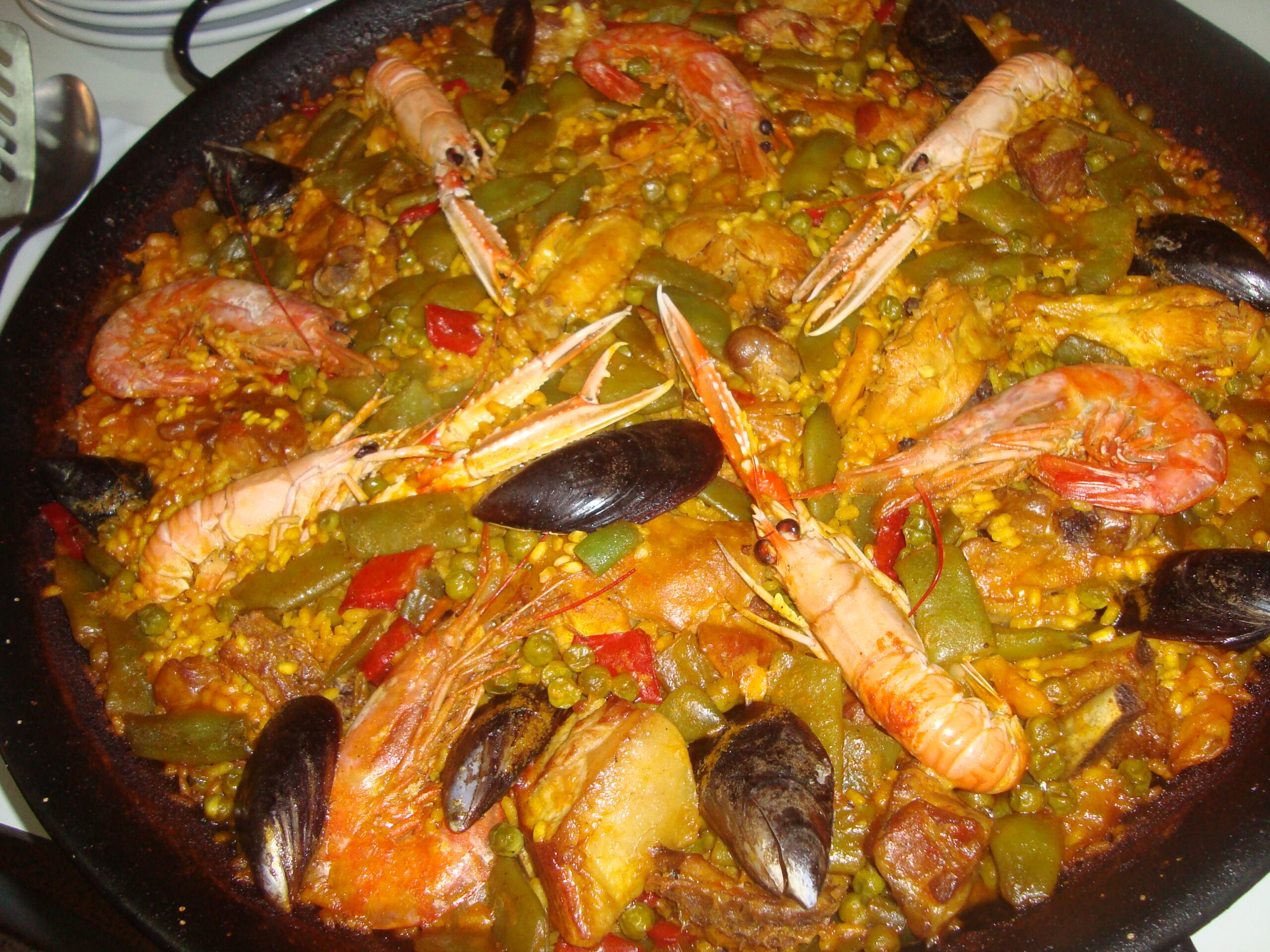
Paella is from Valencia the way champagne is from Champagne, and the locals enforce the distinction. True paella valenciana contains chicken, rabbit, green beans, garrofó beans, and sometimes snails. No chorizo. No frozen seafood medley. Rice cooked thin in a wide pan, ideally over orange-wood fire, with the socarrat (the crisped bottom layer) treated as the prize it is.
Two rules we learned quickly. First, paella is lunch, not dinner; kitchens make it fresh from about 1:30pm to 3:30pm, and most spots serving “paella” at 9pm are serving tourists. Second, it takes 30 to 45 minutes because they are actually cooking it. Order a drink and some salad and wait like it is an event, because it is.
For the classic experience, take the tram or cycle out to La Albufera, the lagoon and rice paddies south of the city where the dish was invented. The villages of El Palmar and El Perellonet are lined with paella houses, and a sunset boat ride on the lagoon afterward is the kind of thing you will still be talking about years later. In the city itself, the beachfront restaurants along Playa de la Malvarrosa do a respectable version with a sea view.
The Beaches
Valencia’s city beaches, Malvarrosa and Las Arenas, are broad, sandy, backed by a long promenade of restaurants, and reachable by tram in about 20 minutes from the center. They are good urban beaches: great for a swim and a long lunch, busy but rarely Barcelona-crowded. For something wilder, El Saler beach, backed by pine dunes at the edge of the Albufera Natural Park, is 30 minutes away and feels like a different coastline entirely.
The Mediterranean here is swimmable from June through early October. September might be the perfect month: warm sea, thinner crowds, and the city back in its own rhythm.
When to Go and How Long to Stay
Valencia is a year-round city with a mild Mediterranean climate, but the sweet spots are April through June and September through October, the same golden windows we describe in our Best Time to Visit Spain guide. July and August are hot and humid, though the beach takes the edge off in a way inland Seville can only envy.
One date to know about: Las Fallas, March 15 to 19, when Valencia builds hundreds of giant satirical sculptures, parades them for days amid constant firecrackers, and then burns nearly all of them in a single night. It is one of Europe’s great festivals and completely bananas. Book months ahead, bring earplugs, and do not expect to sleep.
Three full days covers the old town, the Turia, the City of Arts and Sciences, and a paella pilgrimage. Five days adds the Albufera, real beach time, and the chance to stop sightseeing and just live here a little, which is when Valencia is at its best.
Getting There and Getting Around
Valencia’s airport has direct flights from much of Europe, and the high-speed AVE train reaches Madrid in about an hour and 45 minutes, Barcelona in about three hours. Coming from either city, the train is the move: city center to city center with no airport theater. We built our route as Madrid, then Valencia, then up the coast to Barcelona, and it flowed perfectly; our Madrid, Spain travel guide and Barcelona travel guide cover those ends of the journey.
In town, walk the old center, use the tram or metro for the beach and the port, and rent bikes for everything else. The Turia makes cycling here safer and more pleasant than in almost any other Spanish city.
Easy Day Trips
If Valencia becomes your base for a week, the surrounding region quietly delivers. Xàtiva, 40 minutes south by train, is a handsome old town crowned by one of the longest castle walls in Spain, and it sees a fraction of the visitors it deserves. Sagunto, 30 minutes north, layers a Roman theater and a sprawling hilltop fortress over 2,000 years of history. And inland, the Utiel-Requena wine region produces serious reds from the bobal grape at prices that feel like a misprint; several bodegas run tastings you can reach on a guided half-day trip. None of these require a rental car, which is very Valencia: the good stuff stays easy.
Where to Stay
For first-timers, stay in or beside the Ciutat Vella: the Carmen quarter for atmosphere and nightlife, the area around Plaza de la Reina for classic old-town convenience, or Ruzafa, just south of the center, for the food-and-coffee neighborhood locals love. Beach hotels along Malvarrosa are tempting in summer but leave you a tram ride from everything else; we would rather stay central and tram to the sand.
Where to Book
- Hotels: Booking.com’s Valencia listings run from old-town boutique hotels to beachfront resorts, and Valencia’s prices are noticeably kinder than Barcelona’s; book three to four months out for spring and September, and much earlier for Las Fallas week.
- Tours and activities: Viator’s Valencia tours include paella cooking classes (make the dish where it was invented), Albufera boat trips, City of Arts and Sciences tickets, and old-town tapas walks; the cooking classes book out first.
Our Honest Take
Every trip has a city that outperforms its billing, and for us in Spain that city was Valencia. It is not that it beats Madrid’s museums or Barcelona’s skyline, because it does not try to. It is that Valencia gets the daily texture of a trip right: the market breakfast, the bike ride through a riverbed park, the long paella lunch, the evening swim, the midnight plaza. If your Spain itinerary has room for a third city, make it this one. And if it only has room for one relaxed week in the sun, honestly, it might still be this one.
Planning more of Spain? Start with our Best Time to Visit Spain guide to pick your window, then dig into our Madrid, Spain travel guide and Barcelona travel guide for the other two corners of the classic triangle.
Keep Reading