Disclosure: This post contains affiliate links. If you book through our links, we may earn a small commission at no extra cost to you. Thanks for supporting Faceted Travel!
Table of Contents
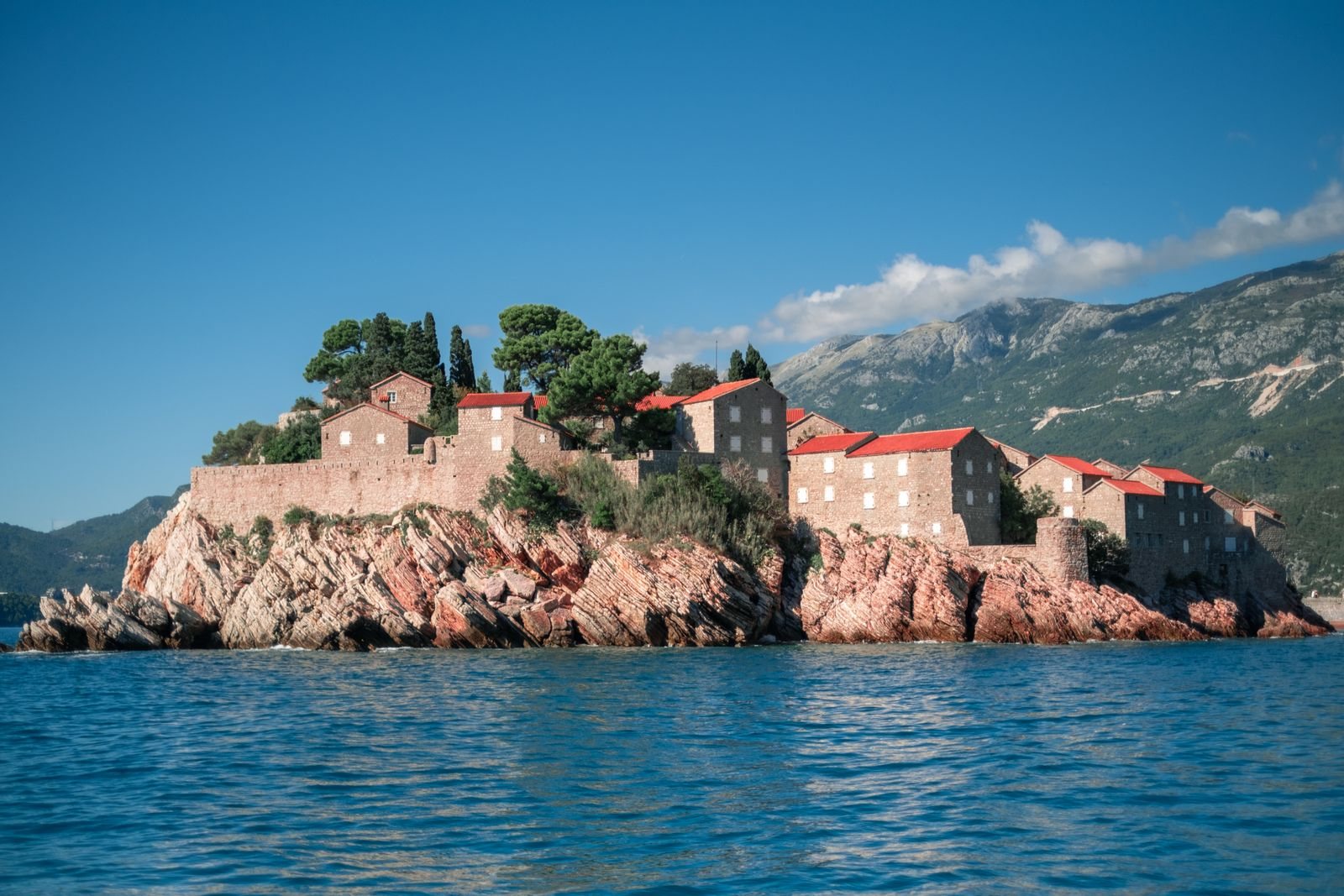
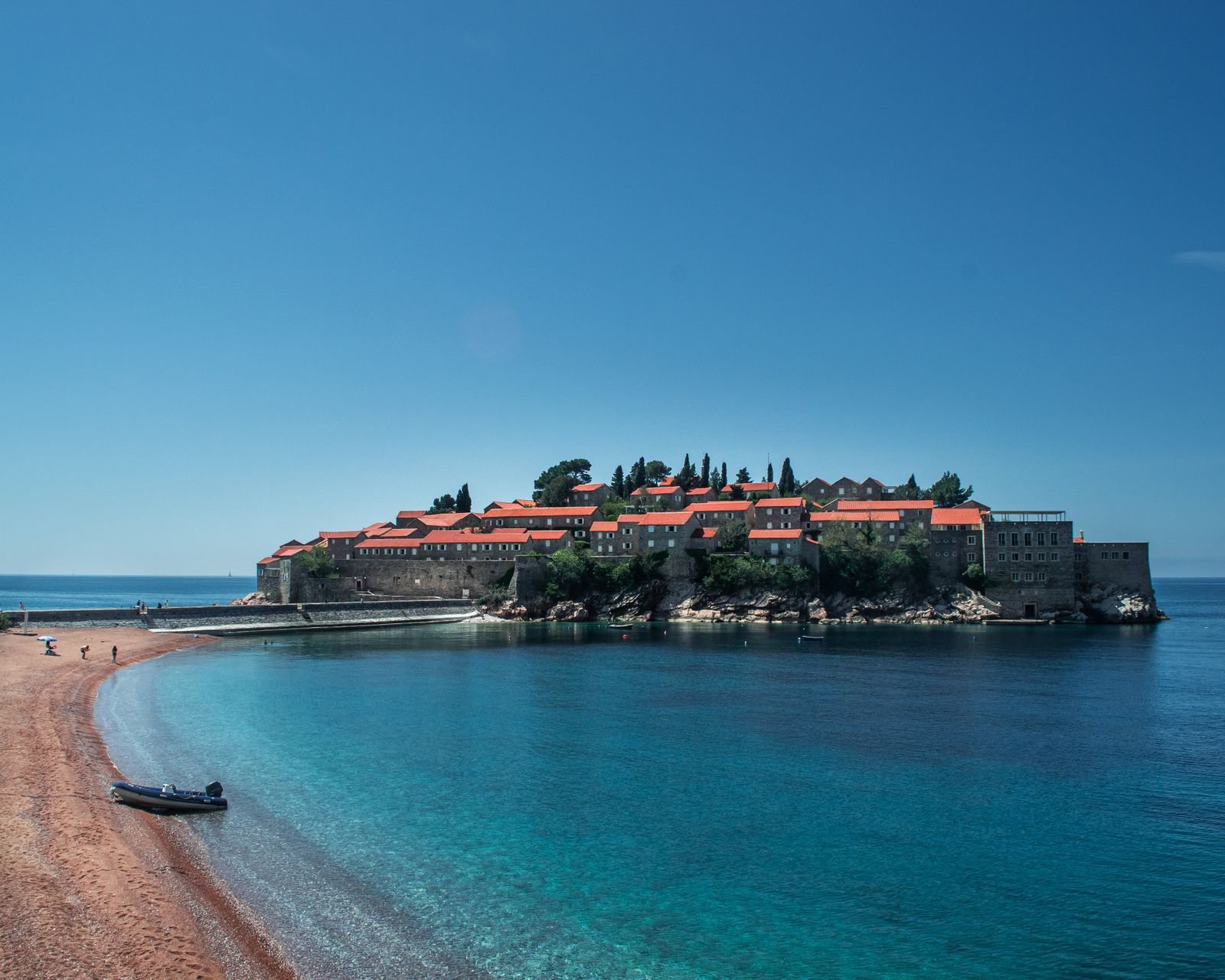
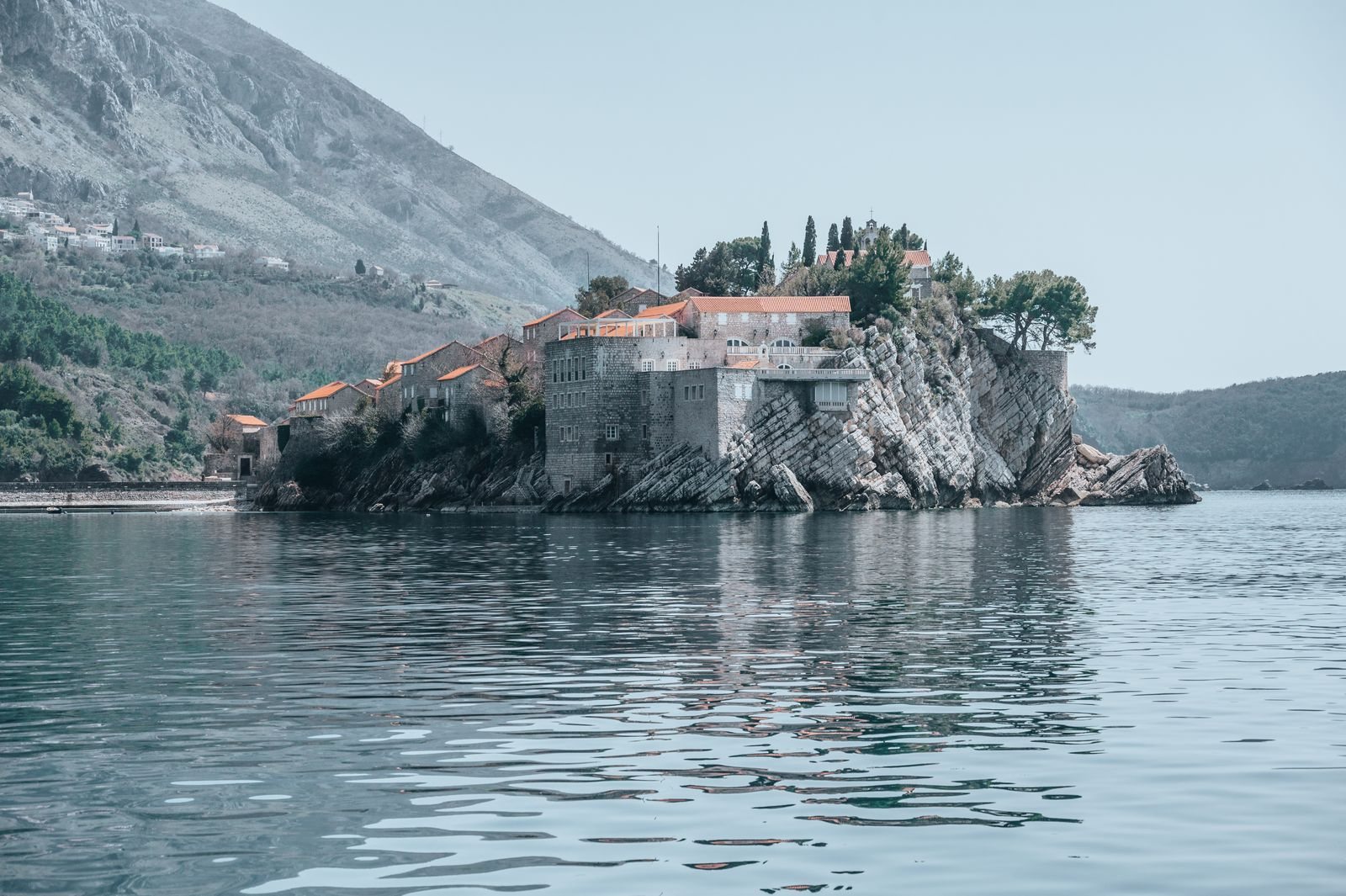
The first time we came around the bend on the coastal road above Sveti Stefan, Todd pulled the car onto the gravel shoulder without saying anything, and we both just sat there. A tiny fortified island of terracotta roofs and pale stone, tethered to the mainland by a thin ribbon of sand, with the Adriatic doing that impossible turquoise thing on both sides of it. We had seen the photo. Everyone has seen the photo. The photo does not prepare you.
Here is the part nobody puts in the caption, though: you probably cannot walk onto the island. Sveti Stefan is a private resort, and it has been closed to the public for most of the last several years. That single fact ruins the day for a lot of visitors who show up expecting to stroll those cobbled lanes, and it is the reason we wanted to write this guide the way we would explain it to a friend over coffee. Because once you know what Sveti Stefan actually is in 2026, and you plan around it rather than against it, it becomes one of the most rewarding half days on the entire Montenegrin coast.
What Sveti Stefan Actually Is Right Now
Sveti Stefan started life in the 1400s as a fishing village built on a rock, fortified against Ottoman raids, with about a dozen families living inside the walls. It stayed that way for five hundred years. Then in the 1950s the Yugoslav government relocated the residents and converted the entire island into a single luxury hotel, which is how it became the place where Sophia Loren and Kirk Douglas and later Novak Djokovic came to be photographed.
Since 2021 the island itself has been closed while a long-running lease dispute between the operator and the Montenegrin government works itself out. Access has opened and closed in fits and starts, and we would not plan a trip around getting on. Check locally when you arrive, ask your hotel, and treat any access as a bonus rather than the point.
What is absolutely open, free, and spectacular is everything around it: the viewpoints, the two beaches on either side of the causeway, the village of Sveti Stefan on the hillside above, and the walking path along the coast. That is what you are coming for.
The Viewpoints, Ranked
There are three places to see Sveti Stefan from, and they are not equal.
The main roadside viewpoint on the Jadranski Put. This is the one in every photo, a wide pull-off directly above the island on the coastal highway. There is room for maybe fifteen cars and a couple of small stands selling drinks. It is free. Go early. By ten in the morning in July there are three tour buses parked here and you are shooting over shoulders.
The path down from the village. From the upper village of Sveti Stefan, a set of stone steps and a paved path drop toward the beaches. About a third of the way down there is a break in the pines that gives you the island framed by branches, and it is a better photograph than the roadside shot because you get depth. Almost nobody stops here.
Praskvica Monastery and the hill above it. Fifteen minutes on foot uphill from the village, this small fourteenth-century monastery has a courtyard and a couple of ancient olive trees, and the elevation gives you the island plus the sweep of the Budva Riviera behind it. This is our favorite, and we have never had to share it.
For sunset, the roadside viewpoint faces roughly southwest, so the light comes in behind and to the right of the island in summer. Late afternoon, about an hour before the sun drops, is when the terracotta really glows.
The Two Beaches
The causeway splits the water into two beaches, and they could not be more different.
Sveti Stefan Beach (the north side) is the pink-tinged pebble beach you see in photos, and roughly the half nearer the island is reserved for resort guests and roped off with loungers. The public half is genuinely lovely, small pink and gray pebbles, water clear enough to see your feet in chest-deep. Bring water shoes. The pebbles are smooth but they are pebbles.
Milocer Beach (the south side), sometimes called Queen’s Beach, sits below the old royal summer villa and is backed by a beautiful park of cedars and olive trees. Part of it is also resort-controlled, but the walk through Milocer Park to get there is free and shaded and is one of the nicest twenty minutes on this coast. There are informational signs about the trees, some of which were planted for the Karadordevic royal family in the 1930s.
Our honest advice: swim on the north side, walk through the park on the south side, and do not spend money on a lounger at either unless you want the resort experience specifically.
The Village Above, Which Everyone Skips
The mainland village of Sveti Stefan climbs the hillside above the highway, and it is where we would actually stay. Narrow lanes, stone houses with fig trees in the yards, a handful of family-run konobas, and a view of the island from almost every terrace. It is quiet in a way that Budva, fifteen minutes up the road, absolutely is not.
Have dinner here. We ate twice at small places with six tables and a handwritten menu, and both times had grilled fish that had been in the water that morning, a plate of blitva (Swiss chard with potatoes and olive oil, the standard Adriatic side), and a carafe of Vranac for less than we would pay for two cocktails on the Budva waterfront.
The Coastal Walk to Przno
This is the thing we recommend most and see recommended least. A paved seaside promenade runs from Milocer Park south to the fishing village of Przno, and it takes about twenty five minutes at a wander. You pass Villa Milocer, the small beach at Kraljicina Plaza, cliffs with pines growing sideways out of them, and half a dozen swimming spots with ladders bolted into the rock.
Przno at the end of it is a real village with a working harbor, a curve of beach, and a couple of restaurants built onto the rocks. Have a coffee, look back up the coast, walk home. If you only have one afternoon in Sveti Stefan and you have already taken the photograph, do this.
Getting There and Getting Around
Sveti Stefan sits about 6 km south of Budva and roughly 40 minutes from Tivat airport or an hour and fifteen from Podgorica.
By car is easiest and it is what we did. The coastal road is good, and there is paid parking in the village and free roadside parking at the viewpoint if you are early. If you are building a wider trip, our Montenegro road trip itinerary puts Sveti Stefan in the right order relative to everything else.
By bus, frequent local buses run the Budva to Bar coastal route and stop on the highway right at the viewpoint. It is about 15 minutes from Budva and costs a couple of euros. This is genuinely convenient and a fine choice if you are based in Budva.
By boat, water taxis run from Budva in summer and give you the island from the sea, which is an angle most people never get.
When to Go
Late May, early June, and September are the sweet spots. The water is warm enough to swim from roughly June through early October, but July and August bring both the crowds and the prices that come with the Adriatic high season, and the viewpoint becomes a scrum.
We were there in the second week of September and had the Praskvica hill to ourselves, swam without a towel-to-towel beach, and still had 26 degree water. If you want the full breakdown by month, we go through it in best time to visit Montenegro.
How Much Time You Need
Half a day covers the viewpoints, a swim, and the walk to Przno. A full day lets you add Praskvica, a long lunch in the village, and a slow afternoon on the beach. Two nights based here is a genuinely good idea if you want a quiet base for exploring the Budva Riviera without staying in Budva itself.
We would not build a week around Sveti Stefan. We would absolutely build two nights around it.
What It Costs
Sveti Stefan is one of the few places in Montenegro where the ordinary and the extraordinary sit right next to each other, price-wise. The viewpoint, the village, the park walk, and the public beach sections are all free. A meal in a village konoba runs roughly 15 to 25 euros a person with a drink. A resort lounger on the reserved beach sections can run 75 to 100 euros a day in season, and the hotel itself, when it is operating, is one of the most expensive rooms in the country.
Guesthouses and apartments in the upper village are the sweet spot, often 60 to 110 euros a night in shoulder season. For a full picture of what a Montenegro trip actually costs day to day, we broke it all out in how much does a trip to Montenegro cost.
A Few Things We Wish We Had Known
The viewpoint pull-off is on a fast section of road with a blind-ish curve. Pull all the way in and watch children carefully.
There is very little shade at the main viewpoint and none on the beach unless you rent an umbrella. In July that matters more than you think at eleven in the morning.
The causeway is visible from the road but the island end is gated. Do not walk down expecting to talk your way on. We watched three separate groups try.
Cash is still useful. Montenegro uses the euro, and card acceptance is good in restaurants but patchy at beach kiosks and small parking lots.
If the island reopens while you are there, tickets have historically been sold at the causeway gate and sell out by mid-morning. Ask your accommodation the night before.
Where to Book
We book almost all of our Montenegro stays through Booking.com, which has by far the deepest coverage of the apartments and guesthouses in the upper village. The properties with terraces facing the island go first, so book those earlier than you think you need to.
For boat trips along the Budva Riviera, kayak rentals, and day tours that combine Sveti Stefan with Kotor or Ostrog, we use Viator. The boat trips are worth it here specifically because the sea-level view of the island is one you cannot get any other way.
Is Sveti Stefan Worth It?
Yes, with the asterisk we opened with. If you arrive expecting to wander a medieval island village, you will be disappointed and you will feel like you drove out for a photograph. If you arrive understanding that the island is a private resort and the experience is the coastline, the park, the village above, and the walk to Przno, you will have one of the best days of your trip.
We have been back twice. Neither time did we set foot on the island. Both times we would go again tomorrow.
If you are building out a Montenegro trip, start with how to plan a trip to Montenegro for the logistics, then read our guides to Kotor and Perast for the Bay, which pairs beautifully with a couple of nights on the Budva Riviera.