Disclosure: This post contains affiliate links. If you book through our links, we may earn a small commission at no extra cost to you. Thanks for supporting Faceted Travel!
Table of Contents
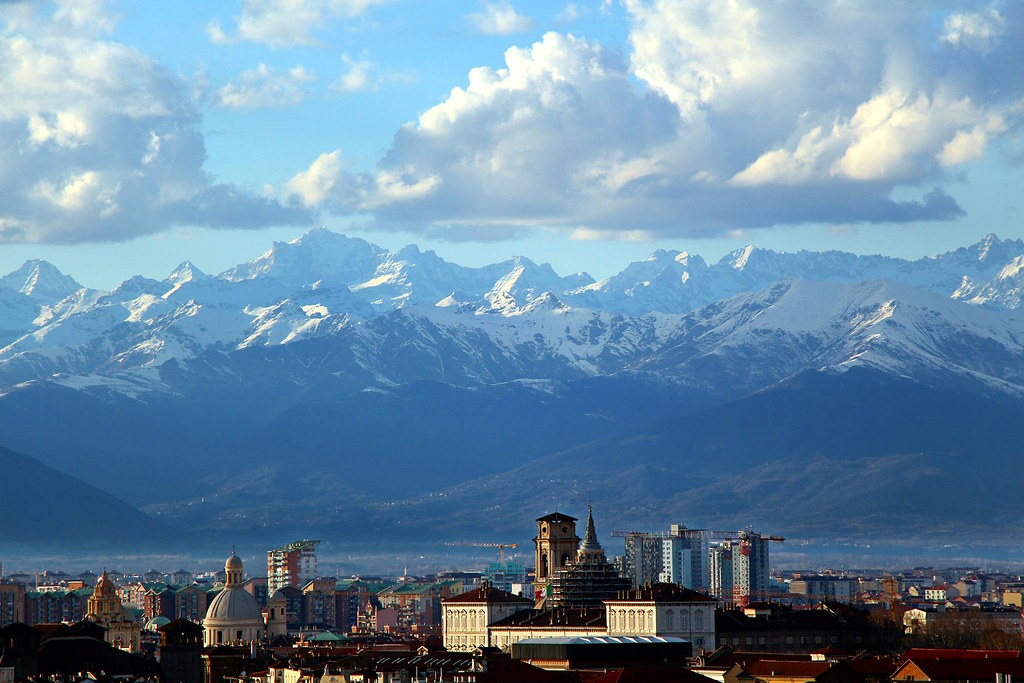
We almost skipped Turin. It was a name on a map between Milan and the French border, and every itinerary we read treated it as a transit stop. Then we spent four days there and could not figure out why nobody talks about it. Turin has grand baroque squares, 11 miles of covered arcades, the best chocolate in Italy, an Egyptian museum second only to Cairo’s, and a snowcapped Alpine backdrop you can see from the middle of downtown.
It also has roughly a fraction of the tourist volume of Florence or Venice. That combination is rare enough that we are still slightly protective of it.
Why Turin Deserves More Than a Layover
Turin, or Torino in Italian, was the first capital of unified Italy and the seat of the House of Savoy for centuries. That history left the city with an architectural grammar that feels more French or Austrian than Italian: wide boulevards, uniform baroque facades, formal squares, and royal palaces stacked one after another.
Then came Fiat, and Turin became Italy’s industrial engine. That gave the city a working-class backbone and, later, a wave of post-industrial reinvention that turned old factories into museums and galleries.
The result is a city with genuine texture. It is not curated for visitors. When you sit down for an aperitivo at 6:30pm on a Tuesday, the people around you are locals who came from work, not tour groups. After spending time in the heavily-visited parts of Italy, that difference is hard to overstate.
If you have already done Milan, Turin is only an hour away by high-speed train and gives you a completely different read on northern Italy.
Best Time to Visit Turin
April through June is the sweet spot. Mild temperatures in the 60s and 70s Fahrenheit, the Alps still hold snow on the horizon, and the city’s outdoor cafe culture is in full swing without summer heat.
September and October may be even better. The heat breaks, the Alba truffle season starts in October just an hour south, and the light through the arcades in autumn is extraordinary. This is also harvest time in the Barolo and Barbaresco wine country nearby.
July and August get hot and humid, and many family-run restaurants close for two or three weeks in August. Turin is not a beach city and it empties out. We would avoid it.
November through March is cold and often foggy, but this is chocolate season and it is a genuine reason to go. Bicerin, the layered coffee, chocolate, and cream drink invented here, tastes correct when it is 38 degrees outside. December brings the Luci d’Artista, a citywide light art installation that runs through January.
Our guide to the best time to visit Italy breaks down the full seasonal picture region by region.
How Long to Stay
Three days is right for the city itself. Add a fourth or fifth if you want to get into the Langhe wine country or the royal residences outside the center.
- Day 1: Piazza Castello, Palazzo Reale, Piazza San Carlo, the arcades, aperitivo in Quadrilatero Romano
- Day 2: Museo Egizio in the morning, Mole Antonelliana and the National Cinema Museum in the afternoon
- Day 3: Cross the Po to Monte dei Cappuccini for the view, then Parco del Valentino and the Borgo Medievale
- Day 4: Day trip to the Langhe wine region or the Reggia di Venaria Reale
What to Actually Do in Turin
Museo Egizio
This is the reason many people finally book a trip to Turin. The Egyptian Museum holds more than 30,000 artifacts and is the oldest museum in the world dedicated exclusively to Egyptian culture. The collection is second in size and importance only to the Egyptian Museum in Cairo. There is a full reconstructed tomb, an entire hall of statuary, and papyri you will not see anywhere else.
Give it three hours minimum. Book online in advance, especially on weekends, and go first thing in the morning. Entry runs about €18.
Mole Antonelliana and the Cinema Museum
The Mole is Turin’s landmark, a 550-foot spire that was originally meant to be a synagogue and ended up as the tallest museum in the world. Inside is the Museo Nazionale del Cinema, arranged as a spiral ramp around a vast open hall with red velvet loungers in the middle where you lie back and watch film clips on the ceiling.
Take the panoramic glass elevator to the observation deck. On a clear day you can see the Alps ringing the entire northern horizon. Combined ticket for the museum and lift is around €20.
Piazza Castello and the Royal Palaces
Piazza Castello is the heart of the city and the launching point for four major streets. Palazzo Madama sits in the middle, a building with a medieval castle at the back and a baroque facade at the front. The Palazzo Reale complex on the north side includes the Royal Armoury, the Royal Library where a Leonardo self-portrait is kept, and the Chapel of the Holy Shroud.
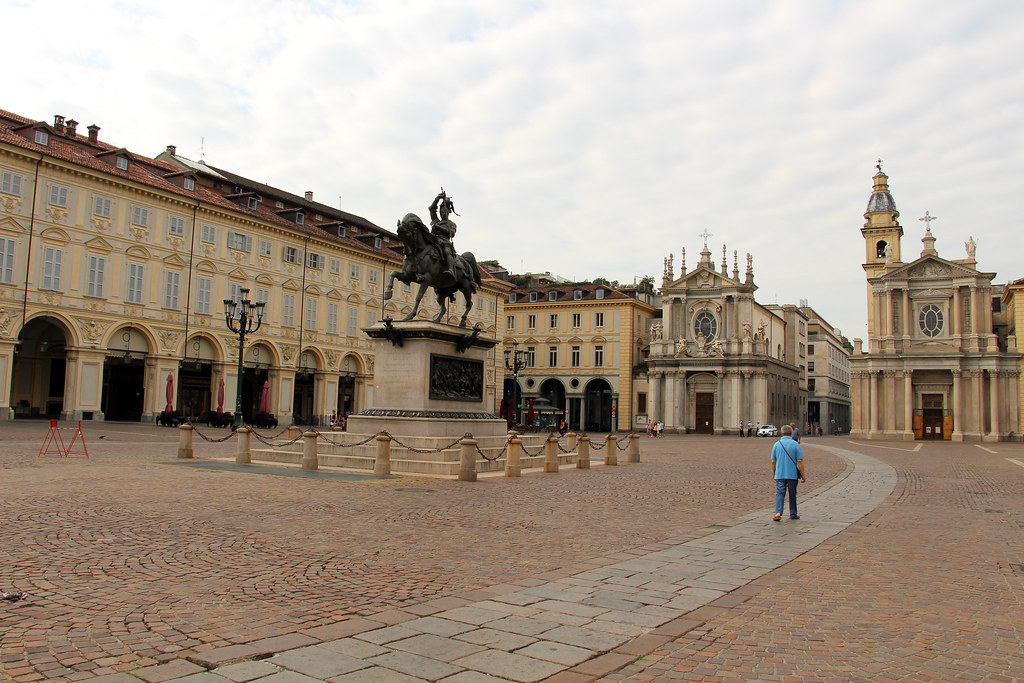
The Shroud of Turin itself is stored in the Cathedral of San Giovanni Battista next door and is almost never on display. The cathedral is free to enter and there is a photographic reproduction on view.
The Arcades
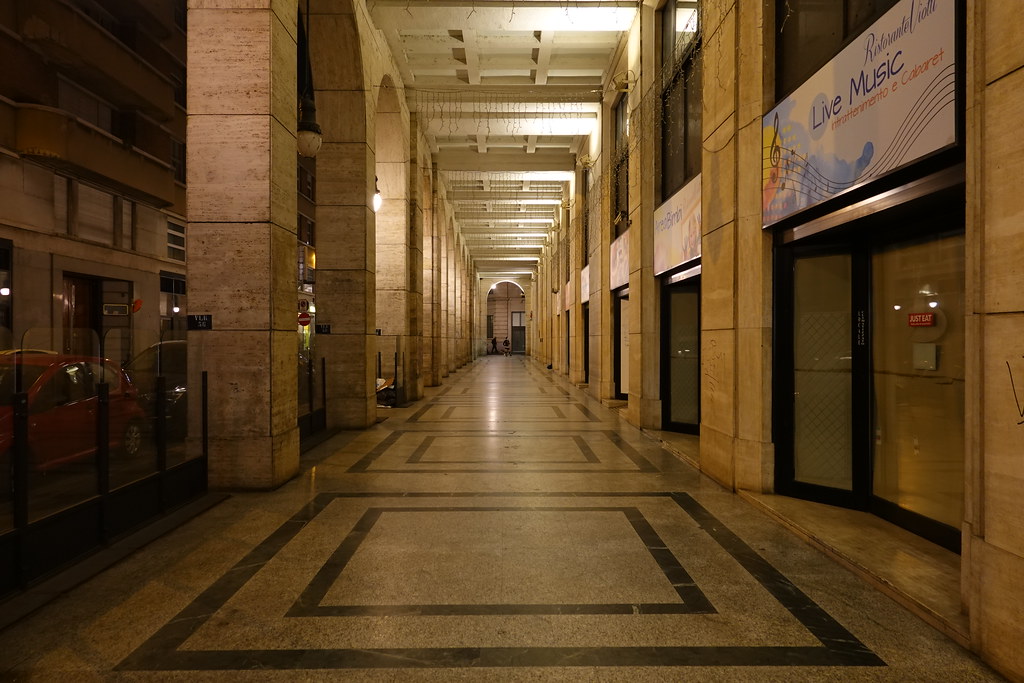
Turin has roughly 11 miles of covered porticoes, about 11 kilometers, built so the royal family could move through the city without getting rained on. They now serve everyone. You can walk from Porta Nuova station to Piazza Castello and beyond entirely under cover, past historic cafes, bookshops, and chocolatiers. On a rainy day this is a genuine feature, not a curiosity.
The Historic Cafes
Turin’s cafe culture is old and serious. Caffè Al Bicerin has been operating since 1763 and invented the bicerin. Caffè Mulassano is where the tramezzino sandwich was created. Baratti & Milano is all mirrors and gilt from 1875.
These places are not cheap. A bicerin runs about €7 and you will pay a premium to sit. Do it once anyway.
Aperitivo
Turin claims to have invented aperitivo, and it takes the tradition further than most Italian cities. Between roughly 6pm and 9pm, buying a drink for €8 to €12 gets you access to a buffet that in many bars is substantial enough to replace dinner. The Quadrilatero Romano and the area around Piazza Vittorio Veneto are the best hunting grounds.
What Turin Costs
Turin is meaningfully cheaper than Milan, Florence, or Venice. Here is per person per day in US dollars.
Budget: $75 to $105. Hostel or budget room, market food and aperitivo dinners, walking, one museum.
Mid-range: $150 to $215. Three or four-star central hotel, one restaurant meal a day, two or three attractions, occasional metro or tram.
Comfortable: $280 and up. Historic hotel, restaurant dinners, wine tastings, guided experiences, day trips.
Specific numbers: a full sit-down lunch with wine is $20 to $30. Coffee standing at the bar is about $1.50. Museum entries run $12 to $20. A single transit ticket is around $2. Hotels in the center in shoulder season commonly land at $110 to $170 a night for a solid three-star.
The Torino+Piemonte Card bundles museum entry and transit. If you plan three or more paid museums, run the math.
For the wider picture, our how much a trip to Italy costs breakdown covers the regional differences that make northern Italy pricier than the south, with Turin as a notable exception.
Eating in Turin
Piedmontese food is different from what most travelers think of as Italian food. It is richer, more butter-driven than olive oil, and closer to French cooking than anywhere else in Italy.
Agnolotti del plin are tiny hand-pinched stuffed pasta, usually served with a roast meat sauce or simply in butter and sage. This is the signature dish.
Vitello tonnato is cold sliced veal under a tuna and caper sauce. It sounds wrong and it is excellent.
Bagna cauda is a warm anchovy and garlic dip for raw vegetables, served communally in a small pot over a flame. Autumn and winter dish.
Gianduja is the hazelnut-chocolate paste invented in Turin during a cocoa shortage in the Napoleonic era. Gianduiotti, the small foil-wrapped ingots, make the best souvenir you will bring home.
Wine is the real prize. You are at the doorstep of Barolo, Barbaresco, Barbera d’Asti, and Nebbiolo. A very good bottle at a restaurant here costs what a mediocre one costs in Florence.
Day Trips From Turin
The Langhe wine region is about 90 minutes south by car and is a UNESCO World Heritage landscape of vine-covered hills and hilltop villages. Alba, Barolo, and La Morra are the core stops. October brings white truffle season and the Alba truffle fair.
Reggia di Venaria Reale is a Savoy royal palace 30 minutes outside the city, often compared to Versailles, with enormous formal gardens. Bus and shuttle connections run from central Turin.
Sacra di San Michele is a medieval abbey perched on a rocky outcrop with a serious approach staircase and views down the Susa Valley. It was an inspiration for The Name of the Rose.
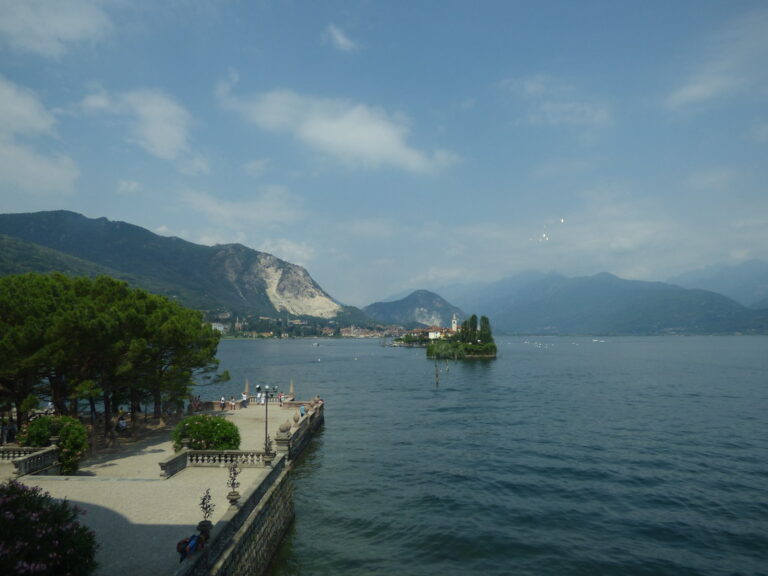
Lake Maggiore is roughly two hours away if you want to add an Italian lake. If lakes are your priority, though, Lake Como is the better anchor and pairs well with a Milan stop.
Getting There and Getting Around
Turin has its own airport, but most travelers arrive by train. From Milan it is one hour on the high-speed line. From Paris it is about five and a half hours direct. From Rome it is around four hours.
Inside the city, walk. Turin’s grid is regular and flat. There is one metro line, plus an extensive tram and bus network, but we used transit maybe four times in four days.
Do not rent a car for the city. Do consider one for the Langhe, where public transit is thin and the whole point is winding between hill villages.
Before you book flights, our post on the best time to book flights covers the windows that consistently save us money on transatlantic routes.
What We Would Do Differently
We would go in October. We visited in spring and it was lovely, but truffle season and the Langhe harvest overlapping is a better version of the same trip.
We would book Museo Egizio for the first slot of the day. We went mid-afternoon and it was busier than it needed to be.
We would give the Langhe two days, not one. A day trip works but feels compressed. Staying a night in Alba or La Morra changes the experience.
We would eat more aperitivo dinners. We kept booking proper restaurants out of habit and the best food nights were the ones where we just grazed at a bar with a glass of Barbera.
Where to Book
- Hotels: Booking.com’s Turin listings cover everything from budget rooms near Porta Nuova to historic properties on Piazza Castello. Staying inside the arcade zone between Porta Nuova and Piazza Castello puts you within walking distance of nearly everything.
- Tours and activities: Viator’s Turin tours include Langhe wine day trips, walking food tours through the Quadrilatero, and Egyptian Museum guided entries. The wine day trips are the strongest value if you do not want to drive.
- Travel insurance: Northern Italy trips often involve multiple trains and connections, and delays cascade. See our guide to the best travel insurance for Europe.
Our Honest Take
Turin is the Italian city we recommend most often to people who have already done the classics and come back saying the crowds ruined it. It gives you baroque grandeur, world-class museums, extraordinary food and wine, and Alpine views, at maybe 60 percent of the cost and 20 percent of the crowds of Florence.
It is not a city that performs for you. You have to meet it partway, walk the arcades, sit in a cafe for longer than feels necessary, and let the aperitivo hour go long. Do that and it will be one of the better four days you spend in Italy.
—
Building a northern Italy route? Pair this with our Milan, Italy travel guide one hour east, our Bologna, Italy travel guide for the other great Italian food city, or our how to plan a trip to Italy guide for stitching the whole thing together.
Keep Reading