Disclosure: This post contains affiliate links. If you book through our links, we may earn a small commission at no extra cost to you. Thanks for supporting Faceted Travel!
Table of Contents
The first plate of tagliatelle al ragù we ate in Bologna ruined “spaghetti bolognese” for us forever. Silky ribbons of fresh egg pasta, a slow-cooked meat sauce with zero tomato showiness, a dusting of real Parmigiano, and we sat there in a tiny trattoria near the market grinning at each other like we had discovered a secret. In a way, we had. Bologna is the food capital of the country that basically invented eating well, and most travelers blow right past it on the train to Florence or Venice.
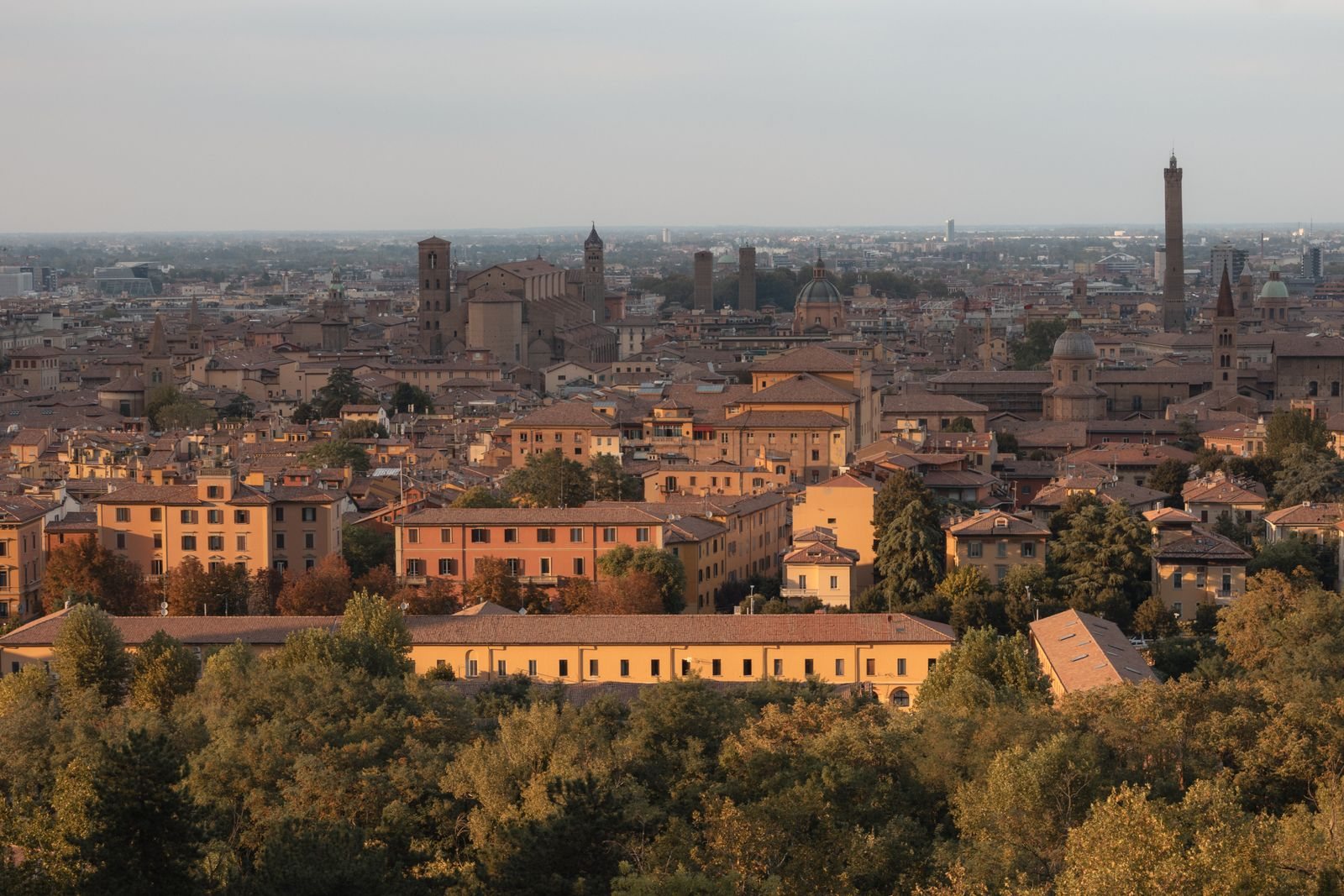
Bologna is the capital of the Emilia-Romagna region in northern Italy, and it wears three nicknames that tell you everything: La Grassa (the fat one, for its food), La Dotta (the learned one, home to the oldest university in the world), and La Rossa (the red one, for its terracotta rooftops and left-leaning politics). It has medieval towers, thirty-plus miles of covered porticoes, a gorgeous central square, and almost none of the tour-group crush you fight elsewhere in Italy.
Here is our complete guide to Bologna, including what to see, where to eat (this section is long, and we make no apologies), how to use it as a base, and why we think it deserves a lot more than an afternoon.
Why Bologna Belongs on Your Italy Itinerary
If you have already done Rome, Florence, and Venice, Bologna is the antidote to Italy fatigue. It is a real, working city with a huge student population, which keeps it lively, affordable, and refreshingly unpretentious. You are surrounded by staggering history and world-class food, but you are eating it alongside locals and university kids instead of shuffling through a selfie-stick gauntlet.
The historic center is one of the largest and best-preserved in Europe, and it is almost entirely walkable. Those famous porticoes, the arched covered walkways that line the streets, mean you can explore for hours in the shade or the rain without ever getting rained on. It is also one of the best-connected cities in Italy by train, which makes it a brilliant base for day trips across the region.
Add in that your euro stretches further here than in the marquee cities, and Bologna becomes one of the smartest stops you can make in northern Italy.
Best Time to Visit Bologna
We visited in early October and loved it. The brutal summer heat had broken, the light turned golden on the red buildings, and the food scene leans hard into autumn (think truffles, mushrooms, and heartier plates).
Here is the seasonal breakdown:
Spring (April to June) is lovely, with mild weather, blooming piazzas, and manageable crowds before the summer peak. It is one of the best windows to visit.
Summer (July and August) gets hot and humid in the Po Valley, and many locals actually leave town, so some restaurants close for holidays. It is doable, but it is our least favorite time here.
Fall (September to October) is our sweet spot. The weather is comfortable, the food is at its seasonal best, and the university brings the city back to full energy after the summer lull.
Winter (November to March) is cold and can be foggy, but it is atmospheric, cheap, and the hearty regional cooking has never tasted better than on a gray December night.
If you are timing a wider Italian trip and want the season-by-season details, our guide on the best time to visit Italy breaks it all down.
How to Get to Bologna and Get Around
Bologna is one of Italy’s great rail hubs, which is a big part of its appeal. High-speed trains connect it to Florence in about thirty-five minutes, Venice in about ninety minutes, Milan in about an hour, and Rome in a little over two hours. If you are building a northern Italy loop, Bologna belongs right in the middle of it.
The city has its own international airport, the Guglielmo Marconi, just a few miles from the center, connected by a quick automated monorail called the Marconi Express that drops you at the central train station in about seven minutes.
Once you are in town, you will not need a car or even much public transit. The historic center is compact and made for walking, and those porticoes make every stroll comfortable. In fact, we would actively discourage driving into the center, which is a restricted traffic zone with fines waiting for the unwary. For the mechanics of stringing Italian cities together by train, our how to plan a trip to Italy guide covers exactly how we do it.
Best Things to Do in Bologna
Climb the Asinelli Tower
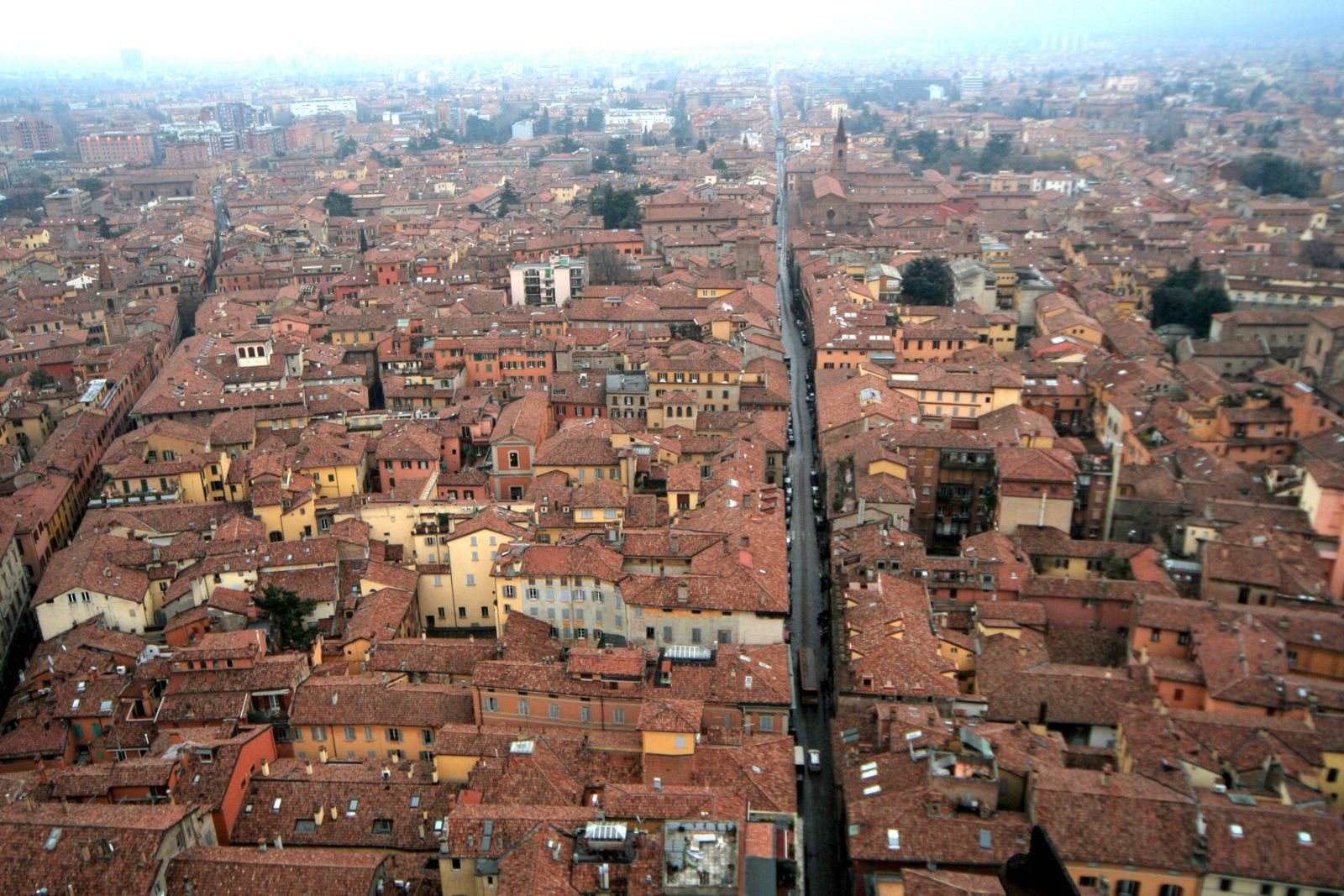
Bologna once bristled with medieval towers, and two of the survivors, the Two Towers (Due Torri), still lean over the center like something out of a fairy tale. You can climb the taller one, the Asinelli Tower, up a steep wooden staircase to a view over the entire terracotta city and the hills beyond. Book your timed ticket in advance, because entry is limited and slots go fast.
Soak Up Piazza Maggiore
The main square, Piazza Maggiore, is the grand living room of Bologna, anchored by the enormous Basilica di San Petronio, one of the largest churches in the world (and famously left unfinished on its facade). Grab a coffee, watch the city go by, and step inside the basilica, which is free and cavernous. Right alongside is the Fountain of Neptune, a muscular Renaissance bronze that locals simply call “the Giant.”
Get Lost in the Quadrilatero
Just off the main square lies the Quadrilatero, a warren of narrow medieval lanes that has been Bologna’s market district since Roman times. This is where the city’s food obsession is on full display: shop windows piled with mortadella, wheels of Parmigiano, fresh tortellini, cured meats, seafood, and produce. Come hungry, graze as you go, and stop for an aperitivo at one of the tiny bars where the crowd spills into the street each evening.
Walk Under the Porticoes to San Luca
Bologna’s porticoes are a UNESCO World Heritage site, and the most famous stretch is the covered walkway that climbs to the Sanctuary of San Luca on a hill above the city. It is the longest portico in the world, with hundreds of arches marching up the hillside for nearly four kilometers. The walk up is a workout, but the sanctuary and the sweeping views over Bologna and the countryside are worth every step. If the climb is not your thing, a little tourist train runs up too.
Explore the University Quarter
Bologna is home to the oldest university in continuous operation in the world, founded in 1088, and the student energy defines the city. Wander the university quarter around Via Zamboni, peek into the astonishing anatomical theater at the Archiginnasio (an old carved-wood lecture hall for dissections), and enjoy the bookshops, cheap eats, and buzzing bars that the student population supports.
We booked a food-focused walking tour of the Quadrilatero and a day trip out to the Parmigiano and balsamic producers through Viator, mostly so we could read recent reviews and cancel free if plans shifted. You can browse current Bologna food tours and activities on Viator here and reserve the popular ones early, because the small-group food tours sell out.
Eating Your Way Through Bologna
We are going to be honest: the food is the reason to come, so give this its own day. Emilia-Romagna is arguably the greatest food region in Italy, and Bologna is its capital.
Tagliatelle al ragù is the dish the world clumsily calls “spaghetti bolognese,” except here it is fresh egg-ribbon pasta with a slow, meaty, barely-tomatoed sauce, and it is a revelation.
Tortellini in brodo, tiny hand-folded pasta parcels served in a clear capon broth, is the local comfort food, especially in the cooler months.
Mortadella is the original bologna, the silky, pistachio-flecked cured pork that puts the deli version to shame. Buy it fresh from a Quadrilatero shop.
Lasagne alla bolognese, layered with fresh spinach pasta, ragù, and béchamel, is nothing like the version you grew up with.
Beyond the plates themselves, do not miss the region’s crown jewels, which you can taste on a day trip: Parmigiano Reggiano from Parma, traditional balsamic vinegar aged for decades in Modena, and prosciutto di Parma. We did a producer tour and watched a wheel of Parmigiano get cracked open at a dairy, and it reframed how we think about cheese entirely.
For an affordable but memorable dinner, look for a family-run trattoria a few streets off the main square, order whatever pasta they made fresh that day, and get the house Sangiovese or Lambrusco. We rarely spent big and rarely ate badly.
Best Day Trips From Bologna
Bologna’s rail links make it a superb base. A few of our favorites:
Modena (about twenty minutes by train) is the home of balsamic vinegar, Ferrari, and Massimo Bottura’s world-famous restaurant, plus a gorgeous compact center.
Parma (about an hour) gives you Parmigiano, prosciutto, and an elegant, art-filled town.
Ferrara (about thirty minutes) is a beautifully preserved Renaissance city with a moated castle and almost no tourists.
Ravenna (about an hour) holds some of the most spectacular Byzantine mosaics on earth, glittering gold ceilings that will stop you in your tracks.
You are also close enough to reach Verona and Lake Garda for a change of pace from city and food into romance and scenery.
Where to Stay in Bologna
We recommend staying inside or right next to the historic center so you can walk to the towers, the market, and the train station with ease.
Luxury: The Grand Hotel Majestic “Già Baglioni,” a lavish historic hotel steps from Piazza Maggiore, is the splurge with genuine grandeur.
Mid-range: Hotels around Via dell’Indipendenza and the university quarter, like the Art Hotel Commercianti near San Petronio, put you in the thick of it in comfortable rooms at fair prices.
Budget: Bologna’s student population means plenty of well-run guesthouses, B&Bs, and hostels, so it is easy to keep costs down in a city that is already cheaper than Florence or Venice.
Where to Book
We booked our room through Booking.com because the best-located central hotels fill up during university events and food festivals, and free cancellation let us hold a spot while we finalized the trip. You can compare Bologna hotels on Booking.com here.
For food tours, the Parmigiano and balsamic producer visits, and day trips, we use Viator for the flexible cancellation and verified reviews. Browse Bologna tours and food experiences on Viator and book the small-group ones ahead of time.
Traveling through multiple Italian cities by train, a little travel insurance covers you for the delays and cancellations that occasionally happen. Here is how we think about it in our guide to the best travel insurance for a Europe trip.
Practical Tips for Visiting Bologna
Come hungry and pace yourself. The temptation is to eat everything at once. Spread it out, do an aperitivo crawl, and leave room for gelato.
Book the Asinelli Tower ahead. Climbing slots are timed and limited, and they sell out, especially on weekends.
Use it as a base. With train times this good, you can sleep in affordable Bologna and day-trip to pricier, busier places.
Walk the porticoes. They are not just pretty, they are practical shade and rain cover, and they are a UNESCO site in their own right.
Watch the driving zones. The center is a restricted traffic area (ZTL). If you have a rental car, park outside and walk in to avoid fines.
Is Bologna Worth It?
For us, it is one of the most underrated cities in Italy, full stop. Bologna gives you jaw-dropping history, the best food in the country, a walkable red-brick center, and a real local energy, all for less money and hassle than the headline destinations. We came for the pasta and stayed for the whole city.
If you love eating well, wandering medieval streets, and skipping the crowds, put Bologna near the top of your Italy list. Climb a tower, walk the porticoes, and order the tagliatelle. You will understand within one bite.
Planning more of Italy? Do not miss our guides to Florence, Italy for Renaissance masterpieces just down the line, Verona, Italy for romance and Roman ruins, and our master how to plan a trip to Italy guide to tie your whole route together.