Disclosure: This post contains affiliate links. If you book through our links, we may earn a small commission at no extra cost to you. Thanks for supporting Faceted Travel!
We have eaten our way through a lot of Europe, and San Sebastián is the only city where we planned the sightseeing around the meals instead of the other way around. By day two we had a spreadsheet (Todd’s doing), a pintxo strategy, and a firm rule: never sit down when you can stand at a bar with a glass of txakoli and a slice of grilled octopus.
Table of Contents
- Why San Sebastián Belongs on Your Spain Itinerary
- The Pintxo Crawl: How to Eat Like You Live Here
- La Concha and the Beaches
- Beyond the Beach: What to Do Between Meals
- Where to Stay in San Sebastián
- When to Go
- Getting There and Getting Around
- What It Costs
- A Perfect Day in San Sebastián
- Tips for First-Timers
- Where to Book
- Our Honest Take
This is our full San Sebastián travel guide: how the pintxo crawl actually works, which beach to pick, what to do between meals, and how to fold this corner of Basque Country into a bigger trip alongside Madrid and Barcelona.
Why San Sebastián Belongs on Your Spain Itinerary
San Sebastián (Donostia in Basque, and you will see both names everywhere) is a small, elegant resort city on Spain’s northern coast, about 20 minutes from the French border. It has more Michelin stars per capita than almost anywhere on earth, a crescent of golden sand called La Concha that regularly tops “best city beach in Europe” lists, and an old town packed so densely with pintxo bars that you can eat at six of them in a night without walking more than 400 meters.
It also feels different from the rest of Spain. This is Basque Country: the language on the street signs looks like nothing you have seen before, the food culture is treated as seriously as religion, and the weather is greener and moodier than the sun-baked south. If your mental image of Spain is Seville’s orange trees, San Sebastián will feel like a different country. In many of the ways that matter to locals, it is.
The Pintxo Crawl: How to Eat Like You Live Here
What a pintxo actually is
A pintxo (PEEN-cho) is the Basque cousin of the tapa: a small bite, usually a couple of euros, traditionally served on a slice of bread with a toothpick through it. The modern versions have long since escaped the bread. Expect miniature crab tartlets, foie with apple compote, grilled mushrooms with egg yolk, and slow-braised beef cheek that has no business costing four euros.
The system: walk in, elbow to the bar, order a drink and one or two pintxos, eat standing, pay, leave, repeat next door. Nobody orders six things at one bar. The crawl is the whole point.
The bars we would go back to tomorrow
- Gandarias for the solomillo (a seared beef tenderloin bite) and jamón that they carve constantly.
- La Cuchara de San Telmo for braised veal cheek and grilled foie, cooked to order from a kitchen the size of a closet.
- Bar Néstor for tortilla: they make two a day, you sign up on a list for a slice, and yes, it is worth the theater. Their tomato salad in summer is somehow also legendary.
- Txepetxa for anchovies a dozen ways (trust us, get the one with sea urchin cream).
- Borda Berri for the “kebab” of pork rib and the risotto that isn’t really risotto.
Drink like a local
Order txakoli, the lightly sparkling Basque white wine that bartenders pour from a meter above the glass, or a zurito, which is a half pour of beer sized exactly for one bar stop. Basque cider (sagardoa) is the third pillar, sharp and completely un-sweet.
La Concha and the Beaches
Playa de la Concha
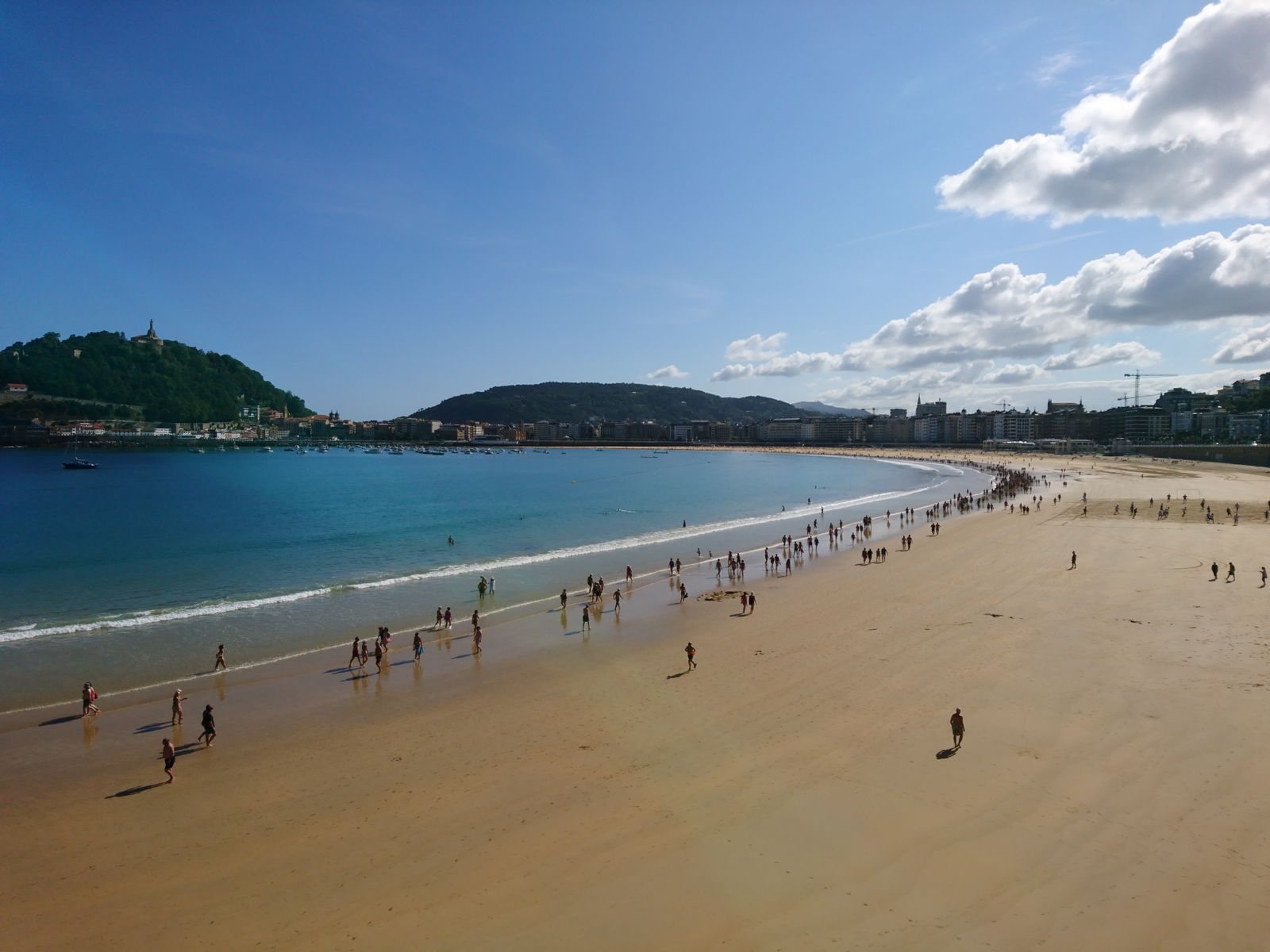
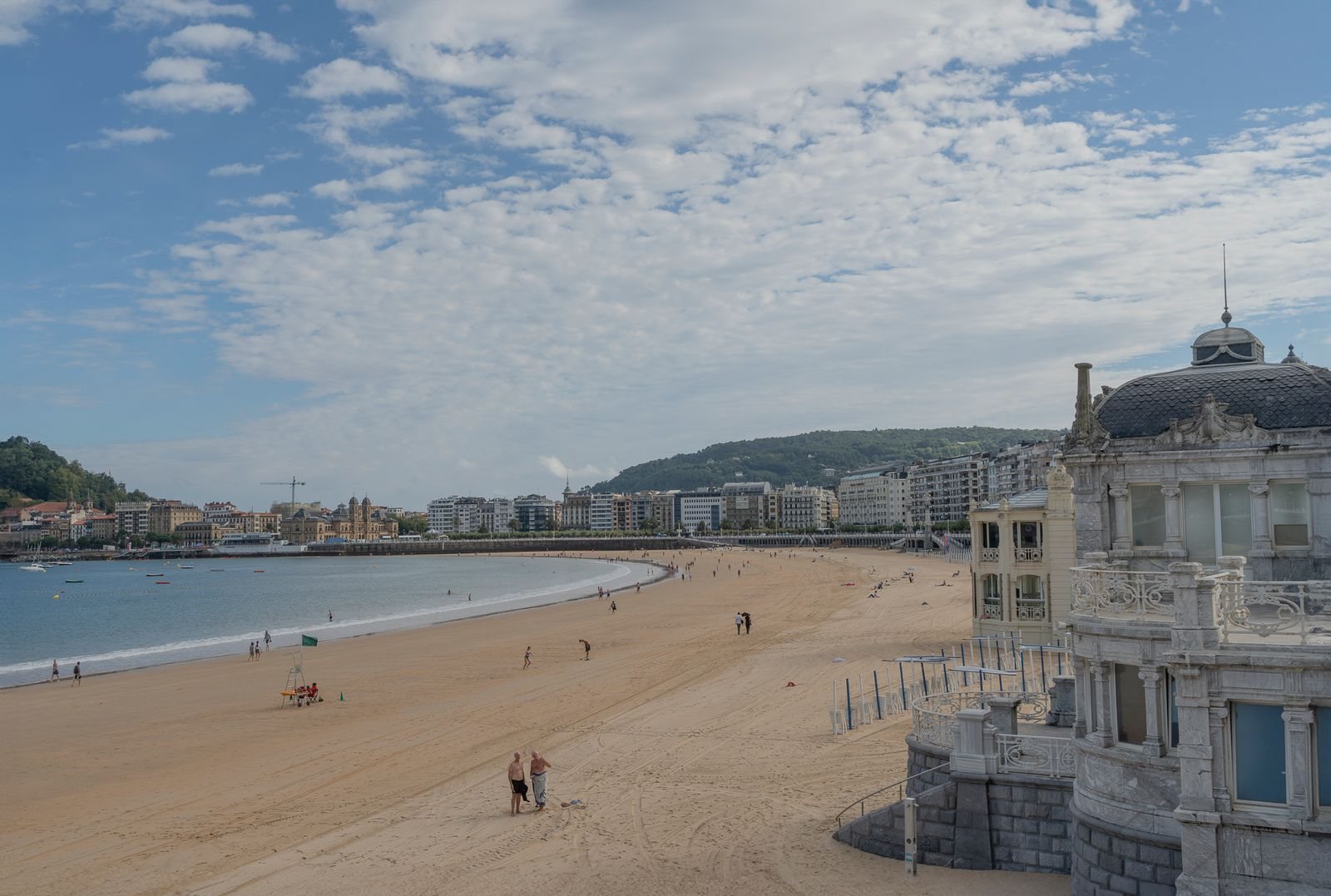
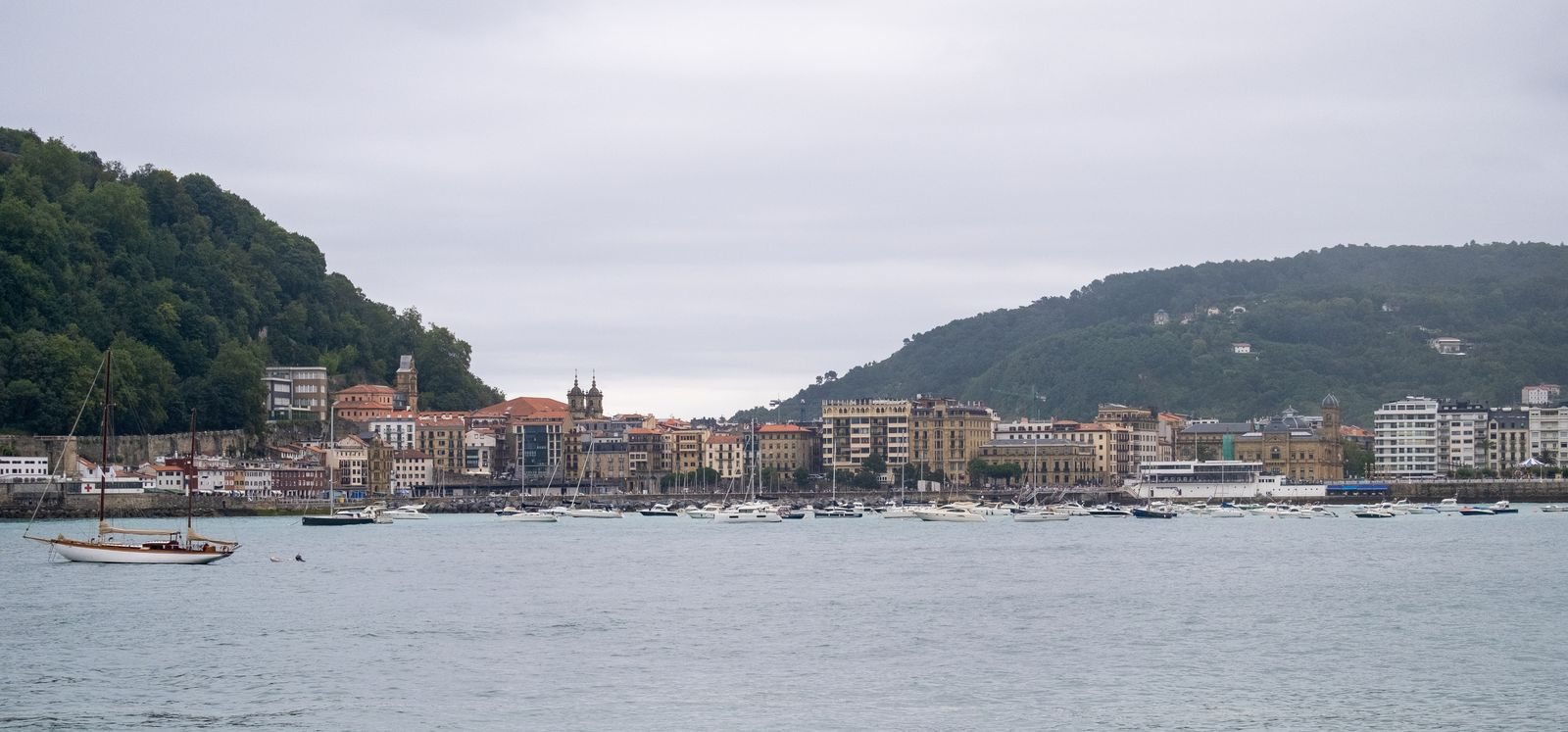
La Concha is the postcard: a 1.5 kilometer half-moon of fine sand wrapped around a calm, protected bay, with a white balustraded promenade that has barely changed since Spanish royalty summered here a century ago. The water is calmer than you expect from the Atlantic and warm enough for swimming from June through September. Rent one of the striped canvas awnings in summer, or just walk the promenade at sunset with everyone else in the city.
Playa de Zurriola
Across the river in the Gros neighborhood, Zurriola is the surf beach: bigger waves, younger crowd, board rental shops a block inland. Even if you have no intention of surfing, Gros has some of the best pintxo bars outside the old town and a fraction of the crowds.
Isla de Santa Clara
The small island in the middle of the bay has a tiny beach at low tide, a lighthouse, and picnic spots. A little ferry runs from the port in summer, or strong swimmers make the crossing from La Concha (there is a floating platform halfway).
Beyond the Beach: What to Do Between Meals
Climb Monte Urgull
The forested hill at the end of the old town is topped by a castle and a 12 meter statue of Christ that watches over the bay. The climb takes about 25 minutes on shaded paths, it is free, and the views over La Concha are the best in the city. Go late afternoon so you come down hungry for the evening crawl.
Ride the funicular up Monte Igueldo
At the far end of La Concha, a creaky 1912 funicular rattles up to a hilltop with a small vintage amusement park and the classic panorama shot of the whole bay. The view is the reason to go: time it for an hour before sunset.
Walk the old town (Parte Vieja)
Between meals, the old town earns a slow wander: the arcaded Plaza de la Constitución (the numbered balconies date from its days as a bullring), the baroque Santa María basilica, and the San Telmo Museum, which does an excellent job explaining Basque culture and why this region considers itself a nation.
Day trip options
- Hondarribia, a painted fishing town on the French border, 30 minutes by bus, with a pintxo scene that locals argue rivals San Sebastián’s.
- Getaria, 25 minutes west, for grilled whole turbot and txakoli vineyards above the sea.
- Bilbao and the Guggenheim, about 75 minutes by bus, very doable as a day trip if the architecture is calling you.
- Biarritz, France, 45 minutes away, because crossing a border for lunch never stops being fun.
Where to Stay in San Sebastián
- Parte Vieja (Old Town): in the middle of the pintxo action, which is wonderful until 1am on a Saturday. Light sleepers should look elsewhere.
- Centro / La Concha: the elegant middle ground, steps from the beach and a 10 minute walk to the old town. This is where we stayed and where we would stay again. The Hotel de Londres has the classic bay views if you are celebrating something.
- Gros: across the river, near the surf beach, more residential, noticeably cheaper, with a great local bar scene. Best value in the city.
Book early. San Sebastián is small, hotel stock is limited, and summer plus the September film festival sell the city out months ahead.
When to Go
June and September are the sweet spot: warm enough for the beach, half the crowds of peak summer, and the food scene in full swing. July and August bring the best swimming weather along with peak prices and packed bars. Shoulder seasons (April, May, October) are moody and green, with plenty of rain, but the pintxo crawl works in any weather, and hotel prices drop hard. Winter is quiet and mild by northern standards, though you will want a rain jacket more than swimwear. For how the north fits into Spain’s bigger weather picture, see our guide to the best time to visit Spain.
Getting There and Getting Around
San Sebastián’s own airport is tiny; most travelers fly into Bilbao (a direct bus runs from Bilbao airport to San Sebastián in about 75 minutes) or arrive by train or bus from Madrid or Barcelona. From Madrid, the fastest trains take around 5 hours; buses are cheaper and only a little slower. Driving the northern coast is spectacular if you are road-tripping Basque Country and Cantabria.
In the city itself you will not need transit at all: the old town, both beaches, and every neighborhood you care about sit within a 30 minute walk, and the promenade makes even the long way round a pleasure.
What It Costs
San Sebastián is one of Spain’s pricier cities, but the pintxo system keeps food costs surprisingly reasonable: a full night of crawling, drinks included, usually ran us 30 to 40 euros a person, and a splurge at a Michelin temple like Arzak or Akelarre is there if your budget allows. Mid-range hotels run 120 to 200 euros in season, noticeably more in August. For a full budget breakdown of a Spain trip, our Spain trip cost guide has real numbers.
A Perfect Day in San Sebastián
Morning coffee and a slice of tortilla in Gros, then a walk along Zurriola to watch the surfers. Cross the river, wander the Parte Vieja while it is still quiet, and climb Monte Urgull before lunch. Spend the afternoon on La Concha (swim, nap, repeat), take the funicular up Igueldo for the golden-hour panorama, then dedicate the entire evening to the pintxo crawl: six bars, one dish at each, txakoli throughout, and Bar Néstor’s tortilla if you planned ahead. End with a walk along the illuminated promenade. That is the whole city, and it is more than enough.
Tips for First-Timers
- Eat lunch like it matters. Many of the best pintxo bars do their freshest cooking at midday, and the 1pm to 3pm window is calmer than the evening crush. Kitchens genuinely close mid-afternoon, so do not show up hungry at 5pm expecting miracles.
- Learn three words. “Eskerrik asko” (thank you in Basque) earns real smiles, “zurito” gets you the right-sized beer, and “barra” means you are ordering at the bar like you should be.
- Carry some cash. Most bars take cards, but the busiest counters move faster with coins, and a few classics remain stubbornly cash-first.
- Watch the tide. La Concha nearly disappears at high tide and doubles in size at low; check the tide table if a long beach walk is the plan.
- Sunday nights are quiet. A number of famous bars close Sunday evening or Monday; plan your big crawl for Thursday through Saturday when the atmosphere peaks.
Where to Book
- Hotels: Booking.com’s San Sebastián listings cover everything from Gros guesthouses to the grand dames on La Concha; book three to five months out for summer, and even earlier for the September film festival.
- Tours and activities: Viator’s San Sebastián tours include guided pintxo crawls (worth it on night one to learn the system), Basque cooking classes, txakoli vineyard visits, and day trips to Bilbao and the French coast.
Our Honest Take
San Sebastián is the best eating city we have found in Europe, full stop, and the fact that it comes wrapped around one of the continent’s prettiest urban beaches feels almost unfair. It is not cheap, it books out early, and it will rain on you at some point. None of that matters once you are standing at a crowded bar with a toothpick in one hand and a txakoli in the other. Give it three nights and come hungry.
Planning a bigger Spain trip? Start with our Madrid travel guide and Barcelona travel guide, then map the whole route with our guide on how to plan a trip to Spain.