Disclosure: This post contains affiliate links. If you book through our links, we may earn a small commission at no extra cost to you. Thanks for supporting Faceted Travel!
Table of Contents
- Why Seville Should Be on Your Spain Itinerary
- The Big Three: Alcázar, Cathedral, and Plaza de España
- Beyond the Big Three
- Where and What to Eat in Seville
- The Heat Is Real: When to Visit Seville
- Getting There and Getting Around
- Day Trips From Seville
- Where to Stay
- What a Seville Trip Costs
- A Perfect Three Days in Seville
- Where to Book
- Our Honest Take
Seville is the only city where we have rearranged an entire dinner reservation around the way sunlight hits a building. By our second evening we understood the local rhythm: nothing important happens before 10am, everything beautiful happens after 6pm, and the hours in between are for long lunches, tiled courtyards, and pretending you have somewhere to be.
This is our full Seville travel guide, built from a week of wandering: what to see (and what to book weeks ahead), where the tapas actually live, how to survive the famous Andalusian heat, and how Seville fits into a bigger Spain itinerary alongside Madrid and Valencia.
Why Seville Should Be on Your Spain Itinerary
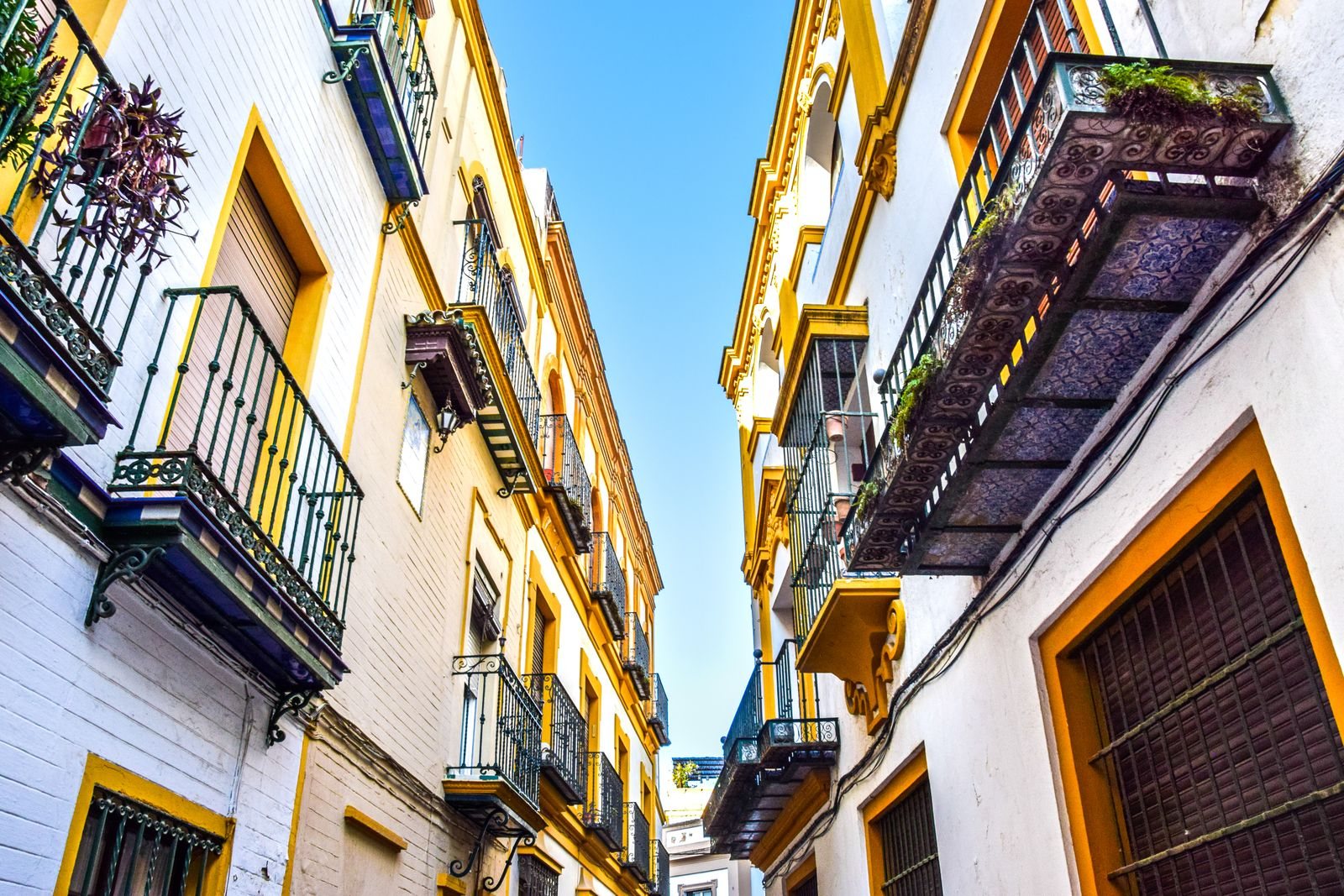
Madrid has the museums and Barcelona has the skyline, but Seville has the atmosphere, and atmosphere is the thing you actually remember. This is the capital of Andalusia, the sun-baked southern region that gave the world flamenco, tapas, and most of what the rest of the planet pictures when someone says “Spain.” The old town is one of the largest in Europe, a genuine labyrinth of whitewashed lanes, wrought-iron balconies, and plazas shaded by orange trees, and almost everything you came to see sits inside it within a 20 minute walk.
Seville rewards slow travel. You can hit the big three sights in a packed day and a half, but the city really pays out when you give it three or four nights and let the evenings stretch. Todd measured our average dinner start time for the week: 9:40pm. We regret nothing.
The Big Three: Alcázar, Cathedral, and Plaza de España
The Real Alcázar
The Royal Alcázar is the single best thing in Seville and one of the best things in Spain, a royal palace complex where Moorish and Christian architecture spent seven centuries finishing each other’s sentences. The Mudéjar courtyards look like lacework carved from plaster, the ceilings are gilded to the point of absurdity, and the gardens roll on through palm avenues, tiled fountains, and peacocks that own the place. Game of Thrones fans will recognize it as Dorne.
Book a timed ticket online at least a week ahead, more in spring, and take the earliest slot of the day. We walked in at opening and had the Courtyard of the Maidens nearly to ourselves for ten minutes; by 11am the same spot was shoulder to shoulder.
Seville Cathedral and the Giralda
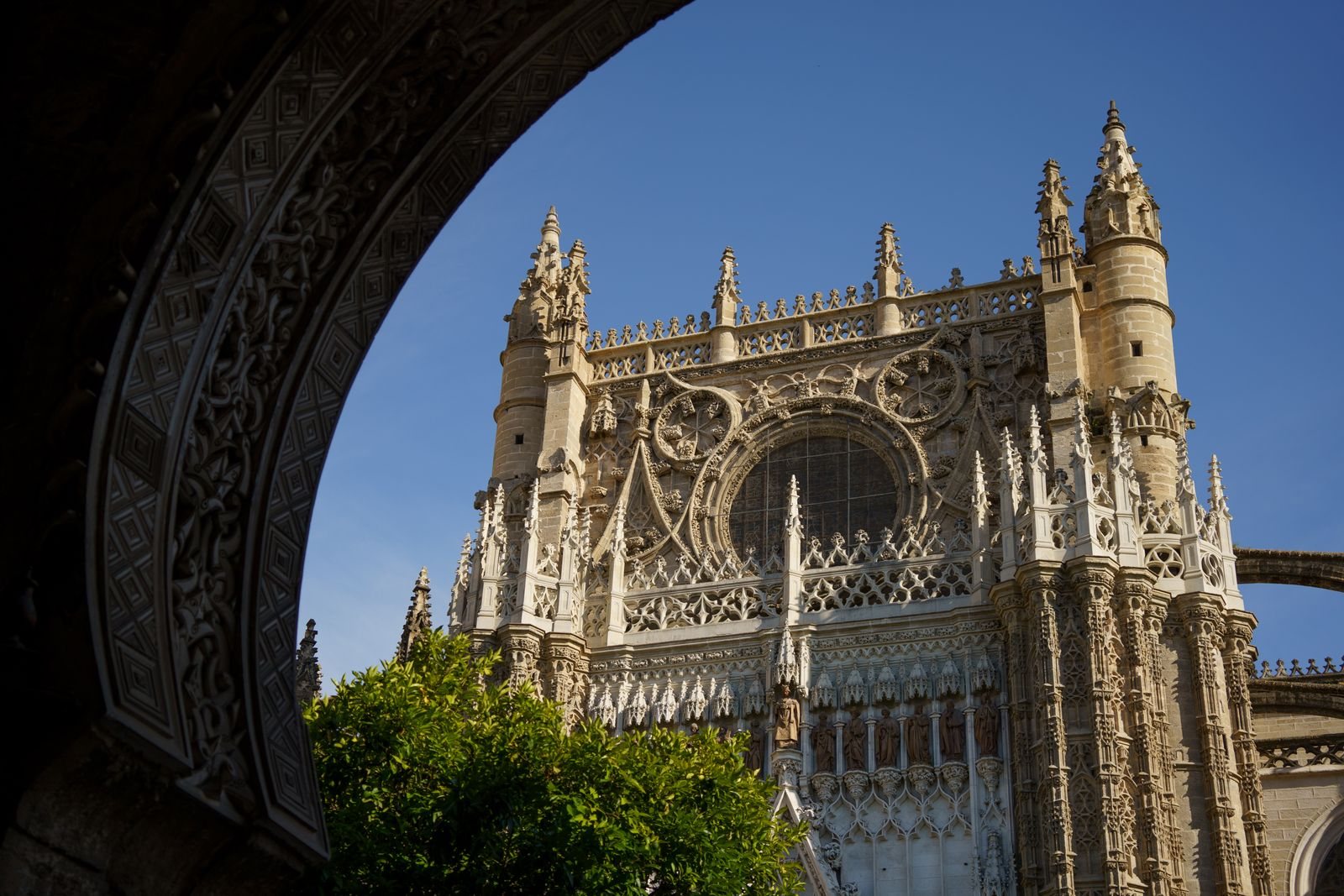
Seville Cathedral is the largest Gothic cathedral on earth, built on the site of the city’s great mosque with the apparent design brief “make future generations think we were mad.” Inside are Columbus’s tomb, a gold altarpiece the size of a cinema screen, and a general sense of scale that no photo manages. The Giralda, the bell tower, began life as a 12th century minaret, and you climb it via 35 ramps rather than stairs (the sultan liked to ride his horse up). The view over the old town’s rooftops is the best in the city.
Plaza de España
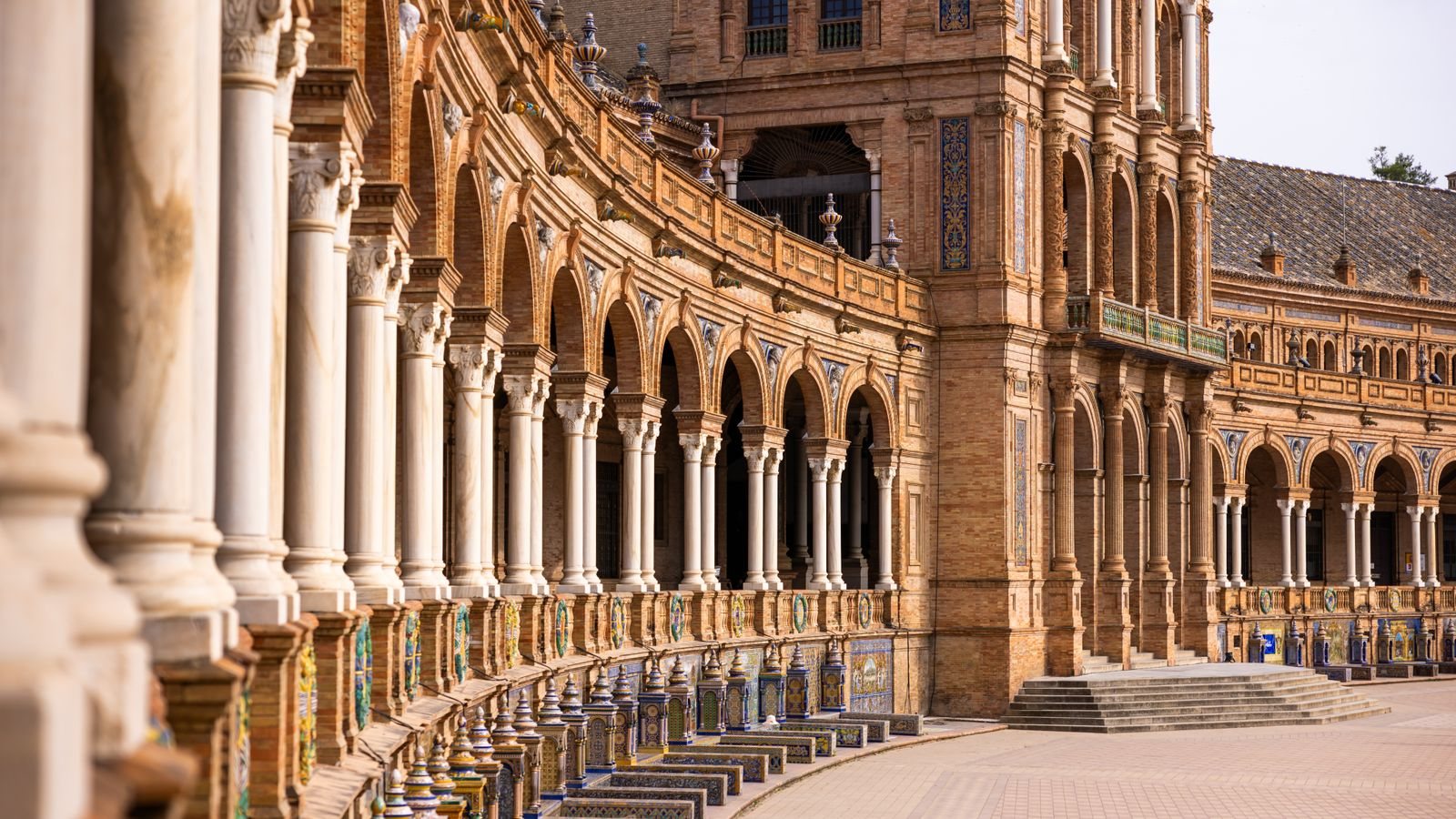
Built for the 1929 Ibero-American Exposition, Plaza de España is a vast semicircular palace wrapped around a canal, with tiled alcoves for every province in Spain and rowboats for rent in the moat. It is free, it is absurdly photogenic, and it is at its absolute best in the last hour before sunset when the brickwork turns copper. It sits inside María Luisa Park, which is also the shadiest place in the city for an afternoon walk.
Beyond the Big Three
Barrio Santa Cruz
The old Jewish quarter is Seville’s postcard: lanes barely wide enough for two people, flower-drowned balconies, and tiny plazas that appear out of nowhere. Yes, it is touristy. Go anyway, but go at 9am or 10pm when it empties out and the orange blossom does its work.
Triana, Across the River
Cross the Isabel II bridge into Triana and Seville gets noticeably more local. This is the historic ceramics and flamenco district, and it is still where we found our favorite tapas bars and the covered Triana Market, perfect for a cheap grazing lunch. The riverbank on the Triana side, Calle Betis, has the best sunset view of the city skyline, drink in hand.
Metropol Parasol (Las Setas)
The giant waffle-shaped wooden canopy over Plaza de la Encarnación divides opinion in Seville, but the rooftop walkway is genuinely great at night, when the structure is lit and the ticket price includes a drink discount. Kimberly declared it “the most fun 5 euros in Seville” and she stands by it.
See Flamenco Properly
Flamenco was born in Andalusia and Seville takes it seriously. Skip the big dinner-show combos and book a small tablao instead: an hour, fifty seats, no food, all intensity. We went to a show in Triana where the nearest dancer was six feet away and the footwork sounded like gunfire. Book a day or two ahead; the small venues sell out.
Where and What to Eat in Seville
Tapas culture here is a contact sport: you stand, you order two or three small plates, you move to the next bar. Essentials to order at least once: jamón ibérico, salmorejo (a thicker, better gazpacho), espinacas con garbanzos (spinach and chickpeas, the city’s signature), carrillada (braised pork cheek), and fried fish anywhere near Triana. A tapa runs 3 to 5 euros, and three tapas plus a drink is a full dinner.
Two habits worth copying: order tinto de verano (red wine with lemon soda) instead of sangria like the locals do, and treat breakfast as a 2 euro tostada with tomato and olive oil at a bar counter, not a hotel buffet.
The Heat Is Real: When to Visit Seville
Seville is the hottest major city in Europe. July and August afternoons regularly pass 40°C (104°F), and the city functionally shuts from 2pm to 6pm. We cover Spain’s seasons fully in our best time to visit Spain guide, but the short version for Seville: March to mid June and mid September through November are ideal. April brings Semana Santa processions and the Feria de Abril fair, the city’s two spectacular weeks, with prices and crowds to match. We went in late September and had 29°C days, warm nights, and no queue longer than 20 minutes outside the Alcázar.
If you do come in summer, adopt the local schedule without negotiation: sights at 9am, siesta and pool from 2pm, dinner at 10pm.
Getting There and Getting Around
Seville’s airport has direct budget flights from most of Europe, but the smoothest arrival from within Spain is the AVE high-speed train: 2.5 hours from Madrid, under 6 from Barcelona with a connection, arriving at Santa Justa station a 20 minute walk from the old town. Book Renfe tickets two or three months out for the cheapest fares.
Inside the city, your feet do almost all the work; the old town is largely pedestrianized and taxis cannot reach half of it anyway. The one exception worth knowing: the airport bus (EA line) runs every 15 to 30 minutes and beats a taxi for value. Rent a car only if you are continuing on a wider Andalusia road trip, and even then collect it on your way out of town, not before.
Day Trips From Seville
Córdoba is the day trip to take: 45 minutes by AVE, and the Mezquita, a cathedral inside a thousand-year-old mosque with a forest of candy-striped arches, is one of the greatest buildings in Europe. Ronda, the white town split by a 100 meter gorge, makes a dramatic second option at about 90 minutes by car. Cádiz, Europe’s oldest city, offers Atlantic beaches and fried fish an hour and 40 minutes away by direct train. And Granada with the Alhambra is reachable at about 2.5 hours by train, though it deserves its own nights rather than a rushed day.
Where to Stay
Stay inside the old town your first time: Barrio Santa Cruz for postcard atmosphere near the big sights, the Alfalfa and Encarnación area for a more local feel with the best tapas density, or Triana if you want the river and flamenco on your doorstep at gentler prices. Boutique hotels built around tiled courtyards are the Seville specialty and worth the modest splurge; many also have small rooftop plunge pools, which from May to September is not a luxury but equipment.
A double in a well-located boutique hotel runs roughly 90 to 160 euros most of the year. During Semana Santa and Feria, prices triple and rooms vanish months out, so if your dates touch April, book the moment your plans firm up.
What a Seville Trip Costs
Andalusia is one of Western Europe’s better values. Between tapas pricing, walkable sights, and reasonable hotels, we averaged clearly less per day in Seville than in Barcelona or Madrid. As a rough per-person guide with hotels split two ways: budget travelers can manage on 70 to 90 euros a day, mid-range comfort lands around 120 to 170, and the Alcázar plus cathedral plus a flamenco show together cost under 60 euros. For the full national picture, including flights and rail, see our how much does a trip to Spain cost breakdown.
A Perfect Three Days in Seville
Day one is for the monuments while your legs are fresh: Alcázar at opening (you booked ahead, right?), the cathedral and Giralda climb before lunch, a long menú del día somewhere in the Alfalfa, then Barrio Santa Cruz in the softening evening light and a first tapas crawl near the Alameda.
Day two flips to the neighborhoods. Cross into Triana for the market and a ceramics browse in the morning, take the afternoon slowly (this is your siesta-and-rooftop-pool day, and in summer that is not optional), then Plaza de España and María Luisa Park for the golden hour, finishing with a small tablao flamenco show at 9 or 10pm.
Day three is the choose-your-own day: the AVE to Córdoba for the Mezquita if you want one more world-class building, or a slow Seville day of Las Setas, the Museum of Fine Arts, and a last unhurried lunch. We did Córdoba and still made it back for a final sunset drink on Calle Betis, which is the correct way to leave Seville.
If you only have two days, compress day three away and move flamenco to night one. If you have four, add Ronda or simply repeat day two; nobody has ever complained about a second golden hour at Plaza de España.
Where to Book
- Hotels: Booking.com’s Seville listings are strongest in the old town’s courtyard boutiques; filter for air conditioning always, and a rooftop pool if you travel May through September. Book three to four months out, and much earlier for April’s festivals.
- Tours and activities: Viator’s Seville tours cover skip-the-line Alcázar and cathedral tickets, small tablao flamenco shows, tapas walks in Triana, and Córdoba day trips by high-speed train. The early-access Alcázar entries are the ones worth grabbing first.
Our Honest Take
Seville is the most atmospheric city in Spain, and we say that having tried hard to find a challenger. It does not have a beach and its summers are frankly hostile, but no other Spanish city rewires your daily rhythm so completely or so pleasantly. Give it three nights minimum, book the Alcázar before you book dinner, and plan your days around the golden hour. The city certainly does.
Planning a bigger Spain trip? Start with our Madrid travel guide and Valencia travel guide, check the best time to visit Spain before you pick dates, and budget it all with our trip to Spain cost breakdown.