Disclosure: This post contains affiliate links. If you book through our links, we may earn a small commission at no extra cost to you. Thanks for supporting Faceted Travel!
Table of Contents
Here is the strange thing about Bergamo: millions of travelers land at its airport every year, because it serves the budget airlines flying into “Milan,” and then almost all of them board a bus and drive away from one of the most beautiful small cities in Italy. We were nearly among them. A delayed connection gave us an accidental night in Bergamo, and by the next morning we had rearranged the rest of the trip to stay two more.
The short version: a perfectly preserved medieval hill town, wrapped in monumental Venetian walls that are now a UNESCO World Heritage Site, sitting above a lively modern city, with Michelin-level food at trattoria prices and a fraction of the crowds that fill Verona or Florence. It is 50 minutes from Milan by train. Go before everyone else figures this out.
Why Bergamo Deserves More Than a Layover
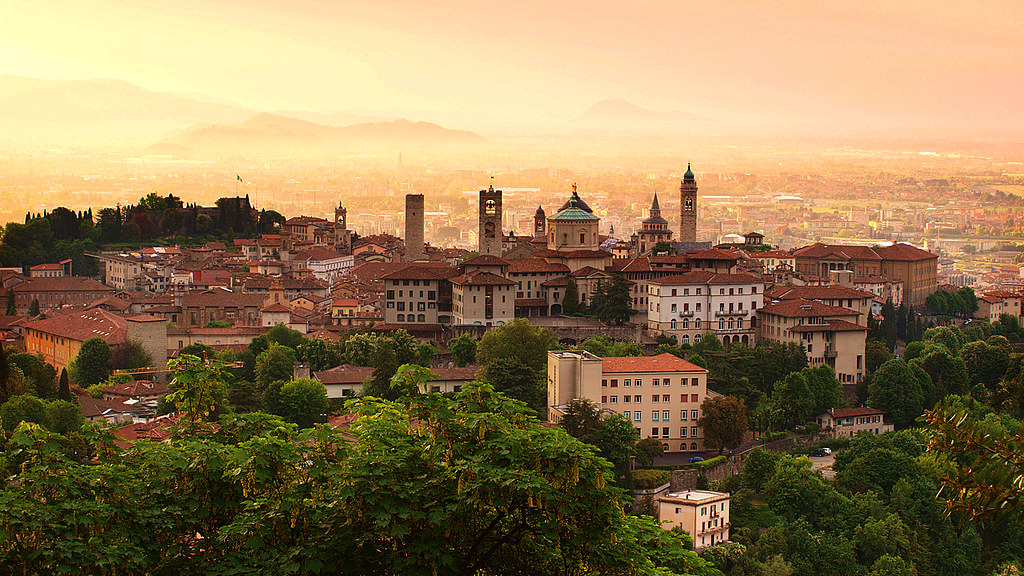
Bergamo is really two cities. The Città Alta (Upper City) is the medieval showpiece on the hill: cobbled lanes, a perfect piazza, towers, and those extraordinary 16th-century walls. The Città Bassa (Lower City) below is elegant, prosperous northern Italy: broad boulevards, porticoed shopping streets, and most of the hotels. A funicular from 1887 stitches the two together, rattling up through gardens and stone arches, and riding it is one of the best two-minute experiences in Lombardy.
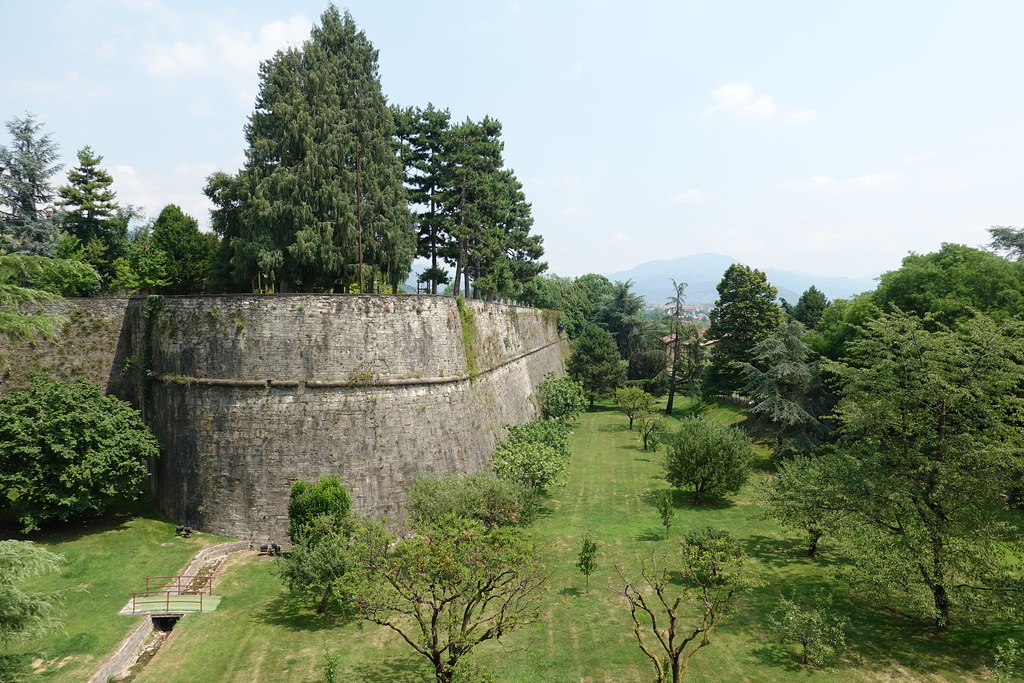
What makes the city special is the intactness. When Venice ruled Bergamo, it ringed the Upper City with more than five kilometers of defensive walls in the 1500s, and those walls were never once breached in battle. The result: a Renaissance city frozen in its prime, now recognized by UNESCO, with green ramparts you can walk at sunset while the Po Valley spreads out below like a map.
We keep saying northern Italy hides its best cities in plain sight, and this is the strongest case since our Turin, Italy travel guide. If Milan is the flashy front door of Lombardy, Bergamo is the beautiful room nobody checks.
Best Time to Visit Bergamo
April through June is prime: mild temperatures, long evenings on the walls, and the surrounding valleys green from spring rain. September and October run a close second, with grape harvest energy in the hills and polenta season arriving in the kitchens.
July and August are hot and humid down in the Po Valley, though the Upper City catches a hilltop breeze the Lower City never gets. August also empties the city of locals on vacation, and some family restaurants close for weeks.
Winter is quiet, foggy, and atmospheric, and pairs beautifully with the Christmas markets and a pot of stracciatella gelato’s hot cousin, thick Italian hot chocolate. Fun fact we did not make up: stracciatella gelato was invented in Bergamo, at La Marianna in 1961, and the pilgrimage is mandatory. For the wider seasonal picture, our guide to the best time to visit Italy breaks the country down month by month.
The Best Things to Do in Bergamo
Piazza Vecchia and the Heart of the Città Alta
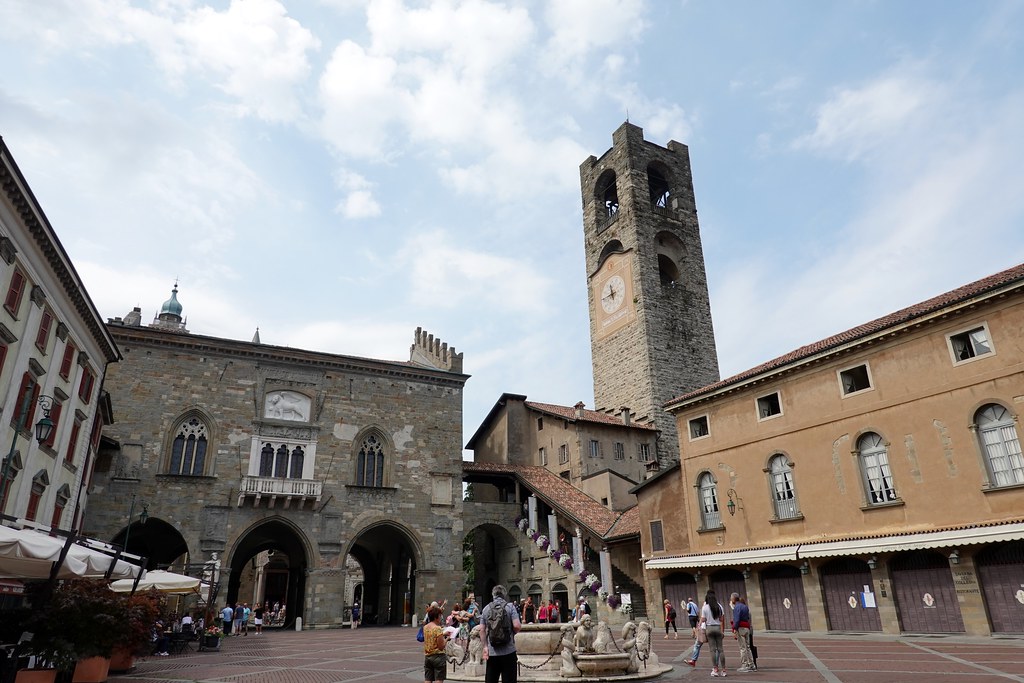
The architect Le Corbusier supposedly said you could not touch a single stone of Piazza Vecchia without committing a crime. Stand in it and you see his point: the white Contarini fountain, the medieval Palazzo della Ragione with its sundial, the Campanone bell tower, and cafe tables spilling across the paving. Climb or ride the elevator up the Campanone, which still rings 100 chimes at 10pm every night, the old curfew signal, and watch the rooftops go gold.
The Basilica di Santa Maria Maggiore and the Colleoni Chapel
Tucked behind Piazza Vecchia, the basilica is an explosion of Baroque interior inside a Romanesque shell, with tapestries, carved choir stalls designed by Lorenzo Lotto, and the tomb of the composer Gaetano Donizetti, Bergamo’s favorite son. Next door, the Cappella Colleoni is the showstopper: a pink-and-white marble Renaissance jewel box built for the mercenary general Bartolomeo Colleoni, whose gilded equestrian statue rides above his own tomb.
Walk the Venetian Walls at Sunset
The full circuit of the walls runs about five kilometers and takes 60 to 90 minutes at stroll pace. Locals treat it as their evening passeggiata: joggers, couples, grandparents, everyone out on the green ramparts as the sun drops behind the Alps. On clear days you can pick out the skyscrapers of Milan 50 kilometers away. This walk is free, unforgettable, and the single thing you must not skip.
Ride the Funiculars
Bergamo has two. The main line links the Lower and Upper cities and is worth riding even if you feel like walking. The second, quieter line climbs from the Upper City to San Vigilio, the hilltop above the hilltop, where a ruined castle and a couple of terrace restaurants look down on the whole layered city. San Vigilio at golden hour, spritz in hand, is our favorite single view in Lombardy.
The Accademia Carrara
Just outside the walls, this is one of Italy’s great underrated picture galleries: Botticelli, Bellini, Mantegna, Raphael, Titian, and a deep bench of Lombard painters, almost never with a line. Art lovers should also cross the street to the GAMeC contemporary gallery.
Explore Via Gombito and the Lanes
The Upper City’s spine runs from Piazza Vecchia down Via Gombito to the funicular station, past food shops stacked with local cheeses, polenta-yellow shop fronts, and the 12th-century Gombito tower. Detour into any side lane that looks promising. They all are. Look for the washhouse (lavatoio) on Via Mario Lupo, still fed by spring water.
Day Trips: Lakes, Wine, and Milan
Bergamo sits in striking distance of a ridiculous amount of Italy. Lake Como is under an hour by car, and our Lake Como travel guide covers where to point yourself when you get there. Lake Iseo, the small lake nobody talks about, is 40 minutes away with the wine hills of Franciacorta, Italy’s answer to Champagne, on its southern shore. Milan is 50 minutes by train for a Duomo-and-Last-Supper day, fully mapped in our Milan, Italy travel guide. And the Val Brembana and Val Seriana north of town lead into proper Alpine hiking country within 45 minutes.
What to Eat in Bergamo
Bergamo’s cuisine is mountain Lombardy: rich, corn-gold, and built for people who walked up hills all day.
- Casoncelli alla bergamasca: the town’s signature stuffed pasta, sauced with butter, sage, pancetta, and a dust of grana. Every trattoria makes it; every nonna’s version is the best one.
- Polenta: the staple starch, served creamy under braised meats or grilled in slabs. Polenta e osei, the sweet version topped with little chocolate birds, is the city’s official-unofficial dessert and photo op.
- Local cheeses: the valleys above town produce more DOP protected cheeses than almost anywhere in Italy: Taleggio, Branzi, Formai de Mut, Strachitunt. Order the tagliere and let the waiter drive.
- Stracciatella gelato at La Marianna, where it was invented in 1961. Non-negotiable.
For a sit-down splurge, the Upper City hides a couple of Michelin stars, but our best meals were at family trattorias in the Lower City’s Borgo Santa Caterina, at two-thirds the tourist-zone price.
Aperitivo, Bergamo Style
Lombardy takes the pre-dinner drink seriously, and Bergamo does it without Milan’s velvet ropes. From about 6pm, the cafes on Piazza Vecchia and the bars along Via Colleoni pour spritzes and local Valcalepio wine with free snacks, and the people-watching is elite: students from the ancient university, gallery owners, nonnas with opinions. Down in the Lower City, Borgo Santa Caterina and the streets off the Sentierone fill with locals doing the same at slightly lower prices. Order a Campari spritz (Campari itself has deep Lombard roots), claim an outdoor table, and settle in; dinner in Italy is not going anywhere before 7:30 anyway.
Where to Stay in Bergamo
Sleeping inside the walls of the Città Alta is the romantic move: small hotels and guesthouses in medieval buildings, evening streets to yourself after the day-trippers leave. Book early, there are only a handful of rooms. GombitHotel is the design pick inside a medieval tower; Relais San Lorenzo adds a serious restaurant and Roman ruins in the basement.
The Città Bassa offers more choice, easier luggage logistics, and lower prices, with the funicular a short walk away. Anywhere near Porta Nuova or the Sentierone puts the whole Lower City on foot.
Where to Book
- Hotels: Booking.com’s Bergamo listings cover both cities; filter for “Città Alta” if you want to wake up inside the walls, and book well ahead for spring and fall weekends.
- Tours and activities: Bergamo works as a stop in most Lombardy itineraries, so browse Viator’s Milan listings for Bergamo day tours, Lake Como pairings, and Franciacorta wine tastings; several tours run directly from Bergamo’s own train station.
- Travel insurance: if your Italy trip chains budget flights through Bergamo’s airport with trains and prepaid stays, one delay can domino. See our guide to the best travel insurance for Europe.
Practical Tips
- Getting there: Bergamo’s Orio al Serio airport (BGY) is one of Italy’s budget-flight hubs, ten minutes from the city by bus. Trains from Milan run about hourly and take 50 minutes. If you land at BGY for a “Milan” trip, consider flipping the script: Bergamo first, Milan after.
- Getting around: the Upper City is car-free for visitors and entirely walkable. Buy the single ticket that covers bus plus funicular. Comfortable shoes are mandatory; the lanes are steep and cobbled.
- How long: one full day covers the Upper City’s highlights. Two days lets you add the Accademia Carrara, San Vigilio, and long meals. Three turns Bergamo into a base for the lakes and wine country.
- Timing the walls walk: sunset is the classic, but early morning is the sleeper pick. Before 9am the Upper City belongs to bakers, dog walkers, and delivery vans, and you can stand alone in Piazza Vecchia, something that has not been possible in Verona or Florence for decades.
- Planning the bigger trip: our How to Plan a Trip to Italy guide covers the trains, timing, and route-building that make a multi-city Italy trip work.
Our Honest Take
Bergamo is the best effort-to-reward ratio in northern Italy right now. It has the beauty of the famous hill towns, the food of a region that takes eating personally, and the infrastructure of a city with its own international airport, and yet at dinner you will still be surrounded by Italians. That never lasts forever. Verona was like this once.
Give it two nights. Ride the funicular up, walk the walls at sunset, eat the casoncelli, and then tell us, like every friend we have sent there has told us, that you wish you had stayed longer.
Building a northern Italy trip? Pair Bergamo with our Milan, Italy travel guide and our Lake Como travel guide for the classic triangle, or head west to the underrated capital of the Piedmont with our Turin, Italy travel guide.
Keep Reading