Disclosure: This post contains affiliate links. If you book through our links, we may earn a small commission at no extra cost to you. Thanks for supporting Faceted Travel!
Table of Contents
Taos got under our skin in a way few American towns ever have. We drove up from Santa Fe on the High Road expecting a smaller, quieter version of the city we had just left, and instead we found a place with its own gravity: a thousand-year-old pueblo still lived in today, a sagebrush plateau split by an 800-foot gorge, mountains that hold snow into June, and an art scene that has been pulling in painters and dreamers for over a century.
Living in Denver, we are spoiled for mountain towns. Taos is still the one we tell friends to drive to first.
Why Taos Is Worth the Trip
Santa Fe gets the flights, the famous museums, and the bulk of the visitors. Taos, 90 minutes north, gets the drama. The town sits at 6,969 feet where the Sangre de Cristo Mountains meet the Rio Grande rift valley, and the landscape does half the work of the vacation: golden light on adobe walls, thunderheads building over Taos Mountain in summer, and a horizon so wide it resets something in your brain.
The other half is cultural. Taos Pueblo has been continuously inhabited for roughly a thousand years, making it one of the oldest living communities in the United States and a UNESCO World Heritage Site. The Spanish colonial layer came in the 1600s, the artists arrived in 1898 and never left, and the ski bums showed up in the 1950s. All four threads are still visible, still living, and still slightly suspicious of each other, which keeps the town interesting.
We covered the bigger city in our Santa Fe, New Mexico travel guide, and the two pair perfectly: fly into Albuquerque or Santa Fe, split your nights, and drive the High Road between them.
Best Time to Visit Taos
September and October are the glory months. Aspen gold in the mountains, green chile roasting in parking lots (the smell alone is worth the trip), warm days in the 70s, cold starry nights, and the summer monsoon crowds gone.
May and June bring reliable sunshine and the wildflower start of the high country season, though June can run hot and dusty on the mesa before the July rains arrive.
July and August are monsoon season: brilliant mornings, dramatic afternoon thunderstorms, everything green by desert standards. Book ahead, this is peak family travel season.
Winter turns Taos into a serious ski town. Taos Ski Valley, 40 minutes up the canyon, has some of the steepest inbounds terrain and most reliable powder in the southern Rockies, with a base at 9,200 feet. The town itself goes quiet and cozy: kiva fireplaces, red chile stews, and hotel prices well below the Colorado resorts we usually write about.
The Best Things to Do in Taos
Visit Taos Pueblo
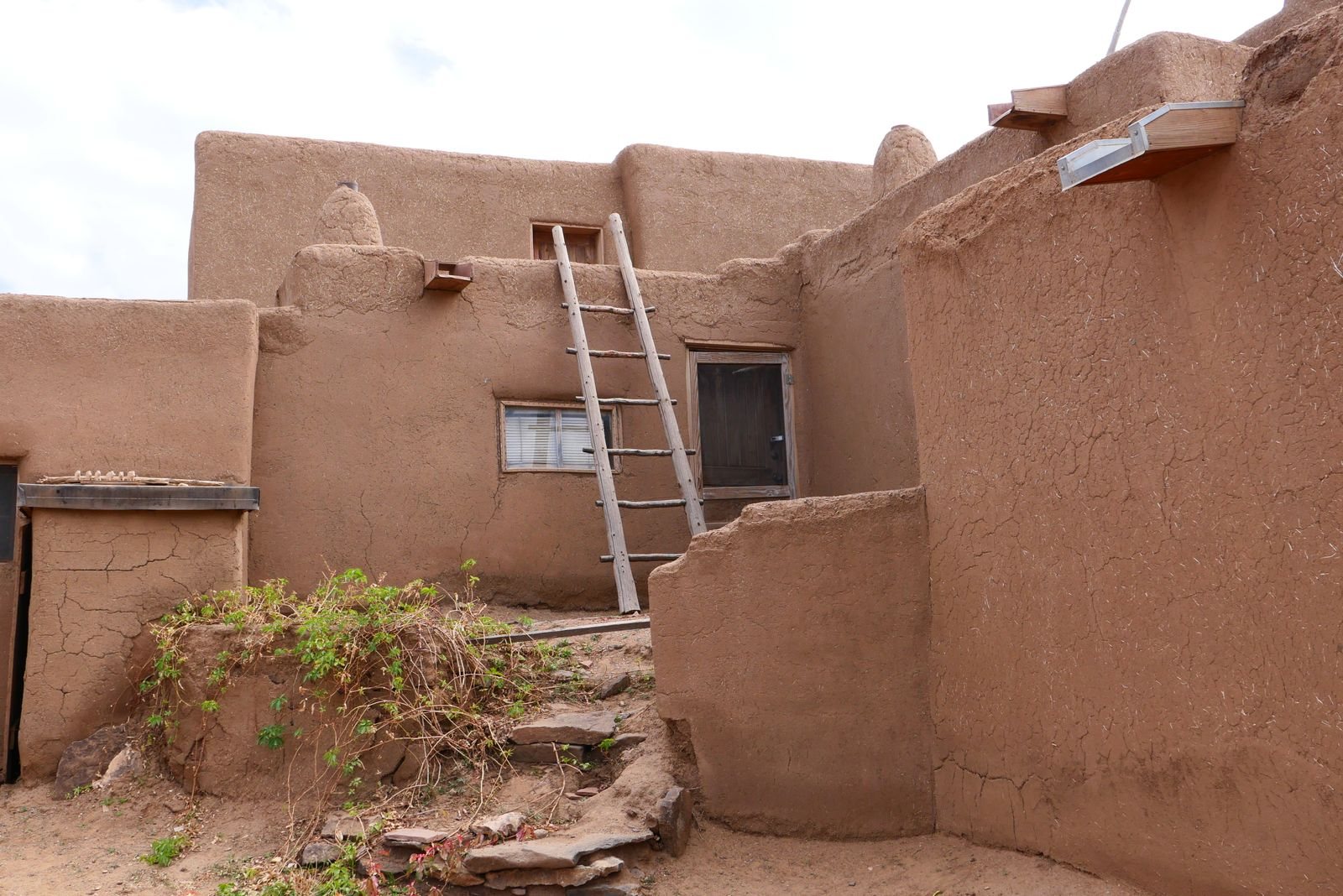
Start here, and go with respect: this is not a museum, it is a living Native community, home to Taos-speaking (Tiwa) people for about a millennium. The multi-story adobe structures against the backdrop of Taos Mountain are among the most photographed buildings in America, and standing in front of them is much more affecting than any photo. Visit with a resident guide if one is available (the tours are excellent and the fee supports the community), buy directly from the artists and bakers selling from their homes, and check ahead: the Pueblo closes to visitors for ceremonial periods and a long stretch in late winter.
Stand on the Rio Grande Gorge Bridge
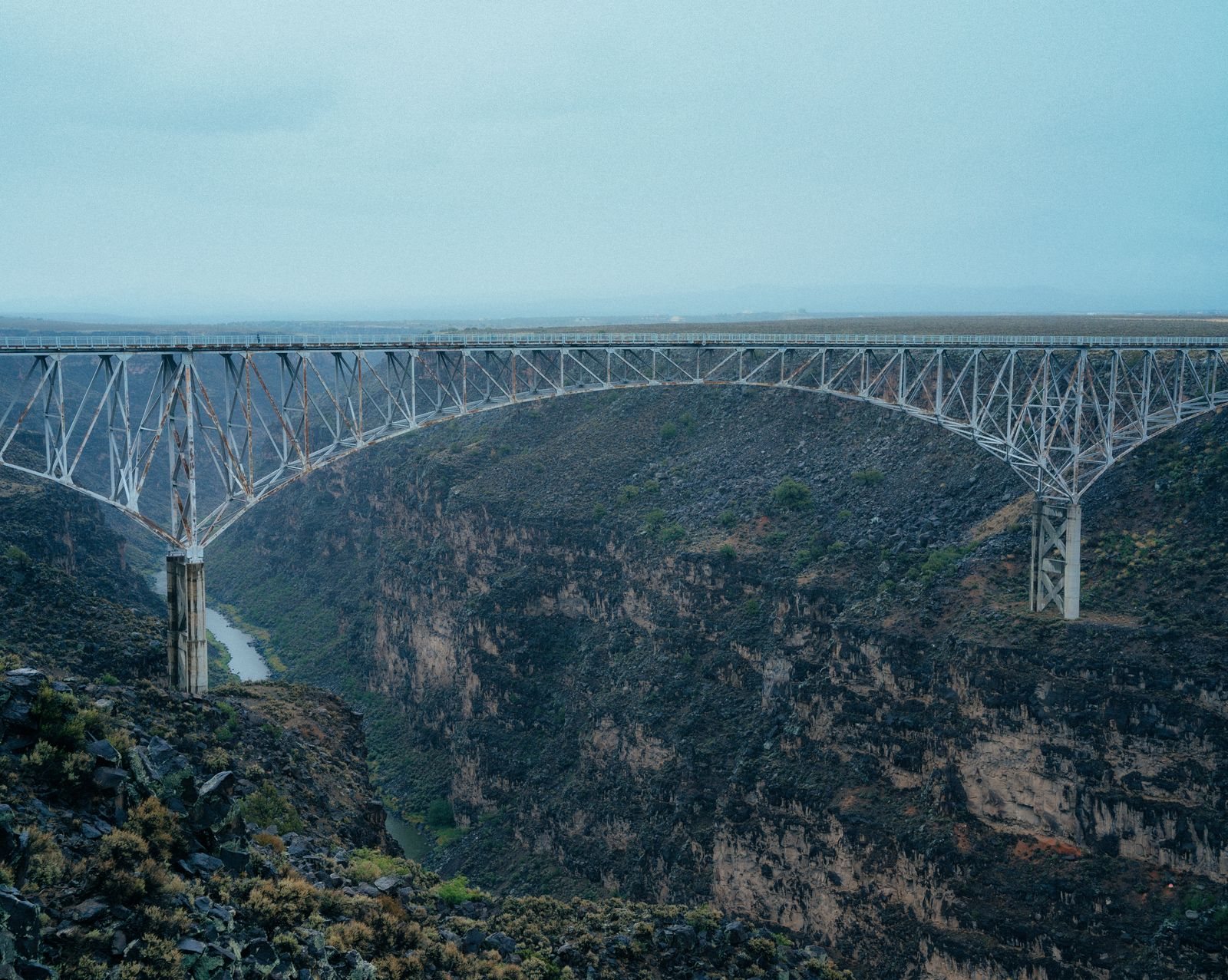
Ten miles west of town, the sagebrush plain simply drops away into an 800-foot basalt canyon with the Rio Grande glinting at the bottom. The steel arch bridge that spans it is one of the highest in the country, and you can walk out on the pedestrian path to the observation platforms at the middle. It is windy, vertiginous, and completely free. Go at sunset when the gorge fills with shadow and the mountains behind town turn the color that gave the Sangre de Cristos (Blood of Christ) their name.
Wander Taos Plaza and the Historic District
The Plaza is smaller and scrappier than Santa Fe’s, which we mean as a compliment. Galleries, the historic La Fonda hotel, and side streets that reward wandering: Bent Street, Ledoux Street with its adobe art museums, and the John Dunn Shops. The whole district is walkable in an afternoon, best done slowly with a coffee.
Do the Museums (They Are Better Than a Town This Size Deserves)
The Millicent Rogers Museum packs a world-class collection of Native jewelry, pottery, and textiles into an intimate adobe. The Harwood Museum of Art traces the Taos art colony from the 1898 founders to the present, including the meditative Agnes Martin gallery. The Taos Art Museum at Fechin House shows Russian painter Nicolai Fechin’s work inside the hand-carved adobe home he built himself, and the house steals the show. The Kit Carson Home and the Couse-Sharp Historic Site round it out for history lovers.
Drive the Enchanted Circle
This 84-mile loop around Wheeler Peak (New Mexico’s highest at 13,161 feet) strings together the gorge, the ski villages of Red River and Angel Fire, the moving Vietnam Veterans Memorial at Angel Fire, and long valley stretches where you might share the road only with cattle. Allow a half day with stops, a full day if you hike.
See the Earthships
West of the gorge bridge, the Greater World Earthship Community is a neighborhood of off-grid homes built from rammed tires, bottles, and cans, looking like a Star Wars set that learned to compost. The visitor center tour is quick, cheap, and one of the most memorable oddball stops in the Southwest.
Soak, Raft, or Ski, Depending on the Season
The Rio Grande through the gorge serves up spring whitewater in the Taos Box (class IV) and mellow family floats on the Racecourse section in summer. Ojo Caliente, 50 minutes southwest, is a historic hot springs resort perfect for a recovery afternoon. And in winter, Taos Ski Valley is the whole reason many visitors come: 110+ trails, legendary steeps off the ridge, and a village that has upgraded its lodging without losing its soul.
Drive the High Road to Taos
If you are coming from Santa Fe, skip the fast lowland highway in at least one direction and take the High Road through Chimayó (stop at the Santuario, the “Lourdes of America”), Truchas, and Las Trampas. It is an hour longer and worth every minute: mountain villages, weaving studios, and 18th-century adobe churches.
Where to Eat: Green Chile Country
New Mexican food is its own cuisine, and Taos does it at the top level. The state question is “red or green?” (chile, that is) and the correct answer is “Christmas,” which gets you both.
- The Love Apple, in a converted 19th-century chapel, is the special-occasion pick: northern New Mexican ingredients, candlelight, cash only.
- Orlando’s New Mexican Cafe is the local standby for carne adovada and green chile that will recalibrate your tolerance.
- La Cueva Cafe does excellent, unfussy plates in a tiny space near the Plaza.
- Taos Diner serves breakfast burritos smothered in green chile to a room full of ranchers, ski patrollers, and artists, which is the whole town in one dining room.
- Bent Street Cafe and Manzanita Market cover lunch, and the Taos Mesa Brewing taproom out by the gorge has live music with a runway-straight view of the mountains.
Where to Stay in Taos
The Historic Taos Inn is the classic: adobe rooms, kiva fireplaces, and the Adobe Bar, nicknamed “Taos’s living room,” with live music most nights. El Monte Sagrado is the luxury resort option with a serious spa. Hotel La Fonda de Taos puts you directly on the Plaza. For character on a budget, the Sagebrush Inn hosted Georgia O’Keeffe in the 1930s, and the town’s adobe casitas on the vacation rental markets are some of the most atmospheric self-catering stays in the Southwest. Skiers should compare staying up at Taos Ski Valley (The Blake is the flagship) against the 40-minute commute from town.
Where to Book
- Hotels: Booking.com’s Taos listings cover the historic adobes near the Plaza, the Ski Valley lodges, and the budget motels on Paseo del Pueblo Sur. For a first visit, stay walkable to the Plaza.
- Tours and activities: many northern New Mexico tours run from the bigger hub, so browse Viator’s Santa Fe listings for High Road tours, Taos Pueblo day trips, and rafting on the Rio Grande; several pick up in or route through Taos itself.
- Travel insurance: a Taos trip usually stacks flights, a rental car, and prepaid lodging, and mountain weather can scramble all three. We break down whether coverage makes sense in Is Travel Insurance Worth It?
Practical Tips
- Getting there: fly into Albuquerque (2.5 hours) or Santa Fe (90 minutes) and rent a car. You need one; Taos spreads out and the best sights ring the town. Coming from Colorado like us, the drive from Denver is about 4.5 hours through the San Luis Valley, one of our favorite road trips from the Front Range.
- Altitude: the town sits near 7,000 feet and the Ski Valley base at 9,200. Hydrate, go easy on day one, and watch for afternoon lightning above treeline in summer.
- How long: two full days covers the Pueblo, the gorge, the Plaza, and a museum or two. Three lets you add the Enchanted Circle or a raft trip without rushing.
- Respect the Pueblo’s rules: photography permits, no photos of people without permission, and stay out of areas marked as private. You are a guest in someone’s home.
- Pack for swings: high desert weather runs 30-degree daily ranges. We layered a puffy over t-shirts in October and used both within the same hour. Sunscreen is non-negotiable at this altitude, and a wide-brim hat earns its suitcase space by day two.
- Cell service and cash: coverage gets thin on the Enchanted Circle and out by the Earthships, so download offline maps. A few beloved spots (The Love Apple included) are cash only, and the Pueblo vendors appreciate small bills.
Our Honest Take
Taos is not polished, and that is the point. The galleries sit next to feed stores, the fine dining shares a street with drive-through tamale stands, and the whole town runs on a frequency somewhere between mountain time and pueblo time. If you need resort-grade predictability, base in Santa Fe and day-trip up. But if you want the version of the Southwest that got the artists to abandon their return tickets a century ago, give Taos two or three nights. Watch the light change on Taos Mountain at sunset, and you will understand everything the paintings were trying to say.
Planning a Southwest trip? Start with our Santa Fe, New Mexico travel guide for the perfect pairing, see how we do high-desert luxury in our Scottsdale, Arizona travel guide, or if you are coming through Colorado first, our Denver travel guide covers our home turf.