Disclosure: This post contains affiliate links. If you book through our links, we may earn a small commission at no extra cost to you. Thanks for supporting Faceted Travel!
Table of Contents
Porto stole a piece of our hearts before we even finished our first glass of port. We came for a quick two-day stop after Lisbon and left convinced that Portugal’s second city might actually be our favorite city in the country.
Porto is everything we love about European travel packed into a walkable, affordable riverside package: blue-and-white azulejo tiles covering entire church facades, a bridge that looks like the Eiffel Tower lying on its side, wine cellars you can tour for the price of a fast-food lunch back home, and locals who seem genuinely happy you showed up. This guide covers everything we learned, including where to stay, what to do, what to eat, and how to do it all without blowing your budget.
Why Visit Porto
Lisbon gets the attention, and we get it. We loved Lisbon too (here is our full guide to the best things to do in Lisbon). But Porto feels different in the best way. It is smaller, grittier, and more lived-in. The historic center, a UNESCO World Heritage site, tumbles down a steep hillside to the Douro River in a jumble of orange rooftops and faded pastel facades.
Porto is also one of the best value destinations in Western Europe. Meals, hotels, wine tastings, and transit all cost noticeably less than in Spain, France, or Italy. If you are trying to stretch your travel budget (and who is not these days), Porto delivers an incredible experience per dollar. We break down full trip budgets in our guide to how much a trip to Europe costs, and Porto lands firmly in the budget-friendly column.
Best Time to Visit Porto
We visited in late September, and it was close to perfect: sunny days in the low 70s, warm evenings on the riverfront, and thinner crowds than peak summer.
May through June is our top recommendation. The weather is warm, the days are long, and the summer crowds have not fully arrived yet.
July and August bring the biggest crowds and the highest prices. Porto rarely gets as brutally hot as inland Spain, so summer is still pleasant, just busier. The São João festival in late June is one of Europe’s most fun street parties if you want to plan around it.
September through October is the harvest season in the nearby Douro Valley, which makes it a fantastic time for wine lovers.
November through March is rainy season. Porto gets more rain than you might expect for Portugal. Prices drop, and the city still charms, but pack a rain jacket and expect gray skies.
How to Get to Porto
Porto’s airport (OPO) is well connected to the rest of Europe with budget carriers and to the US with seasonal direct flights from the East Coast. From the airport, the Metro purple line runs straight into the city center in about 30 minutes for a few euros. It is one of the easiest airport connections we have used anywhere in Europe.
If you are already in Portugal, the train from Lisbon takes about 3 hours on the fast Alfa Pendular service and drops you at the gorgeous São Bento station (more on that below). We booked tickets a few weeks ahead on the CP website and paid around 25 euros each. If Spain is part of your trip, Porto pairs nicely with Madrid or Barcelona via a short budget flight.
Where to Stay in Porto
Porto is compact, so you cannot go too wrong, but the neighborhood you pick shapes the trip.
Ribeira (First Visit, Riverfront Views)
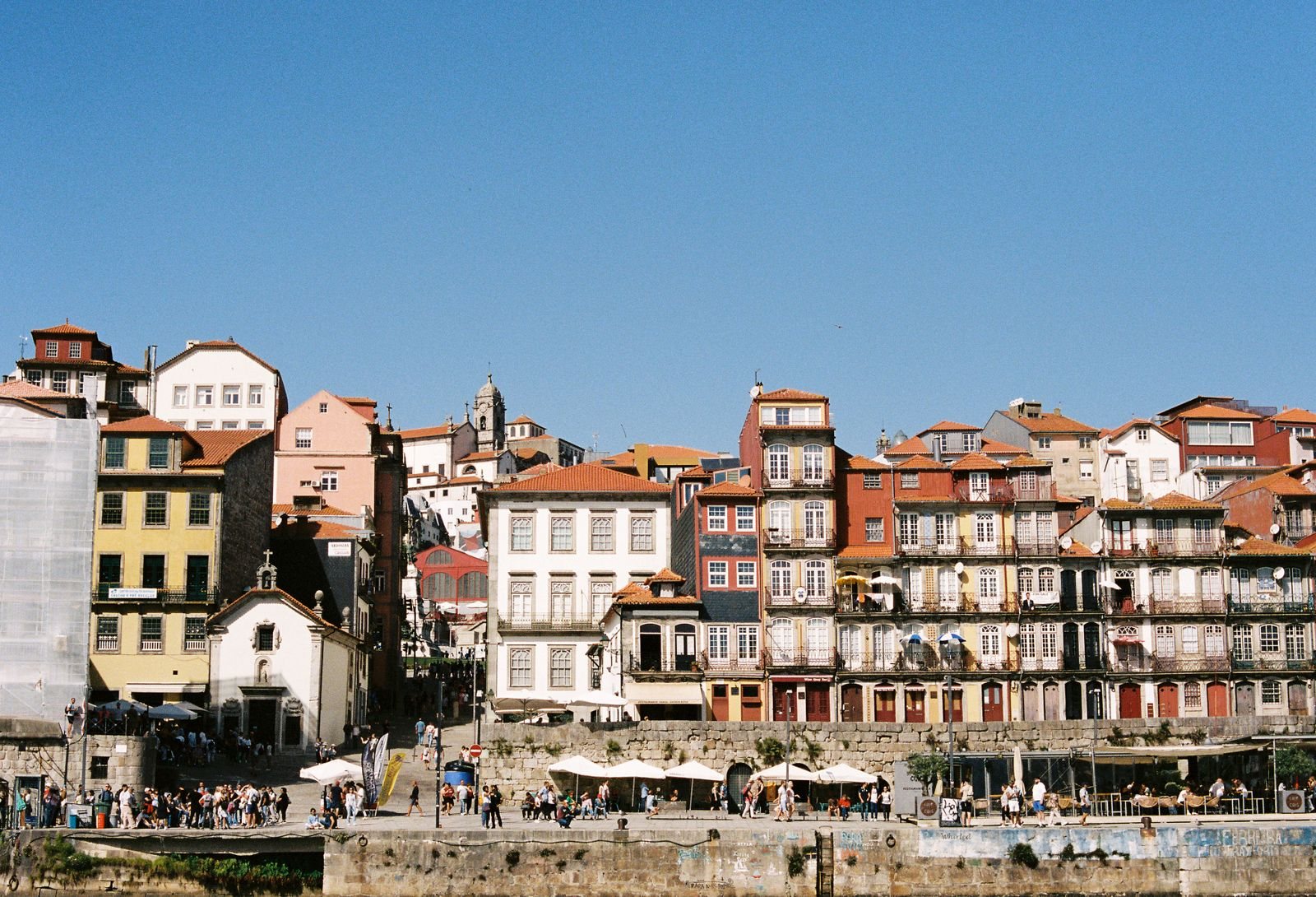
The Ribeira is the postcard: medieval lanes, riverside restaurants, and views of the Dom Luís I Bridge. It is touristy and a little noisy, but waking up steps from the Douro is worth it on a first visit. Expect to pay a premium for river-view rooms, though “premium” in Porto still costs less than a standard room in Paris.
Baixa and Aliados (Central, Best Overall Value)
This is where we stayed, and we would do it again. The area around Avenida dos Aliados and the Bolhão market puts you within a 10-minute walk of nearly everything, with better prices and more local restaurants than the Ribeira. Great metro access too.
Vila Nova de Gaia (Wine Lovers)
Technically its own city across the river, Gaia is home to the port wine lodges. Stay here for cellar-door access and the best sunset views back toward Porto’s skyline. The Yeatman, a wine-themed luxury hotel with a Michelin-star restaurant, is the splurge pick if you want to celebrate something.
Top Things to Do in Porto
Cross the Dom Luís I Bridge
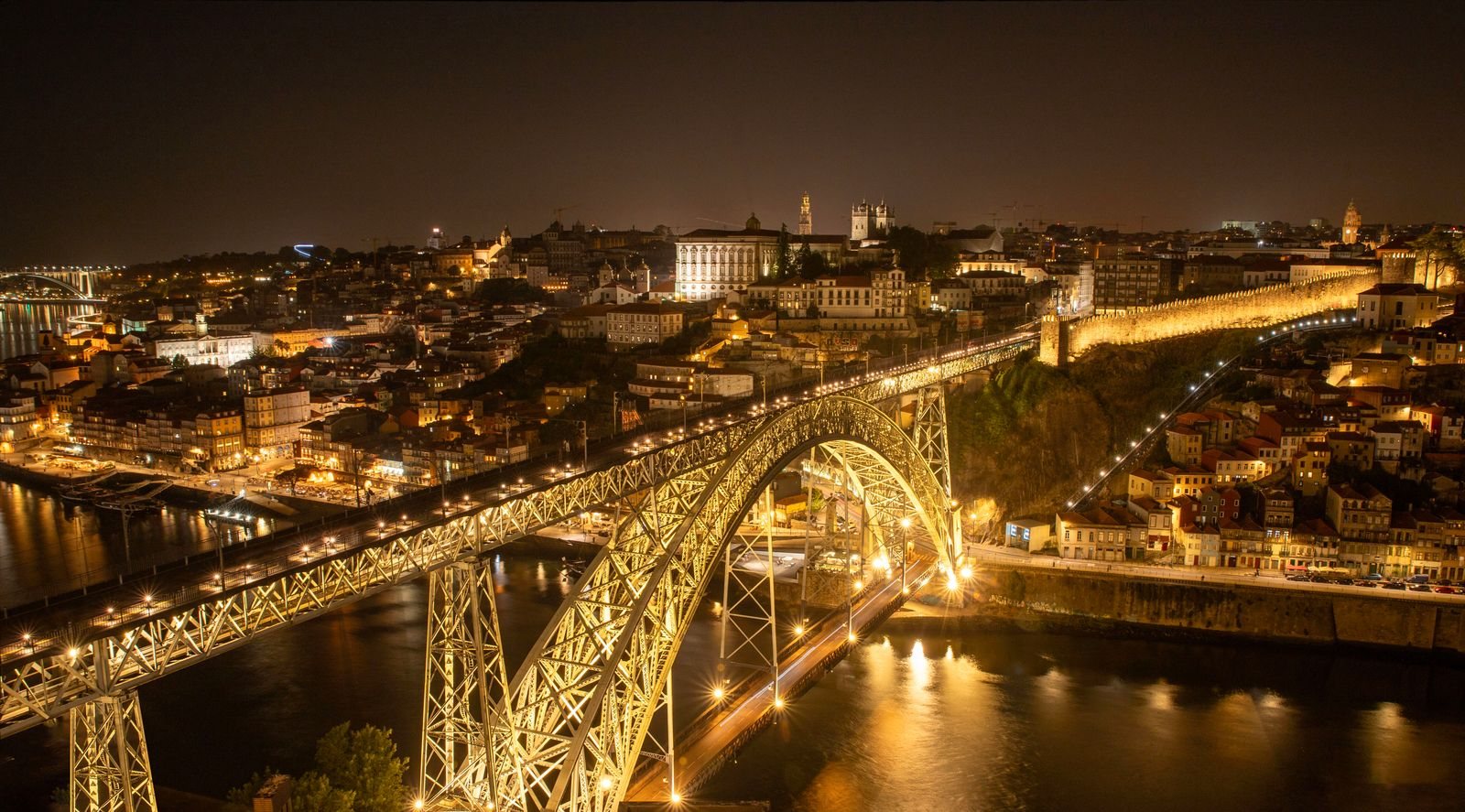
Porto’s double-deck iron bridge was designed by a student of Gustave Eiffel, and the family resemblance shows. Walk the top deck for sweeping views of the river and both cities. We crossed at sunset and it remains one of our favorite travel moments in Europe. It is free, and it never got old; we crossed four times in two days.
Visit Livraria Lello
Often called the most beautiful bookstore in the world, Livraria Lello’s crimson staircase and carved wood interior draw serious crowds. You need a timed ticket (the fee is credited toward a book purchase). Go at opening time or in the last hour of the day, or you will be shoulder to shoulder with half of Instagram. Is it worth it? We think yes, once, early.
Admire São Bento Station
Porto’s main train station doubles as an art gallery: roughly 20,000 azulejo tiles cover the entrance hall, depicting scenes from Portuguese history. It is free, it takes 15 minutes, and it is one of the most beautiful public spaces we have ever walked through.
Tour the Port Wine Cellars in Gaia
You cannot leave Porto without learning how port is made. The historic lodges in Vila Nova de Gaia (Graham’s, Taylor’s, Sandeman, Cálem, and more) all offer cellar tours with tastings. We did Taylor’s and loved the self-guided audio tour and generous pours. Book ahead in summer; tastings sell out.
Get Lost in the Ribeira
Skip the map for an afternoon and wander the alleys between the cathedral and the river. Laundry strung between buildings, tiled facades in every shade of blue, tiny tascas serving grilled sardines. This is the Porto you came for.
Climb the Clérigos Tower
The 76-meter baroque bell tower offers the best panoramic view in the city center. The 240 steps are narrow and the top is snug, but the 360-degree view over the orange rooftops is worth every step.
See the Azulejos at Igreja do Carmo and Capela das Almas
Two churches wear some of the most photogenic tile work in Portugal on their outside walls, which means the best art in Porto is completely free. The Capela das Almas on Rua de Santa Catarina stopped us in our tracks.
Day Trips from Porto
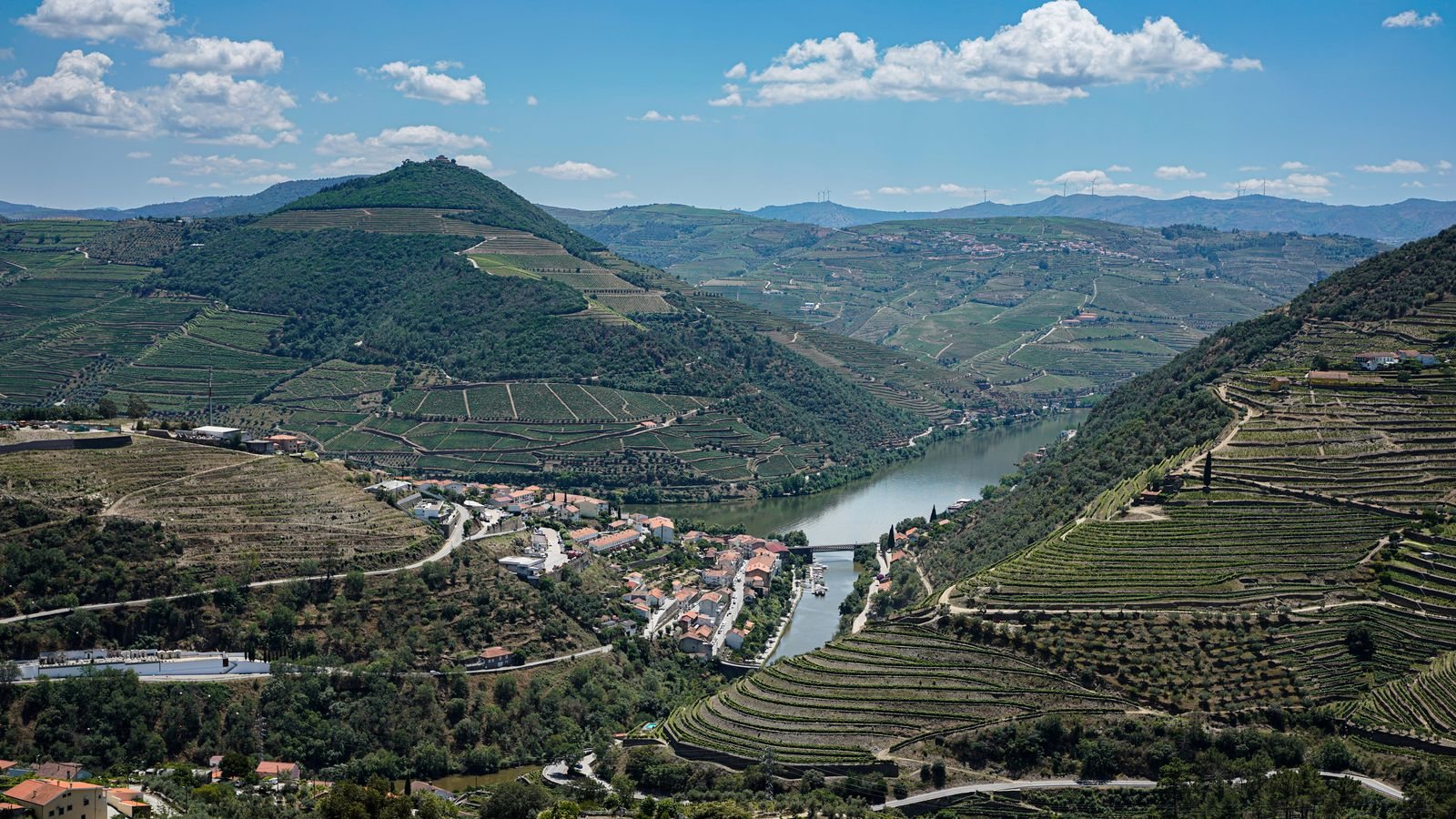
The Douro Valley is the big one. The world’s oldest demarcated wine region is about 90 minutes east, all terraced vineyards folding into the river. We did a full-day small-group tour with two quinta visits, lunch, and a river cruise, and it was the best money we spent in Portugal. You can also take the scenic train to Pinhão and taste at quintas near the station.
Braga and Guimarães pair well for a history day: Braga for the Bom Jesus do Monte sanctuary and its famous baroque staircase, Guimarães for the castle where Portugal was born. Both are under an hour by train.
Aveiro, sometimes called the Venice of Portugal, makes an easy half-day trip for canal boat rides and striped beach houses in nearby Costa Nova.
If your Portugal itinerary continues south, our best day trips from Lisbon guide covers Sintra and Cascais.
What (and Where) to Eat in Porto
Porto’s signature dish is the francesinha, a stacked meat sandwich smothered in melted cheese and a beer-tomato sauce, usually topped with a fried egg. It is completely over the top, and you have to try it once. Café Santiago is the classic spot; expect a line.
Beyond the sandwich, do not miss grilled sardines and octopus rice in the Ribeira, a pastel de nata (or three) from Manteigaria, tripas à moda do Porto if you are feeling brave (it is the dish that gave Porto residents their nickname, tripeiros), and vinho verde by the glass basically everywhere. The renovated Bolhão market is perfect for grazing through cheeses, cured meats, and conservas.
Dinner for two with wine at a good neighborhood tasca ran us 35 to 45 euros. The same meal in Paris or Rome would have cost double.
Getting Around Porto
Central Porto is walkable, but it is seriously steep. Wear real walking shoes with grip (the polished cobblestones get slick), and check our packing list for Europe before you go. The Metro is clean, cheap, and easy, and the vintage Line 1 tram along the river to Foz do Douro is a fun ride in itself. Ubers are plentiful and inexpensive; most rides across town cost 4 to 7 euros. Skip renting a car unless you are heading to the Douro Valley on your own.
How Much Does Porto Cost?
Here is roughly what we spent per day as a couple, mid-range style: a boutique hotel in Baixa at around 110 euros a night, 60 to 80 euros a day on food and wine for two, a few euros each for transit, and 15 to 30 euros per person for attractions and tastings. Call it 200 to 230 euros a day for two people, which is among the lowest of any Western European city we have visited. Budget travelers can do Porto on far less; hostels and lunch menus del dia keep costs tiny.
Where to Book Your Porto Trip
Hotels: We use Booking.com for Porto because the selection of small guesthouses and boutique hotels in Baixa and the Ribeira is excellent, and free-cancellation rates give you flexibility.
Tours and experiences: We book through Viator for Douro Valley day tours, port cellar tastings, and river cruises. Reading recent reviews before booking has saved us from more than one dud tour.
Book the Douro Valley tour and Livraria Lello tickets ahead of time. Everything else in Porto can be decided the day of.
Our Honest Take
Porto is the rare city that exceeded the hype for us. It is beautiful without being precious, affordable without feeling cheap, and small enough to know in a few days but rich enough to pull you back. Give it two full days minimum, three if you want the Douro Valley (you do).
If you are building a bigger European trip around Portugal, start with our guides to the best things to do in Lisbon, how much a trip to Europe costs, and our packing list for Europe. Happy travels!