Disclosure: This post contains affiliate links. If you book through our links, we may earn a small commission at no extra cost to you. We only recommend places and things we’ve personally used or vetted.
Table of Contents
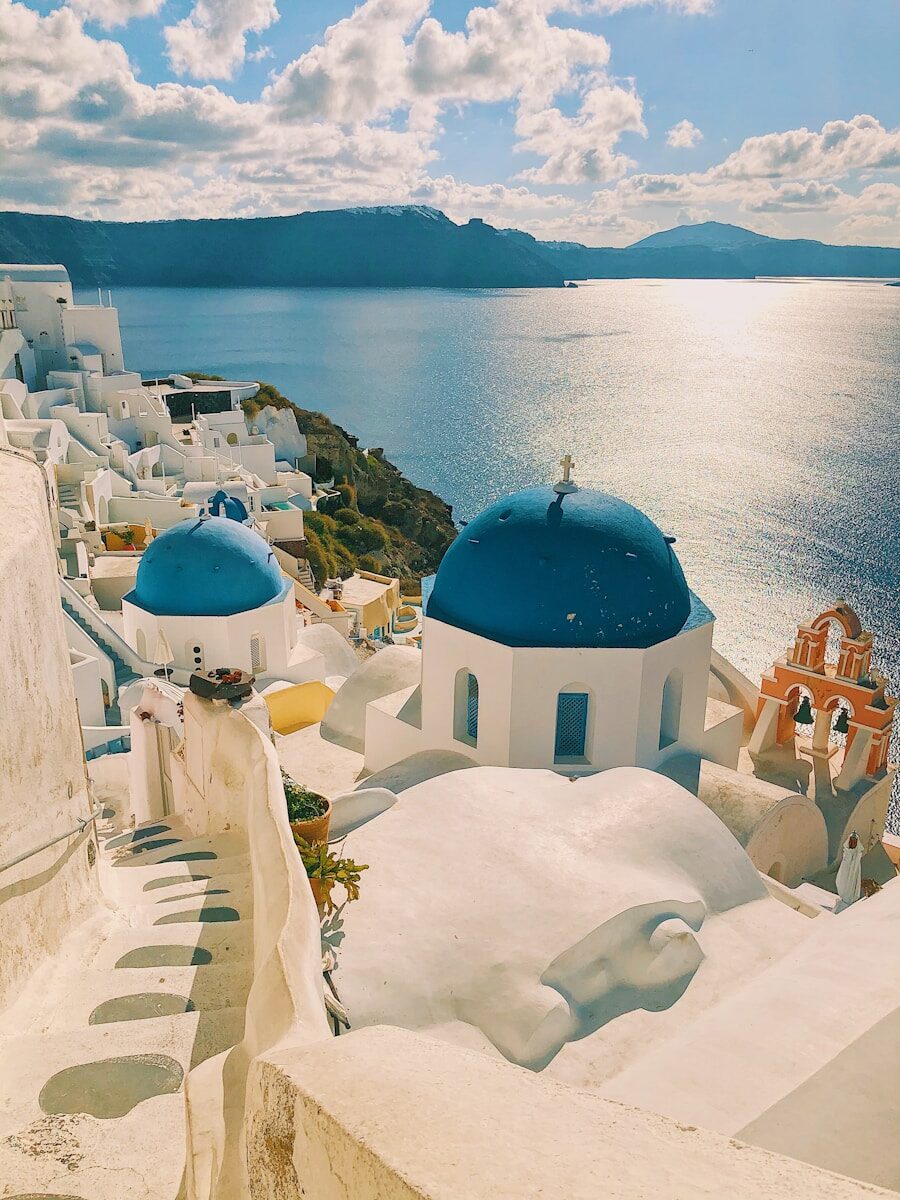
Santorini is one of those places that almost every traveler has a complicated relationship with before they go. The images are everywhere — the white and blue domed churches, the caldera drop, the sunset over Oia that’s been photographed a billion times. You want to go. You’re also slightly suspicious. Can it possibly live up to it?
Here’s our honest answer after visiting: yes, with asterisks. The views are more dramatic in person than any photo conveys. The sunsets are genuinely extraordinary. The wine is excellent and costs less than you’d expect. The food (done right) is some of the best you’ll eat in Greece. The caldera is something else entirely when you’re standing at its edge.
The asterisks: it’s crowded in peak season, it’s expensive relative to the rest of Greece, and the most photographed spots require strategy or you’ll spend your golden hour shoulder-to-shoulder with tour groups. This guide is about how to do Santorini in a way that actually delivers.
When to Visit Santorini
Best time: May–June and September–October. You’ll get excellent weather, manageable crowds, and prices that are still reasonable. The water is warm enough to swim (particularly by late May), the landscape is lush from spring rains, and the towns haven’t hit their August peak saturation.
Peak season (July–August): Santorini is at full capacity. Prices for caldera-view hotels reach eye-watering levels, Oia at sunset is a wall of people, and the beaches are packed. If this is when you can go, book everything months in advance and lower your expectations about having any iconic spot to yourself.
Shoulder (May, October): Our recommendation for most travelers. May in particular is magical — wildflowers still visible, temperatures perfect for walking, and a genuine sense of the island before tourist season fully locks in.
Off-season (November–March): Much of the island closes down. The views are still stunning, prices plummet, and you’ll essentially have the caldera villages to yourself — but many restaurants, hotels, and activities won’t be operating.
Getting to Santorini
By air: Santorini (Thira) International Airport (JTR) receives direct flights from Athens (45 minutes) and seasonal direct flights from many European cities. From the US, you’ll connect through Athens or a European hub. The how to find cheap flights guide covers strategies for finding good fares on Greece routes.
By ferry: Ferries run from Athens’ Piraeus port to Santorini (standard: 8 hours; high-speed: 4–5 hours) and connect to other Cycladic islands including Mykonos, Naxos, and Paros. If you’re island-hopping, the ferry system is well-organized — Ferryscanner and Ferryhopper are the best booking tools.
From the port: Arriving by ferry deposits you at Athinios port, at the base of steep cliffs. A bus, taxi, or pre-arranged hotel shuttle gets you up to the main towns. Agree on taxi price before getting in — meters aren’t always used.
The Main Villages: Which to Base Yourself In
Oia
The most photographed village on the island — the iconic domed churches and caldera views that define Santorini’s image are largely from Oia. It’s genuinely beautiful, particularly at the northern tip where the castle ruins sit. The main shopping street (Nikolaou Nomikou) is charming. The sunset from the castle is extraordinary.
The catch: everyone knows this. At sunset, Oia is elbow-to-elbow. Stay here if you want immersive caldera views from your accommodation and are willing to navigate crowds — but explore strategically.
Best for: Honeymoons, special occasions, travelers who want the iconic Santorini experience.
Fira (Thira)
The island’s capital is the most practical base — more restaurants, more price range options, excellent caldera views, and a central location for getting around the island. It’s more bustling than Oia, less “picture-perfect,” and frankly a good choice for travelers who don’t want to pay the Oia premium.
The path from Fira down to the old port (and back up) is one of the best walks on the island — 580 steps, donkeys, and caldera views the whole way.
Best for: Travelers who want flexibility, value, and easy access to the whole island.
Imerovigli
Between Fira and Oia, perched on the island’s highest caldera point, Imerovigli is quieter and more residential than either. The views are exceptional and the Skaros Rock hike — a former castle promontory jutting into the caldera — is one of the most dramatic walks on Santorini. Many luxury cave hotels are here.
Best for: Couples seeking quiet, caldera views without Oia’s crowds.
Pyrgos
An inland village that most tourists skip entirely, Pyrgos is a medieval village of winding lanes, local restaurants, and a castle at its peak with 360-degree island views. No caldera, but genuine Cycladic atmosphere and a fraction of the prices. The Canava Roussos winery, just below the village, produces some of the island’s best wines.
Best Things to Do in Santorini
Oia Sunset (Strategically)
Yes, everyone does the Oia sunset. That doesn’t mean you should skip it — it’s spectacular. The strategy is to arrive 45–60 minutes early and position yourself either at the castle ruins (crowded but dramatic) or somewhere along the caldera path toward Fira, where you’ll have nearly identical views with a fraction of the people.
The truly insider move: watch the sunset from one of the caldera-view restaurant terraces with a glass of Vinsanto in hand. You pay a premium for the drinks but get a reserved seat with arguably better views than the castle.
Akrotiri Archaeological Site
This is the one Santorini sight that genuinely surprises visitors. Akrotiri is a Bronze Age city buried under volcanic ash around 1600 BCE — essentially the Pompeii of the Aegean. The preservation is extraordinary: multi-story buildings, frescoes, drainage systems, and storage vessels have all been recovered intact. A large canopy now covers the excavation, making it accessible in any weather.
Arrive when it opens. Guided tours through Viator add excellent historical context, but going independently is straightforward — audio guides are available on-site.
Caldera Boat Tour
A boat trip around the caldera is one of the most dramatic experiences Santorini offers. Most tours circle the outer caldera, stop at the active Nea Kameni volcano (you can hike to the crater), visit the hot springs at Palea Kameni, and often stop at Thirassia island. The scale of the caldera — what remains of a massive volcanic explosion circa 1600 BCE — is only comprehensible from water level.
Book through GetYourGuide or your hotel. Private sailboat charters are available and worth the premium for sunset cruises.
Red Beach and Perissa
Santorini’s beaches are unusual — volcanic black and red sand that holds heat intensely and has a drama to it that white-sand beaches don’t. Red Beach, near Akrotiri, is the most striking — vivid red volcanic cliffs rise directly from the shoreline. It’s small (get there early) and swimming conditions vary; check before you go.
Perissa and Perivolos, on the south coast, are long stretches of black sand with good swimming, beach bars, and a fraction of Oia’s prices.
Santo Winery
Santorini’s wine scene is one of the island’s great underrated pleasures. The local Assyrtiko grape produces a distinctive, mineral, acidic white wine that pairs beautifully with the island’s seafood. Santo Wines’ terrace — perched on the caldera above Pyrgos — offers some of the finest wine-tasting views you’ll find anywhere. Book ahead; the sunset terrace session fills up.
Canava Roussos and Domaine Sigalas are also excellent if you want to explore multiple producers.
Where to Stay in Santorini
The accommodation divide in Santorini is essentially: caldera view or not.
Caldera-view cave hotels (Oia and Imerovigli): These are the iconic Santorini accommodations — hewn into the cliff face, with private terraces or plunge pools overlooking the caldera. They are not cheap. A mid-range caldera-view room in Oia in peak season runs $400–800/night. The experience is extraordinary and worth it for a special occasion; for budget-conscious travelers, it’s genuinely not necessary to enjoy Santorini.
Fira/non-caldera hotels: You can get an excellent hotel with a pool, good food, and easy island access for $100–200/night, particularly in the shoulder season. Many have partial caldera views; none have the dramatic cliff-edge experience.
Browse Booking.com and filter for caldera view, cave hotels, and free cancellation — the property photos on this island are unusually accurate, which helps.
Where to Eat in Santorini
Budget warning: dining on the caldera is expensive everywhere. Expect €20–40 per main course at any restaurant with caldera views.
To Psaraki (Vlychada): On the south coast, far from the tourist circuit, this fish taverna is run by a local family and serves some of the freshest seafood on the island at reasonable prices. The drive or taxi is worth it.
Metaxy Mas (Exo Gonia village): One of the most beloved local restaurants on the island — no caldera view, no tourist markup, genuinely excellent Santorinian cooking including fava (yellow split peas), white eggplant, and fresh catch. Reservations essential.
Roka (Fira): A small, atmospheric restaurant tucked into the back lanes of Fira. Great local dishes at prices that won’t wreck your budget.
Any bakery, any morning: Santorini’s traditional breakfast pastries (koulouri, spanakopita) from local bakeries are one of the great simple pleasures of the island.
How Long to Spend in Santorini
3 days: Enough to see the key sights — Oia, Akrotiri, one beach, one boat tour, a proper sunset. You’ll feel the highlights without feeling rushed.
5 days: The sweet spot for most travelers. Allows for a slower pace, a winery afternoon, a day on the south coast beaches, and enough time to discover spots that aren’t on the top-10 lists.
7+ days: You’ll start to run out of structured activities and either deeply relax (excellent) or feel restless (common). Santorini rewards slow travel but punishes trying to fill every day with attractions.
Santorini + Greece Island Hopping
Santorini is often combined with other Greek islands. Natural pairings:
- Naxos: Less touristy, excellent food and beaches, great hiking, just 2 hours by ferry
- Mykonos: Lively nightlife and beaches — very different vibe, 3 hours by fast ferry
- Crete: The largest Greek island and could be its own trip; a 2-hour flight from Santorini
If you’re combining Santorini with mainland Greece, Athens is a natural add-on (direct flights, 45 minutes). Don’t leave the country without spending at least 2 days in Athens — the Acropolis and food scene alone justify it.
Where to Book Your Santorini Trip
- Hotels: Booking.com — best selection of cave hotels and caldera properties
- Tours & Activities: Viator and GetYourGuide for caldera sailing, Akrotiri tours, and winery experiences
- Flights: Our guide to finding cheap flights covers strategies for Europe routes
- Travel Insurance: Greece is generally safe but travel disruptions (ferry delays, strikes) happen — see our best travel insurance picks
Final Thoughts
Santorini lives up to the photos — and in some ways surpasses them. The caldera has a scale that images can’t capture. The wine is a genuine discovery. The Bronze Age ruins at Akrotiri might be the most underrated ancient site in Europe.
Go in shoulder season. Book caldera-facing accommodation at least once if you can stretch the budget (even one night is worth it). Eat away from the tourist-strip. Position yourself for sunset early. And give yourself enough time to find the island that exists beyond the famous Instagram frame — it’s worth finding.
Heading to the rest of Europe before or after? Our Paris in 4 Days guide is a good starting point for extending your trip.