Disclosure: This post contains affiliate links. If you book through our links, we may earn a small commission at no extra cost to you. Thanks for supporting Faceted Travel!
Table of Contents
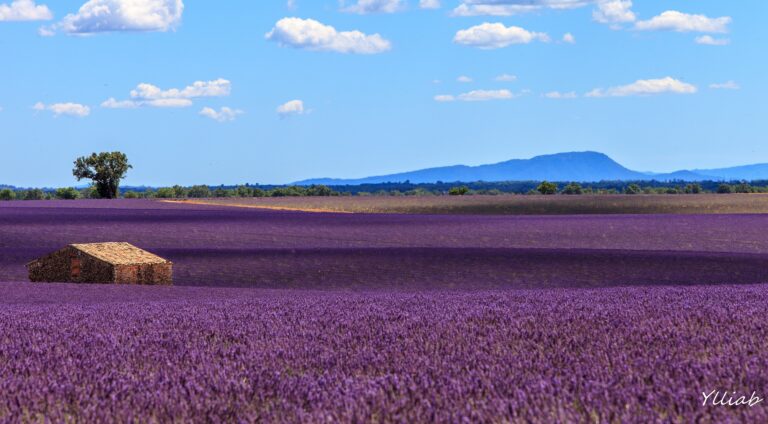
There is a moment on the road between Gordes and Sault, in early July, when the lavender fields open up on both sides of the car and the smell comes through the vents before you even see the purple. We pulled over, stood in the buzzing heat, and understood immediately why people have been romanticizing Provence for centuries. The clichés are all true. That is the whole problem and the whole point.
Provence is the France of your imagination: hilltop villages the color of honey, markets piled with tomatoes and tapenade, rosé that costs less than bottled water back home, and light so famous that painters have been moving here to chase it since before Van Gogh. We spent a week driving its back roads and left convinced it deserves two.
Why Provence Is Worth the Trip
Provence rewards a different kind of travel than a city break. There is no checklist to sprint through, no single sight the whole trip hangs on. Instead there is a rhythm: market in the morning, a long lunch, a village or a vineyard in the afternoon, dinner outside as the swifts scream around the church tower. The region asks you to slow down, and if you let it, it delivers the most relaxing week France has to offer.
It is also more varied than the postcards suggest. Within a 90-minute drive you can stand in a Roman arena that still hosts events after 2,000 years, kayak under a medieval aqueduct, hike a limestone canyon with water the color of antifreeze (in a good way), and drink your way through some of the Rhône Valley’s best cellars.
We treated Provence as the inland half of a bigger southern France loop, pairing it with the coast. If that sounds right to you, our Nice, France travel guide and Antibes, France travel guide cover the Riviera side, an easy 90 minutes from Aix.
Best Time to Visit Provence
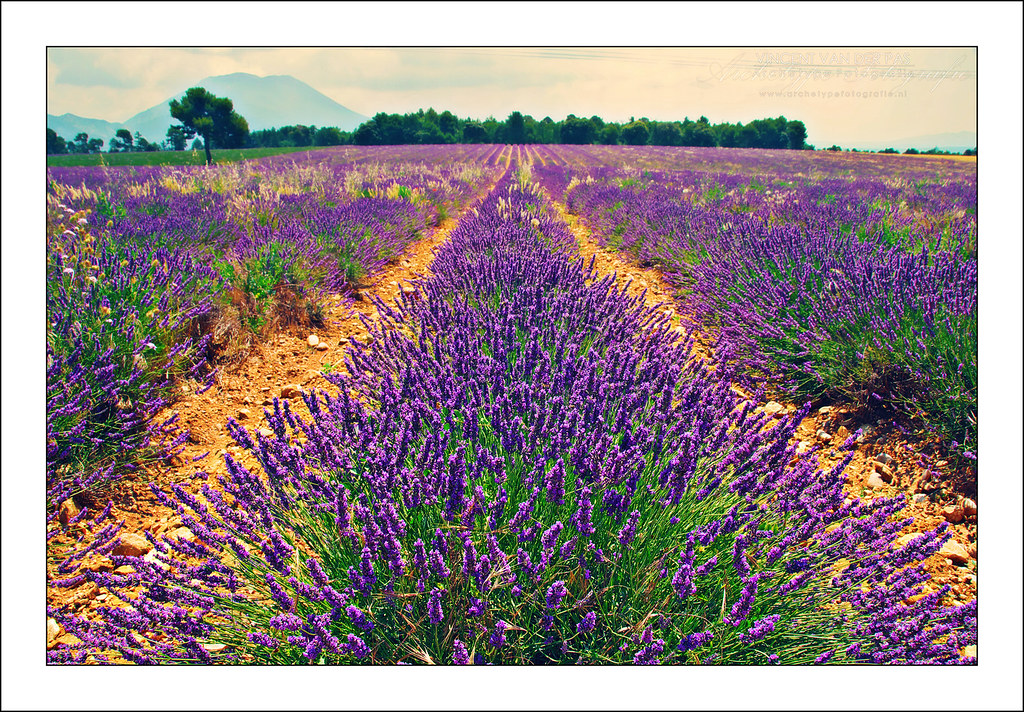
Late June through mid-July is lavender season, and it is the reason half the visitors come. The Valensole plateau peaks first (late June into early July), the fields around Sault run a couple of weeks later. It is hot, it is busy, and it is worth it once in your life.
May, early June, and September are, for us, the actual best times. Everything is green or golden, the markets are full, the temperatures are made for lunch outside, and the summer crowds are either not yet arrived or already gone. September adds the wine harvest.
October brings vendange colors in the vineyards and quieter villages, though some seasonal restaurants start closing.
November through March is deep off-season. Many village hotels and restaurants close, and the mistral wind can howl for days. The compensation: Avignon and Aix stay lively year-round, and you will have the Pont du Gard nearly to yourself.
Our take: go in June if you want lavender, September if you want Provence at its most livable. Either way, book accommodations months ahead; the good village hotels are small and they fill early. Our Best Time to Visit France post puts the whole country’s calendar in one place if you are still choosing regions.
Things to Do in Provence
Chase the Lavender (Late June to Late July)
The Valensole plateau, an hour northeast of Aix, has the vast horizon-to-horizon fields you have seen on every screensaver. Go at sunrise or in the last hour before sunset: the light is better, the heat is kinder, and the tour buses are elsewhere. The fields around Sault and the Abbaye de Sénanque near Gordes are smaller but arguably prettier, framed by hills and stone. One etiquette note: the fields are farms, not photo studios. Stay on the edges, do not pick, and leave the drone at home unless you have asked.
Do a Hill Town Crawl Through the Luberon
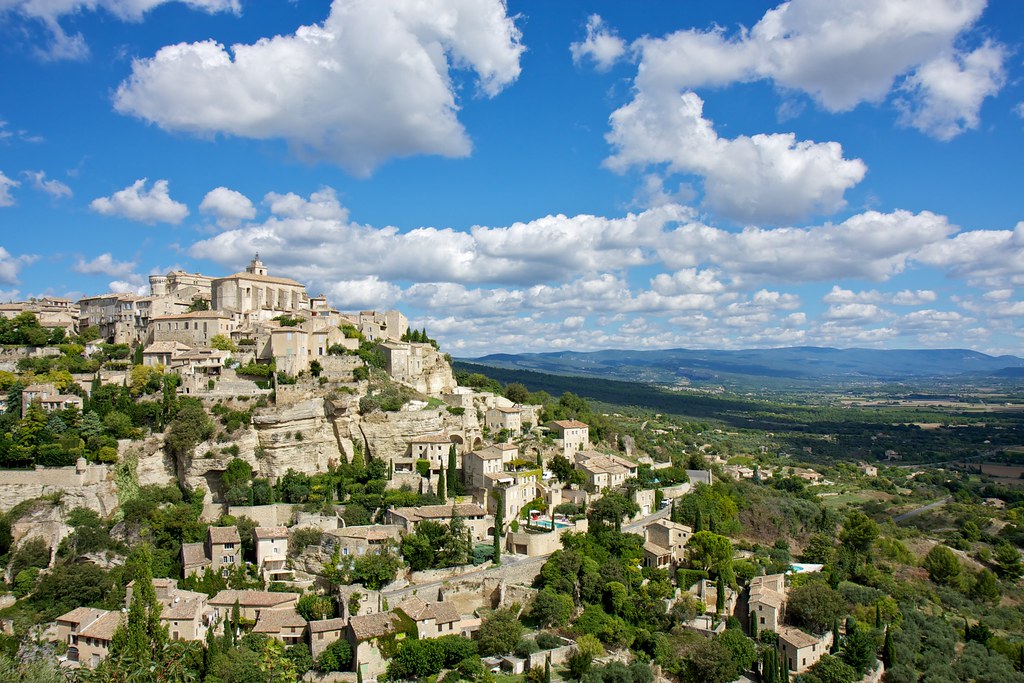
The Luberon valley east of Avignon holds the greatest hits: Gordes, stacked up its hillside like a stone wedding cake; Roussillon, built from ochre in every shade of rust and flame; Bonnieux, Lacoste, and Ménerbes, quieter and just as lovely. The move is to pick two per day, maximum, with a long lunch between them. They are 15 to 25 minutes apart by car, and each one earns an unhurried couple of hours of lanes, viewpoints, and a café stop.
Market Mornings
Every town has its day: Apt on Saturday, Lourmarin on Friday, L’Isle-sur-la-Sorgue on Sunday (with its famous antiques sprawl). Get there by 9am, bring a tote bag, and assemble the world’s best picnic: goat cheese, olives, a roast chicken, apricots, and a baguette that will not survive the drive. Market day is the single best free entertainment in Provence.
Stand Inside Roman Provence
The Pont du Gard, the three-tiered aqueduct bridge over the Gardon river, is one of the most impressive Roman structures anywhere, and you can swim in the river beneath it, which still feels faintly illegal. In Arles, the amphitheater and theater anchor a town Van Gogh painted obsessively; the Fondation Vincent van Gogh and the café-lined Place du Forum fill in the story. Orange’s Roman theater keeps its original stage wall, one of only three left in the world.
Kayak or Swim the Gorges du Verdon
Two hours from Aix, Europe’s answer to the Grand Canyon cuts 2,300 feet deep through the limestone, with the Verdon river running turquoise at the bottom. Rent a kayak or pedal boat at Lac de Sainte-Croix and paddle into the gorge mouth, or drive the vertigo-inducing rim roads and hike the Sentier Blanc-Martel if you want to earn your dinner. In summer the lake is warm, the light bounces green off the water, and it is one of the best swim days in France.
Drink the Rhône
Châteauneuf-du-Pape is 20 minutes from Avignon, and many of its cellars welcome walk-ins for tastings among the famous galet stones. Prefer rosé? The whole region runs on it: pale, dry, and absurdly cheap at the source. Gigondas and Vacqueyras, in the shadow of the jagged Dentelles de Montmirail, pour serious reds in villages that see a fraction of the traffic.
Give Aix-en-Provence a Full Day
Aix gets treated as a base, but it deserves its own billing. The Cours Mirabeau, a double row of plane trees over café terraces, is one of the great streets of France, and the old town behind it is a maze of fountains (the locals claim a hundred; we lost count at twenty) and golden stone. Cézanne’s studio sits preserved on a hill above town, left as if he had stepped out for lunch, and the Sainte-Victoire mountain he painted more than sixty times anchors the horizon east of the city. Come for the morning market on Place Richelme, stay for an evening apéro, and you will understand why Aix has been the region’s most elegant address since the Middle Ages.
Detour to Cassis and the Calanques
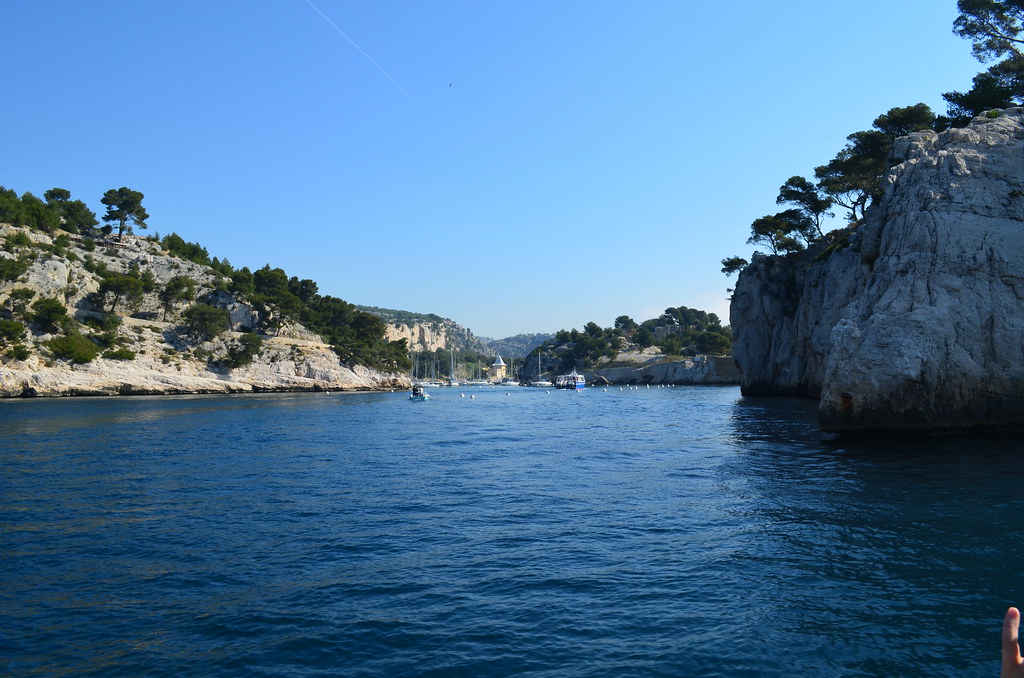
Forty minutes south of Aix, the fishing port of Cassis sits at the edge of the Calanques, a national park of white limestone fjords dropping into water so blue it looks retouched. Hike in to Calanque d’En-Vau if you want to earn your swim (bring water; there are no services), or take one of the boat tours from the harbor if you would rather see five calanques in an afternoon without breaking a sweat. Back in port, dinner is bouillabaisse territory. It is a completely different Provence from the lavender-and-hill-town version, and that contrast is exactly why we loved it.
Where to Stay in Provence
Aix-en-Provence: The elegant base. Cours Mirabeau, fountains, markets, and the best food scene in the region. Well positioned for the Luberon, Cassis, and the Verdon.
Avignon: The practical base. TGV station with direct trains from Paris, a walled old city with the Palais des Papes, and the best access to the Pont du Gard, Châteauneuf, and the western villages.
A Luberon village (Gordes, Bonnieux, Lourmarin): The romantic base. You wake up inside the postcard, and evenings after the day-trippers leave are magic. You will need a car for absolutely everything.
Our advice: split the trip. We did three nights in Avignon and four in the Luberon and it gave us both halves of the region without repacking daily.
Where to Book
- Hotels: Booking.com’s Provence listings cover everything from Avignon city hotels to Luberon farmhouse inns; filter by Aix or Avignon for a base with restaurants, and book spring through early fall well ahead.
- Tours and activities: Viator’s Provence tours include lavender-field day trips from Aix and Avignon, Luberon village tours, Châteauneuf-du-Pape tastings, and Pont du Gard kayak trips; the lavender tours are the easy answer if you would rather not drive.
How to Get There and Around
Fly into Marseille (best connections) or Avignon/Nîmes (seasonal, budget carriers), or take the TGV: Paris to Avignon in 2 hours 40 minutes, which beats flying once you count airport time. Coming from the Riviera, Nice to Aix is about 90 minutes on the autoroute.
Then rent a car. We say this rarely, because we love European trains, but Provence without a car means missing the villages, the fields, and the gorges that are the entire point. Book an automatic early (they are scarce), keep coins for autoroute tolls, and embrace the roundabouts. Parking outside the old villages is easy; driving into them is a mistake you make exactly once.
For the bigger France picture, our How to Plan a Trip to France post walks through routing, rail passes, and how to combine regions without overpacking the itinerary.
What It Costs
Provence can be as cheap or as polished as you make it. Village hotel doubles run $100 to $180, with the famous five-star country houses far above that. Market picnics feed two for $20; the prix-fixe lunch menus at village bistros run $25 to $35 a head and are the best food value in France. Wine tastings are often free or a few euros, credited against a bottle. A rental car plus fuel and tolls adds $50 to $70 a day. All told, two people can do Provence comfortably on $250 to $350 a day, and lavishly beyond that. Our How Much Does a Trip to France Cost? breakdown covers full trip budgets in detail.
Provence With Kids
Provence is quietly excellent with kids. The Pont du Gard has a river beach, the Lac de Sainte-Croix pedal boats come with slides, ochre trails in Roussillon feel like walking on Mars, and every market has a rotisserie chicken and a carousel somewhere nearby. Distances are short, so nobody melts down in the car, and village squares double as evening playgrounds while parents finish their rosé. Aim for May, June, or September; deep-summer heat is the only real enemy.
Our Honest Take
Provence is not underrated, undiscovered, or a secret. It is simply as good as everyone says, and that is rarer than it sounds. Yes, Gordes gets crowded at noon and the lavender fields have their influencer moments. Come anyway. Go in shoulder season, stay in a village, shop the markets, and take the long way everywhere. Some places you visit; Provence you practice. We left better at doing nothing than we have ever been, and we mean that as the highest compliment.
Planning a southern France trip? Pair this with our Nice, France travel guide and Antibes, France travel guide for the Riviera half, and time it all with our Best Time to Visit France guide.
Keep Reading