Table of Contents
Disclosure: This post contains affiliate links. If you book through our links, we may earn a small commission at no extra cost to you. Thanks for supporting Faceted Travel!
Paros sits in the heart of the Cyclades, sandwiched between Mykonos and Santorini in the ferry maps, and for a long time that is exactly where it sat in our mental map too: somewhere to pass through rather than stop. We were completely wrong. Paros has beaches that rival anything in the islands, a gorgeous traditional capital in Parikia, a charming hilltop village in Lefkes that feels lifted from another century, and a windsurf scene at Naoussa that draws athletes from across Europe. It is one of the most well-rounded islands in the Cyclades, and we would happily go back any year.
Why Visit Paros?
Paros has something for almost every kind of traveler. Beach lovers will find a mix of sandy coves, long stretches of golden sand, and turquoise bays that are consistently ranked among the best in Greece. Foodies will appreciate Naoussa’s restaurant scene, which punches well above its size. History travelers will find the Panagia Ekatontapyliani, one of the most important Byzantine churches in Greece, sitting quietly in the center of Parikia. And anyone who wants the Cycladic experience (whitewashed villages, blue-domed churches, fishing boats in a harbor) without the Mykonos pricing or the Santorini crowds will feel immediately at home.
Paros is also one of the best connected islands in the Cyclades, making it an ideal hub for island hopping. From Paros you can reach Naxos in 40 minutes, Mykonos in just over an hour, and Santorini in two to three hours.
When to Visit Paros
The island is welcoming from late April through October.
May and June are our top pick. The weather is warm and sunny, the water warms up enough for comfortable swimming by mid-June, and the island hasn’t yet reached its peak summer density. Accommodation prices are below July and August highs, and you can get a table at good restaurants without a reservation.
July and August are peak season. Naoussa and Parikia fill up, the best beaches get busy, and prices are at their highest. The windsurf conditions at Golden Beach (Chryssi Akti) and New Golden Beach are at their peak in August. Book everything months in advance.
September is excellent: still warm, sea temperatures at their peak, and crowds thinning after the first week. Our personal favorite month in the Cyclades for independent travelers.
October is quiet and increasingly cool. A few restaurants close, ferry connections thin, but it’s peaceful and beautiful.
Getting to Paros
By ferry from Piraeus (Athens): High-speed ferries reach Paros in about 3 hours. Conventional ferries take 4 to 5 hours. Multiple operators serve the route daily in summer: Seajets, Golden Star, and Blue Star Ferries. Book in advance for July and August, especially if taking a vehicle.
By ferry from other islands: Paros connects to Mykonos (1 hour), Naxos (40 minutes), Ios, Folegandros, Milos, and Santorini. It is one of the most connected islands in the Cyclades, making it easy to build a multi-island itinerary. See our guides to Naxos, Mykonos, and Milos for the islands we love most nearby.
By plane: Paros National Airport (PAR) connects to Athens (40 minutes) with several daily flights in summer via Olympic Air and Sky Express. Book early in peak season.
Getting Around Paros
Rental car, ATV, or scooter: The best way to explore the island’s beaches and villages. The road network is good and most of the main sights are reachable on paved roads. Rent in Parikia or Naoussa. Driving is left-hand, traffic is light, and parking is generally available at beaches.
Local bus (KTEL): Regular bus service connects Parikia to Naoussa, Lefkes, Golden Beach, and other key points. Reliable and affordable, it is a genuine option for getting around, though schedules are less frequent in the evening.
Water taxi: In summer, small water taxis connect the main beaches and run between Parikia and Naoussa. A nice and easy way to move between beach areas without driving.
Where to Stay in Paros
Parikia: The main port town and capital. Staying here is convenient for ferry arrivals, the old town, restaurants, and shops. A good base if you have limited time or want easy transport connections.
Naoussa: The smaller fishing-village-turned-resort on the north coast. More romantic, more restaurant options relative to size, a charming harbor, and access to some of the best beaches (Kolymbithres, Santa Maria, Lageri). Our preferred base for first-time visitors.
Lefkes: The mountain village in the interior is one of the most beautiful villages in the Cyclades and a great base for a quieter stay. Limited accommodation, but very special.
Golden Beach area: For windsurfers and beach lovers who want direct access to the best conditions on the island.
Where to Book in Paros
Browse hotels, studios, and boutique properties in Parikia and Naoussa on Booking.com. For guided tours, sailing day trips, food tours of Naoussa, and excursions to nearby islands, Viator has well-reviewed options with traveler feedback.
Top Things to Do in Paros
1. Wander Naoussa Village
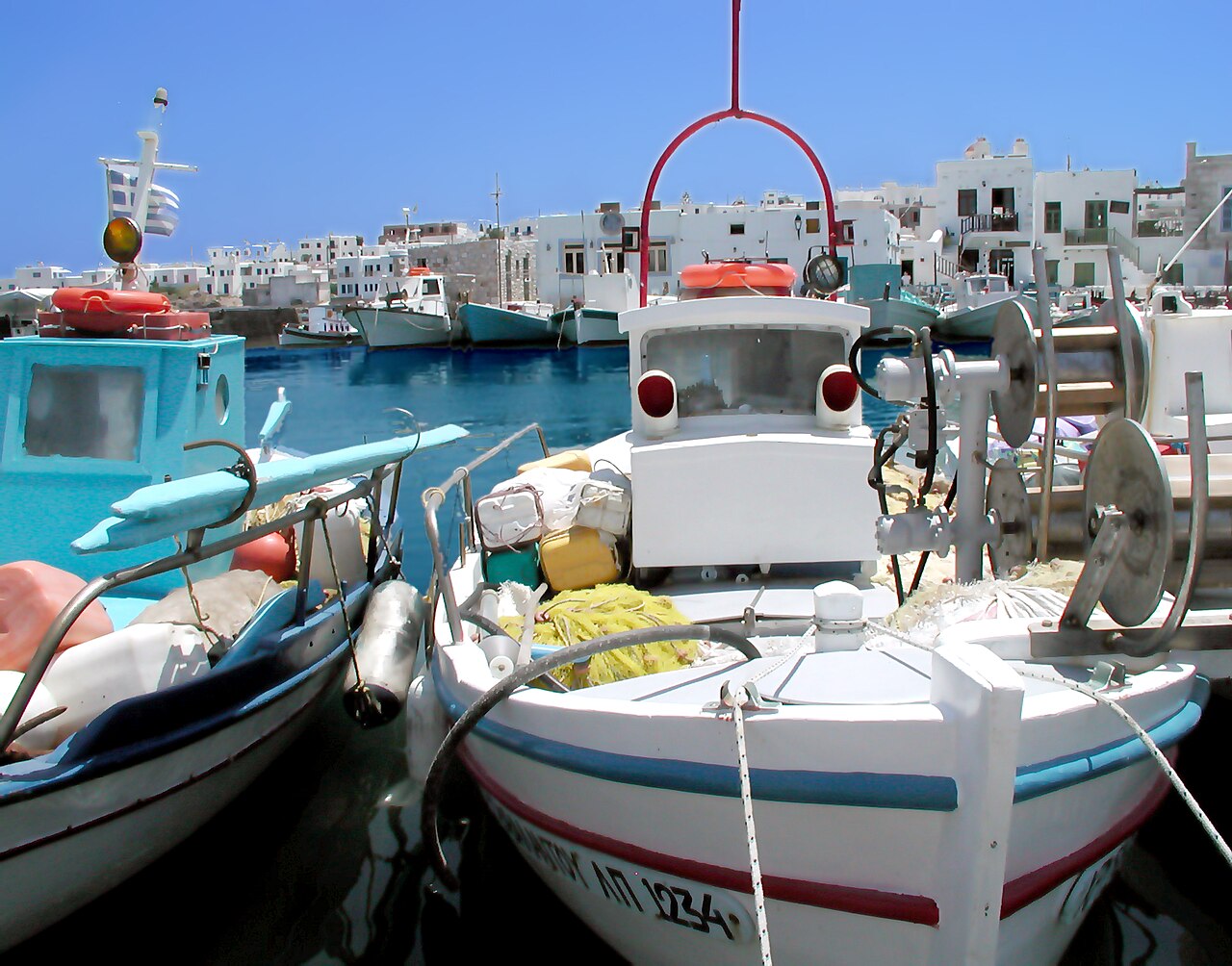
Naoussa is one of the most beautiful villages in the Cyclades. The whitewashed lanes, blue-shuttered houses, and small harbor where fishing boats moor next to expensive catamarans create a picture-perfect setting that somehow avoids feeling overdone. The restaurant scene is exceptional for a village of this size: fresh seafood, creative mezze, proper cocktail bars. Arrive in the morning or early evening for the most atmospheric light and the best photos.
2. Kolymbithres Beach
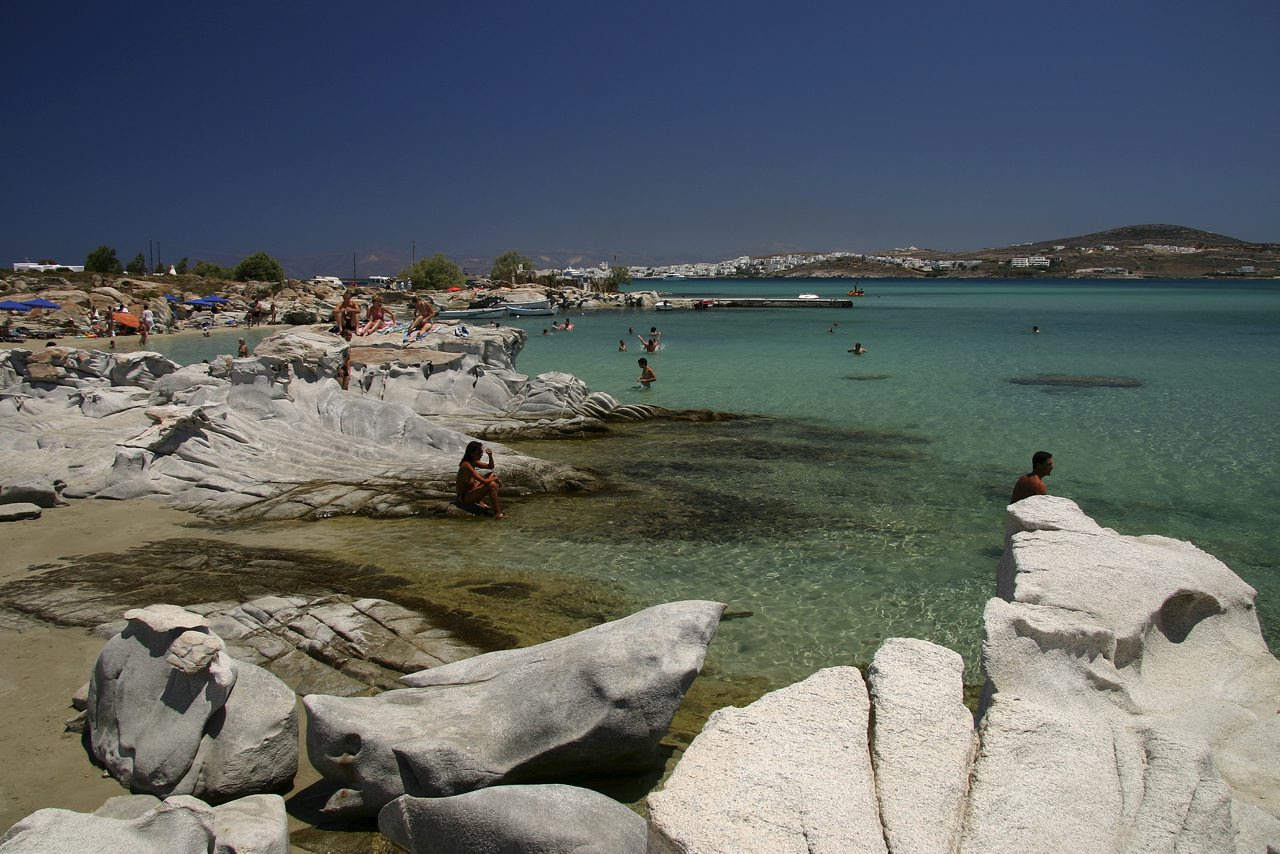
The most iconic beach on Paros, Kolymbithres is defined by its smooth granite rock formations that the sea has carved into sculptural boulders. The water between and around these rocks is clear, calm, and beautifully shallow. There is a beach bar and sunbeds, but also enough space to find a quiet spot on the rocks. Accessible by water taxi from Naoussa in about 15 minutes, or by road with a short walk.
3. Panagia Ekatontapyliani
One of the oldest and most significant Byzantine churches in Greece, the Ekatontapyliani (Church of a Hundred Doors) sits in the center of Parikia, dating from the 4th century AD. The legend says only 99 of the 100 doors have been found; the 100th will reveal itself when Constantinople returns to the Greeks. Whether or not you’re religious, the architecture, the interior mosaics, and the peaceful courtyard make this one of the most remarkable sights in the Cyclades.
4. Lefkes Village
The medieval capital of Paros sits in the hills at the center of the island. The mule-track paths, marble streets, Byzantine churches, and views over the surrounding olive groves give Lefkes a completely different character from the coastal villages. It is one of the most authentic and unspoiled villages on any of the Cycladic islands. Visit in the morning, have lunch at one of the handful of small tavernas, and explore the Byzantine path that leads down toward the coast.
5. Golden Beach (Chryssi Akti)
The island’s most famous beach is a long stretch of golden sand on the southeast coast, consistently ranked among the best beaches in Greece. It is also the windsurf capital of the eastern Mediterranean, with strong afternoon meltemi winds that draw professional athletes and beginners alike. Schools operate on-site. Even if you’re not windsurfing, the beach is beautiful and the water is clear and inviting.
6. Santa Maria Beach and Lageri
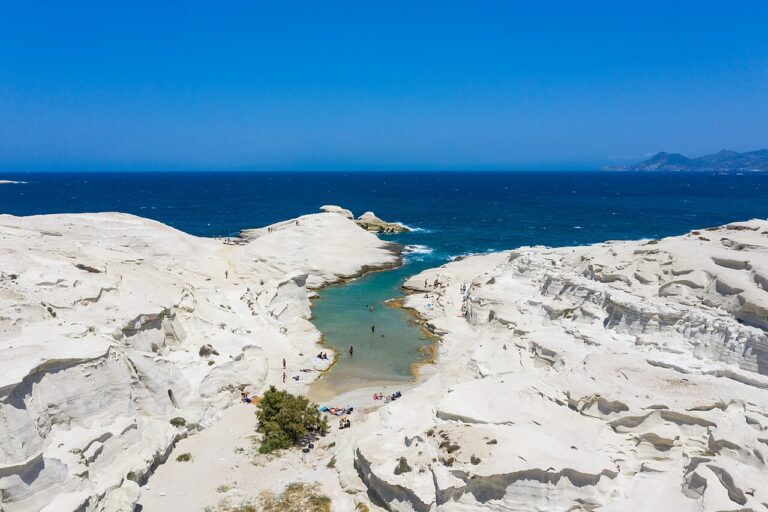
On the north coast near Naoussa, Santa Maria is a sandy beach with facilities and a lively atmosphere. A short walk or a quick water taxi from Naoussa, it offers calm water suitable for families. Lageri, on the other side of the headland, is more secluded and popular with nudists seeking a quieter spot.
7. Ancient Quarries of Paros
Paros marble was among the most prized in the ancient world, used for the Venus de Milo (found on nearby Milos), the Temple of Zeus at Olympia, and numerous other works. The ancient quarries at Marathi are carved deep into the hillside and show the scale of the operation that supplied artists and architects across the Mediterranean. An underrated and genuinely atmospheric site, especially if you combine it with the Lefkes village visit.
8. Antiparos Day Trip
The tiny island of Antiparos, a 10-minute ferry hop from Parikia, is a delightful contrast: quieter, smaller, and with some excellent beaches. The famous cave of Antiparos (Stalactite cave) has been visited since antiquity. A day trip from Paros is easy and very worthwhile.
Best Beaches in Paros
Kolymbithres: Iconic rock formations, clear water, and easy access from Naoussa. Our top pick.
Golden Beach (Chryssi Akti): Long, sandy, windy in the afternoon. Best for windsurfing and sun-worshippers.
Santa Maria: Calm, family-friendly, close to Naoussa.
Logaras: A small, sheltered sandy beach on the southeast coast with calm, shallow water.
Faragas: Quiet and slightly off the beaten track, with turquoise water and a beach bar.
Pounda: On the west coast, the departure point for Antiparos ferries. Good sunset views.
Where to Eat in Paros
Naoussa is the epicenter of the restaurant scene. The harbor-front and the lanes behind it have excellent options ranging from simple grilled fish at low tables to creative Cycladic cuisine at proper tables with wine menus. Reserve in advance for dinner at the most popular spots in peak season.
Parikia has a broader range of budget options and serves the island’s daily life as well as tourists. The morning market around Ekatontapyliani and the lanes of the old town have good bakeries and cafes.
Local specialties to try: Parian goat cheese, fresh octopus, tsipuro (the local anise spirit), loukoumades (honey doughnuts) at any bakery, and grilled fish bought straight from the fishing boats in Naoussa harbor.
Practical Tips for Paros
Winds: The meltemi blows from the north in July and August. Beaches on the west and south coasts (Faragas, Pounda, Logaras) are more sheltered; northern beaches are windier and better for watersports.
Getting around on foot: Parikia’s old town is very walkable. Naoussa’s harbor area is compact. For the beaches, you really want wheels or a water taxi.
Cash: Carry euros. Many smaller tavernas and market stalls in villages are cash-only.
Book ferries early: Routes from Paros to Mykonos and Santorini fill up fast in summer. Book at least a week ahead, more for July and August.
How Long to Stay in Paros
Three to four nights gives you time for the main beaches, Naoussa, Parikia and the Ekatontapyliani, and a day in Lefkes. Five to six nights works beautifully if you plan to use Paros as an island-hopping base or want to take the day trip to Antiparos.
Connecting with Other Islands
Paros is the natural island-hopping hub of the Cyclades. In summer there are direct ferries to Mykonos, Naxos, Ios, Folegandros, Santorini, and Milos nearly every day. A classic itinerary pairs Paros with Naxos (40 minutes) and then Santorini, or with Milos and Folegandros for a quieter circuit.
For more Greece planning help, see our Greece travel planning guide, how much a trip to Greece costs, and our guides to Santorini and Corfu.
Final Thoughts on Paros
Paros never quite gets the credit it deserves, tucked between the more famous Cycladic names, and that is entirely its advantage. It has exceptional beaches, a fishing-village harbor that makes you want to stay for dinner and then another week, some of the best food in the islands, and enough variety in character, from the whitewashed lanes of Naoussa to the medieval streets of Lefkes, to hold your attention for days. If you are building a Cyclades itinerary and Paros isn’t on it yet, put it on.
More Greece islands: See our guides to Naxos, Mykonos, Milos, Crete, and Rhodes.