Disclosure: This post contains affiliate links. If you book through our links, we may earn a small commission at no extra cost to you. Thanks for supporting Faceted Travel!
Table of Contents
- Step 1: Decide How Long You Have
- Step 2: Pick Your Islands Deliberately
- Step 3: Choose Your Season
- Step 4: Sequence It So You Are Not Backtracking
- Step 5: Book the Ferries Correctly
- Step 6: Set a Realistic Budget
- Step 7: Handle the Practical Details
- Step 8: Do Not Skip the Mainland
- Step 9: Build the Booking Order
- Where to Book
- What We Would Do Differently
Our first Greece itinerary had five islands in ten days, and we spent roughly a third of that trip either on a boat or waiting for one. Nobody tells you that the ferries are the trip. They are not the connective tissue between the good parts, they are a major line item in your time budget, and planning around them is most of what separates a great Greece trip from an exhausting one.
This is the guide we wish we had written before that trip: how many days you actually need, how to pick islands without falling for the same three everyone picks, when to go, what it costs, and where the money is worth spending. It pairs with our destination guides for Athens, Santorini, and Crete.
Step 1: Decide How Long You Have
The rule we now use is simple. Two nights minimum per island, three is better, and every island change costs you roughly half a day.
5 to 7 days: Athens plus one island. Two or three nights in Athens, the rest on a single island. Do not island hop on a week-long trip. We know it is tempting.
8 to 10 days: Athens plus two islands. This is the sweet spot for most first trips. Pick two islands in the same group with a short ferry between them.
11 to 14 days: Athens plus three islands, or Athens plus Crete plus one Cycladic island, or the mainland plus two islands.
More than two weeks: now you can do the mainland properly. Delphi, Meteora, and the Peloponnese are the parts almost every first-timer skips and almost every repeat visitor raves about.
The mistake we made was treating a two-hour ferry as a two-hour commitment. In practice it is: check out, get to the port an hour early, sail two hours, find your next place, and it is 4pm. That is the day.
Step 2: Pick Your Islands Deliberately
There are more than 200 inhabited Greek islands and most itineraries use the same three. Here is how we think about the groups.
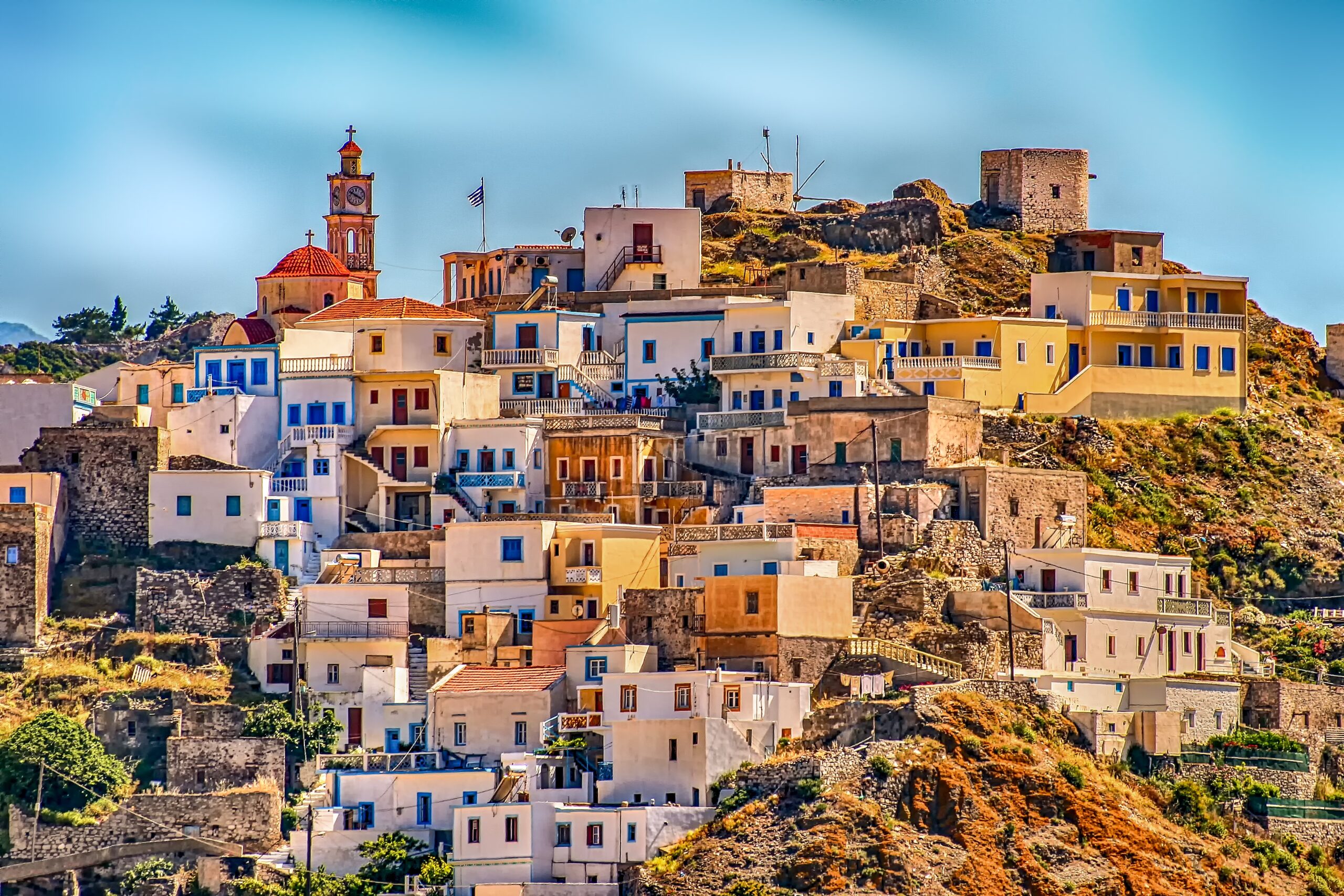
The Cyclades are the postcard: white villages, blue domes, brown rock, bright sea. Santorini for the caldera view, Mykonos for nightlife and beach clubs, Naxos and Paros for a better value version of the same look with real beaches, Milos for otherworldly coastline, Folegandros and Sifnos for quiet.
Crete is its own thing and needs its own week. Mountains, gorges, four cities, Minoan ruins, and the best food in the country.
The Ionian islands on the west side are green and lush rather than arid. Corfu, Kefalonia, Zakynthos. Different light, more Italian influence, easier to reach from Italy.
The Dodecanese in the southeast include Rhodes with its intact medieval walled city, Kos, and Symi. Closest to Turkey, and Rhodes has a long season.
The Sporades in the northwest are forested and close to the mainland, reachable without flying to Athens.
Our advice: pick one group and stay in it. Mixing a Cycladic island with an Ionian one means a full travel day back through Athens.
Step 3: Choose Your Season
April and May: cool to warm, green, wildflowers, low crowds, cheap. The sea is cold. Some island businesses have not opened yet, particularly in April.
June: our favorite month. Warm, everything open, sea warming up, prices below peak.
July and August: hot, expensive, crowded, and windy. The meltemi blows hardest in these months and cancels fast ferries. It is also when most Europeans travel, so book everything months out.
September: warmest sea of the year, thinning crowds, still fully open. The strongest argument against June.
October: lovely and quiet in the first half, closing down in the second. Ferry schedules thin out.
November through March: Athens, Thessaloniki, and Crete’s cities are great and cheap. The small islands largely close.
Our guide to the best time to visit Greece has the full month-by-month breakdown, and our best time to visit Europe guide helps if Greece is one stop on a bigger trip.
Step 4: Sequence It So You Are Not Backtracking
The pattern that works: fly into Athens, work outward, fly home from your last island.
Most Greek islands of any size have an airport with direct summer flights to Athens and often to European hubs. Ending on an island and flying out from there instead of ferrying all the way back saves a full day and often costs the same.
A concrete 10-day example that we would actually book:
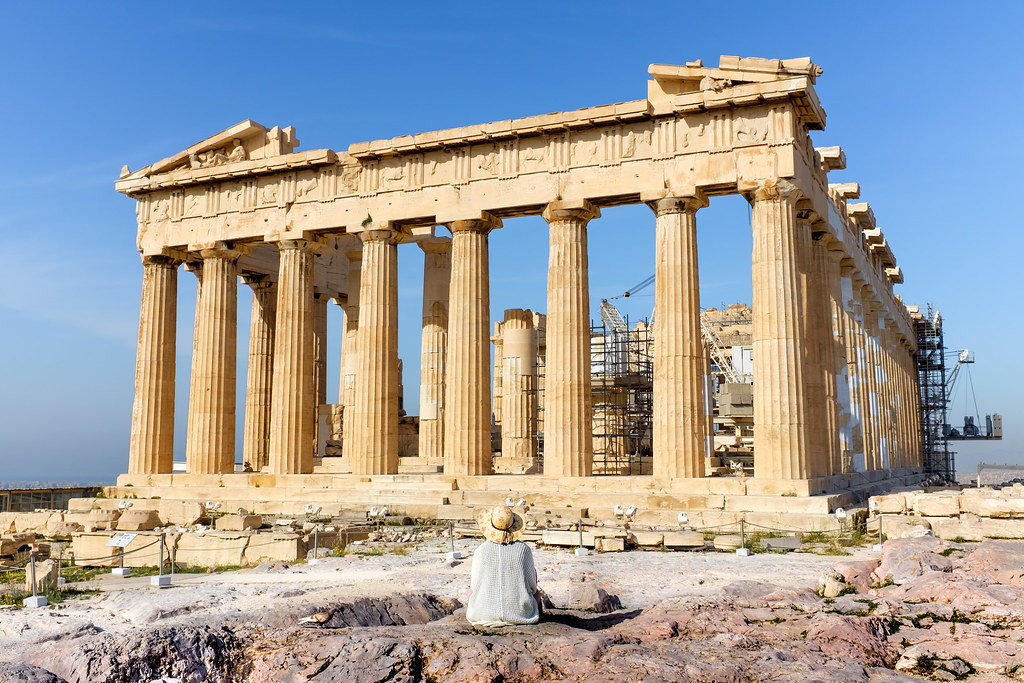
- Days 1 to 3: Athens. Acropolis, the museum, Plaka, a day trip to Cape Sounion or Delphi.
- Day 3 evening: ferry or fly to Naxos.
- Days 4 to 6: Naxos. Beaches, mountain villages, the Portara.
- Day 7: short ferry to Santorini.
- Days 7 to 9: Santorini. Caldera, Oia, a catamaran day.
- Day 10: fly home from Santorini.
Two islands, one direction, no backtracking, and only two travel days out of ten.
Step 5: Book the Ferries Correctly
This is the part that goes wrong most often, so here are the rules we now follow.
Book high season ferries in advance. July and August routes between popular islands sell out, especially for cars.
Prefer conventional ferries when wind is possible. High-speed catamarans get cancelled in strong meltemi. The big slow ferries usually run. If a flight home depends on the boat, take the slow one.
Never connect a ferry to a same-day international flight. Build a night in Athens or on the island before you fly. We have watched people miss flights over this.
Check whether the port is near the town. On some islands the ferry port and the main town are 20 minutes apart, which matters when you are dragging bags.
Bring motion sickness medication even if you never get seasick. The meltemi makes the Aegean genuinely rough.
Step 6: Set a Realistic Budget
Greece is more affordable than most of Western Europe, with one enormous exception: Santorini and Mykonos in July and August are priced like Aspen.
Per person per day, mid-range, outside peak season:
- Accommodation: 45 to 75 euros (your half of a double). Santorini caldera views start at 150 and go up steeply.
- Food: 35 to 50 euros for a taverna lunch and dinner with wine. Less if you eat gyros for lunch, which you should sometimes.
- Ferries: budget 40 to 70 euros per hop.
- Local transport and car rental: 40 to 55 euros a day for a car, split.
- Activities: 20 to 50 euros a day if you are doing boat trips and sites.
Call it 125 to 200 euros per person per day outside Santorini and Mykonos in peak. Our guide to what a trip to Europe costs puts that against other countries.
Where we would spend more: one good caldera-view night in Santorini, and boat days. Where we would spend less: everything in Athens, and food generally, since the cheap places are usually the best ones.
Step 7: Handle the Practical Details
Greece is in the EU and the Schengen zone and uses the euro. US, Canadian, UK, and Australian passport holders do not need a visa for stays under 90 days, though the EU’s new ETIAS authorization is coming and will require a quick online application and a small fee once it launches.
A few things worth doing before you go:
- Get travel insurance, especially if ferries or connecting flights are involved. Our guide to travel insurance for Europe covers what actually matters in a policy.
- Bring cash. Cards are widely accepted in cities and larger hotels, but small tavernas, village shops, and some ferry snack bars are cash only.
- Pack light. You will carry bags up stairs, over cobblestones, and onto boats. Our carry-on packing list is built for exactly this.
- Bring real shoes. Ancient sites, marble streets polished smooth by centuries, and gorge trails do not care about your sandals.
- Note the siesta. Many shops and sites close from roughly 2pm to 5pm, and dinner does not really start until 9pm.
Step 8: Do Not Skip the Mainland
We are going to keep saying this until it takes. Greece is not an archipelago with a capital attached to it. The mainland holds the things that most changed how we thought about the country, and it is cheaper and far less crowded than the islands.
Delphi is two and a half hours from Athens, built into the side of Mount Parnassus, and it was the center of the ancient Greek world. You can do it as a long day trip, but staying the night in the village above it and walking the site at opening is much better.
Meteora is a cluster of monasteries built on top of enormous sandstone pillars, four hours north of Athens by train. Photographs undersell it badly. Six monasteries are still active and you can walk between several of them.
The Peloponnese is a full trip of its own: Nafplio as a base, Mycenae, Epidaurus with its acoustically perfect theater, Olympia, and the Byzantine ghost city of Mystras. A week here with a rental car is one of the best value trips in Europe.
Thessaloniki in the north is the country’s second city, with a food scene most people consider better than Athens and almost no international tourism.
If you have fourteen days, we would trade one island for Delphi and Meteora. We think you would come home agreeing.
Step 9: Build the Booking Order
The sequence we now use, roughly three to five months out for a summer trip:
1. Flights into Athens and home from your last stop. Open-jaw tickets are usually the same price and save a whole day.
2. Accommodation in the expensive places first. Santorini caldera rooms and Mykonos in August go early and the good value disappears before the inventory does.
3. Ferries, as soon as schedules are released, which is typically January to March for the summer season.
4. The one or two activities that sell out: a Santorini catamaran, an Acropolis timed entry, a Samaria trip.
5. Everything else can wait. Tavernas, beaches, and most day tours can be sorted a day or two ahead once you are there.
The general approach in our guide to planning a trip to Europe applies here too, with the ferries as the Greece-specific wrinkle.
Where to Book
- Hotels and apartments: Search Greece stays on Booking.com. Free cancellation is worth prioritizing here more than almost anywhere, because ferry cancellations reshape itineraries with no notice.
- Tours and activities: Browse Greece tours on Viator. Acropolis skip-the-line entry, Delphi and Meteora day trips from Athens, catamaran sailing in Santorini, and Samaria Gorge trips on Crete are the ones we would book ahead.
What We Would Do Differently
We would go slower. Three islands in ten days felt ambitious and we still cut one. Two islands and an extra night each would have been a better trip.
We would spend more time on the mainland. Delphi and Meteora were the two places that genuinely stopped us, and both are day trips or overnights from Athens that most itineraries skip in a rush to reach a boat.
And we would stop optimizing for the famous view. The best afternoon of our first Greece trip was a beach with no name and one taverna, on an island nobody had told us to visit.
—
Keep planning your Greece trip: Read our Athens travel guide for the mainland gateway, our Crete travel guide if you want mountains and food alongside the beaches, and our Naxos travel guide for the Cyclades island that gives you the postcard without the price tag.