Disclosure: This post contains affiliate links. If you book through our links, we may earn a small commission at no extra cost to you. Thanks for supporting Faceted Travel!
Table of Contents
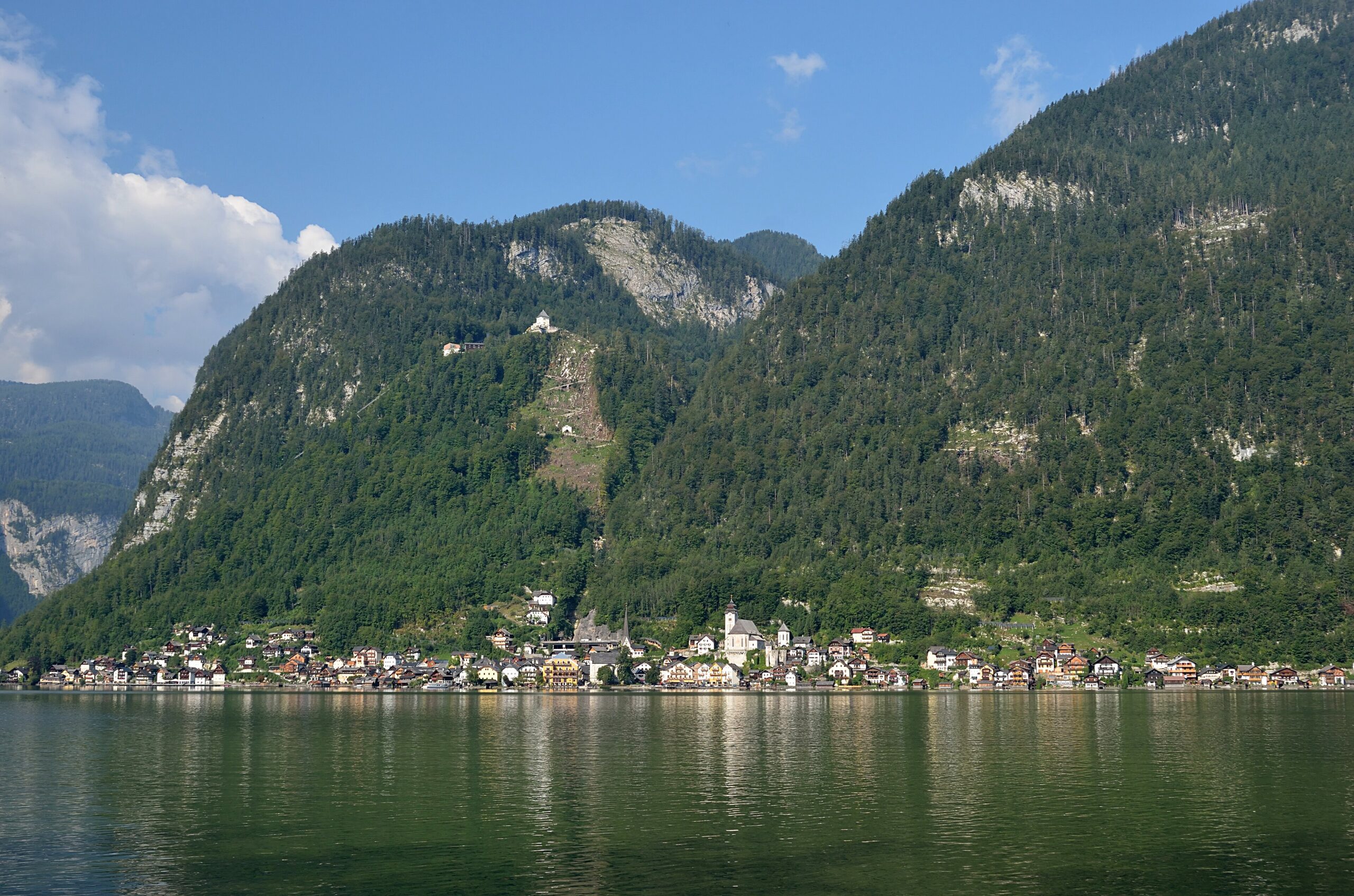
The first time we rounded the lake and Hallstatt came into view, we both actually gasped out loud. Pastel houses stacked up a green mountainside, a slender church steeple mirrored in a glass-still lake, and snow-dusted peaks rising straight out of the water behind it all, it looked less like a real town and more like a painting someone had hung in the sky.
Hallstatt has a reputation as one of the most beautiful villages in the world, and for once the hype is completely earned. This tiny lakeside settlement in Austria’s Salzkammergut region has been drawing salt miners for 7,000 years and photographers for about ten, and somehow it survives both with its fairy-tale charm intact. Here is everything we learned about visiting Hallstatt, including how to see it at its magical best and sidestep the day-tripper crush.
Where Is Hallstatt and Why Go?
Hallstatt sits on the western shore of Lake Hallstatt (the Hallstätter See) in Upper Austria, wedged onto a thin ribbon of land between the water and the steep, forested slopes of the Dachstein mountains. It is part of a UNESCO World Heritage cultural landscape, recognized both for its jaw-dropping natural beauty and for a mining history that reaches all the way back to the Bronze Age.
What makes Hallstatt special is not any single sight. It is the whole scene: the way the light moves across the lake in the morning, the swans gliding past the boathouses, the salt-white peaks catching the last sun of the day. It is small, it is walkable, and it rewards anyone who slows down and simply looks. If you are folding it into a bigger trip, our guide on the best time to visit Europe will help you nail the timing.
The Best Things to Do in Hallstatt
Find the Classic Postcard View
You have seen this photo a hundred times, and standing in the exact spot is still a thrill. The famous view looks back at the village from the northern lakeshore, with the houses tumbling down to the water and the church spire front and center. Head to the streets near the north end of town in the early morning, before the tour buses arrive, and you will often have the whole magical scene nearly to yourself. Golden hour in the evening is just as dreamy and far less crowded.
Go Deep in the Salt Mines
Hallstatt owes its very existence to salt, and the Salzwelten mine above town is the oldest known salt mine in the world. A funicular railway (the Salzbergbahn) carries you up the mountain, where you pull on a miner’s jumpsuit and ride a pair of long wooden slides down into the tunnels the ancient miners carved by hand. It is part history lesson, part underground adventure, and genuinely fun for all ages. The views from the mountain terrace on the way up are worth the ticket on their own.
Walk Out on the Skywalk
Right beside the top of the funicular, the Welterbeblick “Skywalk” viewing platform juts out over the cliff more than 350 meters above the rooftops. The vantage point straight down over the village, the lake, and the valley beyond is the single best panorama in the area. We lingered up here far longer than we planned, just watching the light shift over the water.
Visit the Bone House
Tucked behind the parish church is one of Hallstatt’s more unusual and moving sights: the Beinhaus, or Bone House, inside St. Michael’s Chapel. Because flat burial ground was so scarce on this narrow shelf of land, the village developed a tradition of exhuming remains after some years and painting the skulls with delicate floral designs and the names of the deceased. More than 600 painted skulls are arranged here. It sounds macabre, but it is quiet, respectful, and strangely beautiful.
Wander the Marktplatz and the Lanes
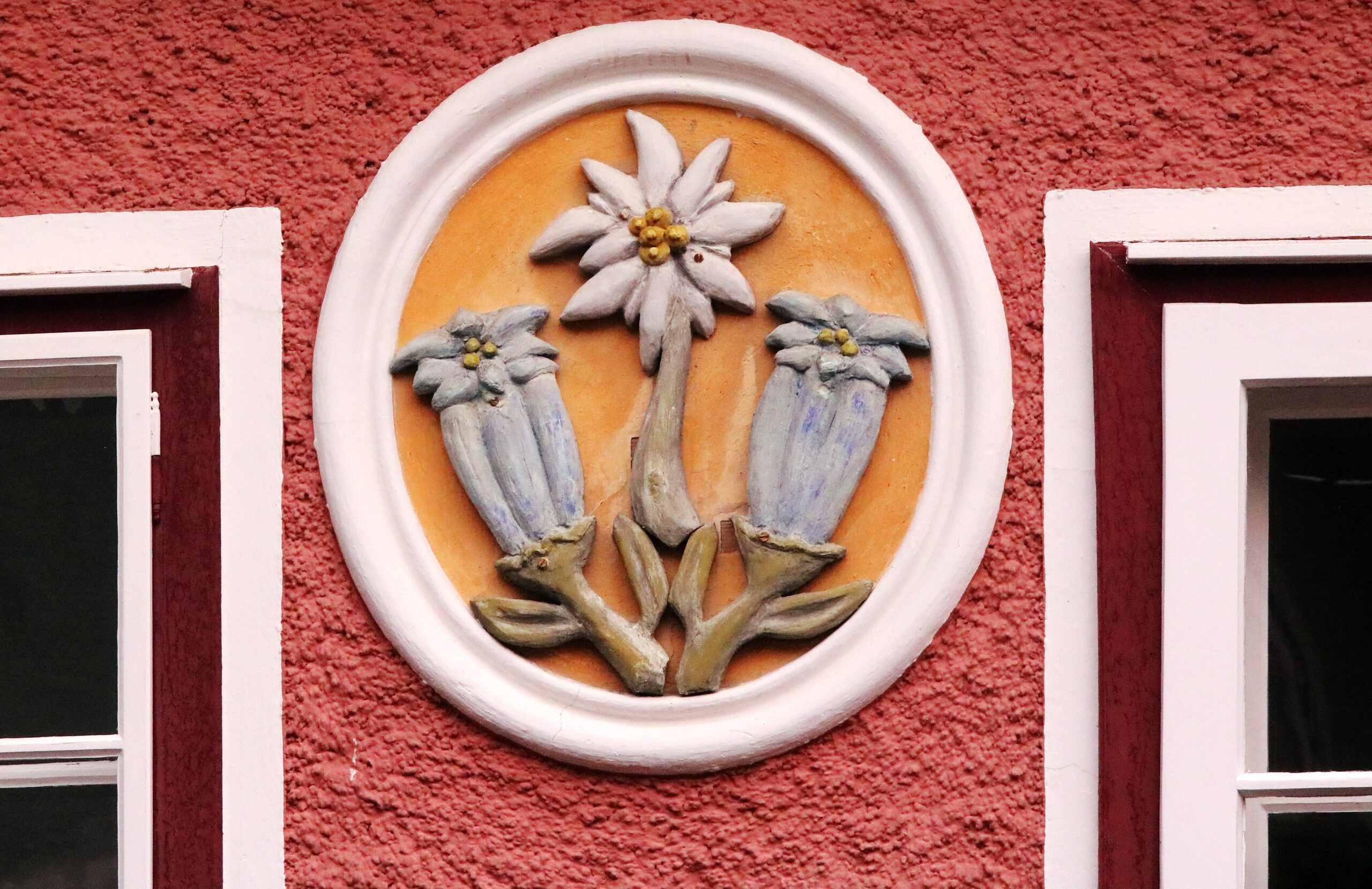
The heart of the village is the Marktplatz, a cobbled little square framed by pastel houses, flower boxes, and a handful of cafes. From here, narrow lanes wind up the hillside and along the shore, past tiny galleries, guesthouses, and window ledges spilling geraniums. There is no grand agenda. Just follow whichever alley looks prettiest, which is all of them.
Day Trips and Nearby Adventures
Hallstatt makes a perfect base for exploring the wider Salzkammergut lake district and the Dachstein massif.
The Dachstein Krippenstein is the big one. A cable car from nearby Obertraun climbs to a high alpine world where the Five Fingers viewing platform stretches out over a sheer drop for a heart-in-throat photo. Up here you will also find the Dachstein Giant Ice Cave and the Mammoth Cave, both remarkable and cool even at the height of summer.
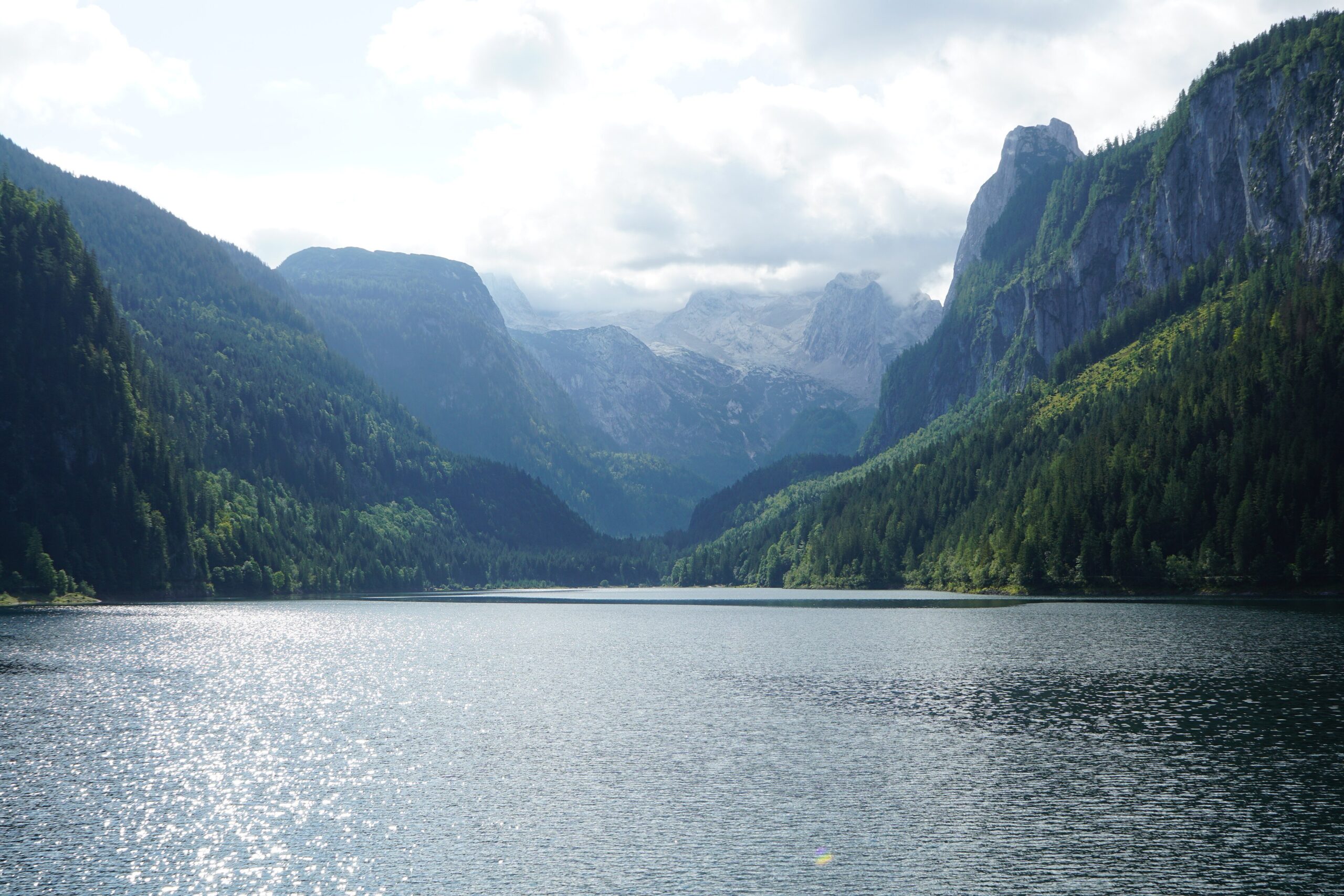
Lake Gosau (the Gosausee) is a short drive away and delivers one of the most photogenic reflections in all of Austria, with the Dachstein glacier mirrored in still green water. An easy, mostly flat trail loops the lake in about an hour.
Bad Ischl and St. Wolfgang round out the region with imperial history and more storybook lake towns. And Hallstatt pairs beautifully with the cities beyond: our Salzburg, Austria travel guide covers Mozart’s hometown just over an hour away, and our Vienna, Austria travel guide can anchor the other end of an Austrian trip.
What to Eat and Drink
Salzkammergut cooking is hearty Alpine comfort food, and Hallstatt’s lakeside setting means fresh fish gets top billing. Look for Reinanke, a delicate whitefish caught right in the lake, usually pan-fried and served with potatoes and a squeeze of lemon. It was one of the best meals of our trip, eaten on a terrace at the water’s edge.
Beyond the fish, dig into Austrian classics like Wiener schnitzel, käsespätzle (the Alpine answer to mac and cheese), and rich goulash on a cool evening. Save room for apfelstrudel or a slice of Salzburg’s beloved Sachertorte with a strong coffee. A crisp Austrian Grüner Veltliner white wine or a cold local beer rounds out the meal perfectly.
Where to Stay in Hallstatt
Our single best piece of advice for Hallstatt is this: stay overnight. The village is overwhelmed by day-trippers from late morning to late afternoon, but they all leave, and the reward for staying is having those cobbled lanes and glowing lake views almost to yourself at dawn and dusk. It transforms the experience entirely.
Accommodation is limited and books up fast, so reserve early. The most atmospheric options are the small guesthouses and lakefront hotels right in the historic center, many in centuries-old buildings with balconies over the water. If the village itself is full, look at nearby Obertraun across the lake or Bad Goisern just up the valley, both quieter and better value, with easy connections in.
Getting to and Around Hallstatt
Getting to Hallstatt is part of the adventure. By car, it is roughly an hour and a half from Salzburg and about three and a half hours from Vienna or Munich, along some of the prettiest driving in the Alps. Just know that the village center is closed to visitor traffic much of the year, so you will park in one of the numbered lots (P1, P2, P3) at the edge of town and walk in, which takes only a few minutes.
By public transport, the classic approach is genuinely special. Trains stop at Hallstatt station, which sits directly across the water from the village, and a small ferry meets most arriving trains to carry you across the lake with that famous skyline growing bigger the whole way. It is one of the loveliest arrivals in Europe. From Salzburg, a common route combines a Postbus to Bad Ischl with an onward connection, so check timetables in advance and allow a little buffer between links.
Once you are there, Hallstatt is entirely walkable end to end in about fifteen minutes. There is nothing to do but wander on foot, which is exactly the point.
A Few Practical Tips
Come early or stay late. The difference between Hallstatt at 8 a.m. and Hallstatt at noon is night and day, and the quiet hours are when the magic happens. Wear comfortable shoes, since the lanes and the paths up to viewpoints are steep and often slick after rain. Austria uses the euro, and while cards are widely accepted, a little cash is handy for small cafes and the ferry. Pack a light layer even in summer, because the mountain air turns crisp the moment the sun dips behind the peaks. And please be respectful: people actually live in these houses, so admire the window boxes without treating front stoops as photo studios.
Where to Book
Here is how we plan and book a trip to Hallstatt.
- Hotels and guesthouses: We book through Booking.com for the best selection in the historic center and flexible free cancellation. Because rooms are so limited, book as far ahead as you can and filter for lake views.
- Tours and day trips: For guided day trips from Salzburg or Vienna, salt mine tickets, and Dachstein excursions, we use Viator. A guided day trip is the easy way to visit if you would rather not juggle trains and ferries.
- Budget planning: Wondering what a trip through Austria and central Europe runs? See our real-numbers breakdown of how much a trip to Europe costs.
Best Time to Visit Hallstatt
Late spring (May and June) and early fall (September) are our favorite windows, with mild weather, green hillsides or golden light, and slightly thinner crowds than high summer. Summer (July and August) brings the warmest lake and the longest days, but also the biggest tour-bus waves, so lean hard into early mornings and evenings. Winter turns Hallstatt into a snow-globe, especially around the holidays, though some mountain activities and boat services scale back and daylight is short. There is genuinely no ugly season here.
How Many Days Do You Need?
Day-trippers rush Hallstatt in a couple of hours, and honestly that is the least rewarding way to see it. We suggest one or two nights. A single night lets you experience the village empty at dawn and dusk, which is the whole magic. A second night gives you time for the salt mine, the Skywalk, and a Dachstein or Gosausee excursion without feeling rushed. Slow is the way to do Hallstatt.
Final Thoughts
Hallstatt is one of those rare places that manages to live up to its own impossible photos. Yes, it is popular, and yes, midday can get busy, but linger past sunset or wake before the buses and you will understand exactly why this little salt-mining village has enchanted travelers for centuries. Give it an overnight, breathe the mountain air, and let Austria’s prettiest corner work on you slowly.
Planning more of your Alpine adventure? Pair Hallstatt with our Salzburg, Austria travel guide for the nearby city of music, our Munich, Germany travel guide for the gateway from Bavaria, and our Lucerne, Switzerland travel guide for another storybook lake and mountain escape. Gute Reise!