Table of Contents
- Why Visit Nafplio?
- When to Visit Nafplio
- Getting to Nafplio
- Getting Around Nafplio
- Where to Stay in Nafplio
- Where to Book in Nafplio
- Top Things to Do in Nafplio
- Where to Eat in Nafplio
- Practical Tips for Nafplio
- How Long to Spend in Nafplio
- Combining Nafplio with Other Destinations
- Final Thoughts on Nafplio
Disclosure: This post contains affiliate links. If you book through our links, we may earn a small commission at no extra cost to you. Thanks for supporting Faceted Travel!
If you have been to Athens and the Cycladic islands but never made it to the Peloponnese, Nafplio is the place to start. This small port city on the northeastern Peloponnese was the first capital of modern Greece, and it carries that history with grace. The cobblestone old town is lined with Venetian mansions and neoclassical buildings, a fortress watches over the harbor from a promontory, and another castle sits on a tiny island in the bay. We spent four nights here thinking we were just passing through and ended up extending our stay. It is one of the most charming and underrated towns in Greece.
Why Visit Nafplio?
Nafplio sits at the head of the Argolic Gulf, backed by mountains and facing a bay dotted with islets. The old town (Syntagma Square and the Venetian-era lanes around it) is compact, walkable, and genuinely beautiful in a way that doesn’t require an Instagram filter. It also sits within easy reach of some of the most important ancient sites in Greece: Mycenae, Epidaurus, Tiryns, and Argos are all within 30 to 45 minutes by car.
Most visitors to Greece skip the Peloponnese entirely, treating it as a detour rather than a destination. That makes Nafplio remarkably uncrowded relative to its quality, even in July and August. You’ll share Syntagma Square with other travelers, but you won’t be fighting through crowds to get a table at dinner.
When to Visit Nafplio
Nafplio has a mild Mediterranean climate and can be visited year-round, but the sweet spots are spring and autumn.
April and May bring warm, sunny days, wildflowers in the surrounding countryside, and almost no crowds. This is also the best time to visit Epidaurus and Mycenae without dealing with the midday heat.
June through August is warm to hot (often 30-35°C in July and August), busy on weekends with Athenian day-trippers, and fully operational. The beach at Arvanitia, just below the old town, gets crowded, but the old town itself handles peak season gracefully.
September and October are our favorite months. The heat has eased, the water is still warm for swimming, the famous Epidaurus Festival has wrapped up, and the town feels calm and local. Tavernas are still open and serving.
November through March is quiet and cooler. Some hotels and restaurants have reduced hours, but the town is beautiful in winter light and almost all attractions remain open. A great choice for a slow, off-season trip.
Getting to Nafplio
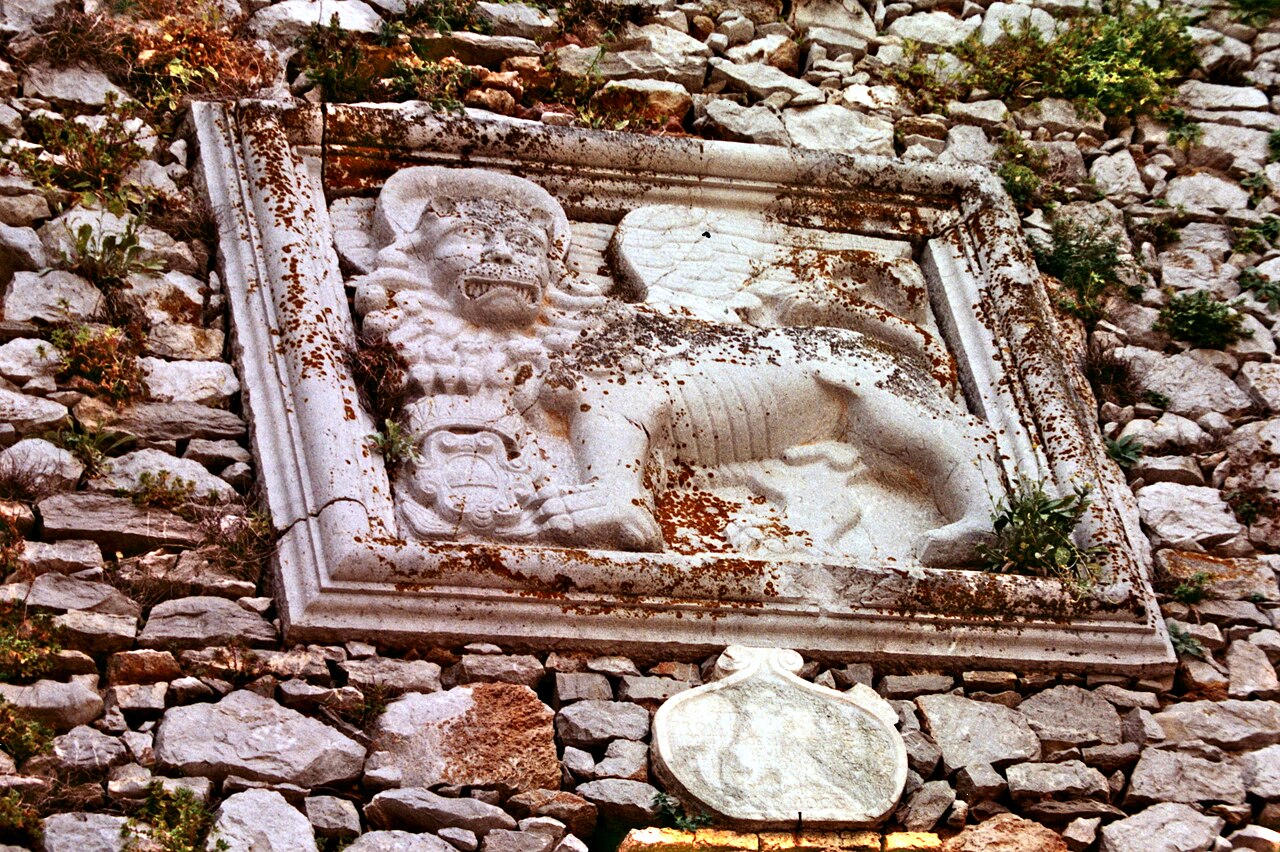
From Athens by bus: KTEL operates regular bus service from the Kifissos bus station in Athens to Nafplio. Journey time is about 2.5 hours. Buses run several times daily. This is the easiest option if you don’t have a car.
From Athens by car: Nafplio is about 140km from Athens via the A7 highway, roughly 1.5 to 2 hours depending on traffic. Having your own car is strongly recommended if you want to explore the surrounding ancient sites at your own pace.
From Corinth: Nafplio is about 70km from the Corinth Canal, making it an eyasy stop on a Peloponnese road trip.
From Mycenae: Only 30 minutes by car, making a combined visit very easy.
Getting Around Nafplio
The old town is entirely walkable. You can walk from Syntagma Square to the Palamidi fortress (via the 999 steps or the road) to the Arvanitia beach to the harbor in under 30 minutes.
For day trips to Mycenae, Epidaurus, and other Peloponnese sites, a rental car is the most practical option. Several agencies operate in Nafplio. Alternatively, organized day tours from Nafplio cover all the main ancient sites and include a guide.
Local taxis are available and useful for the hill up to the Palamidi if you don’t want to climb the 999 steps both ways.
Where to Stay in Nafplio
Staying in the old town is the right call. The atmospheric lanes and squares of the Venetian neighborhood, centered around Syntagma Square and the parallel streets leading to the harbor, put you within walking distance of everything.
Budget and mid-range: A range of small guesthouses and family-run hotels operate in and around the old town. Rooms in restored traditional buildings are charming and often good value compared to equivalent properties in Athens or the islands.
Boutique and upscale: Nafplio has a collection of well-regarded boutique hotels in renovated neoclassical buildings. Some have rooftop terraces with views over the bay and the Bourtzi fortress. Book well ahead for summer weekends.
Practical note: Streets in the old town are very narrow and pedestrianized in many areas. If you are arriving by car, park in the lots near the harbor and walk in. Your hotel can advise on the closest parking to their location.
Where to Book in Nafplio
Browse hotels, guesthouses, and apartments in the old town and the harbor area on Booking.com. For guided day trips to Mycenae, Epidaurus, and across the Peloponnese, Viator has a strong selection of tours with guides, including combined site visits that cover multiple ancient locations in a single day.
Top Things to Do in Nafplio
1. Palamidi Fortress
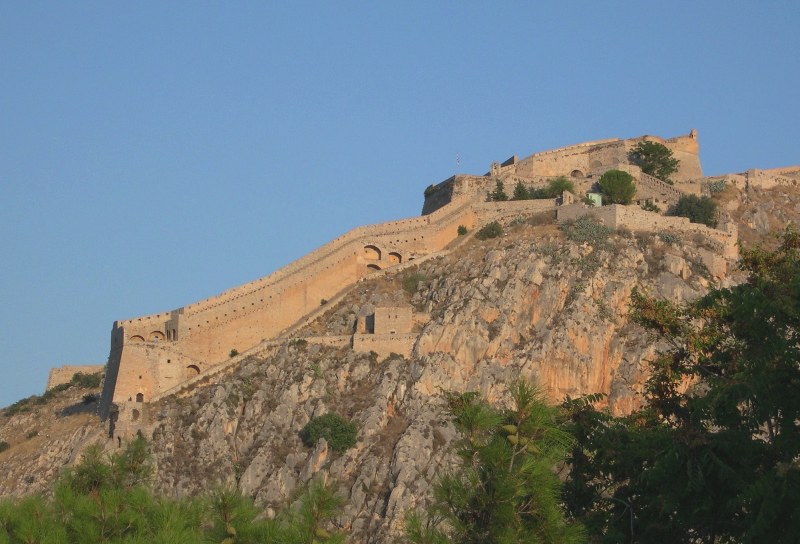
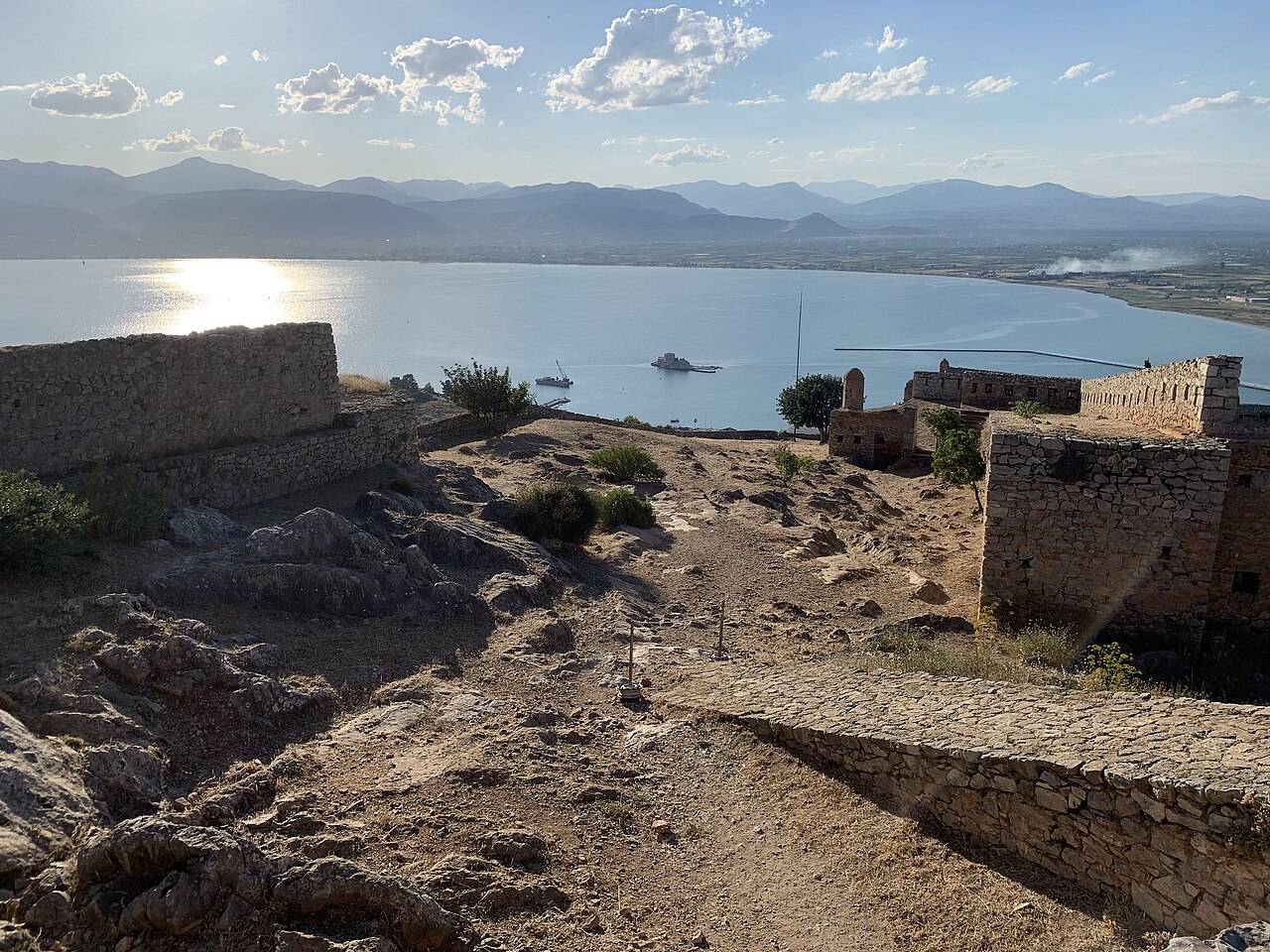
The Venetian-built Palamidi fortress dominates the city from a 216-meter hill above the old town. To reach the top, you can climb the famous 999 steps (roughly 15 to 20 minutes of steep climbing) or drive the road around the back. The views from the ramparts are extraordinary: the old town below, the bay, the Bourtzi island fortress, and the surrounding mountains. Inside, you can explore multiple bastions, dungeons, and Venetian military architecture. The steps are best tackled in the morning or late afternoon to avoid the worst of the midday heat.
2. Bourtzi Castle
The small Venetian fortress on the islet in the middle of Nafplio harbor is one of the most photographed spots in Greece. Short boat trips run from the harbor to the Bourtzi several times daily, and the castle interior is open to visit. The round trip takes about 30 minutes. Even if you don’t cross over, with the Bourtzi looks spectacular from the harbor promenade, especially at sunset.
3. Acronafplia (Acronauplia)
The promontory above the old town was the city’s original fortified acropolis and predates the Palamidi by centuries. It now hosts a hotel complex, but the outer walls and terraces are accessible and offer quieter, intimate views over the bay. A good complement to the Palamidi, with less climbing required.
4. Syntagma Square and the Old Town
The central square of the old town is flanked by the Archaeological Museum, a Venetian arsenal-turned-cinema, and several cafes with outdoor seating. Wandering the narrow streets around it, past Venetian fountains, painted doorways, and bougainvillea-draped balconies, is one of the pleasures of Nafplio. Budget at least an hour just to wander without a specific destination.
5. Archaeological Museum of Nafplio
Housed in a former Venetian arsenal on Syntagma Square, this well-curated museum covers the history of the northeastern Peloponnese from the Bronze Age through the Classical period. The Bronze Age armor (one of only a handful complete examples surviving from the Mycenaean era) is the highlight. Compact and manageable, it pairs well with a subsequent visit to Mycenae.
6. Day Trip to Mycenae
Mycenae is 30 minutes from Nafplio and one of the most important Bronze Age sites in the world. The Lion Gate, the Treasury of Atreus, the royal tombs, and the Cyclopean walls all survive from a civilization that existed over 3,000 years ago. A UNESCO World Heritage Site, it is best explored with a guide who can bring the mythology and history to life. Allow 2 to 3 hours on-site. See our guide to Athens for more context on Greek ancient history.
7. Day Trip to Epidaurus
The ancient theater of Epidaurus, about 30 km from Nafplio, is one of the best-preserved Greek theaters in existence and is still used for performances during the Athens and Epidaurus Festival each summer. The acoustics are extraordinary: a coin dropped at the center of the stage can be heard clearly in the top rows. The Sanctuary of Asclepius surrounding the theater adds another layer of history. Budget 2 to 3 hours here.
8. Arvanitia Beach
A small beach directly accessible from the old town via a coastal path below the Acronafplia. It is pebbly and compact but very convenient, with clear water and a snack bar. Perfect for an early morning swim before the day heats up. Busier on summer afternoons but pleasant in the morning.
9. Tiryns
Another Mycenaean site, only 4 km from Nafplio, Tiryns is a fortified palace with some of the most impressive Cyclopean masonry you will see anywhere. Less visited than Mycenae, it is a UNESCO World Heritage Site in its own right. If you have a car and any interest in Bronze Age history, it is worth the quick detour.
Where to Eat in Nafplio
Nafplio has an excellent restaurant scene for its size, ranging from harbor-side seafood spots to traditional Peloponnesian tavernas in the old town lanes.
Seafood: The harbor promenade has a strip of fish restaurants with outdoor seating overlooking the Bourtzi. Prices are higher than elsewhere in the old town, but the setting and freshness of the fish make it worthwhile for at least one dinner.
Traditional Peloponnesian cuisine: The Peloponnese has its own culinary identity, centered on lamb, pork, olive oil, sun-dried tomatoes, and legumes. Look for restaurants specializing in local recipes rather than generic Greek tourist menus. Stamnagathi (a wild green), hilopites (a local pasta), and lamb dishes slow-cooked in clay pots are the things to order.
Breakfast: Several bakeries and cafes on and around Syntagma Square serve excellent Greek pastries, fresh tyropita (cheese pie), and good coffee. Starting the day at an outdoor table on the square is one of the small pleasures of a stay in Nafplio.
Ice cream: Nafplio is famous among Greeks for its ice cream. The local gelateries and ice cream shops are a serious matter, and you will see everyone, young and old, with a cone in hand on summer evenings. A generous scoop or two from one of the old-town shops is mandatory.
Practical Tips for Nafplio
Parking: The old town is largely pedestrianized. Use the free parking lots near the harbor or the paid lot behind the bus station. Don’t try to drive into the old town lanes.
Best time of day for Palamidi: Early morning (before 9am) for the steps and the climb in cool air, or late afternoon for golden light. Midday in July and August is brutal on that exposed hill.
Peloponnese road trip: Nafplio is an ideal base for a broader Peloponnese road trip. From here you can reach Monemvasia (2 hours), Sparta and the Mani (2.5 to 3 hours), and the ancient site of Olympia (about 3.5 hours) as day or overnight trips.
Budget: Nafplio is noticeably more affordable than Athens or the main tourist islands for accommodation, food, and activities. Your travel budget stretches further here.
Language: English is widely spoken at hotels, restaurants, and tourist sites. Greek is appreciated when you can manage it.
How Long to Spend in Nafplio
Two to three nights is ideal for the old town itself, one or two day trips to ancient sites, and a relaxed pace. If you plan to use it as a base for broader Peloponnese exploration (Monemvasia, Sparta, Olympia), add more nights accordingly.
Combining Nafplio with Other Destinations
Nafplio pairs beautifully with Athens as a two or three-city Greek itinerary. From Athens, you can add Nafplio + Mycenae as a two-night side trip before flying home, or extend into the wider Peloponnese. For island lovers, the ferry from Piraeus can connect you to the Cyclades after your Peloponnese stay.
For more on planning your Greece trip, see our Greece travel planning guide, our guide to Athens, and our overview of how much a trip to Greece costs.
Final Thoughts on Nafplio
Nafplio is one of those places that travelers who discover it wonder why it isn’t more famous. The combination of a beautiful Venetian old town, a stunning natural setting, extraordinary ancient sites nearby, and genuinely good food and hospitality makes it one of the best destinations in Greece, full stop. Whether you spend two nights or a week you will leave wishing you had stayed longer.
More Greece: See our guides to Crete, Mykonos, Thessaloniki, Meteora, and Best Time to Visit Greece.