Disclosure: This post contains affiliate links. If you book through our links, we may earn a small commission at no extra cost to you. Thanks for supporting Faceted Travel!
Table of Contents
The first time we walked into Budva’s Old Town at dusk, we genuinely thought we had taken a wrong turn and ended up back in Croatia. Same honey-colored stone, same polished marble underfoot, same Venetian bell tower catching the last of the light. Then we walked out the seaward gate, saw the beach clubs stacked three deep along the sand, heard the bass line rolling down the promenade, and understood that Budva is its own thing entirely.
This is Montenegro’s beach capital and it makes no apology for it. Budva has more hotel beds than any other town on the coast, a nightlife scene that draws people from across the Balkans, and a fifteenth-century walled core that would be a headline attraction anywhere else. It also gets criticized more than any other Montenegrin destination, usually by people who spent one night in August on the main strip and left. We think that is unfair. Budva rewards you if you understand what it is, when to come, and where to point yourself once you arrive.
Why Budva Is Worth Your Time
Budva does three things better than anywhere else in Montenegro. It has the best concentration of swimmable beaches within walking or short-drive distance of a town center. It has the most accommodation at the widest range of prices, which matters enormously on a coast where beds get scarce in summer. And it sits almost exactly in the middle of the Montenegrin coast, which makes it the single most practical base for a trip that wants to see Kotor, Sveti Stefan, Perast and the beaches without repacking every two days.
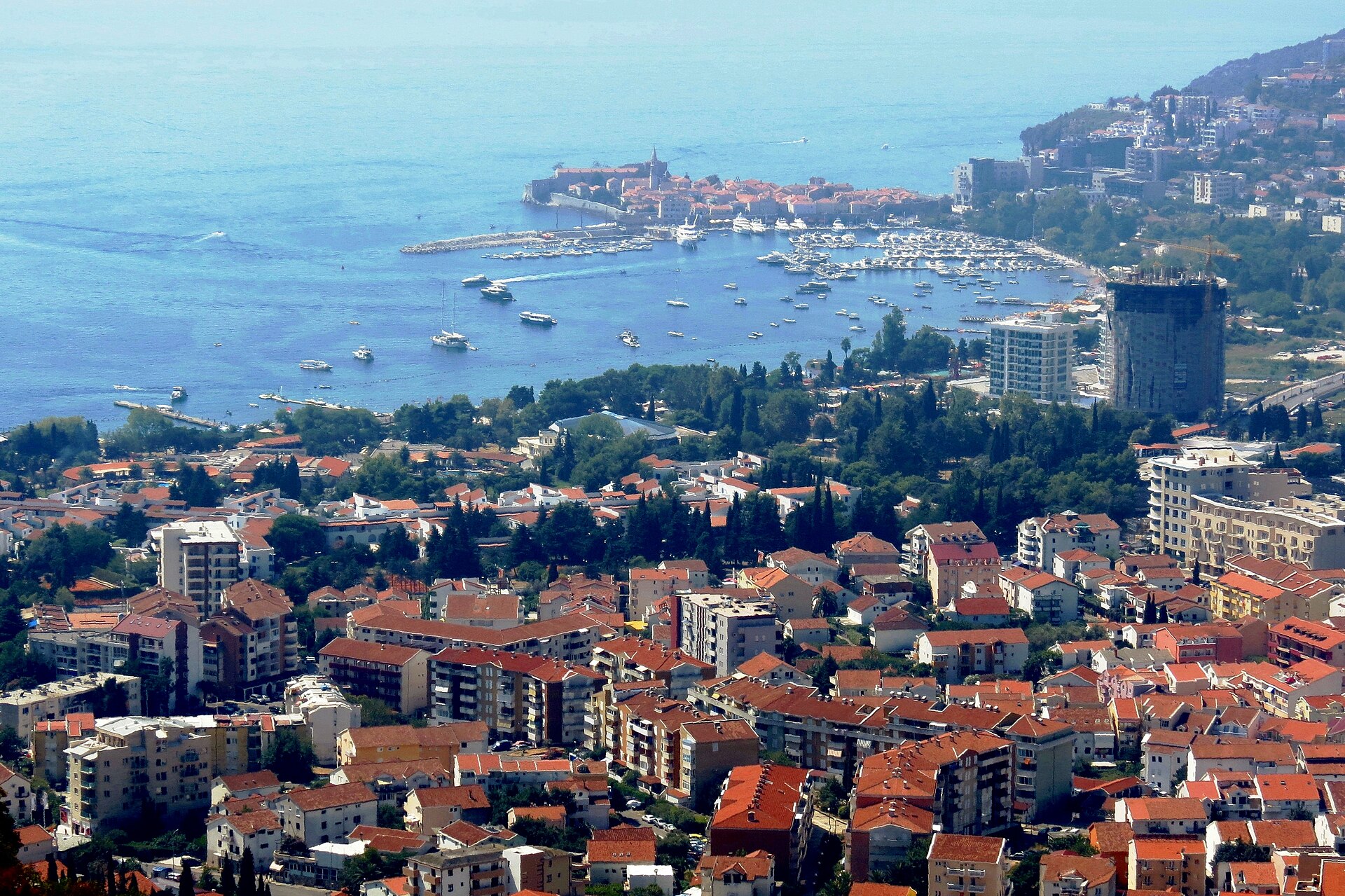
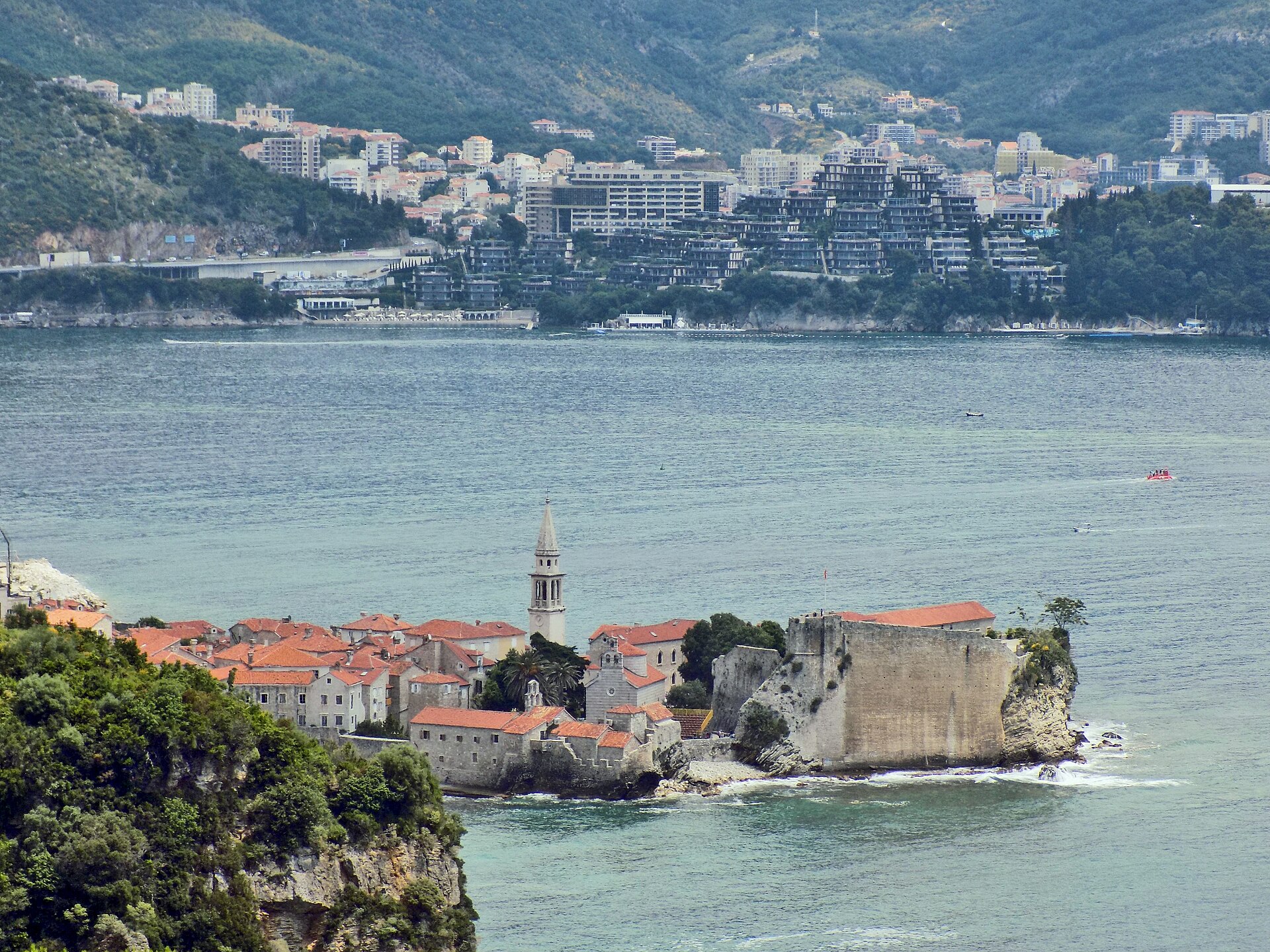
The Old Town, called Stari Grad, is genuinely lovely. It is small, maybe ten minutes end to end, and it was almost completely rebuilt after the 1979 earthquake using the original stone. Purists will tell you that makes it a reconstruction. Walking it at seven in the morning with a coffee before the day-trippers arrive, we did not care even slightly.
What Budva is not is quiet, refined, or particularly Montenegrin in the way Kotor or Perast feel Montenegrin. The strip along Slovenska Plaza in high season is loud, commercial, and packed. If that is a dealbreaker, you can still visit Budva as a day trip and base yourself somewhere calmer. We cover exactly that trade-off in our Kotor, Montenegro travel guide.
Getting to Budva
Most people fly into Tivat (TIV), which is about 25 kilometers away and roughly a 35-minute drive. Podgorica (TGD) is the country’s larger airport at about 65 kilometers and an hour and fifteen minutes. If you are combining Montenegro with Croatia, Dubrovnik (DBV) is around 90 kilometers north and takes two to two and a half hours depending on the border queue at Debeli Brijeg, which in July and August can genuinely add an hour on its own.
There is no train to Budva. Your options are a rental car, the intercity bus network, or a private transfer. The bus station sits just behind the Old Town and connects to Kotor (about 40 minutes), Podgorica (about 90 minutes) and Dubrovnik several times a day. Buses are cheap, reliable and perfectly comfortable.
We rented a car and would do it again, but with a warning: Budva parking in summer is genuinely difficult and the coastal road through town backs up badly between noon and eight in the evening. If your trip is Budva-plus-beaches with occasional day trips, a car earns its keep. If you plan to sit in one place for four days, skip it and take buses.
Getting Around Once You Arrive
Budva is walkable in the way that matters. Old Town to Slovenska Plaza to Mogren Beach is all on foot. The Avala and Dukley areas are a fifteen to twenty minute walk or a very short taxi. Taxis are metered, cheap and abundant, and the local drivers are used to the summer chaos.
For the beaches further south (Becici, Rafailovici, Przno), there is a lovely coastal walking path that runs several kilometers along the water. We did it in the early evening and it was one of our favorite hours of the whole trip.
The Best Things to Do in Budva
Walk the Old Town Walls
The walls open in the morning and cost a small entry fee. They are short, the climb is easy, and the view down onto the terracotta roofs with the Adriatic behind them is the shot everyone comes for. Go early. By eleven the walkway is single-file.
Inside the walls, the Citadel sits at the southern tip with a small maritime library and the best sunset viewpoint in town. The three churches clustered together (St. John, Holy Trinity and St. Mary in Punta) are worth five minutes each.
Swim at Mogren Beach
Mogren is the one everyone photographs, and for good reason. It is actually two small pebble coves reached by a narrow cliff path that starts near the Avala hotel, about a ten-minute walk from the Old Town. The water is startlingly clear and a deep blue-green. It is small, so it fills up. We went at eight in the morning and had it nearly to ourselves.
Take the Boat to Sveti Nikola
Locally nicknamed Hawaii, this island sits about a kilometer offshore and boats run continuously from the Old Town harbor and from Slovenska Plaza in season. The crossing takes ten minutes. The island has a few beach bars, some good snorkeling on the far side, and pine woods you can actually walk through. It is the easiest way to get real distance from the crowds without renting anything.
See Sveti Stefan
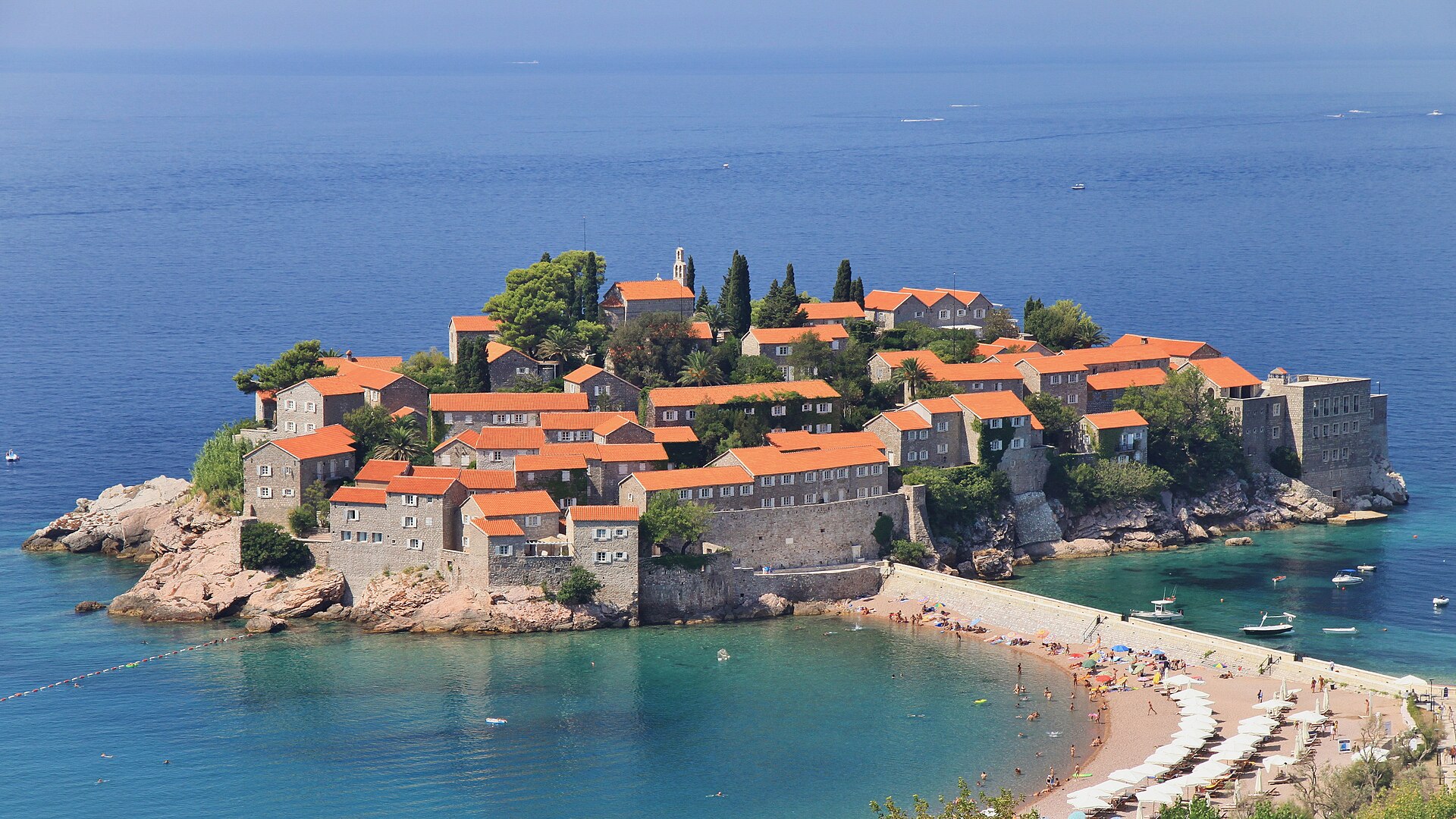
The most photographed thing in Montenegro is a fifteenth-century fortified island village turned luxury hotel, about six kilometers south of Budva. You cannot walk onto the island itself unless you are a guest, which surprises a lot of visitors. What you can do is view it from the road above, which is where every photograph you have ever seen was taken, and swim at the beaches flanking the causeway. It is a twenty-minute drive or a cheap bus ride and absolutely worth doing.
Walk the Coastal Path to Becici
The paved promenade south from Budva runs past Ricardova Glava beach, through a short tunnel, and out to Becici and Rafailovici. Becici has a much longer, sandier beach than anything in Budva proper and a fraction of the noise. Rafailovici, just past it, is a small fishing village with a row of konobas serving the best seafood in the immediate area.
Do the Nightlife Properly, or Skip It Entirely
Budva’s club scene is real and it is large. Top Hill sits above town and runs international acts through July and August. The Old Town bars are more manageable and more fun if you want atmosphere rather than a festival. If nightlife is not your thing, book accommodation in Becici or Przno instead of on the main strip, and you will barely notice it exists.
Where to Eat in Budva
Skip the restaurants with laminated photo menus on the main promenade. The food in Budva is good but you have to walk ten minutes to find it.
Inside the Old Town, the small squares tucked behind the main drag have konobas serving grilled fish by the kilo, black risotto and njeguski steak, which is pork stuffed with the prosciutto and cheese from the village of Njegusi up in the mountains. Order the fish by weight and ask what came in that morning.
Rafailovici is the genuine food destination in the area. The seafront row there is where locals from Budva drive for dinner, which tells you everything.
For a cheap, fast, excellent lunch, find a bakery and get burek. It costs a couple of euros and it is better than most sit-down lunches on the strip.
Where to Stay in Budva
Your choice comes down to how much noise you want.
Old Town and the Slovenska Plaza strip puts you in the middle of everything, walking distance to beaches and bars. It is also loud until three in the morning between mid-June and early September.
Becici and Rafailovici, two to four kilometers south, give you a better beach, quieter nights, and a fifteen-minute walk or three-minute taxi into town. This is where we would stay again.
Przno and Sveti Stefan, further south still, are the calm, more expensive end. Beautiful, but you will want a car.
Budva’s hillside above the coastal road has apartments with enormous views and prices well below the seafront, at the cost of a real climb home.
Where to Book
- Hotels and apartments: We book Montenegro accommodation through Booking.com, which has by far the deepest inventory of the Montenegrin coast including the family-run apartments that never appear anywhere else. Book Budva at least two months ahead for July and August.
- Tours and day trips: Viator covers the Bay of Kotor boat tours, Durmitor day trips, Skadar Lake cruises and the Ostrog Monastery runs that leave from Budva daily.
- Travel insurance: Montenegro is not in the EU, so your EHIC or GHIC will not help you here. We always carry a policy, and if you travel more than twice a year the math usually favors an annual plan, which we break down in annual vs. single-trip travel insurance.
When to Visit Budva
June and September are the sweet spot. The sea is warm, the beach clubs are open, prices are meaningfully lower than peak, and you can get a table without waiting. July and August are hot, crowded and expensive, and the coastal road becomes a parking lot. May and early October are lovely for walking and sightseeing but the water is bracing and some seasonal businesses are shut.
Winter in Budva is very quiet. The Old Town is atmospheric and empty, most beach infrastructure is closed, and prices collapse. It is a completely different trip.
How Many Days Do You Need?
Two full days covers Budva itself: one for the Old Town, walls and Mogren, one for the beaches and Sveti Nikola. Add a third for Sveti Stefan and the coastal walk south.
If you are using Budva as a base, four to five nights lets you add Kotor, Perast and a mountain day trip without ever changing hotels. That is the structure we would recommend to most first-time visitors, and it is roughly the shape of the itinerary in how to plan a trip to Montenegro.
Practical Things Worth Knowing
Montenegro uses the euro despite not being in the eurozone. Cards are widely accepted in Budva but carry some cash for beach bars, small konobas and parking.
There is a small tourist tax charged per person per night, usually collected by your accommodation. It is a euro or so and completely normal.
Sunbeds and umbrellas on the organized beaches cost money, typically fifteen to thirty euros for a pair in high season depending on the beach. Public sections exist on most beaches if you bring a towel.
The pebbles are real pebbles. Water shoes make swimming considerably more pleasant and cost almost nothing at any beach shop.
Tap water is safe to drink.
Is Budva Worth It?
Yes, with a caveat. If you come in August, stay on the strip, and expect a quiet Adriatic hideaway, you will be disappointed and you will write one of the reviews that gives Budva its reputation. Come in June, base yourself a kilometer or two south, walk the Old Town before breakfast, and use the town as a launchpad for the rest of the coast, and Budva is one of the most enjoyable, best-value beach bases in the Mediterranean.
We came expecting to tolerate it and left planning a return.
Planning more of the Adriatic? Start with our Kotor, Montenegro travel guide for the bay’s showpiece town, use how to plan a trip to Montenegro to build the full route, and if you are pairing Montenegro with its northern neighbor, our Dubrovnik, Croatia travel guide and best day trips from Dubrovnik cover the crossing in both directions.