Disclosure: This post contains affiliate links. If you book through our links, we may earn a small commission at no extra cost to you. Thanks for supporting Faceted Travel!
Table of Contents
We walked into Kraków’s main square at dusk, heard a lone trumpeter playing from the tower of St. Mary’s Basilica, and understood immediately why people fall for this city. Kraków gives you everything you want from a European trip, a fairytale old town, deep history, incredible food, and prices that feel like a typo compared to Paris or London.
We spent five days here as part of a longer Central Europe loop, and it ended up being the stretch of the trip we talk about most. This guide covers the best things to do in Kraków, the day trips that are worth your time, where to stay, what to eat, and the practical details that make Poland such an easy country to travel.
Why Visit Kraków?
Kraków was the royal capital of Poland for over 500 years, and unlike Warsaw, it escaped World War II with its historic center intact. That means the medieval old town you walk through today is the real thing: original Gothic churches, Renaissance courtyards, and a market square that has been the heart of city life since 1257.
It is also one of the best value destinations in Europe. A fantastic dinner for two with drinks runs $30 to $40. A tram ride costs about a dollar. A beautiful boutique hotel in the old town costs what a chain hotel near the airport costs in Western Europe. If you have been putting off Europe because of cost, our guide to how much a trip to Europe costs explains the math, and Kraków bends every number in your favor.
When to Visit Kraków
May, June, and September are the sweet spot: warm days, long evenings, and outdoor cafe season in full swing without peak crowds.
July and August bring the warmest weather and the biggest crowds, though “crowded” in Kraków is still gentler than Prague or Barcelona in summer.
December is a sleeper pick. The Christmas market in the main square is one of Central Europe’s best, and the old town under snow is storybook material. Pack for real cold.
Shoulder months like April and October are quiet and cheap, with changeable weather. We visited in late September and had T-shirt afternoons and crisp evenings, which felt about perfect.
Getting to Kraków and Getting Around
Kraków’s John Paul II International Airport has direct flights from most major European hubs, so Americans typically connect once. A train links the airport to the main station in about 20 minutes.
The old town is entirely walkable, and walking is genuinely the best way to experience it. For everything beyond the center, Kraków’s trams are cheap, frequent, and easy to figure out. Rideshare apps like Bolt and Uber work well and cost a fraction of Western European prices.
Kraków also pairs beautifully with other Central European cities by train. Direct trains run to Warsaw in under 2.5 hours, and overnight or day connections reach Prague, Vienna, and Budapest, which is exactly the loop we built our trip around.
The Best Things to Do in Kraków
Rynek Główny (Main Market Square)
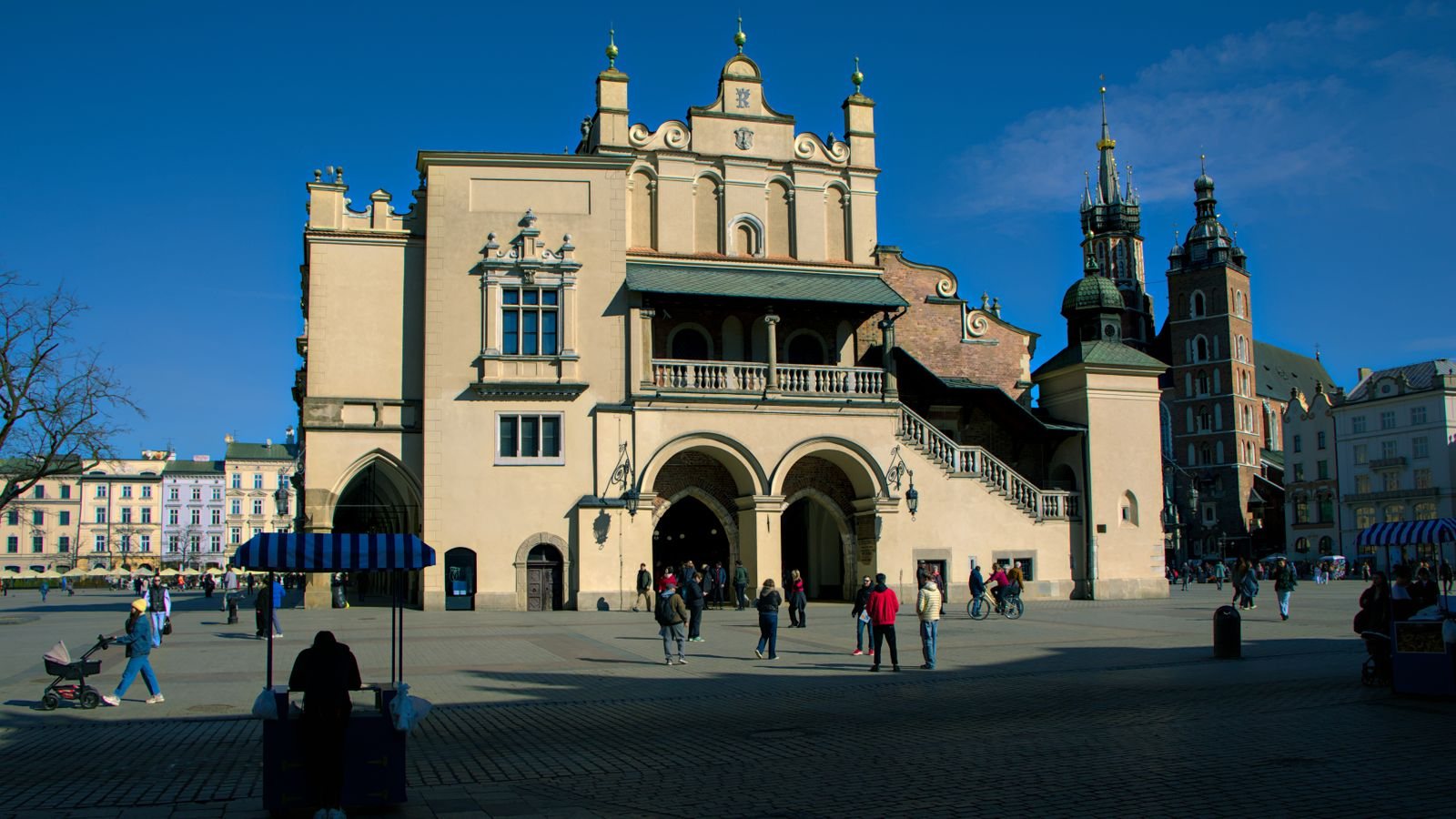
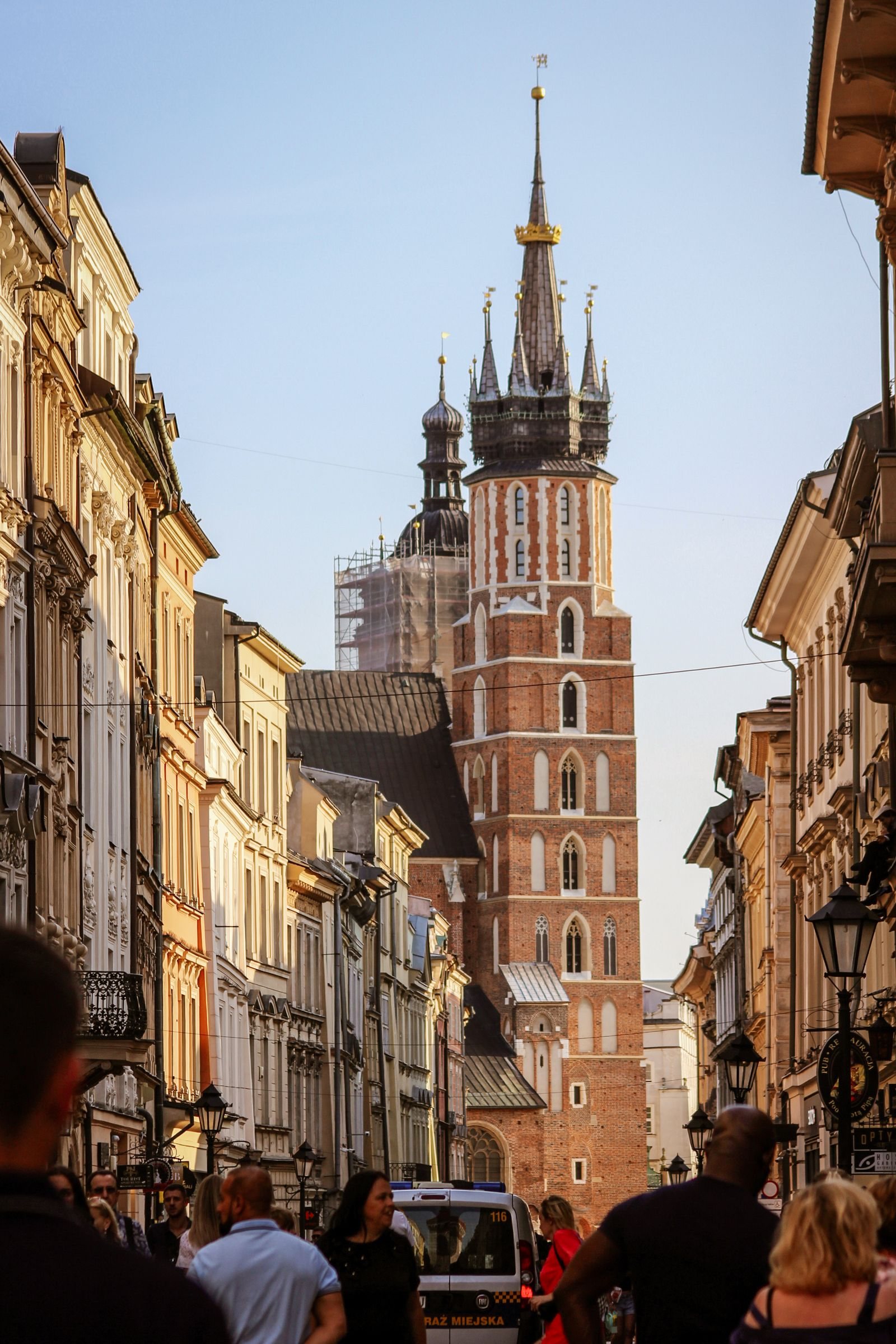
Europe’s largest medieval square is Kraków’s living room. The Cloth Hall runs down the middle, packed with stalls selling amber and woodwork. St. Mary’s Basilica anchors one corner, and every hour on the hour a live trumpeter plays the hejnał from its tallest tower, cutting off mid-note in memory of a 13th century watchman shot mid-warning. Grab an outdoor table, order a coffee or a beer, and let the square do its thing.
St. Mary’s Basilica
Pay the small entrance fee and go inside. The blue and gold ceiling and the enormous carved wooden altarpiece by Veit Stoss are among the most stunning church interiors we have seen anywhere in Europe, and we say that having seen a lot of churches.
Wawel Castle and Cathedral
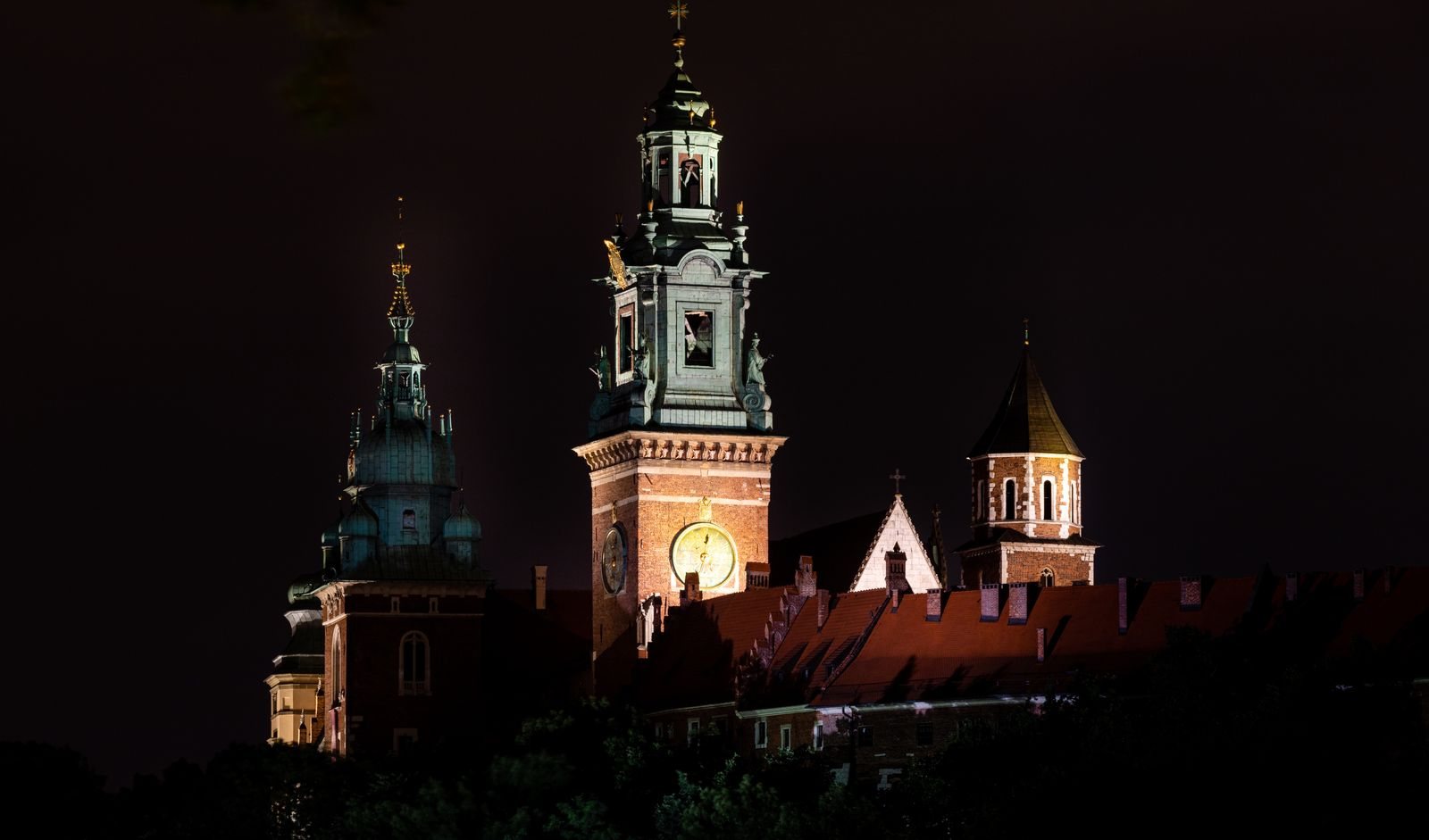
Perched on a hill above the Vistula River, Wawel was home to Polish kings for centuries. The cathedral holds royal tombs and the famous Sigismund Bell, and the castle courtyards are free to wander. Buy tickets for the State Rooms in advance in summer. Below the hill, the fire-breathing dragon statue delights every child who has ever passed it.
Kazimierz, the Old Jewish Quarter
Kazimierz was the center of Jewish life in Kraków for 500 years before the Holocaust destroyed the community. Today its synagogues, cemeteries, and moving small museums share streets with the city’s best cafes, vintage shops, and nightlife. Spend at least a half day here. The Old Synagogue and Remuh Cemetery are essential stops, and a guided walking tour adds context you will not get on your own.
Schindler’s Factory Museum
Across the river in Podgórze, Oskar Schindler’s enamel factory now houses an outstanding museum about Kraków under Nazi occupation. It is immersive, sobering, and one of the best history museums in Europe. Book a timed ticket ahead, because it sells out most days.
Wieliczka Salt Mine
Thirty minutes from the city, this UNESCO-listed mine descends more than 400 feet into chambers carved entirely from salt, including a full underground cathedral with salt chandeliers. It sounds like a tourist trap and is instead genuinely jaw-dropping. Tours take about three hours and stay a constant cool temperature year-round.
Auschwitz-Birkenau Memorial
Most visitors to Kraków set aside a day for the memorial and museum at Auschwitz, about 90 minutes from the city. It is a heavy, important day, and we are glad we went. Entry requires a reserved time slot, and a guided visit is worth it for the context. Book weeks ahead in high season. Give yourself a quiet evening afterward.
Walk the Planty and the Vistula Boulevards
A ring of parkland called the Planty replaces the old city walls and circles the entire old town, perfect for a shady morning walk. Along the river, the boulevards below Wawel fill with locals, food trucks, and barge bars on warm evenings.
Nowa Huta
Hardcore history fans should tram out to Nowa Huta, the planned socialist “ideal city” the communist government built next to Kraków in the 1950s. The monumental architecture, broad avenues, and Cold War bunkers feel like stepping into a different century than the old town. Guided tours in restored communist-era cars are a quirky, memorable way to see it.
Zakopane and the Tatra Mountains
If you have an extra day and a taste for mountains, the resort town of Zakopane sits two hours south at the foot of the Tatras. Wooden highlander architecture, funicular rides, grilled oscypek cheese with cranberry jam, and proper alpine hiking in summer or skiing in winter. It is Poland’s outdoor playground and a completely different flavor of the country.
What to Eat in Kraków
Polish food is hearty, comforting, and wildly underrated.
Pierogi are the obvious star. These filled dumplings come stuffed with potato and cheese, meat, mushrooms and cabbage, or seasonal fruit. We ate them at least once a day with zero regrets.
Żurek is a sour rye soup served with sausage and egg, often in a bread bowl. It sounds odd and tastes incredible.
Obwarzanek are the ring-shaped breads sold from carts all over the old town for well under a dollar. Kraków’s original street food since the 14th century.
Zapiekanka, a toasted open-faced baguette loaded with mushrooms and cheese, is the late-night specialty of Kazimierz. The round pavilion at Plac Nowy serves the classics.
Vodka and craft beer both thrive here. A tasting flight of Polish vodkas is a fun evening, and Kraków’s craft beer scene has exploded over the past decade.
Milk bars (bar mleczny) deserve a special mention. These subsidized cafeterias are a living relic of the communist era, serving home-style Polish food at absurdly low prices. Order at the counter, point if you need to, and enjoy.
Where to Stay in Kraków
Old Town (Stare Miasto)
Staying inside the Planty ring puts everything within a ten minute walk. Boutique hotels in centuries-old townhouses cost far less than equivalent rooms in Western Europe. Light sleepers should ask for courtyard-facing rooms near the square.
Kazimierz
Our pick for the best mix of atmosphere and value. You are fifteen minutes on foot from the main square, surrounded by the city’s best food and bars, in a neighborhood that feels lived-in rather than staged.
Podgórze
Across the river, quieter and cheaper, with easy tram links. A good option for longer stays or travelers who want a more local pace.
Where to Book
- Hotels: We use Booking.com to compare old town boutique hotels and Kazimierz apartments, most with free cancellation.
- Tours and day trips: Viator has skip-the-line Wawel tours, Kazimierz walking tours, and guided day trips to Wieliczka and Auschwitz with hotel pickup.
Sample 3-Day Kraków Itinerary
Day 1: Old town. Main square, St. Mary’s Basilica, Cloth Hall, lunch near the square, Wawel Castle in the afternoon, sunset walk on the Vistula boulevards, pierogi dinner.
Day 2: Kazimierz in the morning with a walking tour, Schindler’s Factory Museum after lunch, zapiekanka at Plac Nowy, evening in the Kazimierz bars.
Day 3: Day trip. Choose Auschwitz-Birkenau for history or Wieliczka Salt Mine if you want something lighter, then a farewell dinner back in the old town.
With five days you can do both day trips and add the Planty loop, more museums, and a lazy cafe morning, which is exactly what we did.
How Many Days Do You Need in Kraków?
Three full days covers the old town, Kazimierz, and one major day trip without rushing. That is the minimum we would recommend.
Five days is the sweet spot. You get both day trips (Auschwitz and Wieliczka), time for the museums you would otherwise skip, and at least one morning with no plan at all, which is when Kraków is at its best. That unhurried cafe morning in the Planty was one of our favorite memories of the whole trip.
A week lets you add Zakopane and the Tatras, or slow everything down further. Because prices are so gentle, stretching a Kraków stay costs far less than adding days almost anywhere else in Europe, which makes it a smart place to park yourself for a while on a longer trip.
Practical Tips for Visiting Poland
Currency is the Polish złoty, not the euro. Cards work almost everywhere, but carry a little cash for obwarzanek carts and milk bars.
English is widely spoken in Kraków’s tourist core, and learning dziękuję (thank you) earns smiles.
Tipping around 10 percent is standard for table service.
Travel insurance is cheap peace of mind for any Europe trip. Our best travel insurance for Europe breakdown covers what we actually buy.
Sundays are quiet. Many shops close, though restaurants and museums generally stay open.
Getting from the airport is easiest by train (about 20 minutes to the main station) or a Bolt ride for roughly $15 to $20. Skip the unmetered taxi touts in arrivals.
Kraków is very safe by big-city standards. Standard pickpocket awareness in the main square and on crowded trams is all the caution you need.
Is Kraków Worth Visiting?
Without hesitation. Kraków packs the beauty of Prague, the history of Berlin, and the food culture of Budapest into a compact, walkable, affordable package with a fraction of the crowds. It is the city we now recommend first to friends planning a Central Europe trip.
Go before everyone else figures it out.
Building a Central Europe itinerary? Pair Kraków with our guides to Prague, Budapest, and Vienna, and use our step-by-step Europe trip planner to put the whole route together.