Disclosure: This post contains affiliate links. If you book through our links, we may earn a small commission at no extra cost to you. Thanks for supporting Faceted Travel!
Table of Contents
- Why Granada Is Worth the Detour
- The Alhambra: How to Not Mess It Up
- The Albaicín and That View
- Sacromonte: Flamenco in the Caves
- Free Tapas Is Not a Myth Here
- Beyond the Headliners
- When to Visit Granada
- Getting There and Around
- Where to Stay
- What Granada Costs
- A Perfect Two Days in Granada
- Where to Book
- Our Honest Take
Granada is the only city in Spain where our biggest planning mistake nearly cost us the main event: we almost showed up without Alhambra tickets, and the Alhambra does not forgive that. Everything else about Granada is gloriously low-effort, a hillside city where the bars still hand you free food with every drink and the best evening plan is simply walking uphill until the view stops you.
This guide covers how to actually get Alhambra tickets (the part most blogs bury), what else deserves your time in Granada, how the free tapas system works, and how to slot Granada into an Andalusia route with Seville and the rest of Spain.
Why Granada Is Worth the Detour
Granada sits in the foothills of the Sierra Nevada in eastern Andalusia, stacked up three hills with snowcapped mountains behind it for half the year. It was the last Moorish kingdom in Spain, holding out until 1492, and that final century of nothing-left-to-lose artistry produced the Alhambra, the most visited monument in the country and, we would argue, the most beautiful building complex in Europe.
But here is what surprised us: Granada out-charmed its own headliner. It is a student city (80,000 of them), which keeps it cheap, young, and awake past midnight. It is compact enough to walk everything. And it has retained a Moorish texture that the rest of Spain lost centuries ago, from the teterías (tea houses) of the Calderería to the whitewashed maze of the Albaicín. We came for one monument and stayed four nights.
The Alhambra: How to Not Mess It Up
Book Tickets Before Anything Else
This is the entire strategy: Alhambra tickets sell out weeks ahead, sometimes over a month in high season, and the Nasrid Palaces (the reason you are going) admit you only at the exact 30 minute time slot printed on your ticket. Buy the “Alhambra General” ticket from the official site the day your travel dates firm up, before flights if your dates are fixed. If official tickets are gone, a guided tour with entry included, at a higher price, is the reliable fallback and honestly adds a lot of context.
Two more rules from hard-won experience: bring the ID or passport you booked with (they check), and arrive at the Nasrid Palaces entrance 20 minutes before your slot, because the complex is huge and the walk from the main gate is longer than it looks.
What You Are Actually Seeing
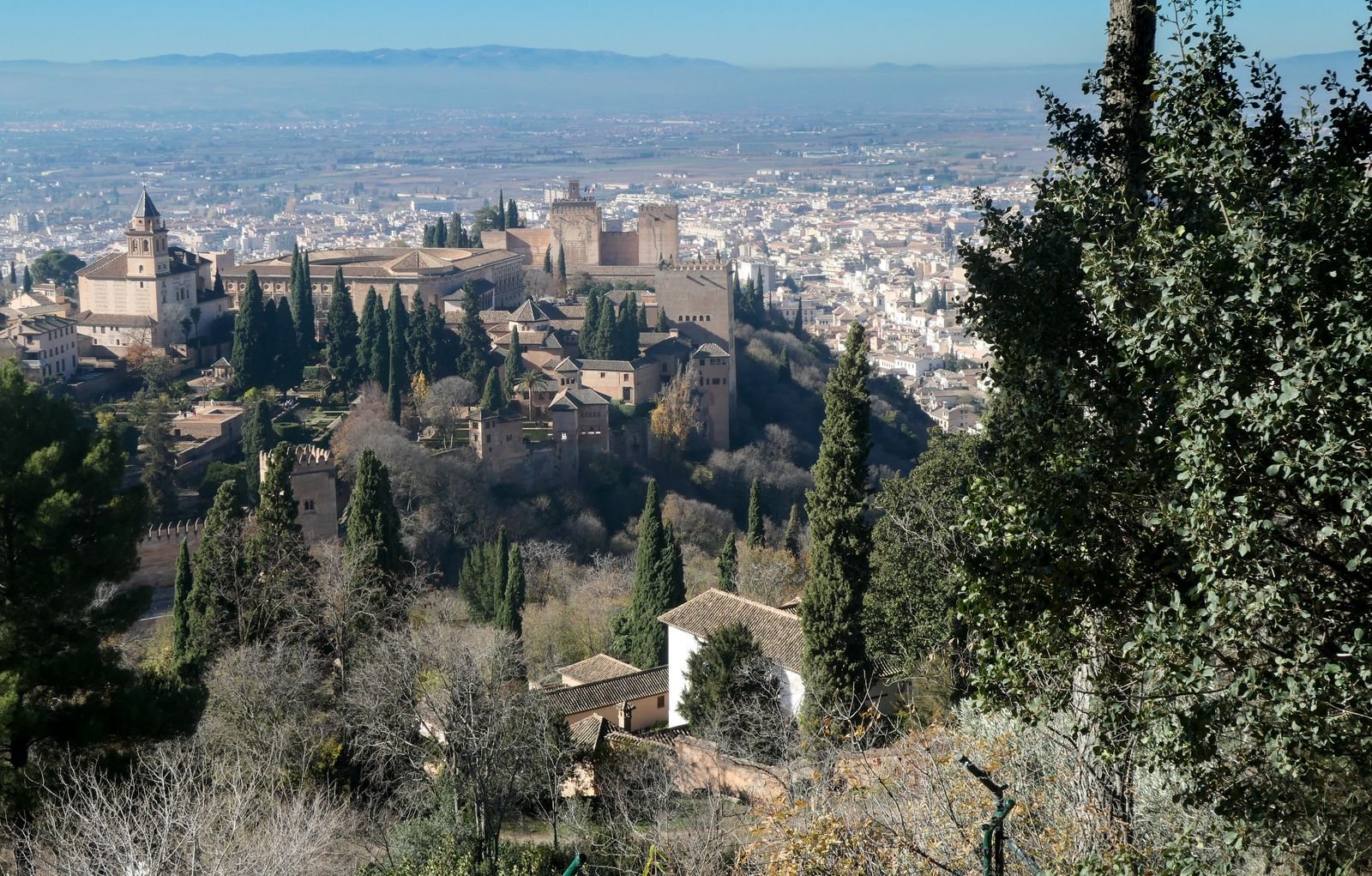
The Alhambra is a walled hilltop city with four distinct parts. The Nasrid Palaces are the showstopper: room after room of carved plaster, honeycomb ceilings, and courtyards built around still water, including the Court of the Lions with its famous fountain. The Generalife is the summer palace and gardens, all cypress corridors, roses, and water channels. The Alcazaba is the military fortress with tower-top views over the whole city. And the Palace of Charles V is the Renaissance intruder, a perfect circle inside a square that somehow works.
Give it a full half day. We took the morning’s first Nasrid slot, spent five hours total, and left convinced it was the best sight we have seen in Spain, edging even Seville’s Alcázar.
The Nighttime Visit Trick
If day tickets are sold out, night visits to the Nasrid Palaces often are not, and the palaces floodlit and half empty are arguably more atmospheric. Some travelers do both: Generalife and Alcazaba by day, palaces by night.
The Albaicín and That View
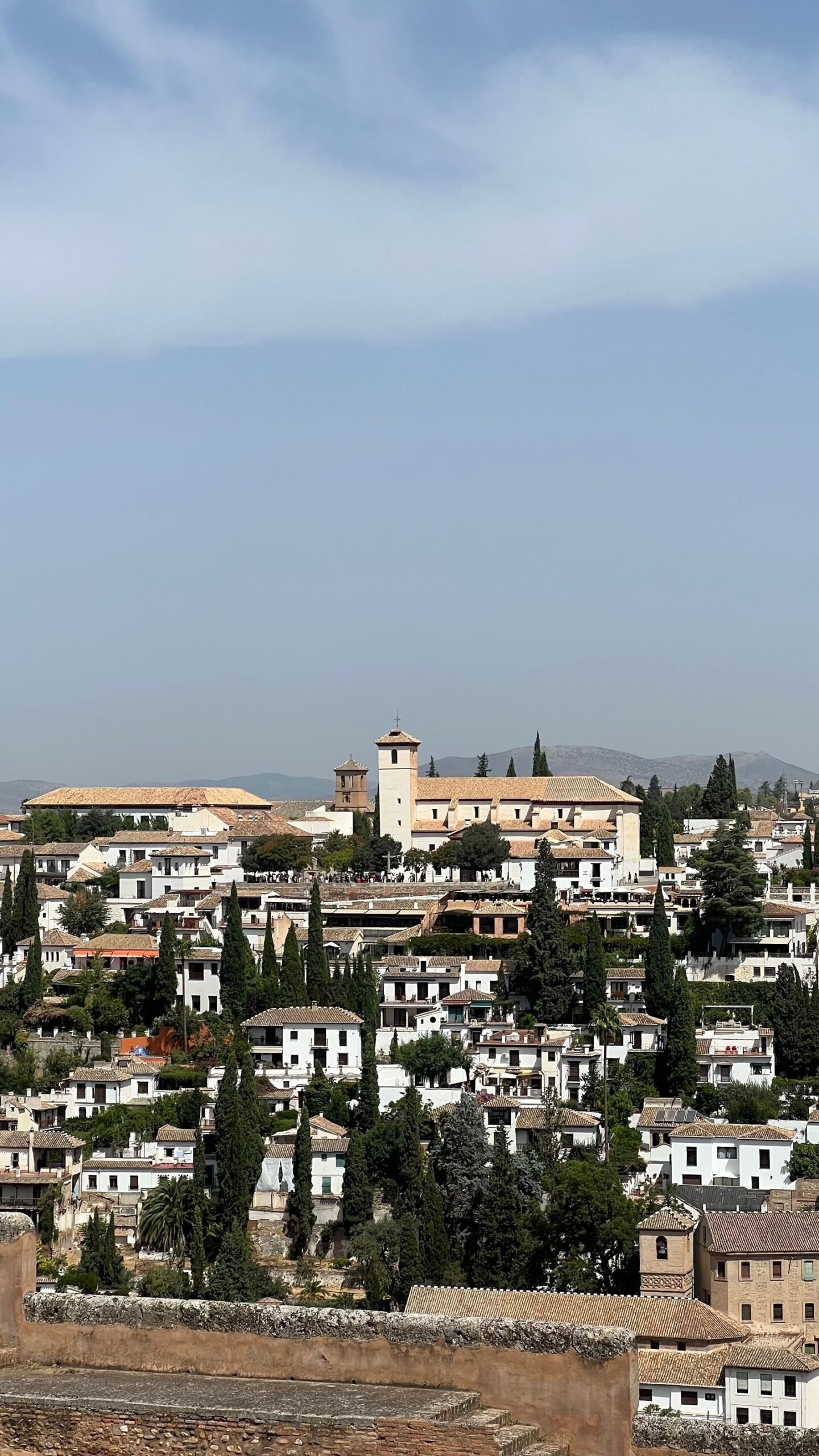
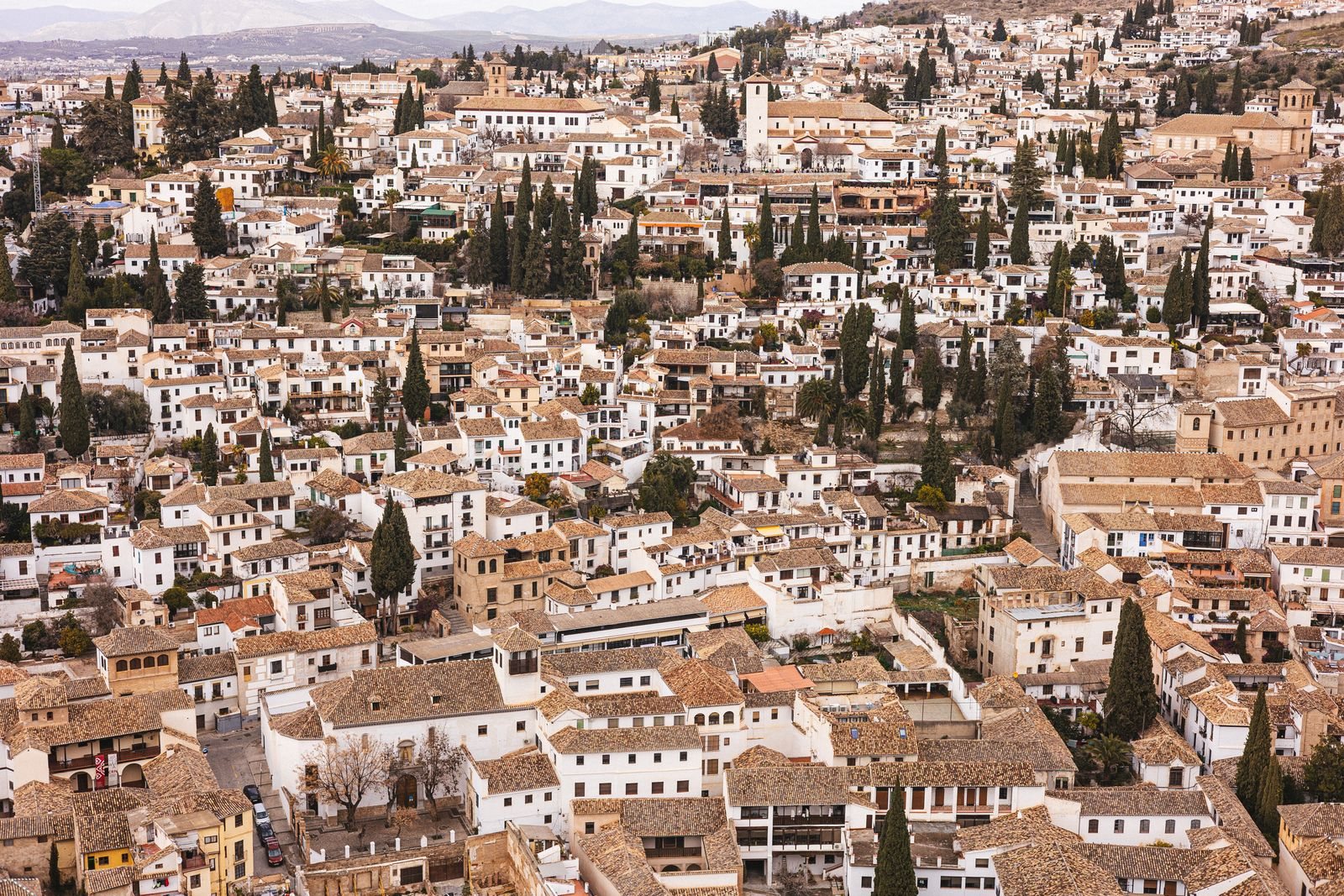
The Albaicín is Granada’s old Moorish quarter, a UNESCO-listed tangle of white houses, hidden gardens, and cobbled lanes climbing the hill opposite the Alhambra. There is no efficient way through it and that is the point; navigate loosely uphill and let it happen.
The destination everyone aims for is Mirador de San Nicolás, the plaza with the postcard view: the Alhambra glowing red at sunset with the Sierra Nevada behind it. It gets busy, and it earns it. Arrive 45 minutes early for a wall spot, or do what we did on night two and walk five minutes higher to the mosque garden viewpoint next door for the same view with a fraction of the crowd.
Sacromonte: Flamenco in the Caves
Sacromonte, the hillside beyond the Albaicín, is the historic home of Granada’s Roma community and its cave houses, many still lived in, some hosting the most intimate flamenco you will find anywhere. Granada’s speciality is zambra, a rawer cave-born style that predates the polished tablaos. Shows run small (30 to 50 seats carved into rock), so book a couple of days ahead. Walking back downhill afterward with the Alhambra lit across the valley is a top-five travel memory for both of us.
Free Tapas Is Not a Myth Here
In most of Spain the free-tapa-with-your-drink tradition has faded. Granada never got the memo. Order a caña (small beer) or a wine, roughly 2.50 to 3 euros, and a plate of food arrives unbidden: migas, albóndigas, jamón on toast, fried fish, a small paella if you are lucky. Order a second round and a different, often better, tapa appears. Three stops in an evening is dinner, and dinner costs what the drinks cost.
The densest hunting grounds are Calle Navas near the cathedral, the streets around Plaza Nueva, and the more local Realejo quarter. One warning: kitchens reward loyalty to the system, so sit at the bar, not at a table, for the good stuff.
Beyond the Headliners
The Cathedral and Royal Chapel anchor the lower town; the chapel holds the tombs of Ferdinand and Isabella, the monarchs who took Granada in 1492, and is worth the modest entry. The Calderería streets are a slice of Morocco, all lanterns, leather, and mint tea; pick a tetería balcony for a mid-afternoon pause. The Carrera del Darro, the riverside lane below the Albaicín, is Granada’s prettiest street and the best evening stroll in town. And the Bañuelo, an 11th century Arab bathhouse, takes fifteen minutes and costs almost nothing.
If you have an extra day in winter or spring, the Sierra Nevada ski resort is 45 minutes away by bus, which produces the very Granada flex of skiing in the morning and tapas in a t-shirt by evening. In summer the same mountains flip to hiking mode, with high trails that stay cool while the city below simmers, and the tiny white villages of the Alpujarras on the southern slopes make a gorgeous half-day drive if you have wheels.
When to Visit Granada
Granada sits at 700 meters, so it runs cooler than Seville: proper spring and fall, hot but survivable summers, and genuinely cold winter nights with snow on the peaks behind town. May, June, September, and October are the sweet spots. Winter is underrated: thin crowds at the Alhambra, snowcapped-mountain views, and the free tapas taste even better when it is brisk out. Our full best time to visit Spain guide covers how Granada’s calendar meshes with the coast and the big cities.
Getting There and Around
Granada finally joined the AVE high-speed network, so trains now run direct from Madrid in about 3 hours 20 minutes and from Seville in about 2.5. From Barcelona, fly or connect through Madrid. The station is a 20 minute walk or short cab from the center.
In town, walk. The center is small, and cars are useless in the Albaicín anyway. The C30, C31, C32, and C34 minibuses are the exception worth knowing: tiny red buses that grind up the Albaicín, Sacromonte, and Alhambra hills for pocket change when your legs file a complaint.
Where to Stay
For a first visit, base yourself between Plaza Nueva and the cathedral: flat streets, every tapas district in walking range, and the Albaicín rising directly behind you. Staying inside the Albaicín itself, ideally in a carmen (a traditional house with a walled garden), is the romantic option, with the trade-offs of hills and luggage-hostile lanes. The Realejo quarter splits the difference: local, quieter, and five minutes from everything. Granada’s hotel prices are noticeably gentler than Seville’s or Barcelona’s; a well-located double in the 70 to 120 euro range is normal outside holiday weeks.
What Granada Costs
Granada might be the best-value city on the Spanish mainland. The Alhambra general ticket is under 20 euros, the free tapas system compresses food budgets wonderfully, and hotels undercut the bigger cities. Careful travelers can run a day here on 60 to 80 euros per person with hotels split; 110 to 150 buys real comfort. Full national numbers, including rail passes and flight strategy, are in our trip to Spain cost breakdown.
A Perfect Two Days in Granada
Day one belongs to the Alhambra, and the earliest Nasrid Palaces slot you can get. Do the palaces first, then the Alcazaba towers, then the Generalife gardens as the crowds build, and walk back down into town through the Cuesta de Gomérez woods rather than taking the bus; the descent is half the fun. Recover over a long lunch near Plaza Nueva, siesta properly, then spend the evening on a free-tapas crawl down Calle Navas, sitting at the bar like you mean it.
Day two is the hillside day. Cathedral and Royal Chapel in the morning, mint tea on a tetería balcony in the Calderería after, then give the entire afternoon to getting lost uphill in the Albaicín, aiming loosely for Mirador de San Nicolás about an hour before sunset. Hold your wall spot, watch the Alhambra turn red, then continue over the hill to Sacromonte for a 9 or 10pm zambra show in the caves and the lit-up walk back along the Darro river.
With a third day, add the Sierra Nevada in winter, a slow Realejo-and-Bañuelo morning any season, or simply re-run the sunset from the mosque garden viewpoint, which is what we did. Some views you file under “seen”; this one you go back for.
Where to Book
- Hotels: Booking.com’s Granada listings include the Albaicín’s carmen guesthouses and the practical Plaza Nueva hotels; book two to three months ahead for spring and fall, and check the map view carefully, because “10 minutes away” in the Albaicín can mean 10 vertical minutes.
- Tours and activities: Viator’s Granada tours are most useful when official Alhambra tickets are sold out, since guided entries hold their own allocation; the Sacromonte zambra shows and Albaicín evening walking tours are the other two worth booking ahead.
Our Honest Take
The Alhambra deserves every superlative it has collected for two centuries, but Granada’s real trick is what surrounds it: a cheap, young, gorgeous hill city where the food is nearly free, the views are constant, and the Moorish past is still in the walls rather than in a museum. Book the tickets first. Everything else here takes care of itself.
Building an Andalusia route? Pair Granada with our Seville travel guide, see where Madrid fits in your route, and get the timing right with the best time to visit Spain.