Disclosure: This post contains affiliate links. If you book through our links, we may earn a small commission at no extra cost to you. Thanks for supporting Faceted Travel!
Table of Contents
Everyone told us to go to Bruges, and we did, and we loved it. But the city in Belgium that actually stole our hearts was the one nobody mentioned: Ghent. We came for a single afternoon on a day trip and ended up scrambling to rebook so we could stay the night, because a canal-side dinner under a floodlit medieval castle is not the kind of thing you walk away from.
Ghent sits in the Flanders region between Brussels and Bruges, and it is that rare thing, a genuinely historic city that is still a living, working place rather than a museum. It has a skyline of medieval towers, a real castle right in the center, romantic canals lined with 800-year-old guild houses, and a young university energy that keeps its cafes and bars humming. It is gorgeous, walkable, and far less crowded than its famous neighbor.
Here is everything we learned about visiting Ghent, including when to go, how to get there, what not to miss, and why it deserves more than a rushed afternoon.
Why Ghent Belongs on Your Belgium Itinerary
Most first-timers in Belgium do Brussels and Bruges and call it a trip. Ghent sits right between them, twenty-five minutes by train from either, and skipping it is a mistake we are glad we did not make.
Where Bruges can feel like a beautiful, perfectly preserved postcard (in the best way), Ghent feels alive. It has the same medieval bones, the stepped-gable guild houses, the canals, the towering churches, but it is also home to a big university, which means the historic center is full of students, indie coffee shops, street art, and a genuine buzz. You get the fairytale architecture and a real city at the same time.
The center is compact and made for walking, the sights cluster within a short stroll of one another, and the whole place is anchored by one of the most dramatic urban views in Europe: the row of medieval towers along the old harbor at Graslei and Korenlei. It pairs naturally with Bruges and Brussels, and slots easily into a wider trip that includes Amsterdam or Paris.
Best Time to Visit Ghent
We visited in late spring and the weather cooperated beautifully, mild days, long light, and terraces spilling out along the water. Belgium’s weather is famously changeable, though, so a little flexibility helps whenever you go.
Here is how the seasons shake out:
Summer (June to August) brings the warmest, longest days and the liveliest atmosphere, with canal-side terraces packed and events on the calendar (the ten-day Ghent Festival, the Gentse Feesten, is one of Europe’s biggest cultural street festivals in July). It is the busiest time, but Ghent rarely feels overwhelmed the way Bruges can.
Shoulder season (April, May, September, and October) is our sweet spot. The weather is generally pleasant, the crowds are thin, prices are gentler, and the light on the old harbor is lovely. Spring flowers and crisp autumn afternoons both suit the city well.
Winter (November to March) is cold, gray, and often wet, but it has its own charm, especially in December when the Christmas market fills the squares and the medieval buildings glow. Pack for damp cold and bring a good coat.
Belgium sits in the sweet spot of Western Europe where the shoulder seasons genuinely shine, and if you are stitching Ghent into a bigger route, our best time to visit Europe guide breaks down the seasonal tradeoffs across the continent.
How to Get to Ghent and Get Around
Ghent is one of the easiest cities in Belgium to reach because the country’s train network is superb. From Brussels it is about twenty-five to thirty minutes by direct train, from Bruges around twenty-five minutes, and from Brussels Airport a bit over an hour with a quick change. Trains run constantly and are cheap, so Ghent works equally well as a base or a day trip.
The main station, Gent-Sint-Pieters, sits a little outside the center, but a tram or a fifteen-minute ride drops you right in the historic core. Once you are there, you will not need any transport at all. The medieval center is small, flat, and entirely walkable, and honestly walking is the point, because every bridge and lane opens onto another postcard.
If you would rather let the water do the work, the canal boats are both sightseeing and transport. We are firm believers in leaning into a city’s natural rhythm, which is the same philosophy we lay out in our how to plan a trip to Europe guide: use the trains between cities and your own two feet within them.
Best Things to Do in Ghent
Wander the Medieval Harbor at Graslei and Korenlei
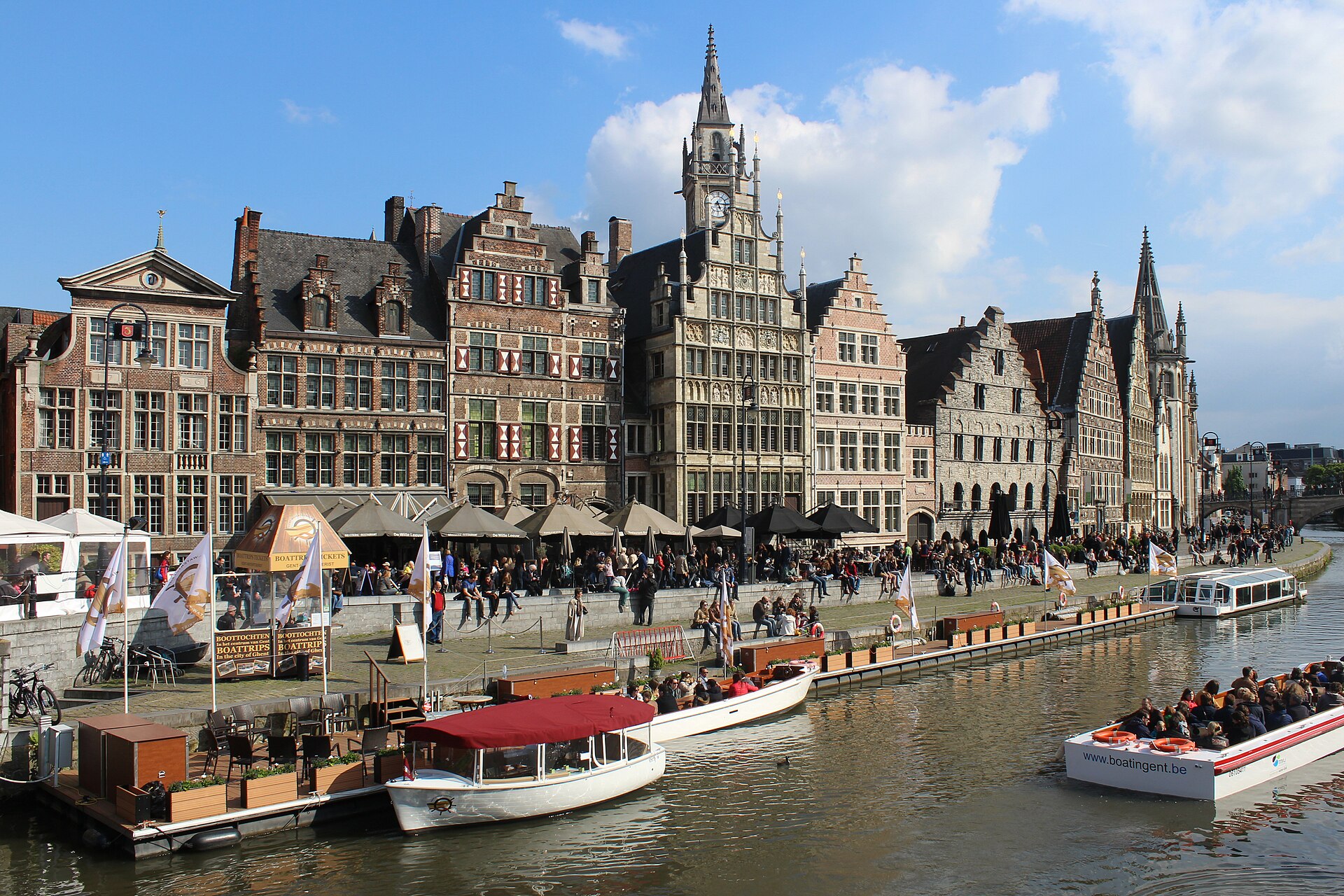
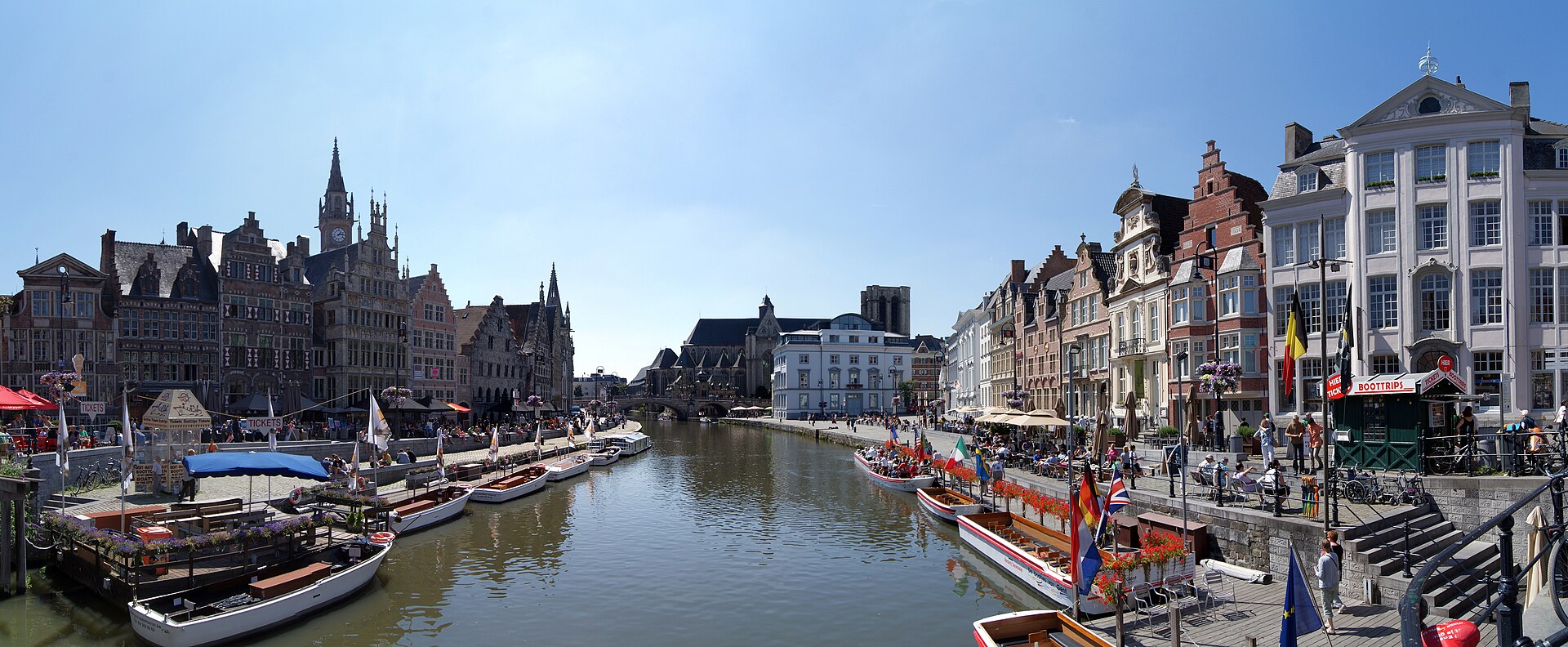
The two quays facing each other across the old harbor, Graslei and Korenlei, are the heart of Ghent and one of the great urban views in Europe. This was the city’s medieval port, and the guild houses lining the water go back to the 1200s, a stacked row of stepped gables, arched warehouses, and ornate facades reflected in the canal.
Grab a spot on the stone steps of Graslei with a drink at golden hour and watch the boats drift by. It is the classic Ghent moment, and it is even better after dark when the whole row is floodlit.
Climb the Belfry
Ghent’s medieval Belfry is a UNESCO World Heritage site and, at over ninety meters, one of the tallest in Belgium. Ride the elevator (or climb) to the top for a sweeping view across the three towers, the red rooftops, and the canals threading through the center. It is the best orientation you will get and a great first stop to understand the layout.
See the Ghent Altarpiece at St. Bavo’s Cathedral
St. Bavo’s Cathedral holds one of the most important paintings in the world: the Ghent Altarpiece, also known as the Adoration of the Mystic Lamb, completed by the Van Eyck brothers in 1432. It is a founding masterpiece of European art, endlessly stolen and recovered over the centuries (it is the most-stolen artwork in history), and seeing it in person, with the modern visitor experience that walks you through its story, is genuinely moving even if you are not an art buff.
Explore Gravensteen Castle
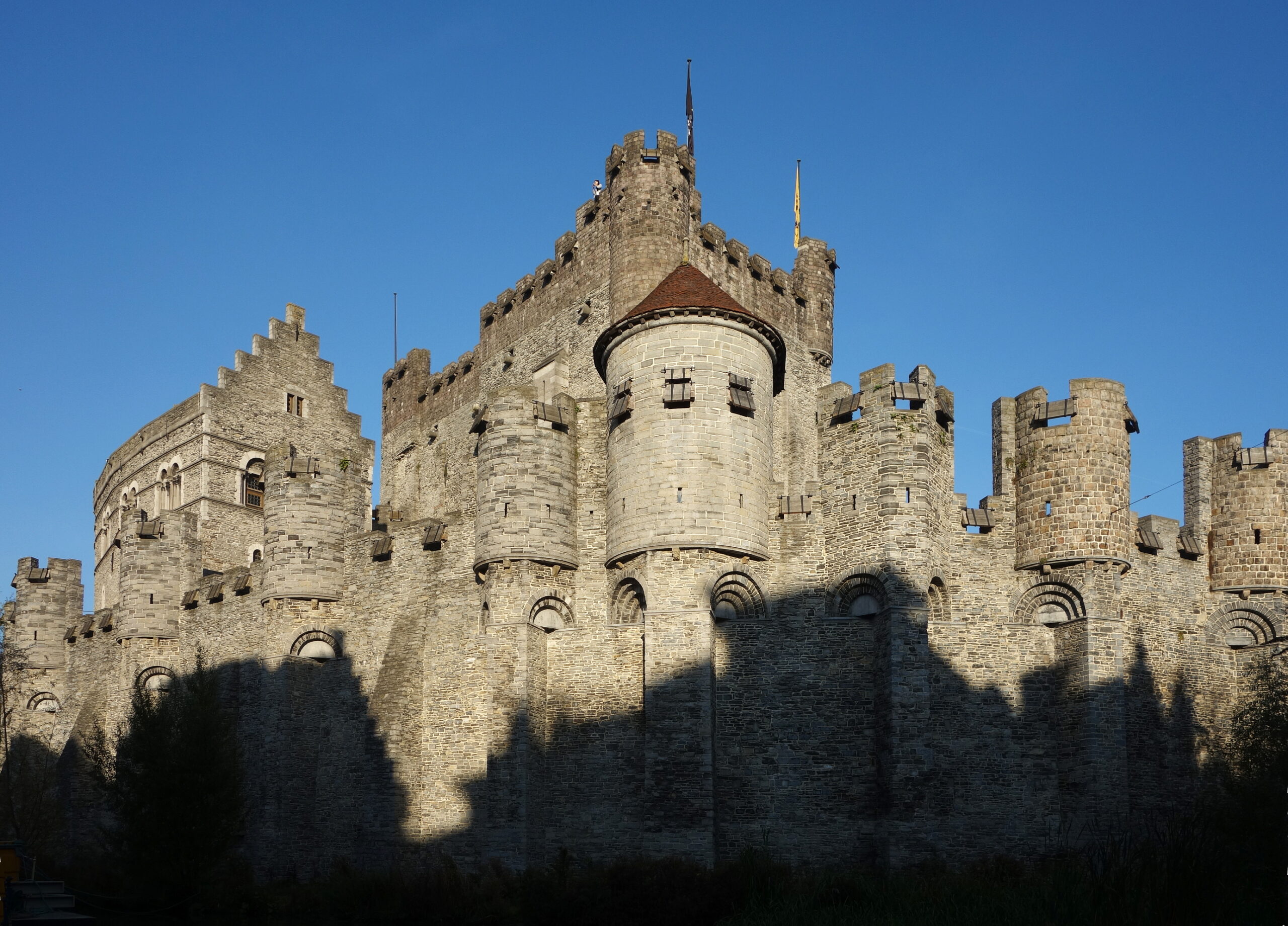
Right in the middle of the city stands Gravensteen, the Castle of the Counts, a moated stone fortress from the 12th century that looks like it was airlifted out of a fantasy novel. You can walk the ramparts, climb the towers, and take in the view over the rooftops, and the audio guide is famously funny, which makes it a hit even with kids. Having a real medieval castle at the center of town is a big part of what makes Ghent feel so cinematic.
Cross St. Michael’s Bridge
For the single best photo in Ghent, stand on St. Michael’s Bridge (Sint-Michielsbrug). From here you get all three medieval towers lined up along the canal with the guild houses of Graslei framing the water below. It is stunning by day and magical at night. We came back three separate times because the light kept changing.
Take a Canal Boat Cruise
Seeing Ghent from the water reframes the whole city. The little open boats run forty-minute loops along the River Leie, gliding past the castle, the old port, and stretches of the center you cannot reach on foot, with a guide sharing the history along the way. We booked ours through Viator so we could read recent reviews and pick a highly rated operator, and it was a relaxing, scenic hour well spent. You can browse current Ghent canal cruises and walking tours on Viator here and reserve ahead in busy months.
Wander the Patershol Quarter
Just behind the castle, the Patershol is a tangle of tiny medieval lanes that has become Ghent’s most atmospheric dining and drinking neighborhood. Cobbled, car-free, and lined with restaurants and cozy bars, it is where we spent our evening, and it is the perfect antidote to a day of sightseeing.
Where to Eat in Ghent
Belgian food is a genuine highlight, and Ghent does it especially well, with a big vegetarian streak (the city declared a weekly “Veggie Day” years ago) alongside all the classics. Come hungry.
Start with the obvious icons: crispy frites from a friture (with mayonnaise, like the locals), rich Flemish beef stew (stoofvlees) cooked in dark beer, and mussels in season. Save room for Belgian waffles and, of course, the chocolate. Ghent has its own sweet specialty too, the cuberdon, a cone-shaped purple candy sold from carts around town.
And then there is the beer. Belgium is one of the great beer countries on earth, and Ghent’s old bars pour Trappist ales, sours, and local brews you will not find at home, each in its own branded glass. For value, the friture stands and casual cafes will feed you well for very little, while the Patershol is the spot for a memorable sit-down dinner.
Where to Stay in Ghent
Because the center is so compact, we recommend staying within a short walk of the medieval core so you can be out among the canals and towers in minutes.
Luxury: Design hotels set inside historic buildings, like the 1898 The Post right on the water, deliver real character and knockout canal views.
Mid-range: Comfortable, well-run hotels and boutique guesthouses near the center, such as the NH Gent Belfort by the town hall, put you steps from the sights without the top-tier price.
Budget: Ghent’s university-town energy means a strong hostel scene and affordable rooms, many in charmingly restored old buildings.
Where to Book
We booked our stay through Booking.com because Ghent’s best-located central rooms are limited and free cancellation let us grab one the moment we decided to stay the night. You can compare Ghent hotels on Booking.com here.
For the canal cruise and a guided walking tour, we use Viator for the flexible cancellation and verified reviews. Browse Ghent tours and activities on Viator and lock in the popular ones before they fill up.
Because European trips can hit the occasional snag, from a delayed train to a cancelled connection, a little travel insurance goes a long way. We break down how we weigh it in our guide to the best travel insurance for a Europe trip.
Practical Tips for Visiting Ghent
Stay the night. Most people day-trip Ghent from Brussels or Bruges and miss its best hours. The city is at its most magical in the evening, when the towers light up and the day-trippers have gone.
Pair it with Bruges. They are twenty-five minutes apart and make a perfect two-city combo. Our Bruges guide covers the fairytale half of the pairing.
Come back to St. Michael’s Bridge at night. The floodlit tower view is the shot of the trip.
Bring a rain layer. Belgian weather is fickle in any season, so a compact rain jacket is your friend.
Go easy on the tourist strip. The restaurants right on the main squares are convenient but pricey. Walk five minutes into the Patershol for better food and atmosphere.
Is Ghent Worth It?
For us, absolutely, and it might be the most underrated city in Belgium. Ghent gives you the medieval fairytale of Bruges with the pulse of a real, lived-in university city, all in a compact center you can cross on foot, and it does it without the crush of crowds.
If you love handsome old cities, great beer and food, and the feeling of discovering somewhere your friends back home have never heard of, Ghent will win you over the moment you step onto St. Michael’s Bridge. Give it an overnight instead of an afternoon, and let the city everyone skips become the one you remember most.
Planning more of this corner of Europe? Do not miss our guide to Bruges, Belgium for the fairytale sister city, our 3 days in Amsterdam itinerary just up the road, and our master how to plan a trip to Europe guide to tie the whole route together.
Keep Reading