Disclosure: This post contains affiliate links. If you book through our links, we may earn a small commission at no extra cost to you. Thanks for supporting Faceted Travel!
Table of Contents
- Why Visit Mavrovo National Park?
- Mavrovo at a Glance
- The Best Things to Do in Mavrovo National Park
- Suggested Mavrovo Itineraries
- How to Get to Mavrovo National Park
- Where to Stay in Mavrovo
- What to Eat in Mavrovo
- Best Time to Visit Mavrovo National Park
- Practical Tips for Visiting Mavrovo
- Is Mavrovo National Park Worth Visiting?
- Where to Book
- Final Thoughts
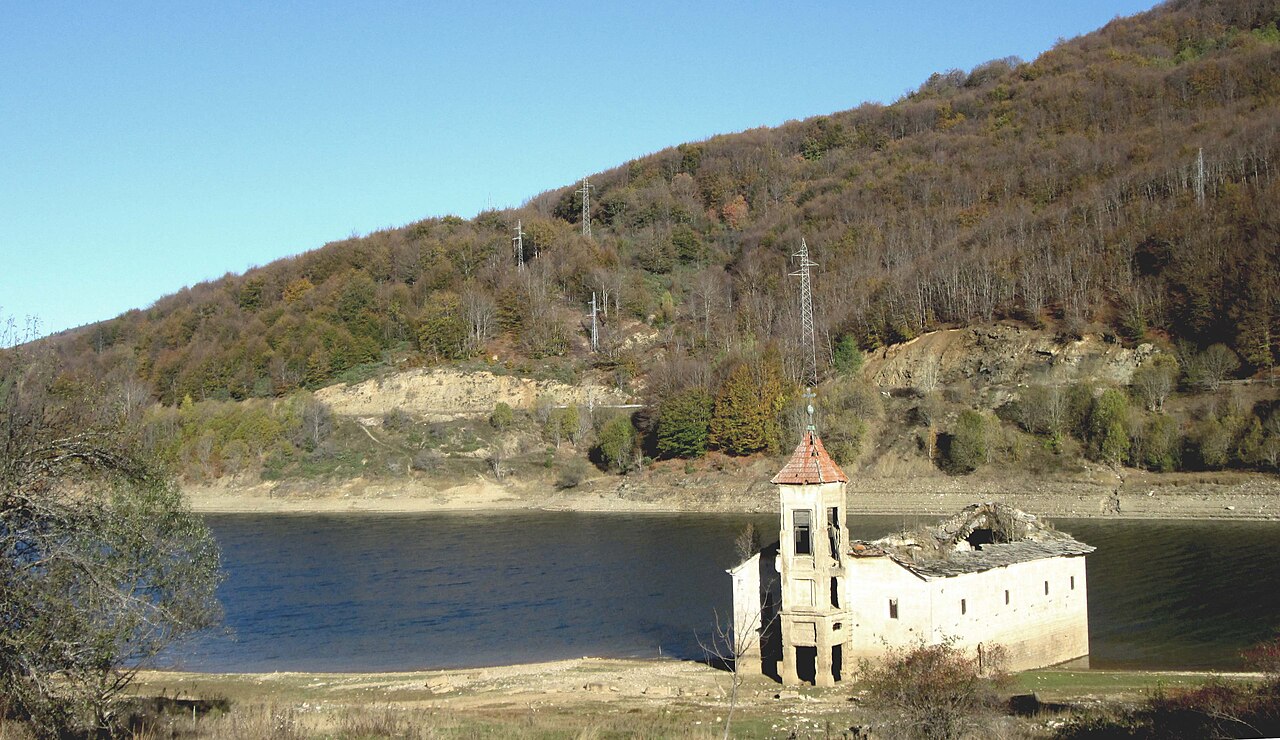
The first time we saw the sunken church at Mavrovo, the lake was low and we could walk right up to its doorway across cracked, dry lakebed. A local shepherd told us that in wet years only the bell tower pokes above the water. That is Mavrovo in a nutshell: a place that looks different every time you visit, and one most travelers to North Macedonia never see at all.
Mavrovo National Park is the largest national park in North Macedonia, a sweep of high mountains, beech forests, river gorges and old stone villages in the far west of the country. It sits right between Skopje and Ohrid, so it is easy to add to almost any itinerary. Here is how to visit, what to see and where to stay.
Why Visit Mavrovo National Park?
- The sunken church. The half-submerged Church of St. Nicholas on Mavrovo Lake is one of the most photographed sights in the country.
- Real mountain scenery. The park includes Mount Korab, the highest peak in both North Macedonia and Albania.
- Traditional villages. Galicnik, Janche and others still preserve their stone houses and old customs.
- One of the finest monasteries in the Balkans. St. John Bigorski is famous for its extraordinary carved wooden iconostasis.
- Year-round appeal. Hiking, swimming and lake walks in summer, and skiing in winter.
- Few crowds. Outside ski season and a couple of summer festival weekends, you will often have trails to yourself.
If this is your first time in the country, our guide on how to plan a trip to North Macedonia helps you figure out where Mavrovo fits.
Mavrovo at a Glance
Founded in 1949, Mavrovo covers roughly 280 square miles along the border with Albania and Kosovo. It stretches from the Mavrovo plateau and its lake down through the dramatic gorge of the Radika River. Much of the park is forested, and it is one of the last refuges of the critically endangered Balkan lynx, along with brown bears, wolves, chamois and golden eagles. You are very unlikely to see a lynx, but it is a nice reminder of how wild this corner of Europe still is.
The Best Things to Do in Mavrovo National Park
See the Sunken Church of St. Nicholas
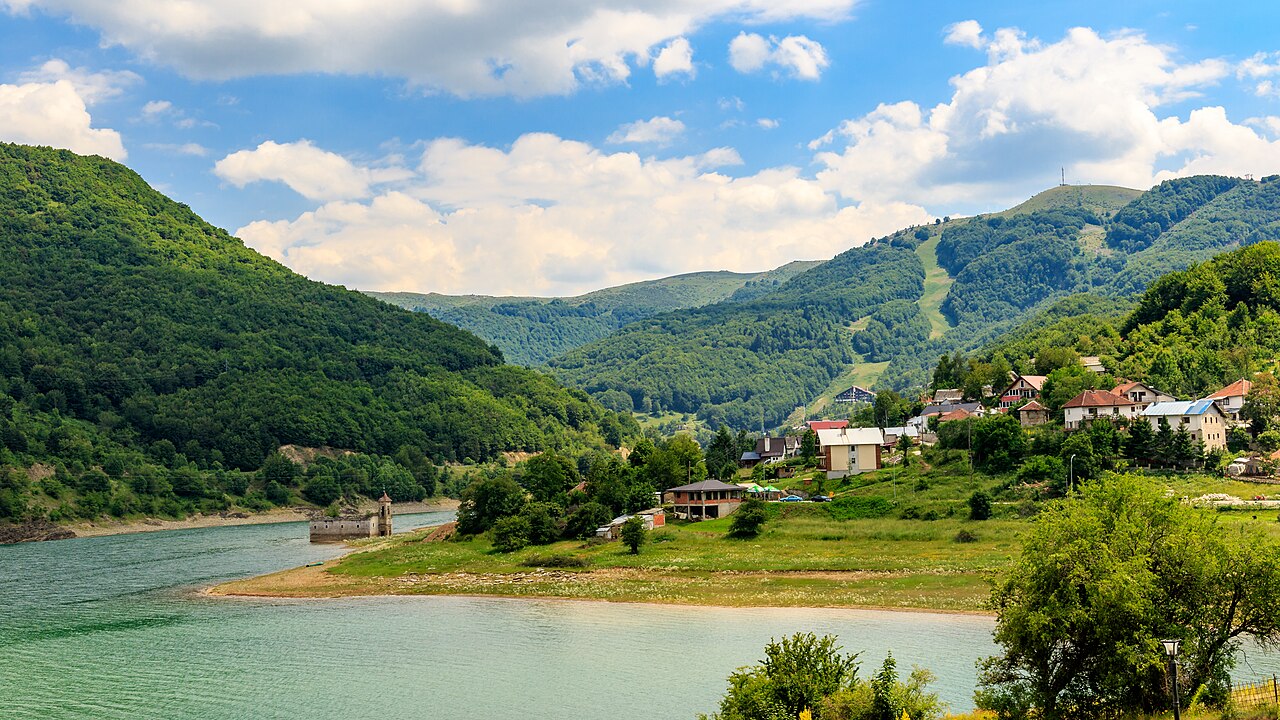
Mavrovo Lake is actually a reservoir, created in the 1950s when a dam flooded part of the valley. The Church of St. Nicholas, in the old village of Mavrovo, was partly submerged in the process. Depending on the season and the year, you may find it standing in shallow water, surrounded by it with only the upper walls and roof showing, or high and dry on the exposed lakebed.
When water levels are low, usually in late summer and fall, you can walk out and look inside the roofless nave. In spring the reflections can be beautiful. Either way, go early in the morning or late in the afternoon for the softest light and fewest people. There is a small parking area and a couple of cafes nearby.
Walk or Swim at Mavrovo Lake
The lake itself is lovely for an easy afternoon. There are gentle walking paths along the shore, a few spots where locals swim on hot summer days, and lakeside restaurants serving fresh trout. The water is cold even in August, so be ready for a bracing dip. The lake sits at around 4,000 feet, which keeps summer days pleasantly cool compared with Skopje.
Visit St. John Bigorski Monastery
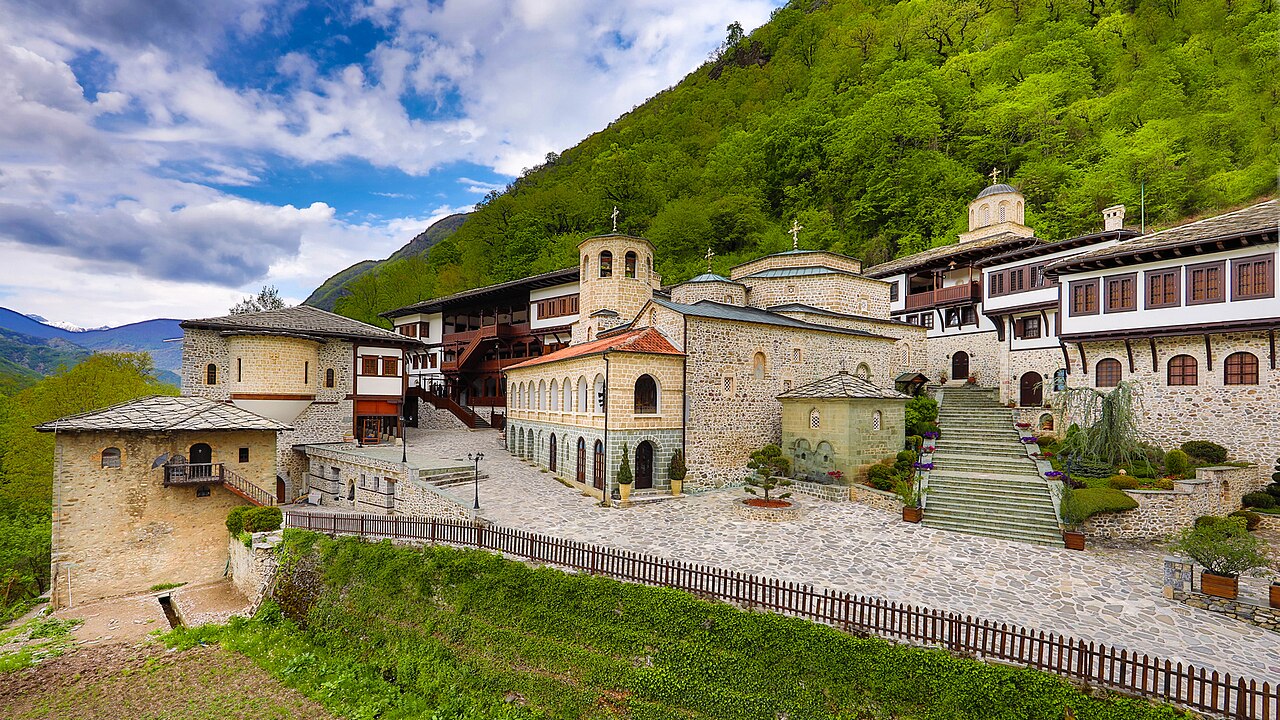
On the road through the Radika Gorge, the Monastery of St. John the Baptist, known as Bigorski, is a highlight of any trip to Mavrovo. The monastery was founded in the 11th century and rebuilt in the 18th, and it is still an active community of monks.
The star is the iconostasis, a huge carved wooden screen created in the 1830s by master woodcarvers from the region. It is packed with tiny figures, animals, vines and biblical scenes, and it is one of the finest works of its kind anywhere. Photos are not allowed inside the church, which makes the experience feel even more special. Dress modestly, with shoulders and knees covered, and keep your voice low.
Explore Galicnik Village
High on a mountainside above the Radika Gorge, Galicnik is one of the most atmospheric villages in North Macedonia. Its tall stone houses cling to the slope, and although only a handful of people live here year-round, the village comes alive every July for the Galicnik Wedding Festival, held around St. Peter’s Day.
During the festival, a real couple marries in the traditional style, with folk costumes, music, dancing and centuries-old rituals, while thousands of visitors watch. If your dates line up, it is an unforgettable experience. Book accommodation well in advance. The rest of the year, Galicnik is peaceful and wonderful for a short walk and a coffee with a view.
Stay in Janche
Janche is a small village on the slopes of the Radika Valley known for its guesthouses, home cooking and views. It makes a great base for exploring the gorge, Galicnik and Bigorski. We loved coming back each evening to a big home-cooked meal with vegetables from the garden and a glass of homemade rakija.
Hike to the Duf Waterfall
Near the village of Rostuse, a short and easy trail leads through the forest to the Duf Waterfall, which tumbles about 80 feet into a pool. The walk takes around 20 to 30 minutes each way and is a nice leg-stretcher on a drive through the gorge. It is at its most impressive in spring, when snowmelt swells the flow.
Climb Mount Korab
Serious hikers can tackle Mount Korab, at about 9,030 feet the highest peak in North Macedonia. The summit sits right on the border with Albania. The hike is long and demanding and is usually done in summer, often from the army post at Strezimir, where you may be asked to register. Many people go with a local guide, and that is what we would recommend for a first attempt. Check current access rules before you go.
Ski in Winter
Mavrovo is North Macedonia’s best-known ski area. The Zare Lazarevski ski center above the lake has lifts, rental shops and hotels. It is modest by Alps standards, but it is very affordable, uncrowded on weekdays and a fun way to see the park under snow.
Suggested Mavrovo Itineraries
Day Trip from Skopje or Ohrid
Start early and head to Mavrovo Lake and the sunken church. Continue south through the Radika Gorge to Bigorski Monastery, with a stop at the Duf Waterfall, then carry on to Ohrid or loop back to Skopje. It is a long day, but very doable by car.
Two Days in Mavrovo
- Day 1: Mavrovo Lake, the sunken church, a lakeside trout lunch and an afternoon walk. Overnight near the lake.
- Day 2: Drive down through the Radika Gorge to Galicnik, then Bigorski Monastery and the Duf Waterfall. Overnight in Janche or continue to Ohrid.
Three Days or More
Add a full day of hiking, whether that is a trail on the plateau, a guided climb of Korab in summer, or simply more time relaxing in a village guesthouse.
How to Get to Mavrovo National Park
- From Skopje. Mavrovo Lake is about 90 minutes by car, heading west via Gostivar.
- From Ohrid. Roughly two hours via Struga and Debar, following the Radika River up through the gorge. This is one of the most scenic drives in the country.
- By bus. Buses run to Mavrovo and to towns along the Radika route, but they are infrequent. If you rely on public transport, plan carefully and allow extra time.
- By car. Renting a car is by far the easiest way to see the park, since the highlights are spread out. Roads are paved and generally in good shape, with some narrow mountain sections.
If you are combining North Macedonia with Albania, Mavrovo fits naturally on the western side of the country. Our Albania road trip itinerary shows how to continue across the border.
Where to Stay in Mavrovo
- Near Mavrovo Lake. Hotels and chalets around the lake and ski area, ideal for the sunken church and for skiing.
- Janche and Galicnik. Family guesthouses with home cooking and a very local feel.
- Skopje or Ohrid. If you would rather not move bases, visit on a day trip. Our Skopje travel guide covers the best neighborhoods to stay in the capital.
Prices are low. Expect to pay about $40 to $100 a night for a comfortable room, often with breakfast, and a bit more in the ski season.
What to Eat in Mavrovo
Mountain food here is hearty, local and delicious.
- Fresh trout from the lake and rivers, grilled simply with lemon.
- Sheep’s cheese and kashkaval from the high pastures. Galicnik and the surrounding villages are famous for their cheeses.
- Home-baked bread and pita, often filled with cheese, spinach or leek.
- Tavce gravce, the national baked bean dish, perfect after a long hike.
- Homemade rakija, offered as a welcome at many guesthouses. Sip slowly.
Best Time to Visit Mavrovo National Park
June to September is best for hiking, lake walks and exploring the villages. July brings the Galicnik Wedding Festival, and late summer often means lower water and better access to the sunken church.
Late September and October are beautiful, with fall colors across the beech forests and crisp, clear days. This was our favorite time.
December to March is ski season around Mavrovo Lake. Some mountain roads can be snowy, so drive carefully and carry chains if you are renting a car.
April and May bring waterfalls and wildflowers, but higher trails may still be snowy.
Practical Tips for Visiting Mavrovo
- Bring cash. Many guesthouses, cafes and small shops in the villages don’t take cards, and ATMs are limited.
- Fill up on fuel in Gostivar or Debar before heading into the park.
- Pack layers. Even in summer, mornings and evenings in the mountains are cool.
- Download offline maps. Cell signal can drop in the gorge and on the trails.
- Respect the monasteries. Cover up, speak quietly and follow the no-photo rules.
- Get travel insurance. Mountain hiking and winter driving are exactly when you want coverage. See our guide to the best travel insurance.
Is Mavrovo National Park Worth Visiting?
Absolutely, especially if you are driving between Skopje and Ohrid anyway. For very little extra time you get a completely different side of North Macedonia: high pastures, wild forests, a haunting church rising out of a lake and a monastery with one of the most remarkable works of woodcarving we have ever seen. It is also refreshingly uncommercial. There are no tour-bus crowds, no souvenir strips, just mountains, villages and people happy to feed you.
Where to Book
We use Booking.com for stays around Mavrovo Lake and in the villages of the Radika Valley, where you will find everything from ski hotels to family guesthouses. Search Mavrovo stays on Booking.com.
If you would rather not drive, Viator offers day tours to Mavrovo, Bigorski Monastery and the Radika Gorge from Skopje and Ohrid, many with free cancellation. Browse Mavrovo tours on Viator.
Final Thoughts
Mavrovo is the North Macedonia most people drive past. Give it a day, or better yet two, and you will be rewarded with mountain air, empty trails and a sunken church that looks different every time you see it. It is the perfect counterweight to the cafes of Skopje and the lakeside buzz of Ohrid.
Planning more of the region? Read our Ohrid travel guide, take a morning trip to Matka Canyon, or explore the south with our Bitola travel guide.