Disclosure: This post contains affiliate links. If you book through our links, we may earn a small commission at no extra cost to you. Thanks for supporting Faceted Travel!
Table of Contents
- What Is the Blue Eye?
- Where Is the Blue Eye?
- How to Get to the Blue Eye
- Blue Eye Entrance Fees and Opening Hours
- Can You Swim in the Blue Eye?
- Best Time to Visit the Blue Eye
- What to Expect When You Visit
- Tips for Visiting the Blue Eye
- How to Combine the Blue Eye With Other Sights
- Where to Stay Near the Blue Eye
- Is the Blue Eye Worth It?
- Where to Book
- Final Thoughts
Imagine peering into a pool so blue it looks like someone dropped a gemstone into the forest, with a dark center that seems to go down forever. That is the Blue Eye, or Syri i Kalter in Albanian, and it is one of the most photographed natural wonders in the Balkans.
We visited on a road trip between Saranda and Gjirokaster, and it turned out to be one of those rare places that looks even better in person than it does online. It is also easy to get wrong: people show up at midday in August, fight the crowds, and leave wondering what the fuss was about. This guide covers everything you need to know about visiting the Blue Eye in Albania: how to get there, when to go, what it costs, whether you can swim, and how to fit it into a bigger trip through southern Albania.
What Is the Blue Eye?
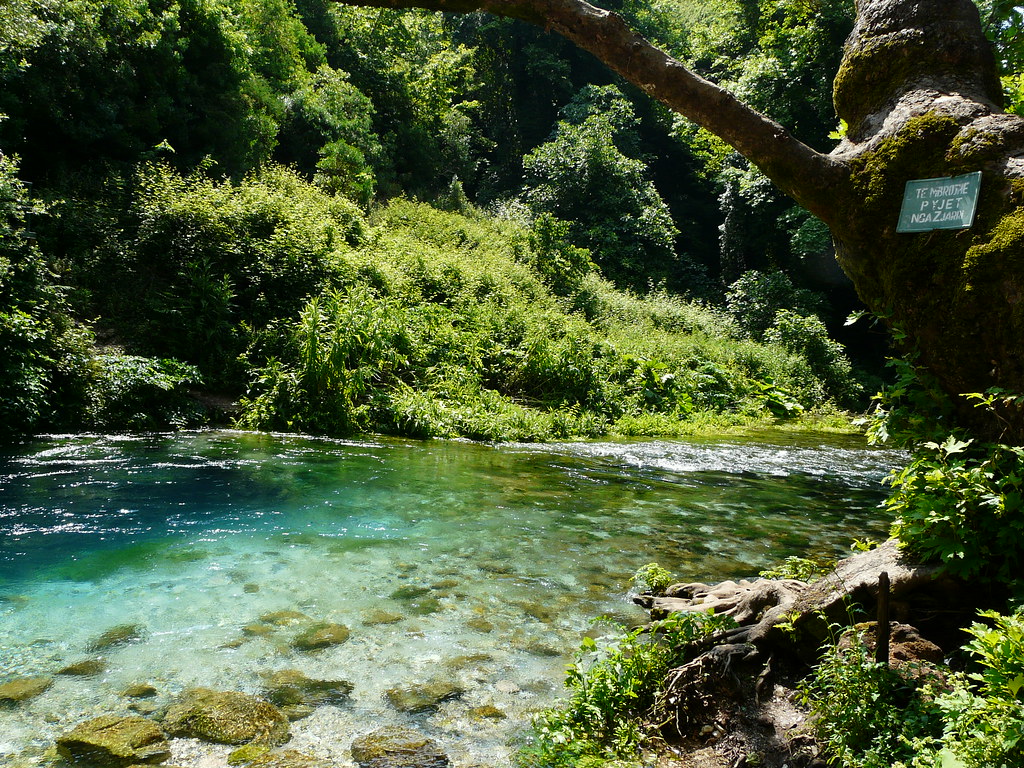
The Blue Eye is a karst spring in southern Albania, near the village of Muzine, where water bubbles up from deep underground into a small, astonishingly clear pool. The center of the spring is a deep, dark blue hole ringed by lighter turquoise water, which is exactly why it looks like an eye.
Divers have explored the spring to depths of more than 150 feet (about 50 meters) without reaching the bottom, and nobody knows for sure how deep it goes. The water pushes up with enough force to keep the surface gently rippling, and it feeds the Bistrice River, which flows toward the Ionian coast. The spring is protected as a natural monument, and the area around it is shaded by oak and plane trees, with wooden viewing platforms and a small bridge.
The water stays at roughly 50°F (10°C) year-round, which matters when we get to the question of swimming.
Where Is the Blue Eye?
The Blue Eye sits in the green hills between Saranda on the coast and the UNESCO town of Gjirokaster inland. It is about 14 miles (22 km) from Saranda and roughly 25 miles (40 km) from Gjirokaster, just off the main SH99 road that connects them.
That location makes it a perfect stop on a drive between the two towns, or an easy half-day trip from anywhere along the southern Albanian Riviera, including Ksamil.
How to Get to the Blue Eye
By Car (Our Recommendation)
Driving is the easiest and most flexible way to visit. From Saranda, it takes about 30 to 40 minutes on a good paved road. Follow the signs for Syri i Kalter off the main road, then continue down the side road to the parking area.
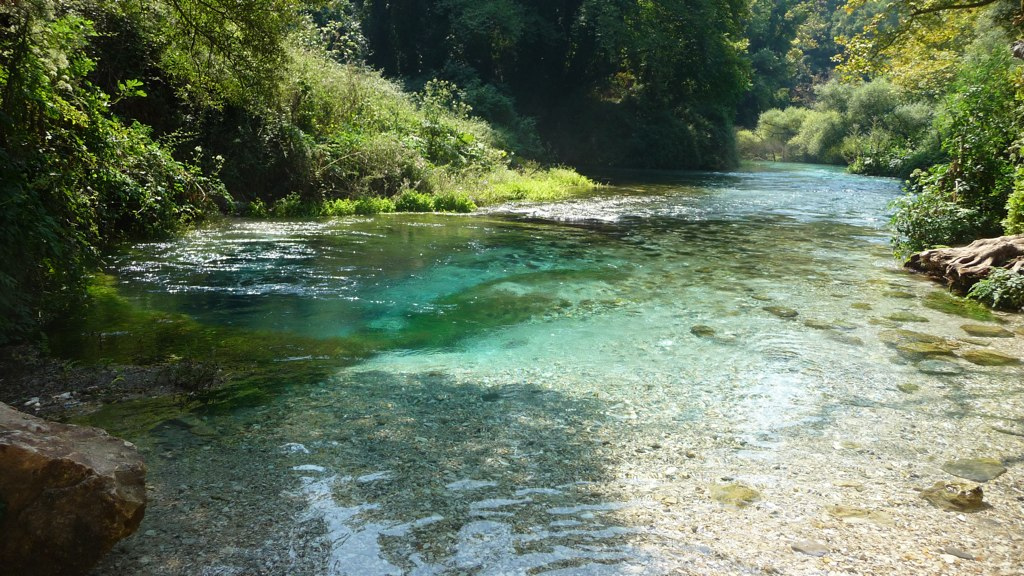
In recent years, the road to the spring itself has been closed to private cars for much of the year, so you will usually park at the entrance and walk. The walk is about 1.2 miles (2 km) each way on a flat, shaded path along the river, and it is lovely. Allow 25 to 30 minutes each way at an easy pace. At busy times, a small shuttle or golf cart service sometimes runs for a fee, and there have been bike rentals near the entrance too.
Renting a car also lets you combine the Blue Eye with Gjirokaster, Butrint and the Riviera beaches, which is how most visitors see southern Albania. Our Albania road trip itinerary includes the Blue Eye as a stop.
By Bus
Buses between Saranda and Gjirokaster pass the turnoff for the Blue Eye. Ask the driver to drop you at Syri i Kalter, then walk down from the main road to the spring. This adds some distance on foot, so it works best in cooler weather. Bus schedules in Albania can be loose, so confirm your return times locally.
By Taxi
A taxi from Saranda is a simple option if you do not want to drive. Agree on a round-trip price with waiting time before you leave. It is also easy to arrange a taxi that stops at the Blue Eye on the way to Gjirokaster.
On a Tour
Many small-group tours from Saranda, Ksamil and even Corfu combine the Blue Eye with Gjirokaster or Butrint. This is the easiest option if you are arriving on the ferry from Corfu for a day. We list a few options in the Where to Book section below.
Blue Eye Entrance Fees and Opening Hours
There is a modest entrance fee per person to enter the protected area, plus a parking fee if you drive. Both are inexpensive, typically a few euros in total, and are usually paid in cash in lek, though euros are often accepted. Bring small bills, since card machines are not guaranteed.
The site is open during daylight hours year-round. Fees, road access and shuttle arrangements have changed several times in recent years, so check locally or with your accommodation before you go.
Can You Swim in the Blue Eye?
This is the question everyone asks, and the answer is no, swimming in the Blue Eye itself is not allowed. Signs at the spring prohibit swimming and jumping, and staff often enforce the rule, especially in summer.
There are good reasons for this. The water is extremely cold, the upward current is strong and unpredictable, and the spring is a protected natural monument that was being damaged by the sheer number of visitors jumping in. You will still see photos online of people leaping from the platform, but many of those are older or were taken before rules tightened.
The good news is that simply standing on the viewing platform and looking down into the spring is the highlight. The colors are most intense when you look straight down into the center.
Best Time to Visit the Blue Eye
Best Time of Year
The spring is beautiful year-round, but conditions do change.
- May, June and September are ideal. The weather is warm, the forest is green, and the crowds are manageable.
- July and August are the busiest months, when tour buses and beachgoers from the Riviera arrive in waves. It is still worth seeing, but timing your visit matters.
- Spring (March and April) can bring the strongest flow after winter rains, which can make the colors a little less clear on some days but gives the river a lively, rushing feel.
- Winter is quiet and peaceful, with fewer services open nearby.
For a month-by-month look at the whole country, see our guide to the best time to visit Albania.
Best Time of Day
Go early in the morning or late in the afternoon. We arrived just after 9am and had the viewing platforms almost to ourselves for about half an hour before the first groups rolled in. Around midday in summer, the platform can get genuinely crowded, with people waiting for their turn at the best photo spot.
For the best color, sunny days are better than overcast ones. When sunlight hits the water from above, around late morning, the blue lights up dramatically, so there is a small trade-off between light and crowds. Early to mid-morning is the sweet spot.
What to Expect When You Visit
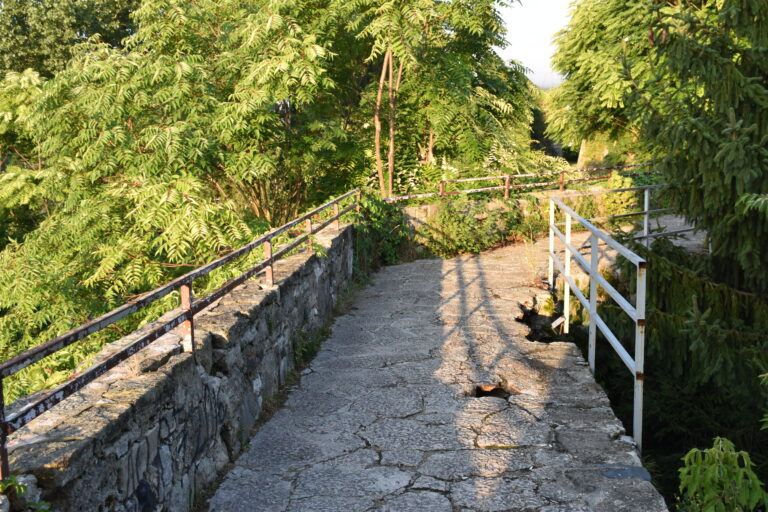
After the walk along the river, you arrive at a small area with a cafe and restaurant, a few stalls and the viewing platforms around the spring. There is a wooden deck that extends over the water, which is where most people take their photos, and a small bridge downstream with views back toward the spring.
Most visitors spend 30 minutes to an hour at the spring itself. With the walk from the parking area, plan on about two hours total. The riverside restaurant is a nice spot for a coffee or a simple lunch of grilled trout, and sitting under the trees with the sound of the water is a big part of the experience.
The path is flat but can be muddy after rain, and the ground near the spring is uneven in places. Comfortable walking shoes are a good idea.
Tips for Visiting the Blue Eye
- Arrive early. This is the single best thing you can do to improve your experience.
- Bring cash in small bills for the entrance, parking and cafe.
- Pack a light layer. The air right around the spring feels noticeably cooler than the surrounding area because of the cold water.
- Respect the rules. Stay on the paths, do not swim, and do not throw anything into the water.
- Use a polarizing filter if you have one. It cuts glare and makes the blue look even more vivid in photos.
- Combine it with other stops. The Blue Eye is small, so it is best as part of a bigger day.
How to Combine the Blue Eye With Other Sights
The Blue Eye works best as one stop in a full day in southern Albania. Here are two routes we like.
Saranda to Gjirokaster Day
- Leave Saranda early and reach the Blue Eye by 9am.
- Continue to Gjirokaster, about 45 minutes away, for lunch and an afternoon exploring the castle and Ottoman stone houses.
- Either stay the night in Gjirokaster or drive back to Saranda for sunset.
Our Berat and Gjirokaster guide covers what to see in town.
Butrint, Ksamil and the Blue Eye
- Visit the Blue Eye first thing in the morning.
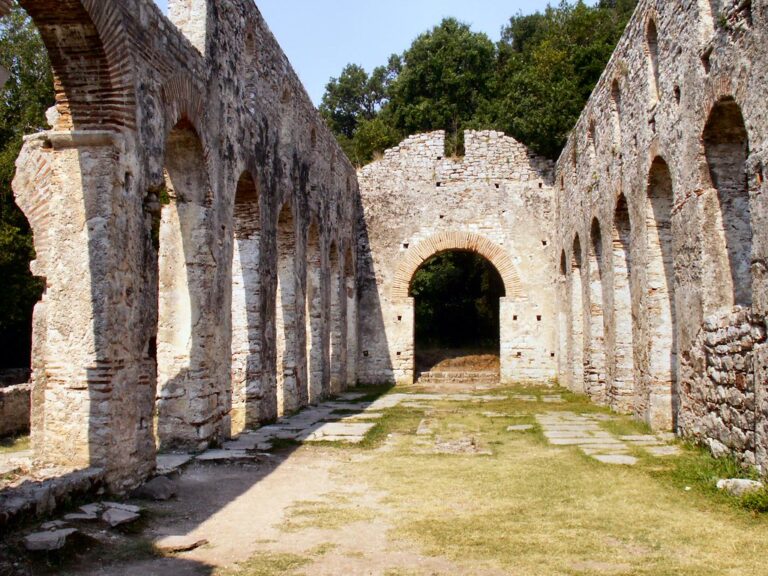
- Drive back through Saranda and south to Butrint National Park for the ancient ruins.
- Finish the day swimming at one of Ksamil’s beaches.
See our Butrint National Park guide and our Albanian Riviera guide for more details.
If you have a little extra time, the ruined Mesopotam Monastery is a short detour from the main road, and Lekursi Castle above Saranda is a great place to watch the sunset.
Where to Stay Near the Blue Eye
Most people visit the Blue Eye from a base in Saranda, Ksamil or Gjirokaster.
- Saranda is the most convenient base, with the widest choice of hotels and apartments, plus a long seaside promenade.
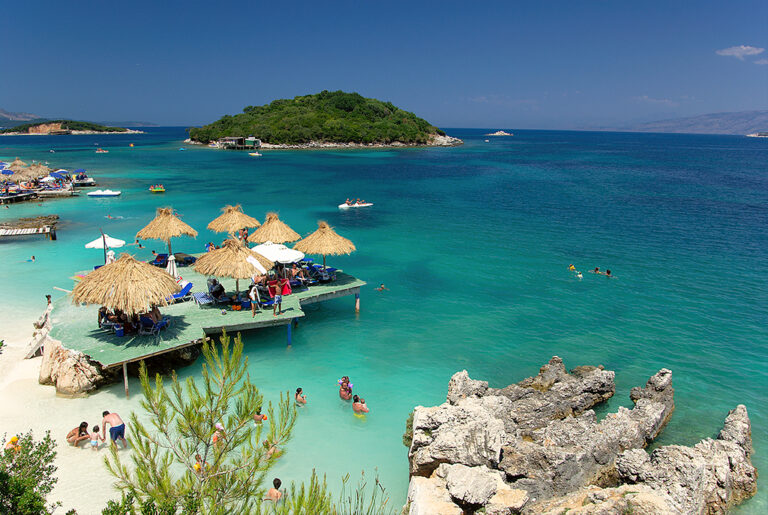
- Ksamil is best for beach time, with turquoise water and little islands just offshore. It is about 50 minutes from the Blue Eye.
- Gjirokaster is ideal if you prefer history and mountain views over beaches, and it makes a great overnight on a road trip.
There are also a handful of small guesthouses near the spring itself if you want to be first through the gate in the morning.
Is the Blue Eye Worth It?
Yes, as long as you set the right expectations. The Blue Eye is a small spring, not a sprawling park, and you will not be swimming in it. But the color is unlike anything we have seen elsewhere, the shaded walk along the river is lovely, and it fits easily into a day with Gjirokaster or Butrint.
Go early, bring a little cash and patience, and pair it with other stops in the south. It is one of the highlights of a trip through southern Albania, and it gives you a reason to see more of the beautiful countryside between the coast and the mountains.
Where to Book
We use Booking.com for our stays across Albania, from seaside apartments in Saranda to boutique guesthouses in Gjirokaster’s old town. Search Saranda stays on Booking.com or search Gjirokaster stays on Booking.com.
If you would rather not drive, Viator has day tours from Saranda, Ksamil and Corfu that combine the Blue Eye with Gjirokaster or Butrint, many with free cancellation. Browse Blue Eye tours on Viator.
Final Thoughts
The Blue Eye is proof that some of the best places in Albania are hiding just off the main road. A short walk through the forest, a cold, crystal-clear spring and a color you will be trying to describe to friends for years: it is worth the detour. Get there early, and you might have that magic blue all to yourself.
Planning southern Albania? Read our Albanian Riviera guide, our Butrint National Park guide and our guide on how to plan a trip to Albania.