Disclosure: This post contains affiliate links. If you book through our links, we may earn a small commission at no extra cost to you. Thanks for supporting Faceted Travel!
Table of Contents
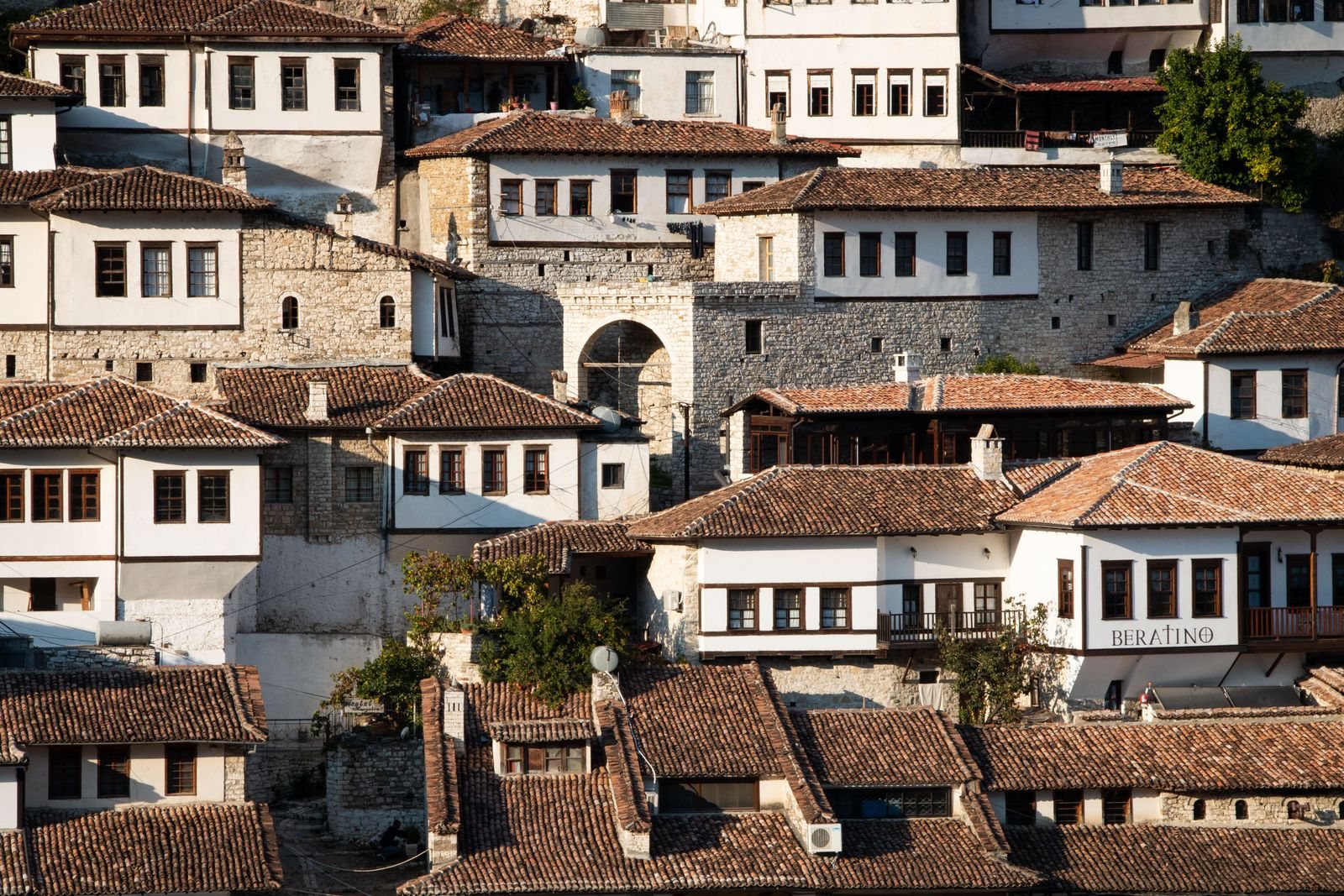
The first time we came around the bend into Berat at dusk, Todd actually pulled the car over. An entire hillside of white Ottoman houses was stacked up the slope, every one of them with rows of tall windows catching the last of the light, and the whole thing looked less like a town than like a single enormous building someone had folded into the mountain. They call it the City of a Thousand Windows and for once the nickname undersells it.
Berat and Gjirokaster are Albania’s two UNESCO listed Ottoman towns, they are about two and a half hours apart, and together they make the strongest case that Albania is a serious destination rather than just a cheap beach alternative. Most people passing through on their way to Ksamil give them one rushed night between them. We think they deserve three, and we would give the extra night to Berat.
Berat and Gjirokaster: Which One, and Do You Need Both?
If you only have time for one, take Berat. It is more beautiful, more compact, easier to reach from Tirana, and better set up for spending a lazy evening. The riverside quarter and the castle hill give you two completely different experiences in a town you can cross on foot.
Gjirokaster is the more atmospheric and the more complicated. It is steeper, grayer, stranger and heavier with history. The castle is enormous and genuinely unsettling, the Ottoman tower houses are more intact than Berat’s, and the town has a hard edged, lived in feel that Berat’s polished riverfront does not. If you like places that are interesting more than pretty, Gjirokaster wins.
Doing both is easy and we recommend it. They sit on the same north to south line, so a natural route runs Tirana to Berat to Gjirokaster to Saranda and the Riviera, which is exactly how we would build an Albania road trip.
Berat
Why it looks the way it does
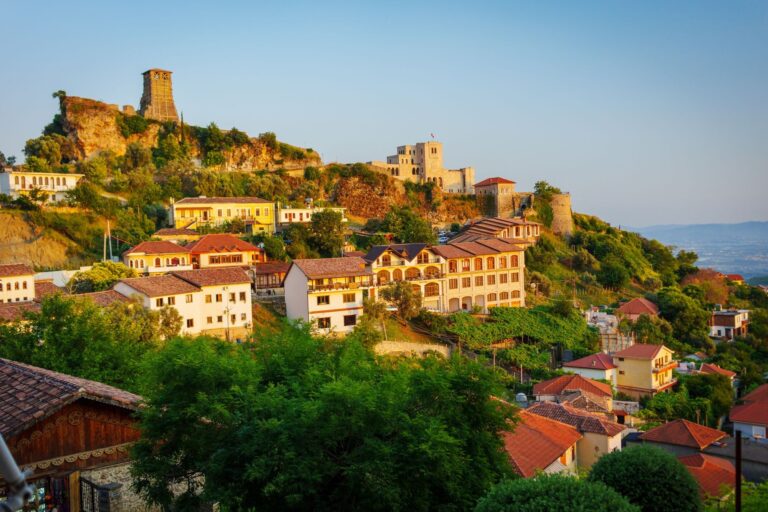
Berat’s old quarters, Mangalem on the near bank and Gorica across the river, are made up of Ottoman era houses built one above another on a steep slope. Because each house had to look out over the roof of the one below it, they all face the same direction and they are all mostly window. From across the Osum River the whole hillside reads as one facade. That accident of hillside engineering is why UNESCO listed it and why every photo of Albania you have ever seen is probably this.
Berat Castle and the Kala quarter
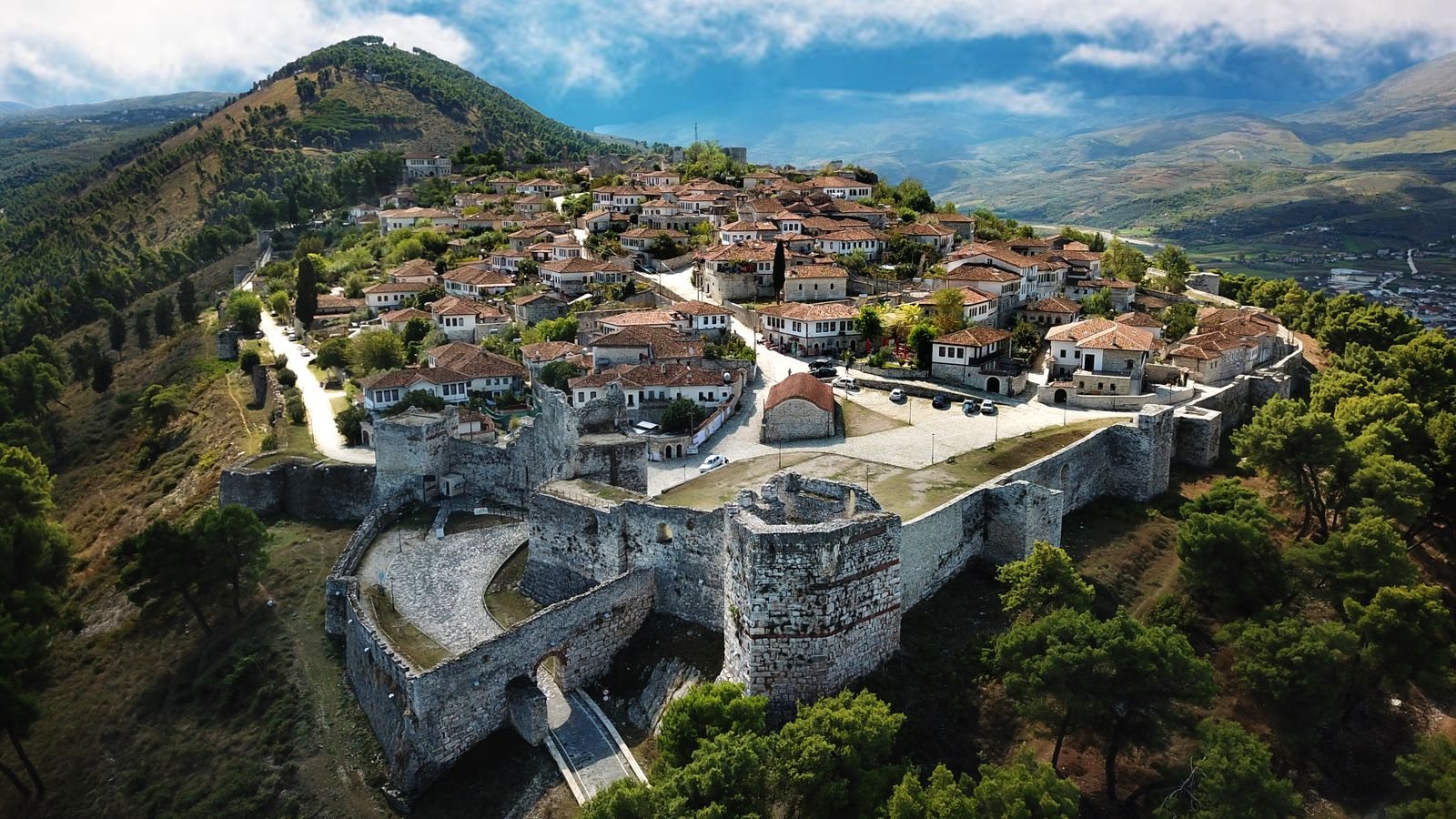
The castle is the thing people get wrong. It is not a ruin you tour in forty minutes. It is a walled hilltop with a village still living inside it: families, laundry lines, cats, a few guesthouses, several Byzantine churches and a whole lot of cobblestone. People have lived continuously inside these walls for centuries and still do.
Walk up rather than drive if your knees allow it, because the approach is half the experience. Entry is around four dollars. Give it two to three hours minimum. The Onufri Iconography Museum inside the walls, housed in the Church of the Dormition of St Mary, holds sixteenth century icons by the painter the museum is named for, and it is small, cheap and worth it.
The views from the northwestern walls at sunset over the valley are the best in town. Bring a layer; it gets windy up there.
Mangalem, Gorica and the bridge
Down in Mangalem, the narrow lanes running up from the riverfront are where the thousand windows actually are. The King Mosque and the Halveti Tekke are both worth stepping into.
Cross the seven arched Gorica Bridge to the quieter side. Gorica has fewer restaurants, more residents, and the better view: from over there you are looking straight at Mangalem and the castle together, which is the postcard.
Eating in Berat
The riverside promenade is where everyone eats, and it is pleasant even though it is obviously the tourist strip. Wander two streets up in Mangalem or across to Gorica for better prices and more locals. Look for tave kosi, the baked lamb and yogurt dish that is more or less Albania’s national plate, and anything with the local Berat white wine.
Where to stay in Berat
Stay in Mangalem or up in the castle. The Ottoman guesthouses in the old quarters are the reason to come: thick stone walls, wooden ceilings, breakfast on a terrace over the river, typically $35 to $60 a night in shoulder season. Staying in the newer part of town saves you very little and costs you the entire atmosphere.
How long to stay
Two nights. One full day gets you the castle, the museums and both riverbanks properly, and the second evening is when the place actually settles into you.
Gjirokaster
The Stone City
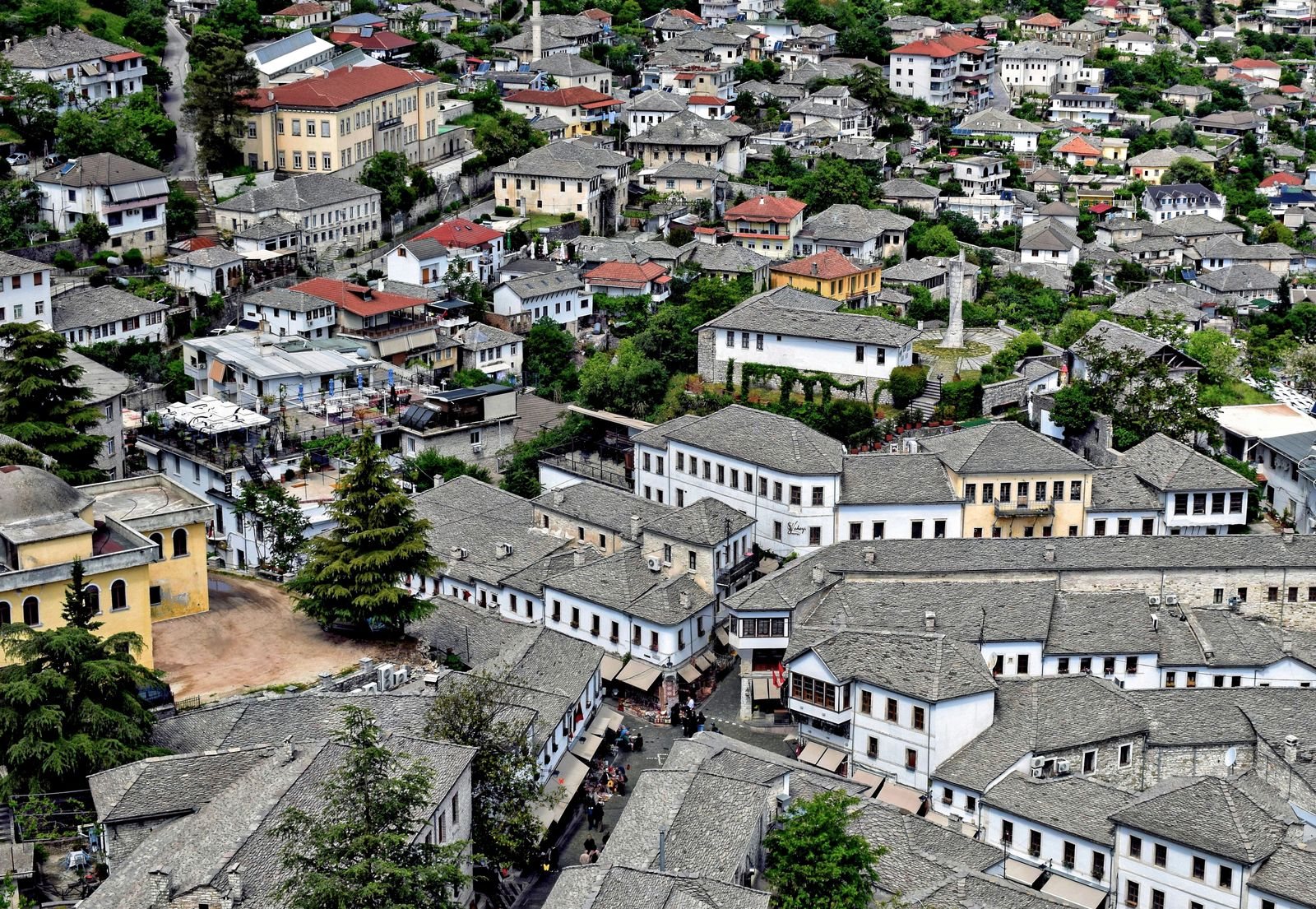
Gjirokaster is built from gray schist: the walls, the roofs, the streets, all of it. The effect on an overcast day is severe and unforgettable. The town climbs a steep slope under an immense castle, and the streets are so steep in places that they have been cobbled into shallow steps.
It is also the birthplace of both Enver Hoxha, Albania’s long ruling communist dictator, and Ismail Kadare, the country’s best known novelist, which tells you something about the density of this small place.
Gjirokaster Castle
The castle is one of the largest in the Balkans and it dominates everything. Inside there is a long artillery gallery lined with captured weapons, a Cold War era American reconnaissance aircraft sitting in an open courtyard with a genuinely murky backstory, and a former prison used under both the Italian occupation and the communist regime. The prison section is heavy going and worth doing anyway.
Entry is about four dollars. Budget two hours, more if you read everything.
The Ottoman tower houses
Gjirokaster’s domestic architecture is better preserved than Berat’s and completely different in character. These are fortified tower houses, defensive structures with living quarters stacked above storage and stables. The Skenduli House and the Zekate House are both open and both extraordinary, with carved wooden ceilings and painted rooms that have survived largely intact. Zekate is the more spectacular; Skenduli usually comes with a family member giving the tour personally, which we preferred.
The Ethnographic Museum, built on the site of Hoxha’s birthplace, rounds out the picture of how these households actually worked.
The Cold War tunnel
Underneath the town is a bunker complex built for local officials in case of nuclear attack, now open to visitors. It is cold, damp, unadorned and one of the most effective explanations of Albania’s isolation years you will find anywhere.
Eating and staying in Gjirokaster
Gjirokaster’s food scene is smaller than Berat’s but the traditional restaurants in the bazaar quarter are good, and qifqi (herbed rice balls, a local specialty) are worth ordering wherever you see them.
Stay in the old town, ideally in a converted tower house. The trade off is real: these places are steep, stone and sometimes cold, and you will be hauling luggage up cobbles. It is still the right call. Rates run $35 to $60 in shoulder season.
How long to stay
One full night, two if you want an unhurried day. There is less here than in Berat but what there is takes concentration.
Getting There and Getting Around
Tirana to Berat is about two hours by car on decent road, or roughly $4 and two and a half to three hours by bus or furgon. Most people come straight off a night or two in the capital, and if that is you, our Tirana travel guide covers what is worth your time before you drive south.
Berat to Gjirokaster is about two and a half to three hours by car. Public transport on this leg is awkward and often routes back through a larger town, which is one of the better arguments for renting a car in Albania.
Gjirokaster to Saranda is about an hour and a quarter, which makes it a natural last stop before the coast. Saranda and Ksamil are the obvious next move, and we break that whole stretch down in our Albanian Riviera guide. If you are heading to Greece, the Kakavia border crossing is close.
Parking: both old towns are steep, narrow and not designed for cars. In Berat, park along the river and walk up. In Gjirokaster, most guesthouses will tell you exactly where to leave the car, and you should do what they say rather than improvising.
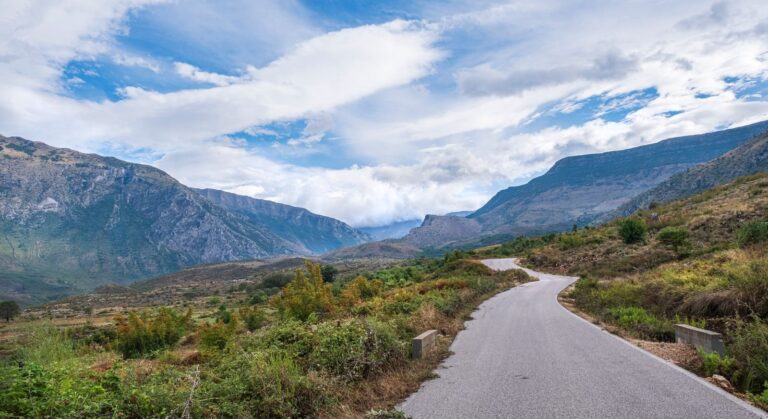
Driving note: the roads between these towns are fine by Albanian standards but expect single lane sections, livestock, and drivers who overtake optimistically. Full insurance on the rental is money well spent.
A Three Day Route That Works
Day 1: Drive Tirana to Berat in the morning. Afternoon in Mangalem and across the Gorica Bridge. Sunset dinner on the river.
Day 2: Full morning in the castle and the Onufri museum. Afternoon wandering Gorica or a side trip to the Osum Canyon. Second night in Berat.
Day 3: Drive to Gjirokaster. Afternoon at the castle and the Zekate House. Evening in the bazaar. Next morning, continue to Saranda and the coast.
If you have a fourth day, spend it in Gjirokaster rather than adding a stop. Both of these towns reward slowness and punish a tight schedule.
When to Go
Both towns are hillside stone with very little shade, which makes summer genuinely hard. Berat in August at midday is not fun, and Gjirokaster’s cobbled slopes in the heat are worse.
April, May, September and October are the right months. October might be the single best: warm enough to sit outside in the evening, cool enough to climb the castle at noon, and almost completely free of tour groups. Winter works too if you accept rain, and the stone towns under gray skies have a mood that summer never gives you. We go into the full calendar in the best time to visit Albania.
What to Budget
These towns are cheap even by Albanian standards. Guesthouses at $35 to $60, dinner with wine at $12 to $18 a head, castle entries around $4 each, house museums $2 to $4. Two people can do three nights across both towns, including a rental car, for around $450 to $550. Our full cost breakdown is in how much a trip to Albania costs.
Where to Book
Booking.com is where the Ottoman guesthouses in both towns live, and many of them have no other online presence at all. Search Berat and Gjirokaster stays on Booking.com. Read the reviews for mentions of stairs and parking, because both matter more here than in a normal town.
For guided walks of the old quarters, Osum Canyon trips out of Berat, and day tours that combine Gjirokaster with Butrint or the Blue Eye, Viator has good coverage. Browse Albania tours and day trips on Viator.
Our Honest Take
Berat is the one we would go back to. Gjirokaster is the one we think about more.
Neither is a quick photo stop, and treating them that way is the most common mistake we saw people making. Give them real time and they will do the thing that makes a trip memorable: they will make Albania feel like a country with a long, complicated, specific history rather than a lucky stretch of coastline.
More Albania planning: start with how to plan a trip to Albania, pick your dates with the best time to visit Albania, and see where the road ends up in our guide to the Albanian Riviera, Ksamil and Saranda.