Disclosure: This post contains affiliate links. If you book through our links, we may earn a small commission at no extra cost to you. Thanks for supporting Faceted Travel!
Table of Contents
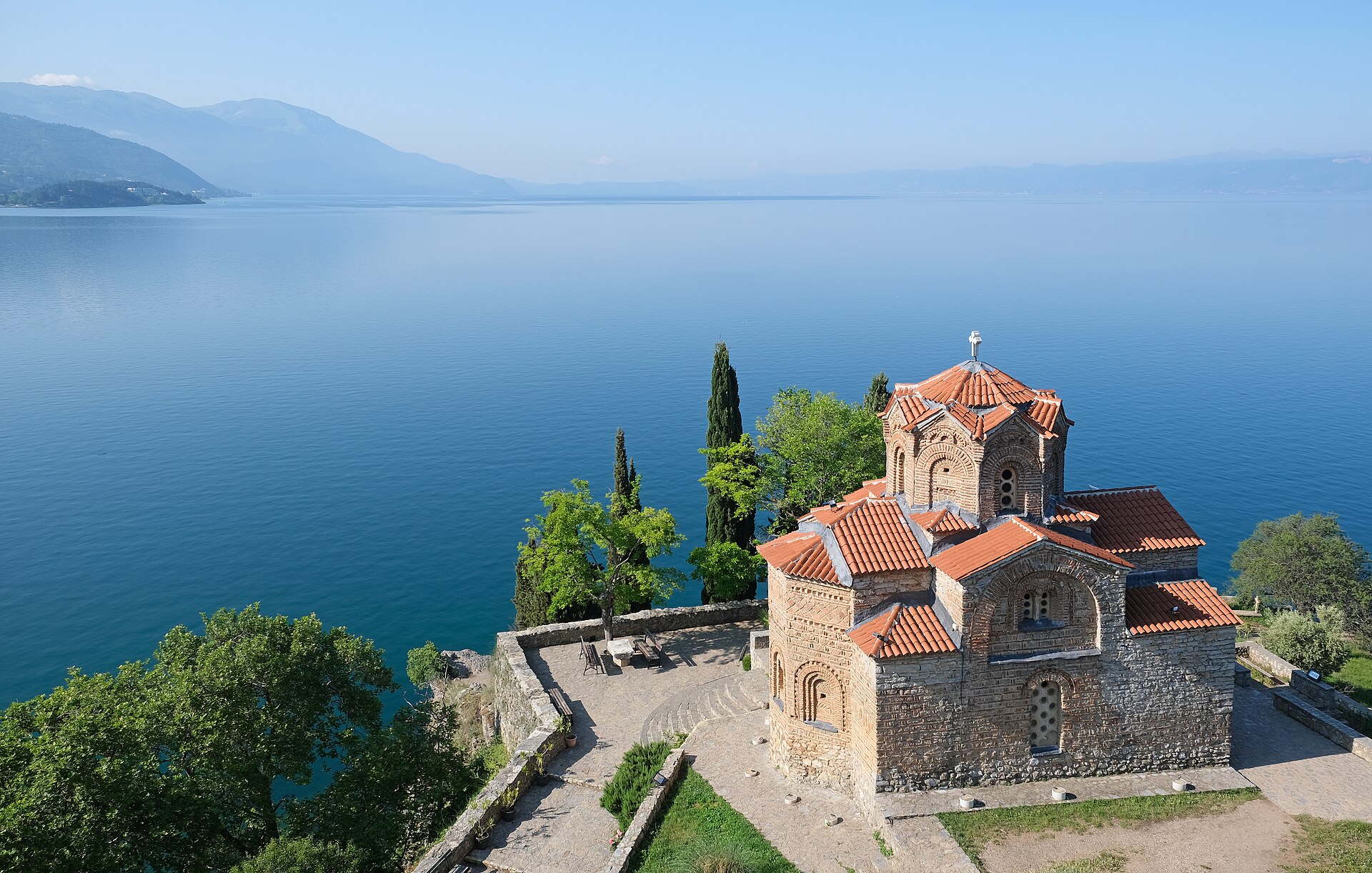
Picture a tiny red-roofed church perched on a cliff, with water below so clear you can count the pebbles twenty feet down. That is the view from Kaneo in Ohrid, and it is the moment we realized North Macedonia deserved far more than the one night we had budgeted for it.
Ohrid sits on the shore of Lake Ohrid, one of the oldest and deepest lakes in Europe, and the town and lake together are a UNESCO World Heritage Site. It is only about three hours from Tirana by road, which makes it the easiest and most rewarding add-on to an Albania trip. In this Ohrid travel guide we cover the best things to do in Ohrid, how to get there, where to stay, when to go, and what it all costs.
Why Visit Ohrid?
Ohrid packs a lot into a small, walkable old town. Here is why we think it belongs on any Balkans itinerary:
- The lake itself. Lake Ohrid is believed to be well over a million years old and reaches depths of around 280 meters. The water is famously clear, and it is home to species found nowhere else on Earth.
- Churches everywhere. Locals like to say Ohrid once had 365 churches, one for every day of the year. That number is folklore, but you really do stumble on a medieval chapel around almost every corner.
- Double UNESCO status. The lake and the old town were recognized for both natural and cultural value, and in 2019 the listing was extended to the Albanian side of the lake.
- Value. North Macedonia is one of the most affordable countries in Europe. A lakeside dinner with wine for two often costs less than a single cocktail in Dubrovnik.
- It is easy. English is widely spoken in the tourist areas, the old town is compact, and the pace is slow in the best way.
If you are already exploring the region, Ohrid slots perfectly between Tirana and the rest of our Albania road trip itinerary.
Best Things to Do in Ohrid
Church of St. John at Kaneo
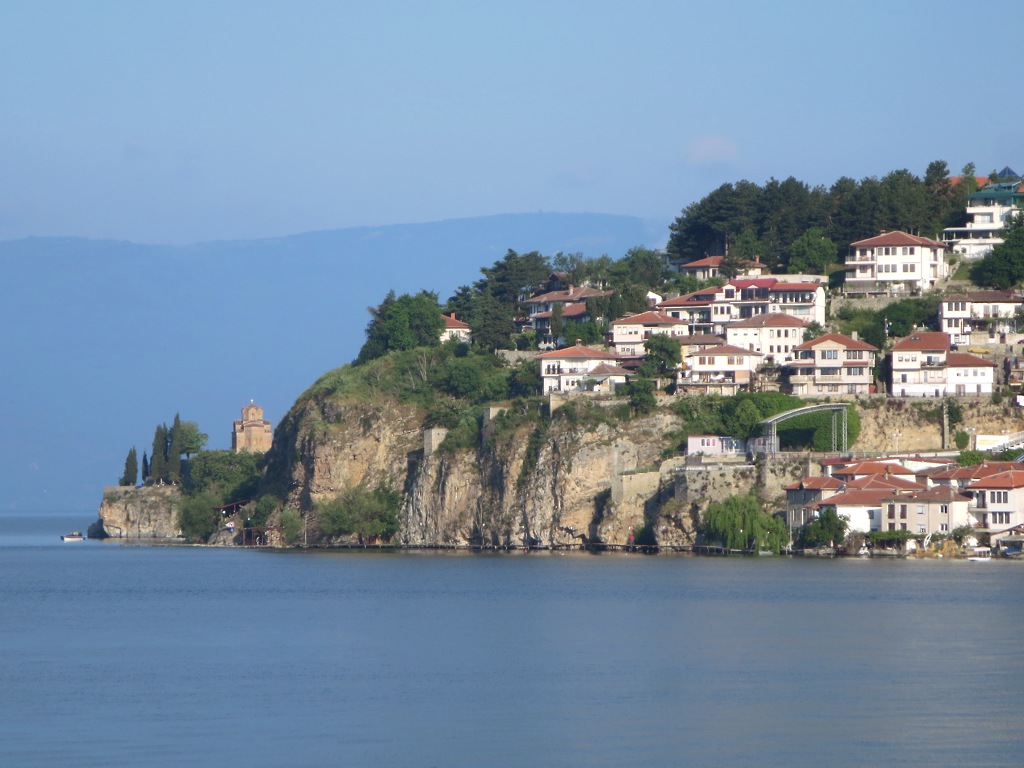
This is the postcard shot of North Macedonia. The small Byzantine church, dating to around the 13th century, sits on a rocky point above the lake at the western edge of the old town. Walk the lakeside boardwalk to get there, then climb the path behind the church for the classic view with the lake stretching out behind it. We went twice: once at sunset, when it was busy but glowing, and once around 8am, when we had it almost to ourselves. Go early if you want photos without a crowd.
Samuel’s Fortress
The fortress walls crown the highest hill in town. Tsar Samuel made Ohrid the capital of the First Bulgarian Empire around the end of the 10th century, and the fortress as you see it today was heavily restored. There is not much inside the walls, but walking the ramparts gives you a 360 degree view over the terracotta rooftops, the lake and the mountains of Albania on the far shore. There is a small entry fee.
Plaošnik and the Church of St. Clement and Panteleimon
Just below the fortress, Plaošnik is the site where St. Clement of Ohrid founded one of the first Slavic universities in the late 9th century. The church here was rebuilt in 2002 on its original foundations, and around it you can see early Christian floor mosaics under protective covers. It is a short walk downhill to Kaneo, so we paired all three in one morning.
The Ancient Theatre
Ohrid’s Hellenistic theater dates to roughly 200 BC and was later used by the Romans, reportedly for gladiator fights. It is free to wander through and still hosts performances during the Ohrid Summer Festival in July and August.
Church of St. Sophia
St. Sophia is one of the most important medieval churches in the country, with 11th century frescoes that are some of the finest in the Balkans. The interior is dim and quiet, and it was a welcome cool break on a hot afternoon.
The Old Bazaar and Lakeside Promenade
The main pedestrian street runs from the old plane tree near the harbor into the bazaar. This is where you will find cafes, ice cream, and dozens of shops selling Ohrid pearls. Real Ohrid pearls are not natural pearls at all; they are made by hand using a secret coating traditionally derived from the scales of a small fish from the lake. A couple of family workshops have been making them for generations, and a good pair of earrings makes a lovely souvenir.
Day Trips and Excursions From Ohrid
Monastery of St. Naum
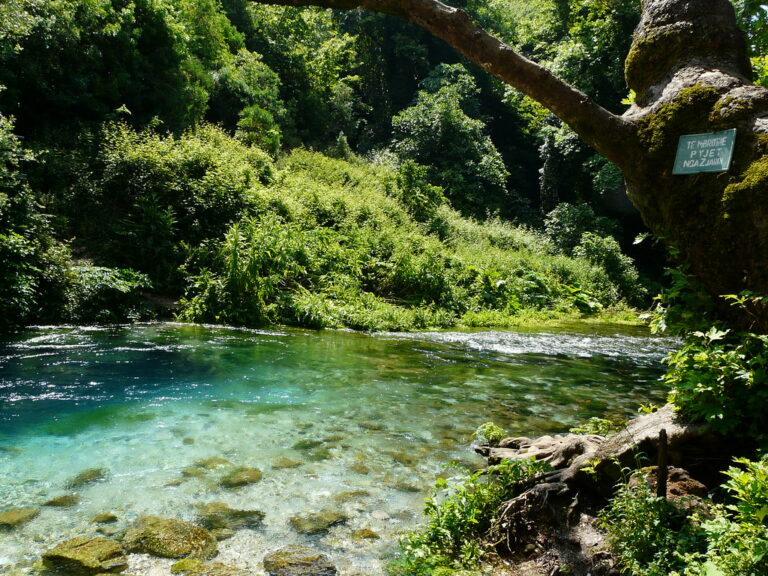
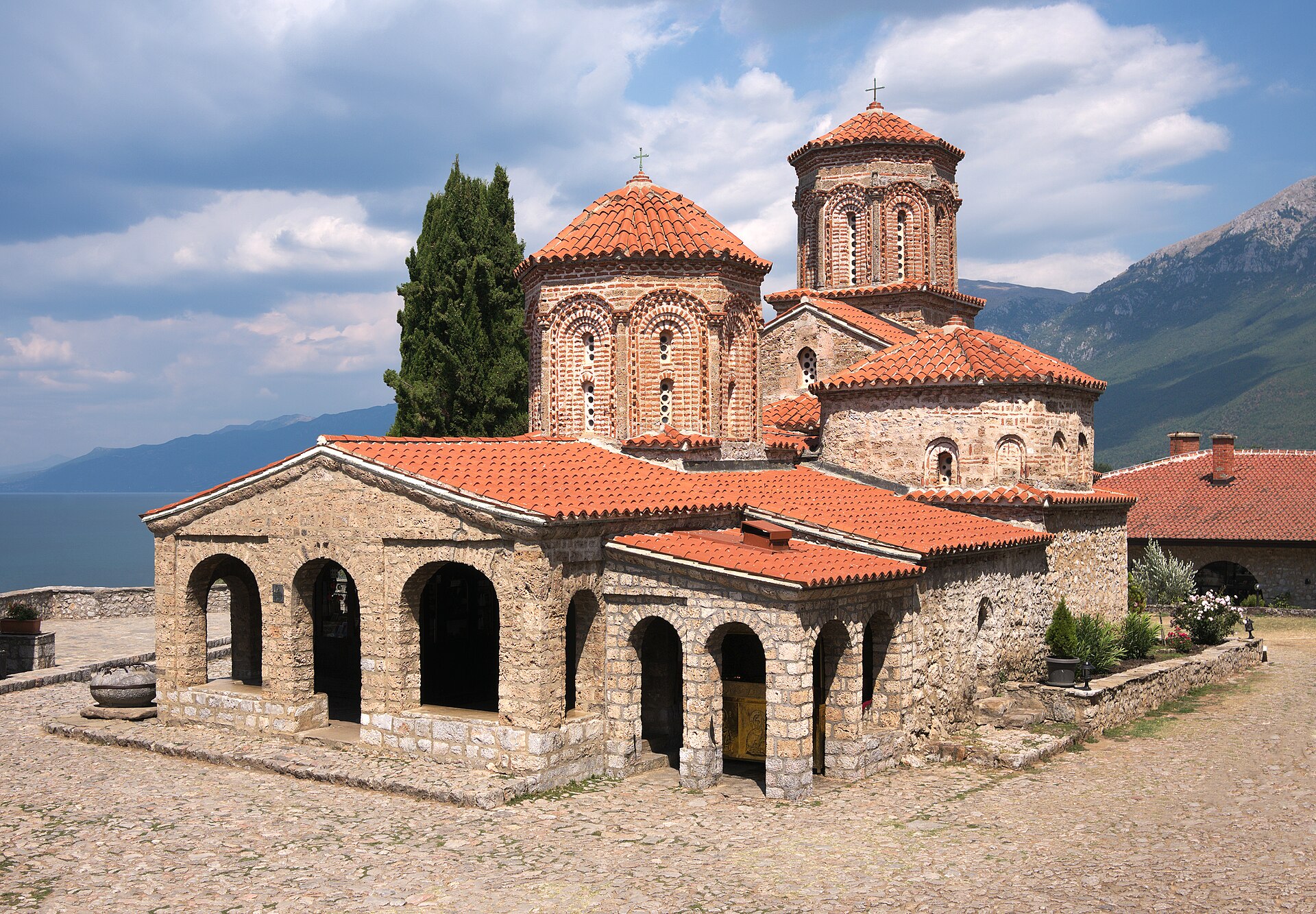
St. Naum sits about 30 kilometers south of Ohrid, right by the Albanian border. The monastery was founded around 900 AD, and the grounds are full of strutting peacocks. The real highlight for us was the springs next to the monastery: you can take a small rowboat ride through the crystal-clear spring pools that feed the lake. The water is a surreal shade of blue and green. Our boatman said the ride takes about 30 minutes, and it was worth every denar.
You can get there by bus, taxi, or by boat from Ohrid harbor in summer, which takes a little over an hour each way. We drove there and took the boat option on a different day just for the views.
Bay of Bones Museum
About 15 kilometers south of town, the Bay of Bones is a reconstruction of a Bronze Age pile-dwelling village built on wooden platforms over the water. The divers who excavated here found thousands of wooden posts on the lake floor. It is a quick stop, but a fun one, and the Roman military camp on the hill above has a great lookout.
Galičica National Park
Galičica is the mountain ridge that separates Lake Ohrid from Lake Prespa. The road over the top has several viewpoints where you can see both lakes at the same time, which is a pretty rare thing. If you have a car and a clear day, it is a spectacular drive. There are also marked hiking trails and a small park entrance fee.
Trpejca and the Lakeside Villages
Trpejca is a small fishing village on the eastern shore with a pebble beach and a few simple restaurants. It is one of the nicest places to swim near Ohrid, with calmer and clearer water than the town beaches. Lagadin and Gradište are two more beach areas along the same road that fill up with day-trippers in summer.
How to Get to Ohrid
From Albania
Most of our readers will come from Albania, and this is the easiest approach. From Tirana, the drive is about three hours via Elbasan and the Qafë Thanë border crossing near Struga. Direct buses and shared vans also run between Tirana and Ohrid several times a day in summer. The crossing is usually quick, but allow extra time on summer weekends.
If you are renting a car in Albania, check that your rental agreement allows cross-border travel and that you have a green card for insurance. Many companies allow it for a fee, but you need to ask in advance.
By Air
Ohrid has its own small airport, St. Paul the Apostle Airport, with seasonal flights from a handful of European cities. The bigger option is Skopje International Airport, about three hours away by car or bus. We found Tirana to be the easiest gateway from the US, since it has more connections.
Getting Around
The old town is compact and hilly, so comfortable shoes matter more than a car. For St. Naum, the beaches and Galičica, a car gives you the most freedom. Taxis are inexpensive, and local buses run along the east shore to St. Naum in summer.
Where to Stay in Ohrid
We recommend staying in or right next to the old town so you can walk everywhere, especially to Kaneo at sunrise.
- Old town guesthouses: Many traditional houses have been turned into small guesthouses with balconies facing the lake. They are atmospheric, but some sit up steep stone streets, so pack light.
- Lakeside hotels along the promenade: Easier access, flatter walking, and often a small beach platform.
- Villages on the east shore: Peshtani and Trpejca are great if you have a car and want a quieter base with better swimming.
Parking in the old town is tight, so if you drive, choose a place that includes parking.
Best Time to Visit Ohrid
June and September are the sweet spots. The lake is warm enough for swimming, the weather is sunny, and the crowds are lighter than in peak summer. September was our favorite.
July and August bring the Ohrid Summer Festival and lots of domestic and regional tourists. The town has a buzzing, festive energy, but hotels are pricier and the beaches get packed.
Spring and late autumn are quiet and lovely for sightseeing, but the lake is cold and some boat trips and beach restaurants close. Winter is very quiet, and Galičica can get snow.
For more on timing across the region, our guide to the best time to visit Albania covers the same seasonal patterns.
How Much Does Ohrid Cost?
North Macedonia uses the Macedonian denar (MKD), and at the time of writing one euro is roughly 61 denars. Euros are accepted in some tourist spots, but you will get better value paying in denars. ATMs are easy to find in town and cards are widely accepted in hotels and larger restaurants.
Here is a rough idea of what we spent per day for two people in September:
| Item | Typical cost |
|---|---|
| Guesthouse or mid-range hotel | 40 to 90 euros per night |
| Lunch for two at a local restaurant | 12 to 20 euros |
| Dinner for two with wine on the lake | 25 to 40 euros |
| Fortress or church entry | 1 to 3 euros each |
| Boat ride at St. Naum springs | around 10 euros per boat |
| Bus from Tirana | around 15 to 20 euros per person |
Overall, Ohrid felt a notch cheaper than Albania’s coast in summer, and far cheaper than Croatia or Montenegro. If you are comparing budgets across the region, our breakdown of how much a trip to Albania costs is a helpful reference.
What to Eat in Ohrid
- Tavče gravče: Baked beans in a clay pot, the national dish, hearty and delicious.
- Shopska salad: Tomato, cucumber, onion, peppers and grated white cheese. You will eat it daily.
- Ajvar: A roasted red pepper spread served with bread at almost every meal.
- Lake fish: Ohrid trout is an endemic and protected species, so fishing for it has been heavily restricted. Many restaurants serve other trout or lake fish instead. Ask your server what is actually on the plate.
- Macedonian wine: The Tikveš region produces excellent, inexpensive reds. Try a Vranec.
Practical Tips for Visiting Ohrid
- Entry requirements: US citizens can currently visit North Macedonia visa-free for short stays. North Macedonia is not in the EU or Schengen zone, so days here do not count toward your Schengen limit. Always double-check current rules before you travel.
- Travel insurance: You will be crossing borders and possibly driving mountain roads, so it is worth having solid coverage. Our guide to the best travel insurance explains what we use.
- Dress for churches: Carry a light scarf or cover-up for shoulders when visiting active churches and monasteries.
- Cash for small things: Keep some denars on hand for church entries, parking and boat rides.
- Sunrise at Kaneo: Worth the early alarm. Trust us.
How Many Days in Ohrid?
Two full days is ideal. Spend one day on the old town (Kaneo, Plaošnik, the fortress, St. Sophia, the theater and the bazaar) and one day on the south shore (Bay of Bones, a swim at Trpejca, and St. Naum). Add a third day if you want to drive over Galičica or relax by the water.
If you are on a longer Balkans loop, Ohrid pairs beautifully with Albania to the west, and from there you can continue north through Montenegro.
Where to Book
For guesthouses and lakeside hotels in Ohrid, we use Booking.com. Look for places with a lake view balcony and included parking, and book ahead for July and August. Search Ohrid stays on Booking.com.
For boat trips on the lake, St. Naum tours, or a day trip to Ohrid from Tirana, Viator has plenty of well-reviewed options, many with free cancellation. Browse Ohrid tours on Viator.
Final Thoughts
We came to Ohrid expecting a quick detour and left wishing we had stayed a week. The combination of that impossibly clear lake, a thousand years of churches, easygoing people and prices that feel like a secret makes it one of our favorite places in the Balkans. If you are planning Albania, add Ohrid. It is closer than you think.
Keep planning your Balkans trip with our guide on how to plan a trip to Albania, see the UNESCO stone towns in our Berat and Gjirokaster guide, or compare destinations with Albania vs Montenegro.