Disclosure: This post contains affiliate links. If you book through our links, we may earn a small commission at no extra cost to you. Thanks for supporting Faceted Travel!
Table of Contents
Banja Luka is the second largest city in Bosnia and Herzegovina and the one almost no visitor sees, which is strange given that it has a river running green through the middle of it, an Austro-Hungarian boulevard lined with chestnut trees, and a whitewater canyon twenty minutes from downtown. It is not a museum town. It is a working city of a quarter million people that happens to be surrounded by very good water.
We came the first time because it was the logical overnight between Zagreb and Sarajevo, expecting nothing, and left having spent two full days. This is a guide to what is actually worth your time here, written for people who are considering adding northwest Bosnia to a Balkans trip and wondering whether it earns the detour.
Why Banja Luka Is Worth a Stop
The case is straightforward. Banja Luka sits on the Vrbas, a river clear enough that you can see the bottom in August, and the city has built its identity around it. Rafting, kayaking, riverside cafes, swimming spots inside the city limits. It hosted the world rafting championship, and the whitewater in the Tijesno canyon upstream is legitimately good, not a tourist-board exaggeration.
Add to that a walkable center with real coffee culture, prices below Sarajevo and far below Croatia, and a history that is complicated and visible in a way that rewards paying attention. It is also the easiest entry point to Bosnia from the north: about two hours from Zagreb, with a small airport that gets budget flights.
What it does not have is a signature postcard image. There is no Stari Most here. If your trip is built around checking off famous sights, skip it. If you like cities that are pleasant to simply exist in, stay two nights.
A Note on Republika Srpska
Banja Luka is the largest city and administrative center of Republika Srpska, one of the two entities that make up Bosnia and Herzegovina under the Dayton Agreement. In practice this means signage is predominantly in Cyrillic, the population is majority Bosnian Serb, and the visual and cultural texture is noticeably different from Sarajevo or Mostar.
For a traveler, the practical effects are small: the same currency, no border, no checks, nothing to arrange. It is worth understanding before you arrive mostly so the shift is not disorienting, and because the city’s history makes more sense with the context. Read our Bosnia and Herzegovina safety guide for the broader political picture and how to handle these conversations respectfully.
Things to Do in Banja Luka
Ferhadija Mosque
The single most important building in the city and the one that requires the most explanation. The Ferhat Pasha Mosque was built in 1579, was one of the finest Ottoman structures in the Balkans, and was dynamited in 1993 during the war. The rubble was carted away and dumped.
What stands today is a reconstruction, reopened in 2016, rebuilt using recovered original stone that was excavated from landfill sites and the river, pieced back together over fifteen years. Standing in the courtyard knowing that is a different experience from admiring a 16th century mosque. Go, and go knowing the story.
Kastel Fortress
The fortress sits on a bend of the Vrbas right in the center, with foundations that go back to Roman occupation and walls that are mostly Ottoman. It is free to walk in, the grounds are essentially a public park, and locals treat it that way: kids on bikes, people reading on the grass, a cafe by the wall. In summer it hosts concerts and festivals.
It takes forty minutes to walk properly. The payoff is the river view from the ramparts and a sense of how the city grew around the crossing point.
Christ the Savior Cathedral
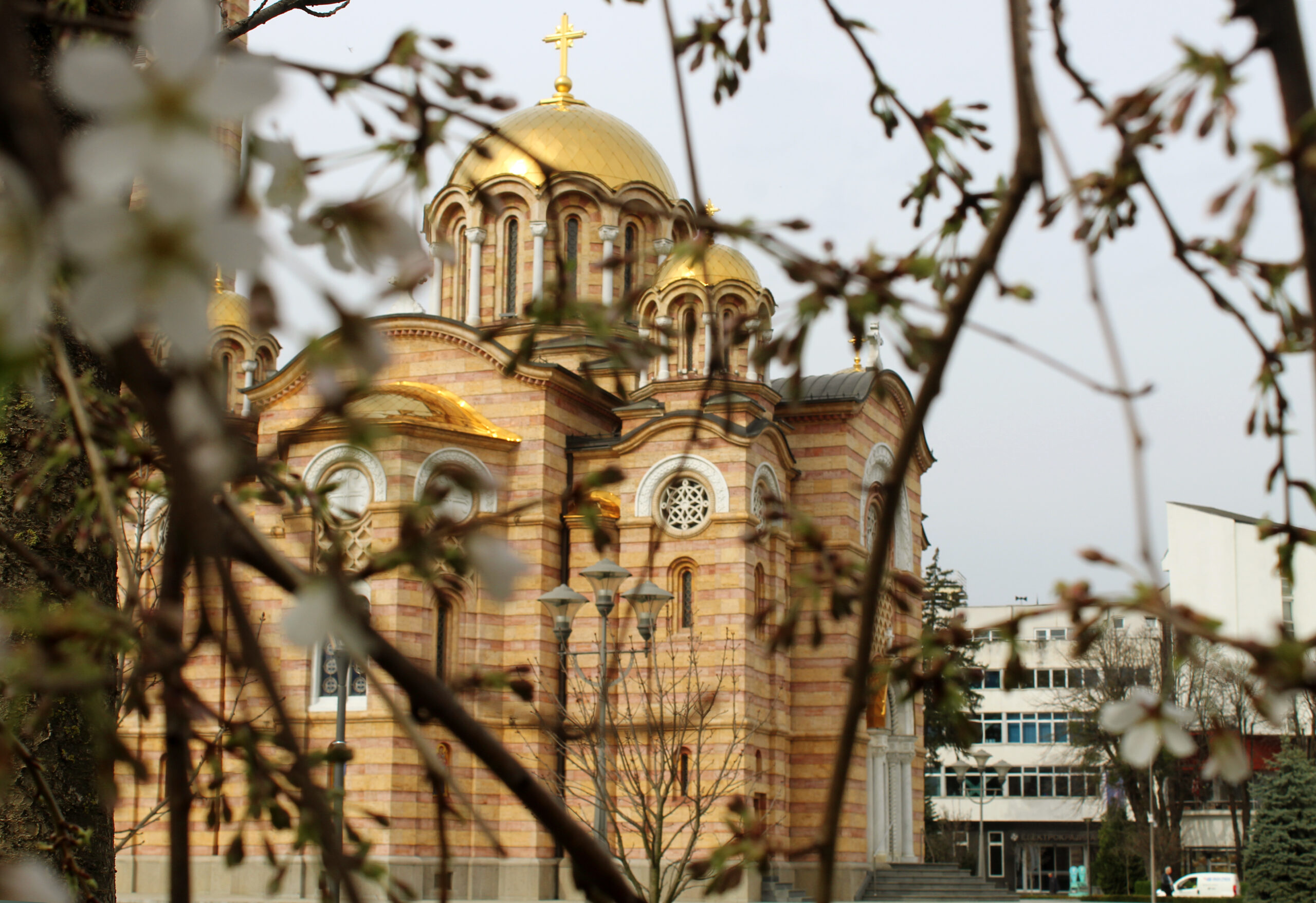
The Orthodox cathedral on Trg Srpskih Vladara is the visual anchor of the center, built in dark and light stone with gold domes. Like the Ferhadija, the original was destroyed, in this case in 1941, and the current building was completed in 2004. The interior is worth stepping into, with dress-modestly rules that are loosely enforced but polite to follow.
Gospodska Street
The pedestrian spine of the old center, lined with restored Austro-Hungarian facades and, at any hour of the day, a great many people drinking coffee. This is where Banja Luka is most itself. Bosnian cafe culture means a single coffee buys you two hours of table time and nobody will rush you, and Gospodska is the best place in the city to participate.
Banj Brdo
The hill above the city, topped with a monument to fallen fighters and a wide terrace with the best panorama of Banja Luka, the river valley and the mountains behind. It is a popular local walk, about an hour up on foot through forest, or a short drive. Sunset is the obvious time. There is a cafe at the top.
Rafting the Vrbas
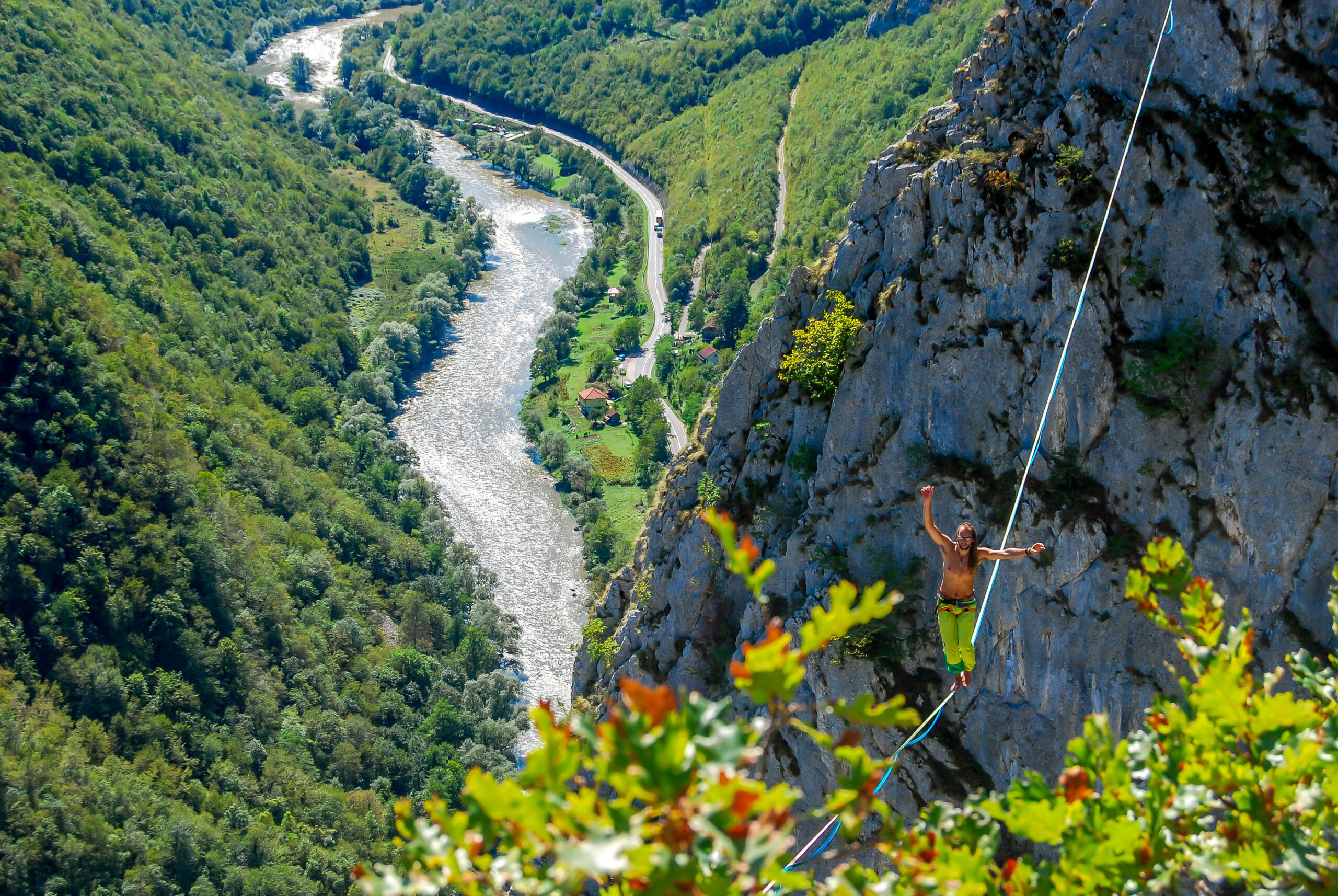
The reason a lot of people who know about Banja Luka come at all. The Tijesno canyon upstream from the city delivers class III and IV whitewater in a limestone gorge, and multiple operators run half day trips with transfers from town. The season runs roughly April through October, with the biggest water in spring.
If whitewater is not your thing, calmer float trips and kayak rentals run on the stretch closer to the city, and there are swimming spots along the riverbank that locals use all summer.
Day Trips from Banja Luka
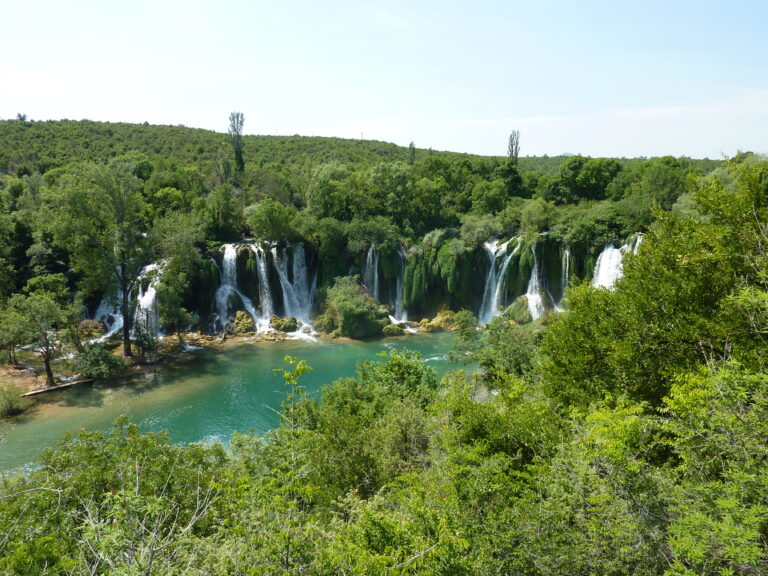
Krupa na Vrbasu is thirty minutes south and is the trip we would prioritize. A set of tiered waterfalls tumbling over travertine steps, with a monastery nearby and old watermills along the banks. It is modest in scale and lovely, and on a weekday you may have it to yourself.
Ostrozac Castle is further west toward Bihac, an eccentric hilltop fortress with Ottoman foundations and a strange Austro-Hungarian residential wing bolted on. It works well as a stop if you are heading toward Una National Park, which is the natural next move from Banja Luka.
Jajce is a bit over an hour and a half south and is one of the best small towns in the country, with a waterfall in the middle of it. We wrote it up separately in our Jajce travel guide.
Where to Eat
Banja Luka is a good eating city and a cheap one. The local specialty is banjalucki cevap, which differs from the Sarajevo version: the minced meat fingers come joined in fours, grilled over wood, served in a half somun with raw onion and nothing else. Purists argue it is the best cevapi in the country. Places along Gospodska and around the fortress do it well.
Beyond that, look for river fish, especially trout, and for the grilled meat platters that turn up everywhere. Vegetarians will find the going harder than in Sarajevo but burek with cheese or spinach is always available and is genuinely good.
Coffee is a ritual rather than a transaction. Order domaca kafa if you want it Bosnian style, in a small copper dzezva with a cube of sugar and a piece of Turkish delight.
Getting There and Getting Around
From Zagreb: about two hours by car via the Gradiska border crossing, and this is by far the most common approach. Buses run the route several times a day.
From Sarajevo: roughly four to five hours by road, through mountain terrain that is scenic and slow. Buses take about five hours. This is the drive that surprises people who looked at the map and assumed two.
By air: Banja Luka International has a small number of budget connections, mostly seasonal. Check what is flying before building a plan around it.
Around town: the center is entirely walkable. You want a car only for the canyon, Banj Brdo and day trips. City buses are cheap and reasonably frequent.
Banja Luka works best as part of a loop rather than a standalone destination, and we put it into a full route in our Bosnia and Herzegovina road trip itinerary.
Where to Stay
The center around Gospodska and the fortress is the right choice. Everything worth walking to is within fifteen minutes, the cafe scene is on your doorstep, and hotel prices are low enough that the nicer options are affordable in a way they would not be in Croatia.
Apartments are excellent value here and there are a lot of them, often newly renovated and run by owners who will meet you at the door with recommendations.
When to Go
May and June are our pick. The Vrbas is running high for rafting, the chestnut trees on the boulevards are in leaf, and the heat has not arrived.
July and August get hot, often into the mid thirties Celsius, which is when the river swimming spots earn their keep. The city empties a little in August as locals head to the coast.
September is quietly excellent, warm water, thinner crowds, harvest season food.
Winter is cold, grey and cheap. Not the season to plan around unless you are passing through. Our best time to visit Bosnia and Herzegovina guide has the full seasonal breakdown.
Banja Luka in One Day
If you only have a single day, this is the order that works. Start on Gospodska with a Bosnian coffee and a burek, walk five minutes to the Christ the Savior Cathedral and then another five to the Ferhadija Mosque, giving the courtyard the time the rebuilding story deserves. Cross to Kastel Fortress before lunch and walk the ramparts while the river light is good.
Eat banjalucki cevap near the fortress, then take the afternoon on the water: a half day raft trip if you booked ahead, or a simple riverside walk and a swim at one of the city spots if you did not. Finish by driving or walking up Banj Brdo for sunset over the valley, then come back down to a terrace on Gospodska for dinner. That fills a day comfortably without rushing anything, which is very much the local pace.
Where to Book
- Accommodation: Search Banja Luka stays on Booking.com. Central apartments are the value play; the few business hotels near the square are fine but less interesting.
- Tours: Browse Bosnia and Herzegovina tours on Viator. Rafting trips are best booked directly with local operators, but guided city and regional tours are available here.
- Insurance: Worth having for the rafting alone, and because Bosnia sits outside the EU health system.
Our Take
Banja Luka will not be the highlight of anyone’s Balkans trip, and we do not think it is trying to be. What it is, is the most livable city in Bosnia and the easiest place in the country to slow down for two days without feeling you are missing something.
We would send you here if you are driving down from Zagreb or Ljubljana and want to arrive in Bosnia gently, if you like rivers, or if you have done the famous stops in the region and want a place where the cafes are full of people who live there. Pair it with Una National Park to the west and Jajce to the south and you have a northwest Bosnia loop that almost nobody is doing.
Keep planning: our how to plan a trip to Bosnia and Herzegovina guide covers the framework, how much does a trip to Bosnia and Herzegovina cost has the budget numbers, and our Sarajevo travel guide covers the capital four hours south.