Disclosure: This post contains affiliate links. If you book through our links, we may earn a small commission at no extra cost to you. Thanks for supporting Faceted Travel!
Table of Contents
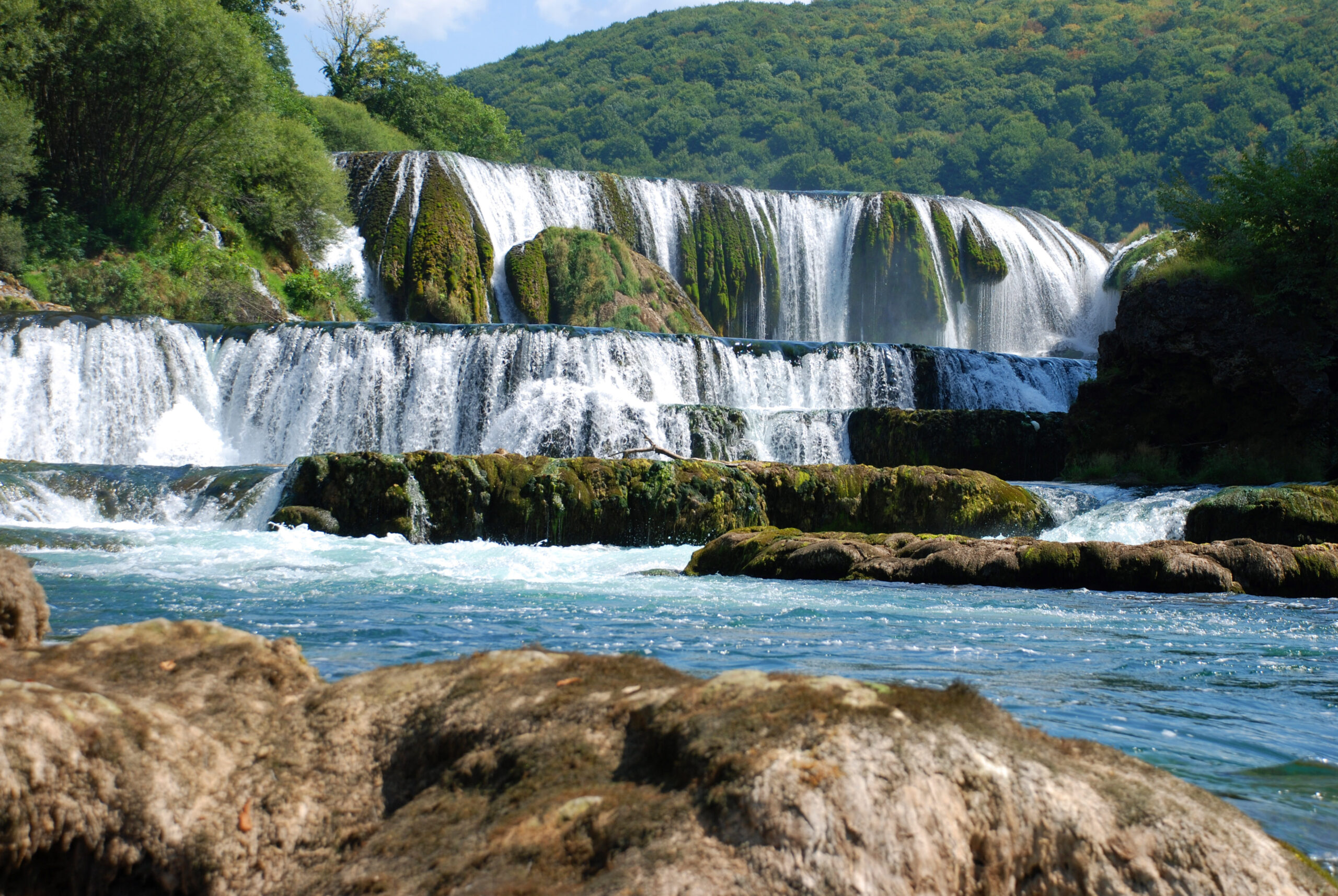
There is a waterfall in northwest Bosnia that is wider than it is tall, roughly 24 meters high, spread across a limestone shelf in a forest gorge, and on the Tuesday morning in June that we walked down to it there were four other people there. Strbacki Buk is an hour from Plitvice Lakes, where that same morning several thousand people were queuing for a shuttle bus.
That gap is the entire argument for Una National Park. It is the same karst geology that made Plitvice famous, on a river that is arguably prettier, with a fraction of one percent of the visitors. This is a guide to the park, to Bihac as a base, and to how to build the northwest into a Bosnia trip.
What Una National Park Actually Is
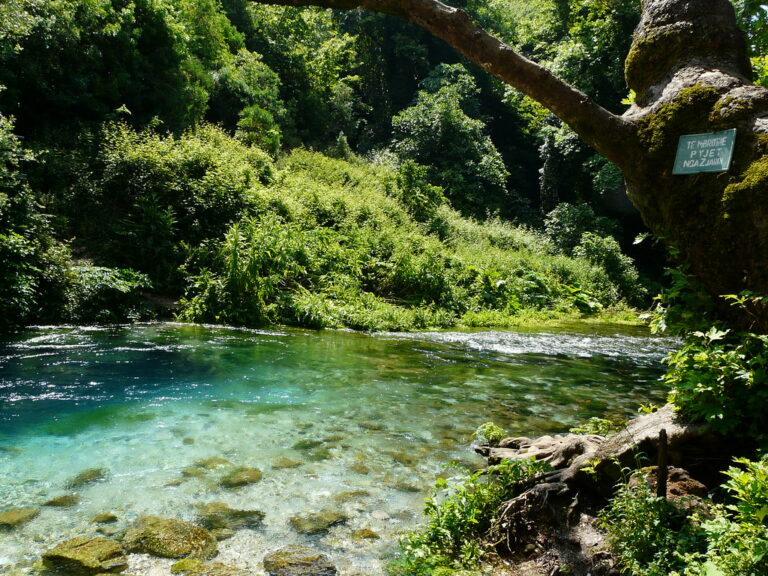
Una became a national park in 2008, making it Bosnia’s youngest, and it protects about 198 square kilometers along the Una river and its tributary the Unac, hard against the Croatian border. The river is the point. It runs an improbable green-blue over travertine terraces, dropping through a series of cascades and falls in a valley that is largely forested and largely empty.
There is no single entrance gate in the Plitvice sense. The park is a corridor of river with a handful of access points, each of which is a separate drive, and understanding that is the key to planning a visit. You do not do Una in a loop. You pick two or three points and drive between them.
Entrance fees are modest and collected at the main access points. Bring cash in convertible marks, since card readers are unreliable out here.
The Three Places That Matter
Strbacki Buk
The headline. A wide cascade where the Una drops over a travertine barrier in several channels at once, with a wooden viewing platform built out over the base and paths along both sides. The access road is rough gravel for the last stretch and slow, so allow more time than the distance suggests.
The falls sit directly on the Croatian border, and the Croatian side has its own access from the Plitvice area. From Bosnia you are coming from Bihac, roughly 40 kilometers south, which takes over an hour on that road.
Go in the morning. The light comes down the gorge and the few visitors who do come tend to arrive midday.
Martin Brod and Milancev Buk
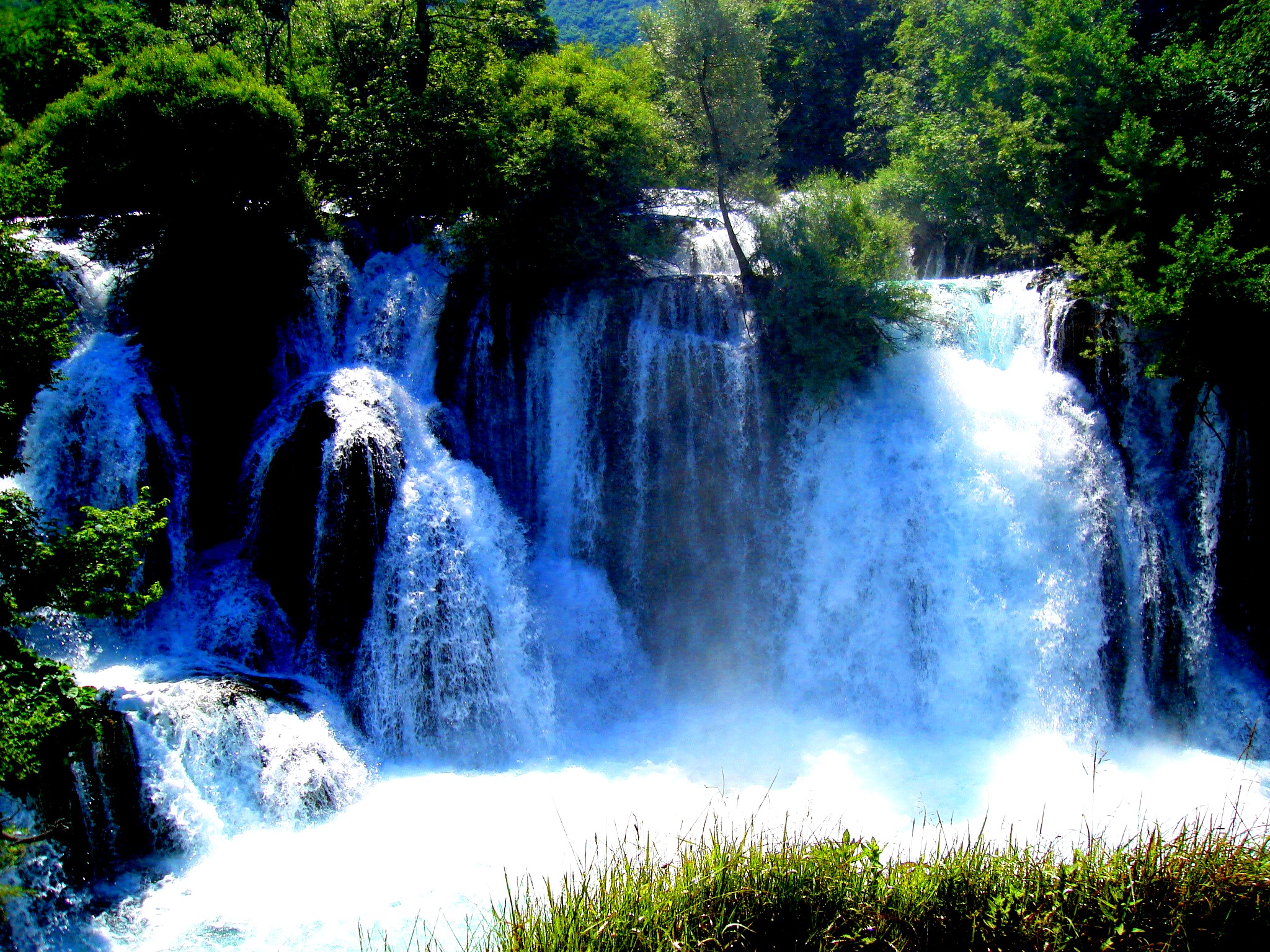
Further upstream, and our personal favorite of the two. Martin Brod is a small village where the river braids into dozens of channels and drops in a tiered sequence of cascades that spread through the middle of town. There is an old monastery, Rmanj, at the confluence, and watermills along the banks.
It is less dramatic than Strbacki Buk and more beautiful, in the way that a complicated thing is more interesting than a big thing. You can walk the whole cascade system in an hour and a half.
The Japodian Islands
Closer to Bihac, this is a stretch of the Una where the river splits around small wooded islets, with wooden bridges, shallow swimming spots and a set of reconstructed prehistoric dwellings referencing the Japodes, the Illyrian people who lived here. It is more park than wilderness and it is where families go on a hot afternoon. Good for a swim and a couple of hours, not a destination in itself.
Rafting and Kayaking the Una
The Una is a rafting river with a long local tradition and it is the activity most visitors to the region actually come for. Sections range from gentle family float to genuine whitewater below Strbacki Buk, where the descent immediately under the falls is the serious stretch.
The season runs roughly April to October, with high water in spring. Operators in and around Bihac run half day and full day trips with equipment and transfers included, and prices are far below what the same trip costs in Slovenia or Austria.
The Una Regatta each July is the big event, a multi-day paddle down the river with hundreds of boats and a festival atmosphere. If you want to see the region at its most alive, that is the week, and it is also the week accommodation actually books out.
Bihac: The Base
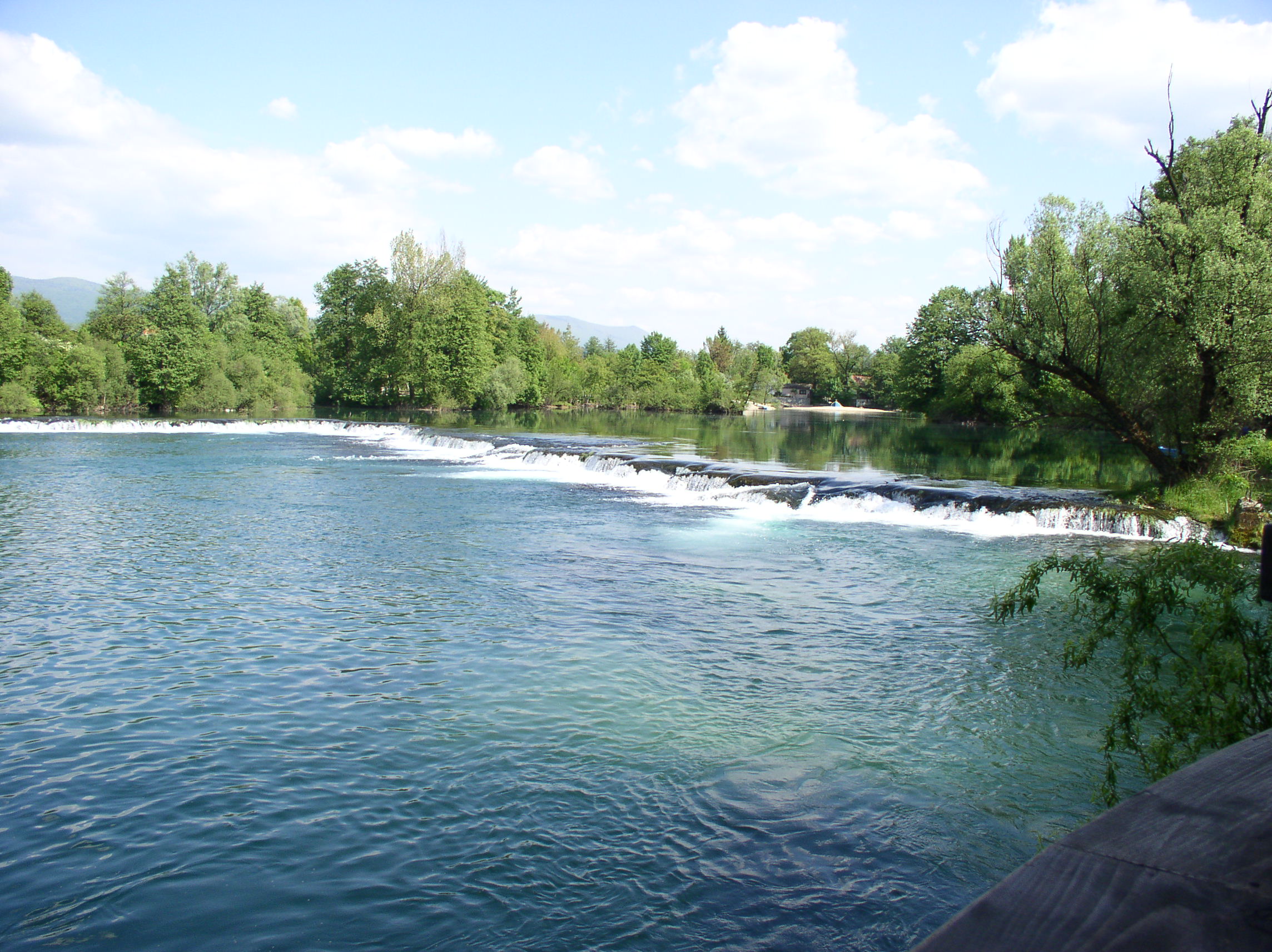
Bihac is the town you stay in, a city of about 40,000 on the Una with the river running right through the center. It is not a tourist town and does not pretend to be, but it has enough to fill an evening and it is the only place in the region with a real choice of restaurants and accommodation.
The Fethija Mosque is the standout, a Gothic church built in the 16th century and converted to a mosque after the Ottoman conquest, so the building reads as both at once. The Captain’s Tower is a medieval stone keep by the river that now houses a small museum. The riverside promenade is where the town gathers in the evening, and there are terraces built out over the water where you can eat trout and watch the current.
Bihac also carries hard modern history as the center of the Bihac pocket during the 1990s war, and more recently as a transit point on the Balkan migration route. Both are visible if you look.
Getting There
From Zagreb: about two and a half hours to Bihac, which makes this the most natural approach and explains why the region is best combined with Croatia rather than with the rest of Bosnia.
From Plitvice Lakes: roughly an hour to Bihac. This pairing is the single best planning insight for the region. You can do Plitvice in the morning, cross into Bosnia in the afternoon, and be at a river cascade with nobody on it the next day for a fraction of the price.
From Banja Luka: two and a half to three hours east, through Ostrozac and the Una valley. If you are building a northwest loop, this is the connecting drive, and we cover Banja Luka in its own Banja Luka travel guide.
From Sarajevo: five to six hours. Una is genuinely far from the rest of Bosnia, and pretending otherwise will wreck an itinerary. Our Bosnia and Herzegovina road trip itinerary explains how we fit it in and when we would leave it out.
Border crossings in this region are small and usually quick, but they are proper non-Schengen crossings. Bring passports, and check that your rental car company permits Bosnia entry and has supplied a green card insurance certificate. This trips people up constantly on Croatian rentals.
You need a car. There is no practical way to see the park without one.
A Safety Note Specific to This Region
Northwest Bosnia saw heavy fighting and is one of the areas where residual landmine contamination still exists in rural land away from settlements. Within the park, stick to marked trails, established riverbanks and the access roads. Do not wander into unmarked forest, do not explore abandoned buildings, and do not cut across fields.
Follow that and there is no meaningful risk. It is worth saying plainly here because this is exactly the kind of place where people are tempted to explore off-path, and it is the one part of Bosnia where we would firmly say do not. We go into this in more depth in our Bosnia and Herzegovina safety guide.
When to Go
May and June are the best window. The river is full from snowmelt, the cascades are at their most powerful, the forest is bright green and the crowds, such as they are, have not arrived.
July and August bring warm water and the Una Regatta, and this is the only time the region feels busy. Even then, busy here means a full parking area, not a queue.
September and October deliver low water, clear conditions and autumn color in the gorge, which photographs beautifully. Rafting operators start winding down in October.
Winter is quiet to the point of being closed. Access roads may be impassable and most operators shut. Skip it. Our best time to visit Bosnia and Herzegovina guide covers the country-wide picture.
How Many Days You Need
Two full days is the honest minimum and three is better. The distances between access points are the reason: Strbacki Buk and Martin Brod are each a half day by the time you have driven the gravel, walked the falls properly and driven back, and neither rewards being rushed.
A workable two day plan is Strbacki Buk and a raft trip on day one, Martin Brod and the Japodian Islands on day two, with Bihac as the base for both nights. If you have a third day, add Ostrozac Castle and the drive east toward Banja Luka, which turns the trip into a loop rather than an out and back.
If all you have is one day, come from Plitvice, do Strbacki Buk, and accept that you are sampling rather than visiting.
What It Costs
Northwest Bosnia is inexpensive even by Bosnian standards. Park entry runs a few marks per person per access point. A guesthouse room in Bihac is a fraction of a comparable room near Plitvice. A half day rafting trip costs less than a Plitvice entrance ticket in high season.
The real cost is time. The driving is slow, the distances between access points are larger than they look, and you should budget two full days minimum to make the trip worth the detour. For the wider budget picture, see how much does a trip to Bosnia and Herzegovina cost.
Where to Book
- Accommodation: Search Bihac stays on Booking.com. Riverside guesthouses and small pensions are the move here, several of them with terraces directly over the Una.
- Tours: Browse Bosnia and Herzegovina tours on Viator. Rafting is usually booked direct with Bihac operators, but guided options from the Croatian side exist.
- Insurance: Whitewater, rough gravel access roads and a non EU country make this an easy call.
Our Take
Una is the best argument we know for crossing a border. It sits an hour from one of Europe’s most photographed national parks and delivers a comparable landscape with essentially nobody in it, at a third of the price, and the only reason it is not overrun is that most travelers stop at the Croatian frontier out of habit.
We would not send a first-time Bosnia visitor here before Mostar and Sarajevo. But for a second trip, or for anyone already doing Plitvice who has two days and a rental car, the northwest is the highest reward-per-effort corner of the country. Pair it with Banja Luka and you have a loop that feels genuinely off the map while never being difficult.
More Bosnia: start with how to plan a trip to Bosnia and Herzegovina, read the Jajce travel guide for the waterfall town on the way south, and see the best day trips from Mostar for the opposite end of the country.