Disclosure: This post contains affiliate links. If you book through our links, we may earn a small commission at no extra cost to you. Thanks for supporting Faceted Travel!
Table of Contents
- Why Istria Eats Differently from the Rest of Croatia
- Istrian Truffles: What to Know Before You Order
- The Hill Towns Worth Driving To
- Istrian Wine: Malvazija and Teran
- Istrian Olive Oil, Which Is Genuinely World Class
- Dishes to Order in Istria
- The Coast: Rovinj, Porec and Pula
- How to Plan a Food Trip to Istria
- What It Costs
- Where to Book
- Our Honest Take
We went to Istria for the coastline and came home talking about lunch. That is the honest summary. The Croatian peninsula that pokes down into the Adriatic between Slovenia and the Gulf of Venice has beaches and Roman ruins and hill towns, all of which are lovely, and it also has white truffles the size of a fist, olive oil that regularly beats Italy in international rankings, and a wine grape almost nobody outside the region has tried.
Istria is the part of Croatia where the food is the reason to go, not the thing you do between sights. If you have already done Dalmatia and you are wondering what a second Croatia trip looks like, this is our answer.
Why Istria Eats Differently from the Rest of Croatia
Geography and history, mostly.
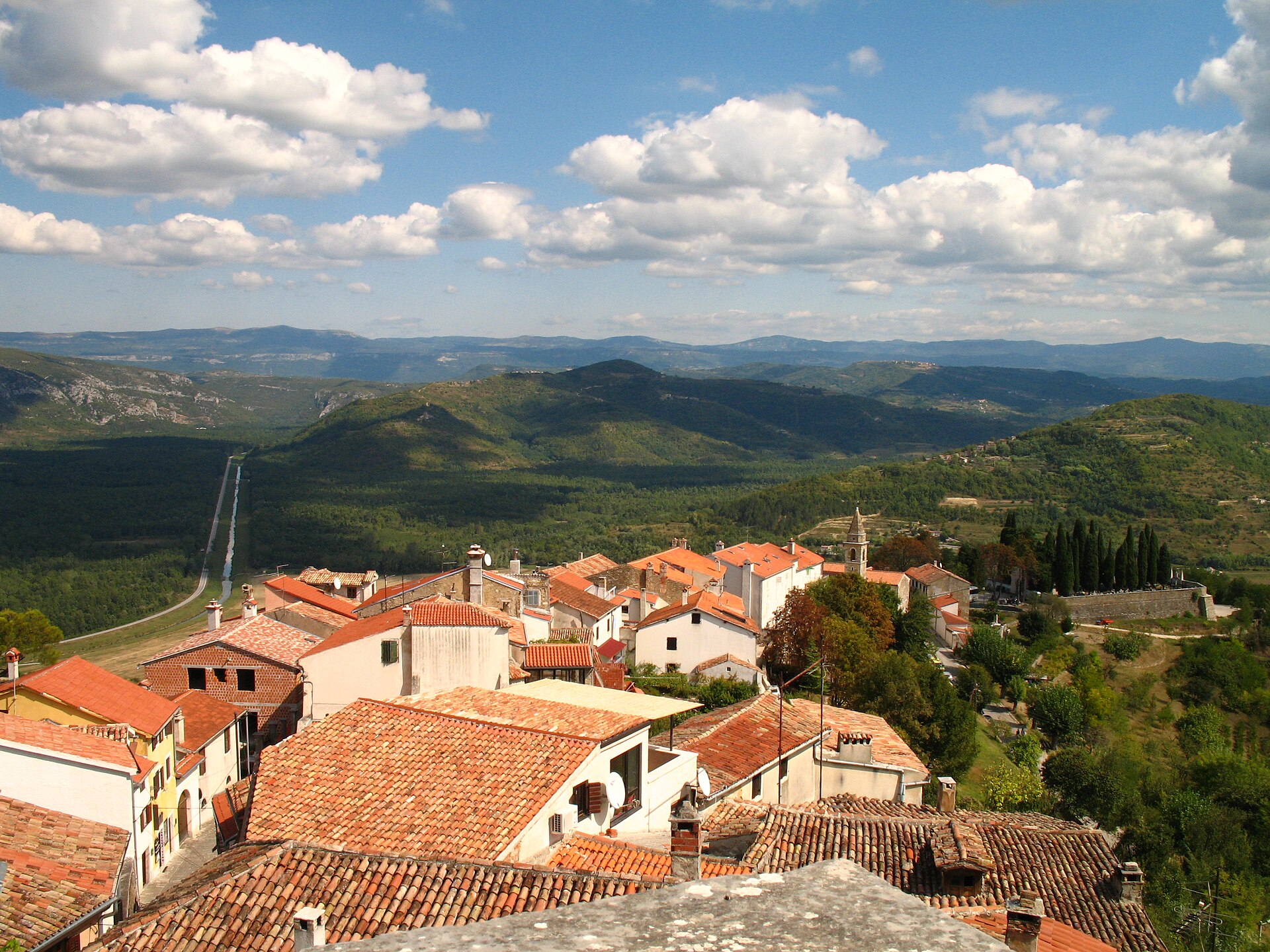
Istria spent centuries under Venetian rule, then Austro-Hungarian, then Italian between the wars, and the kitchen absorbed all of it. You get pasta, risotto and gnocchi sitting comfortably next to Slavic stews and Adriatic seafood. Menus are frequently bilingual in Croatian and Italian. The inland hill towns feel more like Tuscany than Dalmatia, right down to the cypress trees.
The interior is also green and forested rather than rocky and arid, which is why truffles grow here and nowhere else in Croatia. The Motovun forest along the Mirna river valley is one of the most productive truffle grounds in Europe.
The result is a regional cuisine that is genuinely distinct. Dalmatian food is grilled fish, olive oil, and simplicity. Istrian food is layered, earthy and richer.
Istrian Truffles: What to Know Before You Order
Truffles are the headline, and there is a fair amount of nonsense around them, so here is the practical version.
Two seasons. Black truffles are found for much of the year. White truffles, the expensive and aromatic ones, run roughly from September through January, peaking in October and November. A white truffle dish in July is either frozen, preserved, or not what it says it is.
The world record came from here. In 1999 a Motovun local named Giancarlo Zigante found a white truffle weighing 1.31 kg, which held the Guinness record for years. There is a restaurant named after him, and the story is on every menu in the valley.
How to order well. Ask whether the truffle is fresh and shaved at the table or whether the dish uses truffle oil. Truffle oil is almost always synthetic aroma, not truffle. A fresh shaving over handmade pasta with butter is the dish to get, and it costs meaningfully more for a reason.
Fuzi with truffles is the classic. Fuzi are a quill shaped hand rolled Istrian pasta, and they are made to hold sauce.
Truffle hunting experiences are widely available around Motovun, Livade and Buzet, and the good ones are excellent: you go out with a hunter and their dogs, you actually find something, and you eat afterward. Book one for the morning.
The Hill Towns Worth Driving To
You need a car in inland Istria. Public transport between hill towns barely exists, and the whole pleasure of the region is stopping when you see something.
Motovun
The most famous, sitting on a hill above the Mirna valley with medieval walls you can walk for free and a view over the truffle forest. Cars stop partway up and you walk the last stretch. It is busy at midday and magical at 7pm. There is a film festival here in late July.
Groznjan
An artists’ town. In the 1960s it was nearly abandoned and the government offered studios to artists to repopulate it, which worked. Now it is galleries, workshops and a jazz school, with a population still under 200. Very small, very pretty, worth an hour.
Buzet
Calls itself the City of Truffles and hosts a September festival where they cook an enormous truffle omelet in a giant pan. The old town on the hill is quiet and largely unrestored, which we liked.
Hum
Officially the smallest town in the world, with a population that hovers around twenty. It takes eight minutes to see. Go for the biska, a mistletoe brandy made here from a recipe that is supposedly two thousand years old, and for the restaurant by the gate.
Oprtalj and Livade
Oprtalj is the quieter alternative to Motovun with a similar view. Livade, down in the valley, is where Zigante’s restaurant is and where several truffle hunting outfits are based.
Istrian Wine: Malvazija and Teran
Istria’s wine scene has improved dramatically in the last twenty years and remains underpriced relative to quality.
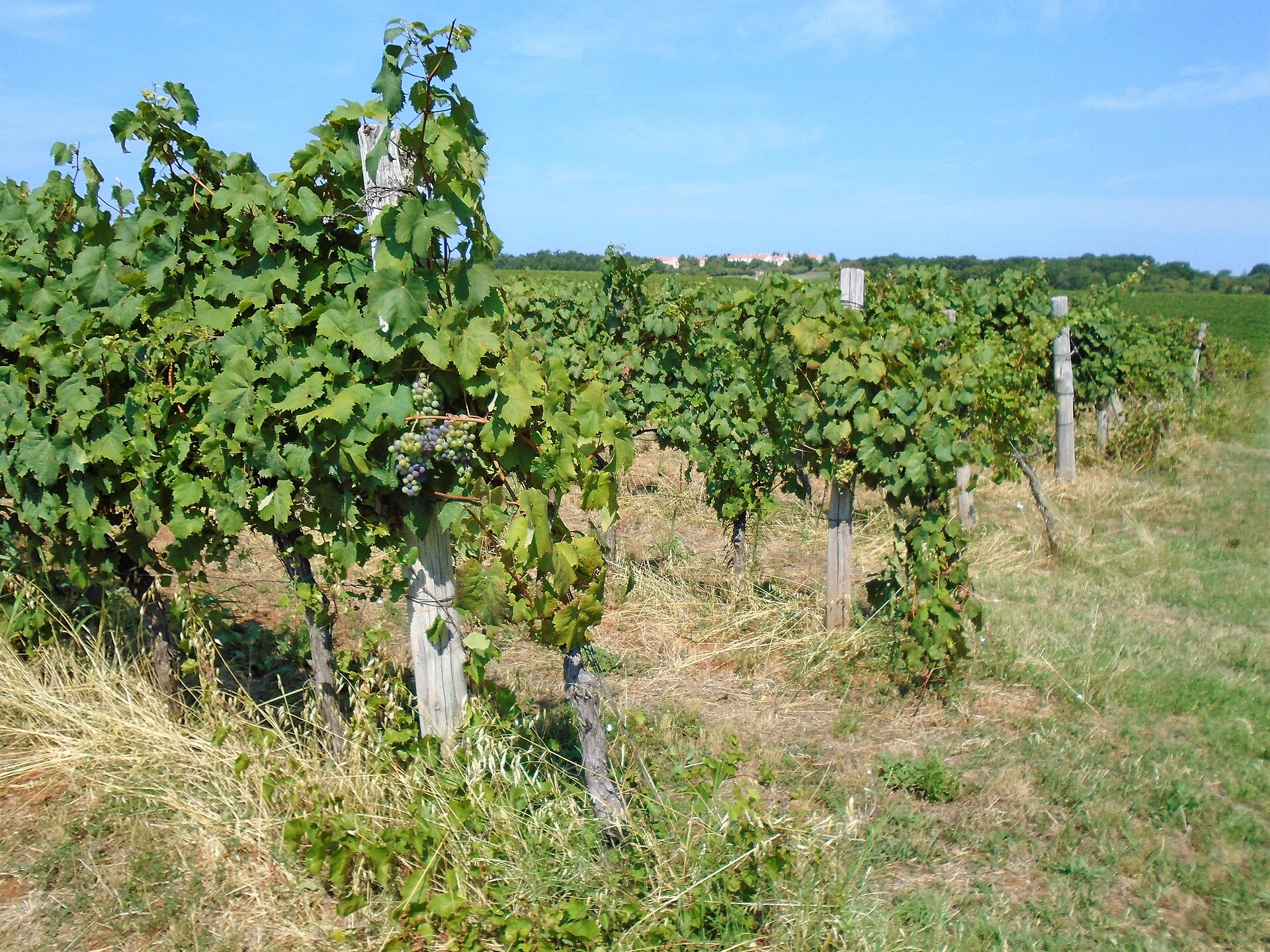
Malvazija Istarska is the white, and it is the one to focus on. In its fresh style it is crisp, faintly floral, with a slight bitter almond finish that goes beautifully with seafood and with olive oil. In its aged or amphora style it becomes richer, nuttier and more complex. It represents the majority of plantings on the peninsula.
Teran is the local red: dark, high acid, a bit rustic, and traditionally drunk with cured meats. It divides people. Try it with prsut before deciding.
Where to taste. The Wine Roads of Istria are signposted and most producers welcome visitors, though smaller ones prefer a call ahead. The area around Buje, Momjan and Brtonigla in the northwest has a particularly high concentration. Momjan is also known for Muscat, made in a sweeter style.
A tasting at a family winery typically runs 10 to 25 euros for several wines, often with bread, oil and cheese included, and often with the owner pouring.
Istrian Olive Oil, Which Is Genuinely World Class
This surprises people. Istria has topped Flos Olei, the international extra virgin olive oil guide, as the world’s best olive oil region multiple years running, ahead of every Italian and Spanish region.
The local varieties to look for are Buza, Istarska Bjelica and Crna. The oils tend to be assertive: peppery, grassy, with a real catch at the back of the throat, which is the polyphenol content and a sign of quality rather than a flaw.
Most producers offer tastings on the same model as the wineries. You will be taught to warm the oil in your hand, smell it, and sip it, and you will taste four or five in a row. It is more interesting than it sounds. Bring a bag, because you will buy bottles.
Dishes to Order in Istria
- Fuzi with truffles. The signature. Hand rolled pasta, shaved white truffle in autumn.
- Pljukanci. Another hand rolled pasta, thicker and chewier, often served with game ragu.
- Maneštra. A thick bean and vegetable soup, the everyday inland dish, usually with corn and cured pork.
- Boskarin. The Istrian ox, a nearly extinct native breed brought back by chefs. Slow cooked, rich, often served as a ragu.
- Prsut. Istrian dry cured ham, air dried in the bura wind, drier and saltier than Italian prosciutto and traditionally served with cheese and olives.
- Scampi na buzaru. Adriatic langoustines cooked in white wine, garlic and breadcrumbs. Coastal, messy, excellent.
- Kroštule and fritule. Fried pastries, one twisted and dusted with sugar, the other a small doughnut with rum and raisins.
The Coast: Rovinj, Porec and Pula
The interior is the food story, but the coastal towns are where most people stay.
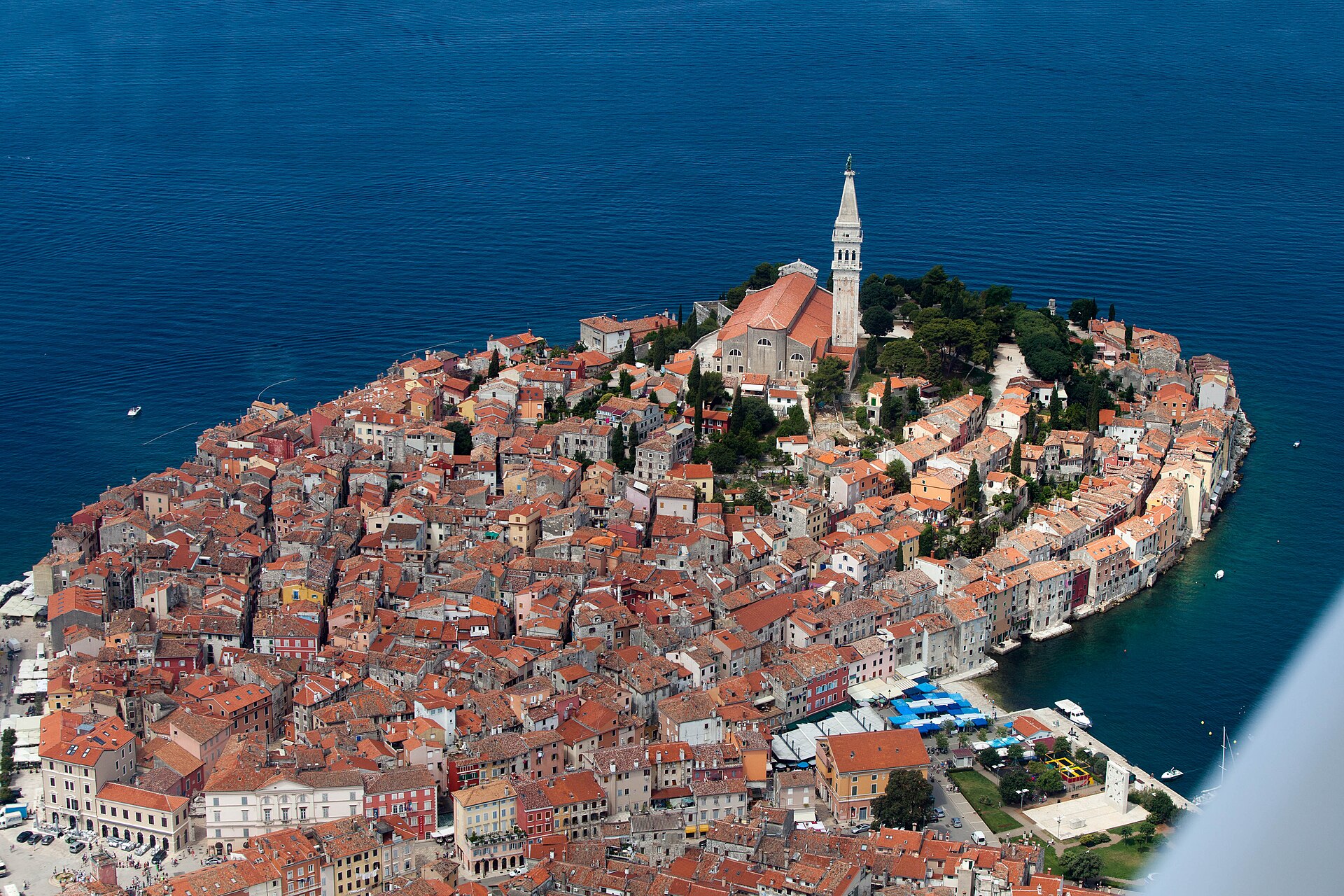
Rovinj is the prettiest town in Istria by a wide margin, a former island packed with tall pastel houses rising to a church on the hilltop, and it has the peninsula’s best restaurant scene. We have a full Rovinj travel guide if you are basing yourself there, which we would recommend.
Porec has a sixth century basilica with Byzantine mosaics that is a UNESCO site and genuinely stunning. Pula has one of the six largest surviving Roman amphitheaters in the world, right in the middle of town.
All three are within an hour of the hill towns, which means you can stay on the coast and eat inland.
How to Plan a Food Trip to Istria
Five to seven days is the right length. Fewer and you are rushing between the coast and the interior.
Rent a car at Pula or Trieste airport. Trieste in Italy is often cheaper and is only about 90 minutes from northwestern Istria.
Split your stay. Three or four nights on the coast in Rovinj, two or three nights at an agriturismo style stay in the interior near Motovun or Groznjan. The inland stays are frequently converted stone farmhouses with pools and views, and they cost less than the coast.
Go in autumn if truffles matter to you. October is the peak of white truffle season, the grape harvest is on, the sea is still swimmable, and the summer crowds are gone. If you want beach weather, June is the alternative.
Book restaurants. The best places in Rovinj and the valley fill weeks ahead in season. This is not a region where you wander in.
For a broader sense of when to come, our guide to the best time to visit Croatia covers the whole country, though Istria runs a slightly different calendar from Dalmatia because of the food seasons.
What It Costs
Istria is more expensive than inland Croatia and cheaper than Dubrovnik. Rough numbers per person per day in shoulder season:
- Agriturismo or apartment: 70 to 120 euros per night for two
- Truffle pasta at a good restaurant: 25 to 45 euros in white truffle season, less for black
- Winery tasting: 10 to 25 euros
- Olive oil tasting: 10 to 20 euros
- Truffle hunting experience: 60 to 120 euros including a meal
- Rental car: 40 to 70 euros per day
We break down national averages in how much a trip to Croatia costs, and Istria sits a little above them because the eating is the point.
Where to Book
For accommodation, we use Booking.com. The filter that matters in Istria is “farm stay” or looking specifically at properties in the Motovun, Groznjan and Buje areas, where restored stone houses with pools are a fraction of coastal prices.
For truffle hunts, winery tours and olive oil tastings, Viator has most of the well reviewed operators. Book the truffle hunt for a morning slot and give yourself nothing scheduled afterward, because lunch runs long and it should.
Our Honest Take
Istria is the trip we recommend to people who have already done the Croatian coast and want to know what else there is. It is quieter than Dalmatia, greener, considerably better fed, and it has a texture that comes from being a genuine border region rather than a resort coast.
Come in October. Rent the car. Get the fuzi.
Keep planning: our Rovinj travel guide covers Istria’s prettiest town, how to plan a trip to Croatia walks through the logistics, and our Croatia island hopping itinerary covers the Dalmatian half of the country.