Disclosure: This post contains affiliate links. If you book through our links, we may earn a small commission at no extra cost to you. Thanks for supporting Faceted Travel!
Table of Contents
- Why the Algarve Is Worth More Than a Beach Day
- Where to Base Yourself
- The Beaches Actually Worth the Walk
- What to Do Besides Lie Down
- Where to Stay in the Algarve
- When to Go
- Getting There and Getting Around
- What It Costs
- A Perfect Day in the Algarve
- Tips for First-Timers
- Where to Book
- Our Honest Take
We drove into the Algarve expecting a beach holiday and got something closer to a geology lesson with a swimsuit on. The cliffs here are the color of butterscotch, the sea is a blue that photographs like it has been edited, and every fifteen minutes of coastal road hides another staircase down to a cove you would swear nobody else knows about.
This is our full Algarve travel guide: which stretch of coast to base yourself on, the beaches actually worth the walk, when to go so you are not sharing the sand with all of northern Europe, and how to fold southern Portugal into a bigger trip alongside Porto and Lisbon.
Why the Algarve Is Worth More Than a Beach Day
The Algarve is Portugal’s southernmost region, a roughly 100-mile ribbon of coastline running from the Spanish border in the east to the wind-scoured cliffs of Sagres in the west. It is the country’s tourism engine and it wears that reputation unevenly. There are absolutely stretches that feel like a package-holiday strip mall. There are also, within a twenty-minute drive of those same strips, sea caves you can only reach by kayak and fishing villages where the day’s catch is still grilled on a charcoal drum out front.
What surprised us most was the variety. The eastern Algarve near Tavira is flat, marshy, and quiet, with sandbar islands you reach by ferry. The central Algarve around Lagoa and Albufeira is the postcard: ochre cliffs, sea stacks, arched grottoes. The western Algarve past Lagos turns wild and Atlantic, with surf beaches and a coastline that feels genuinely remote. Picking the wrong one for what you want is the single most common Algarve mistake we see.
Where to Base Yourself
Lagos: the best all-rounder
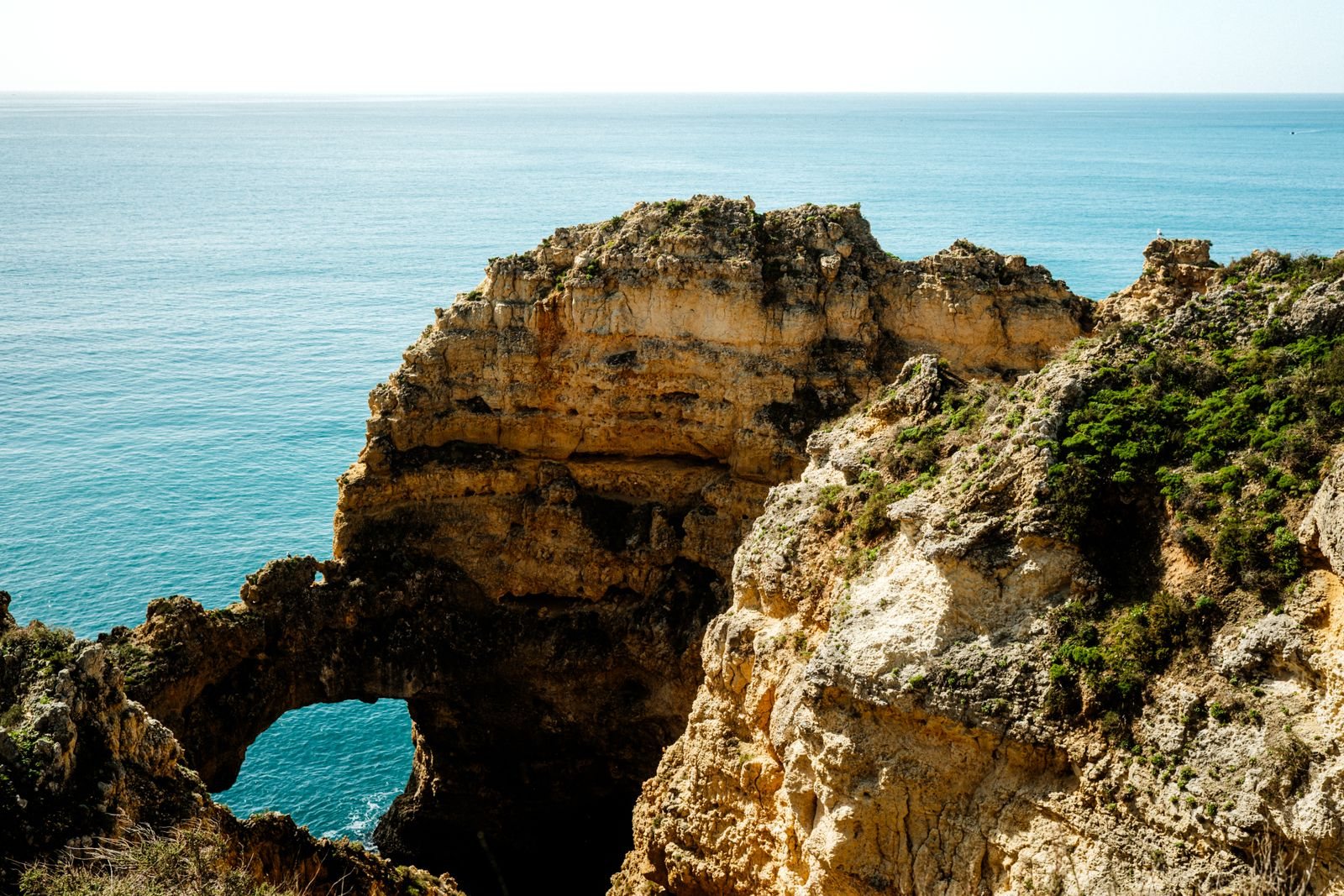
If you only get one Algarve base, make it Lagos. It has a walkable old town inside 16th-century walls, an easy restaurant scene that is not aimed exclusively at tourists, and it sits right where the pretty central cliffs meet the wilder west. Ponta da Piedade, the sea-stack headland that shows up in every Algarve photo ever taken, is a twenty-minute walk from town. We used Lagos as a hub for five nights and never felt like we had run out of coast.
Tavira: the quiet one
Tavira is what people mean when they say “the Algarve before the Algarve.” A Roman bridge, tiled churches, a slow riverfront, and a ferry that takes you to Ilha de Tavira, a sandbar island with miles of beach and almost no development. If your ideal trip involves reading a book and eating grilled sea bream, this is your town. It is also noticeably cheaper.
Sagres: the end of the world
Sagres sits at Portugal’s southwestern tip, where Henry the Navigator supposedly ran his navigation school and where the Atlantic hits the cliffs hard enough that the wind is a permanent feature. It is stark, dramatic, and thin on nightlife. Surfers love it. We loved it for one very windy, very memorable day, but we would not base a week there unless you are chasing waves.
Albufeira: skip it unless
Albufeira is the region’s party capital and it delivers exactly what it advertises. If that is what you want, go. If it is not, base elsewhere and visit the nearby beaches by day.
The Beaches Actually Worth the Walk
Every Algarve list includes the same handful. Here are the ones we would actually go back to, and why.
Praia da Marinha. The one on the postcards, and it earns it. Twin arches, clear water, a proper cliff-top viewpoint before you descend the stairs. Go before 10am or after 5pm in summer.
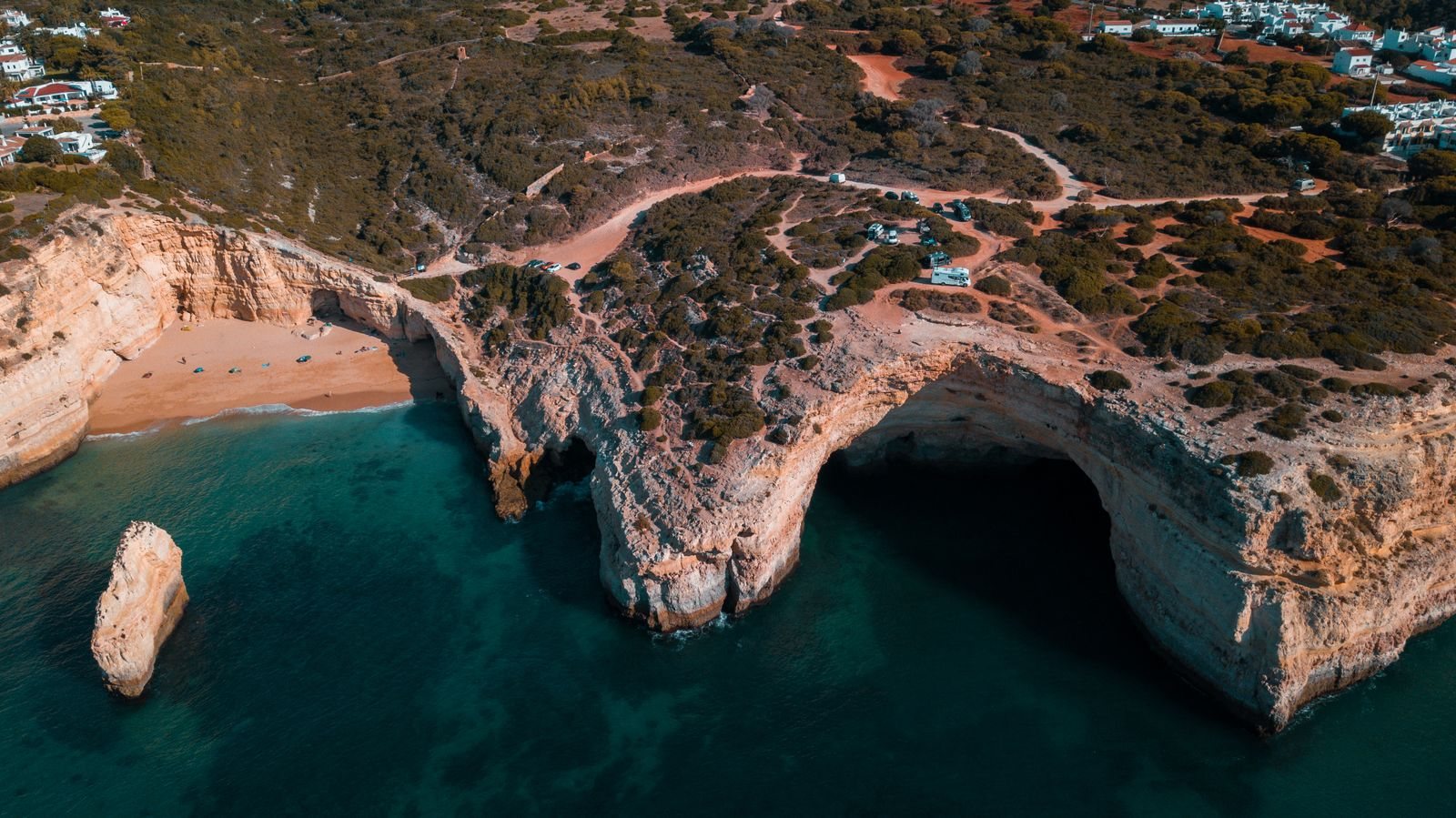
Praia de Benagil and the Benagil Cave. The cave with the hole in its roof is the most photographed spot in the Algarve. Important: you can no longer swim into it legally, and tour boats do not let you disembark. The honest options are a guided kayak or SUP tour, which is genuinely lovely early in the morning, or the cliff-top walk that lets you look down through the roof opening.
Praia do Camilo. Near Lagos, 200 steps down a wooden staircase, and worth every one of them. Small, golden, framed by rock formations that split it into a series of little rooms.
Praia da Falésia. Six miles of red-and-white cliff backing an enormous stretch of sand. Because it is so long, it never feels crowded even in August. This is the one we would pick for a lazy full day.
Ilha Deserta. A boat ride from Faro into the Ria Formosa lagoon delivers you to an almost entirely empty sandbar island with one restaurant. It is the best antidote to Algarve crowds we found.
What to Do Besides Lie Down
Walk the Seven Hanging Valleys Trail
This is the best half-day in the region and somehow still under-visited. The Percurso dos Sete Vales Suspensos runs about 3.7 miles one way along the cliffs between Praia da Marinha and Praia de Vale Centeanes, dipping in and out of valleys and passing sinkholes, arches, and viewpoints over Benagil. Start early, bring more water than you think you need, and arrange a taxi back or walk it as an out-and-back.
Kayak the caves
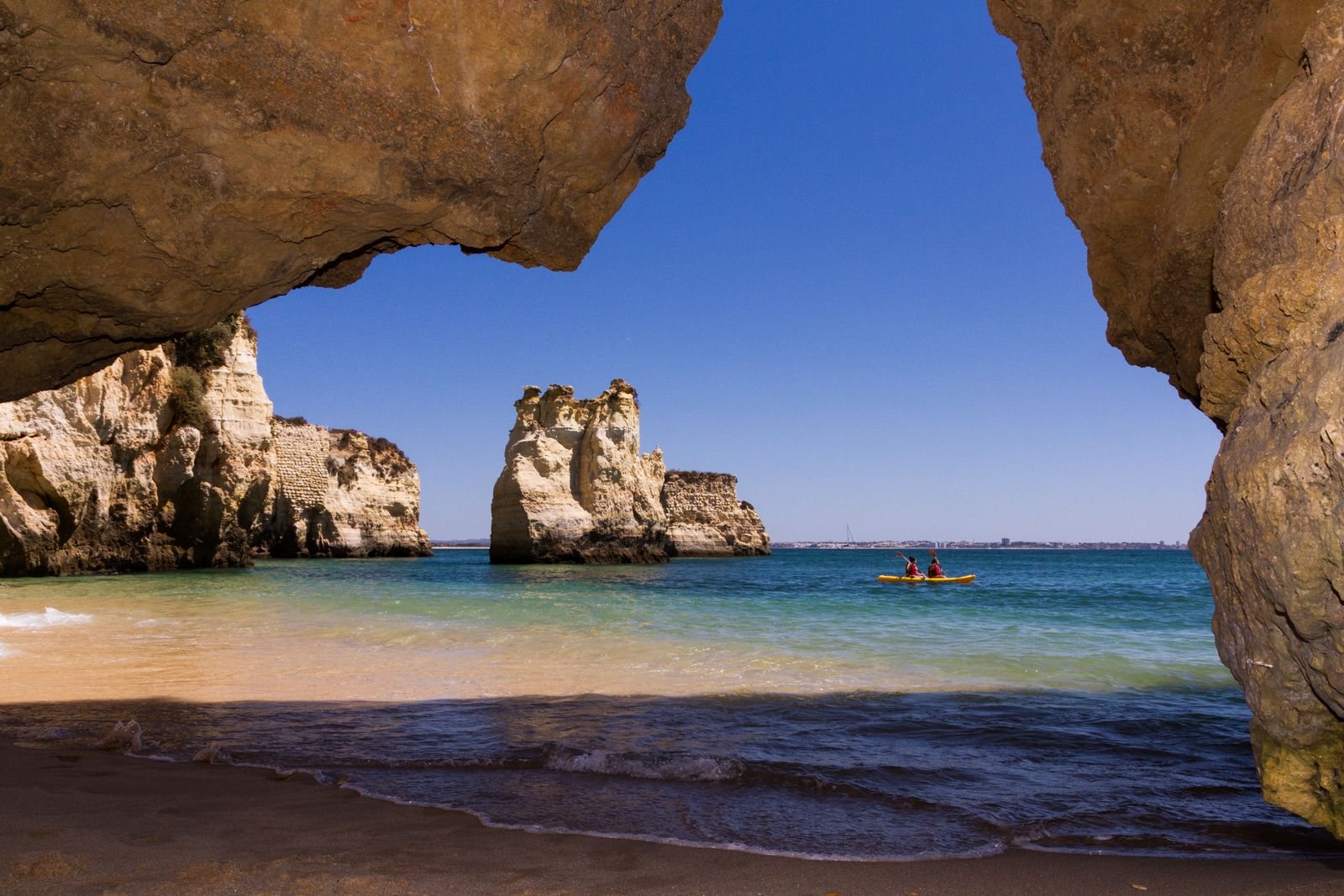
The sea-cave coastline between Lagos and Benagil is riddled with grottoes, arches, and slot canyons that boats cannot enter. A morning kayak tour gets you inside them and gets you there before the tour-boat armada shows up. This was our single favorite Algarve activity.
Explore the Ria Formosa
The lagoon system stretching east from Faro is a protected wetland full of flamingos, seahorses, oyster beds, and barrier islands. Small-boat tours run from Faro, Olhão, and Fuseta. It is the one part of the Algarve where the appeal has nothing to do with cliffs.
Eat cataplana, properly
The cataplana is a hinged copper clam-shell pot, and the seafood stew cooked inside it is the regional dish. Order it for two, get the version with clams and pork if you want the classic Alentejo-influenced take, and do not schedule anything demanding afterward.
Drive the western coast
North of Sagres the coastline turns into the Costa Vicentina, a protected stretch of cliffs and surf beaches with almost no development. Arrifana and Odeceixe are the standout stops. This drive is where we stopped thinking of the Algarve as a resort region.
Where to Stay in the Algarve
Accommodation splits into three broad tiers. Big resort hotels cluster around Albufeira, Vilamoura, and Praia da Rocha, and they are genuinely good value outside July and August. Boutique guesthouses and converted townhouses fill the old towns of Lagos, Tavira, and Silves, and they are our preference. Villa rentals dominate the inland hills and make sense for families or groups staying a week or more.
One planning note that saved us money: staying five minutes inland instead of directly on the sand cut our nightly rate by close to 40 percent, and we had a car anyway.
When to Go
May, June, September, and early October are the sweet spots. Water is swimmable, days are long, and prices sit well below peak. September is our pick: the sea is at its warmest after a summer of heating, and the crowds thin noticeably after the first week.
July and August are hot, expensive, and full. Beaches fill, restaurants need reservations, and rates can double. Go only if school calendars force your hand, and book several months ahead.
Winter is mild and surprisingly appealing if you are coming for hiking, golf, and empty cliff walks rather than swimming. Daytime highs sit in the low 60s Fahrenheit, many beach restaurants close, and the light is beautiful. It is also the cheapest the region ever gets. For a broader look at timing across the continent, our guide to the best time to visit Europe breaks the seasons down region by region.
Getting There and Getting Around
Faro Airport is the gateway, with direct flights from most of western Europe and easy connections through Lisbon. From Lisbon, the train to Faro or Tunes takes about three hours and is comfortable and cheap.
You want a car. This is the one region in Portugal where we would insist on it. The best beaches sit at the bottom of unmarked turnoffs, the coastal road rewards wandering, and bus service between towns is slow. Rentals from Faro are inexpensive by European standards. Be aware that some Portuguese motorways use electronic-only tolls, so accept the transponder option at the rental desk and save yourself the paperwork.
If you would rather not drive, base in Lagos or Tavira, where the old town, the beaches, and the train station are all walkable, and book day tours for the rest.
What It Costs
The Algarve is one of western Europe’s better values. Outside peak season, a good mid-range hotel runs roughly 90 to 140 euros a night, a proper seafood dinner for two with wine lands around 45 to 60 euros, and a rental car sits near 30 to 40 euros a day. Beach access is free everywhere, sunbed rentals run 15 to 20 euros a pair, and a half-day kayak tour is about 35 to 45 euros per person. Budget travelers can do the region comfortably on 100 euros a day for two; in August, plan on close to double.
A Perfect Day in the Algarve
Kayak out of Lagos at 8am while the water is glass and the caves are empty. Back by 11 for coffee and a pastel de nata in the old town. Drive twenty minutes east, walk down to Praia do Camilo, and swim until you are hungry. Late lunch of grilled sardines at a beach shack. Nap. Drive to Ponta da Piedade for sunset, when the cliffs go properly orange. Cataplana for dinner, slowly, with a bottle of Alentejo red.
Tips for First-Timers
- Book Benagil kayak tours in advance in summer. The good early slots sell out days ahead.
- Cliff edges here are undercut and crumbly. The viewpoints have railings for a reason and the ones without railings are genuinely dangerous. Stay back from the lip.
- Beaches with stairs are the good ones. Effort filters crowds remarkably well.
- Learn “bom dia” and “obrigado” (men) or “obrigada” (women). Portuguese hospitality warms up fast when you try.
- The couvert is not free. Bread, olives, and cheese arriving unasked at your table are charged for. Wave them away if you do not want them, no offense taken.
- Sun here is stronger than it feels because of the Atlantic breeze. We both got burned on day one.
Where to Book
- Hotels: Booking.com’s Algarve listings cover everything from Tavira guesthouses to cliff-top resorts in Lagoa; book three to four months out for summer, and watch for free-cancellation rates so you can rebook if prices drop.
- Tours and activities: Viator’s Algarve tours include Benagil kayak and boat trips, Ria Formosa lagoon cruises, jeep safaris into the Monchique hills, and full-day wine tours inland.
Our Honest Take
The Algarve has a reputation problem it does not deserve. Yes, there are resort strips, and yes, August is a scrum. But drive fifteen minutes in any direction and you find a coastline as dramatic as anything in southern Europe, at prices that make Spain and Italy look expensive. Give it five nights, rent a car, go in September, and walk down every staircase you pass.
Planning more of Portugal? Pair this with our Porto travel guide and our roundup of the best things to do in Lisbon, then map the whole route with our guide on how to plan a trip to Portugal.