Disclosure: This post contains affiliate links. If you book through our links, we may earn a small commission at no extra cost to you. Thanks for supporting Faceted Travel!
Table of Contents
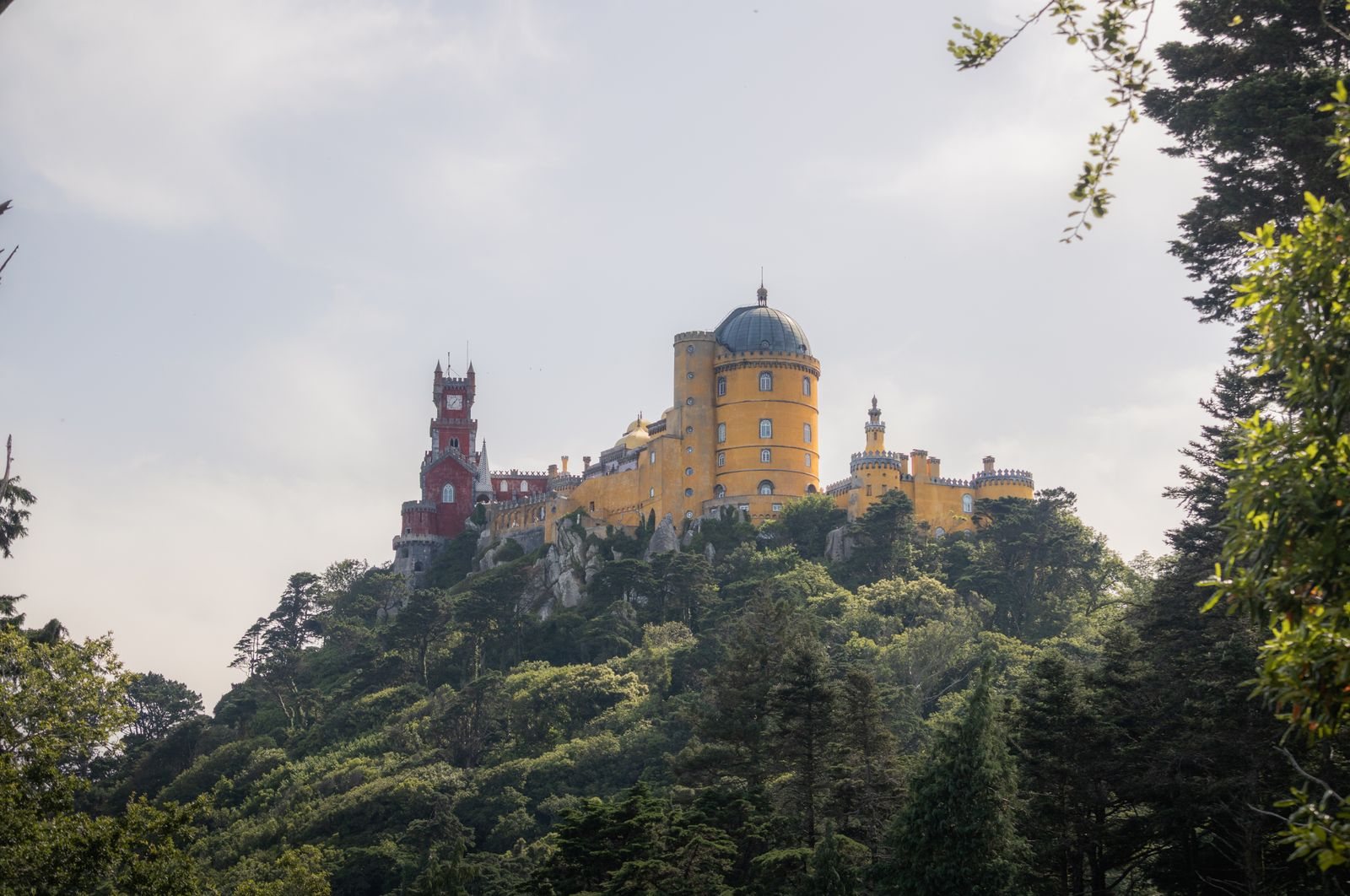
Sintra is the only place we have visited where the tourist board’s photos undersell it. A yellow-and-red palace perched on a fog-wrapped peak, a Moorish castle wall snaking along the ridge opposite, and a private estate with an inverted stone tower you climb down into like a well. It looks invented. It is not.
It is also, if you plan it badly, one of the most frustrating days in Europe: two-hour queues, a tuk-tuk gridlock on a one-lane mountain road, and four palaces you cannot possibly see in the six hours you allowed. This is our full Sintra travel guide, written mostly around the question of how to get the magic without the misery.
Why Sintra Is Worth the Hassle
Sintra sits about 30 kilometers northwest of Lisbon, in a range of green hills that catch Atlantic moisture and stay cool and misty when the capital is baking. Portuguese royalty figured this out centuries ago and built summer palaces here. Then 19th-century Romantics arrived, decided the hills needed more drama, and built even stranger things on top of the old ones. The result is a UNESCO World Heritage cultural landscape that reads like several centuries of architectural fever dreams stacked on one mountain.
The whole thing is genuinely unlike anywhere else in Portugal. If Porto is granite and port lodges and Lisbon is tile and hills, Sintra is moss, fog, and follies. It is the most popular day trip from the capital for a reason, and it shows up at the top of our list of the best day trips from Lisbon.
The Big Four Sights (and Which to Skip)
You cannot do all of these well in one day. Pick two, maybe three.
Pena Palace
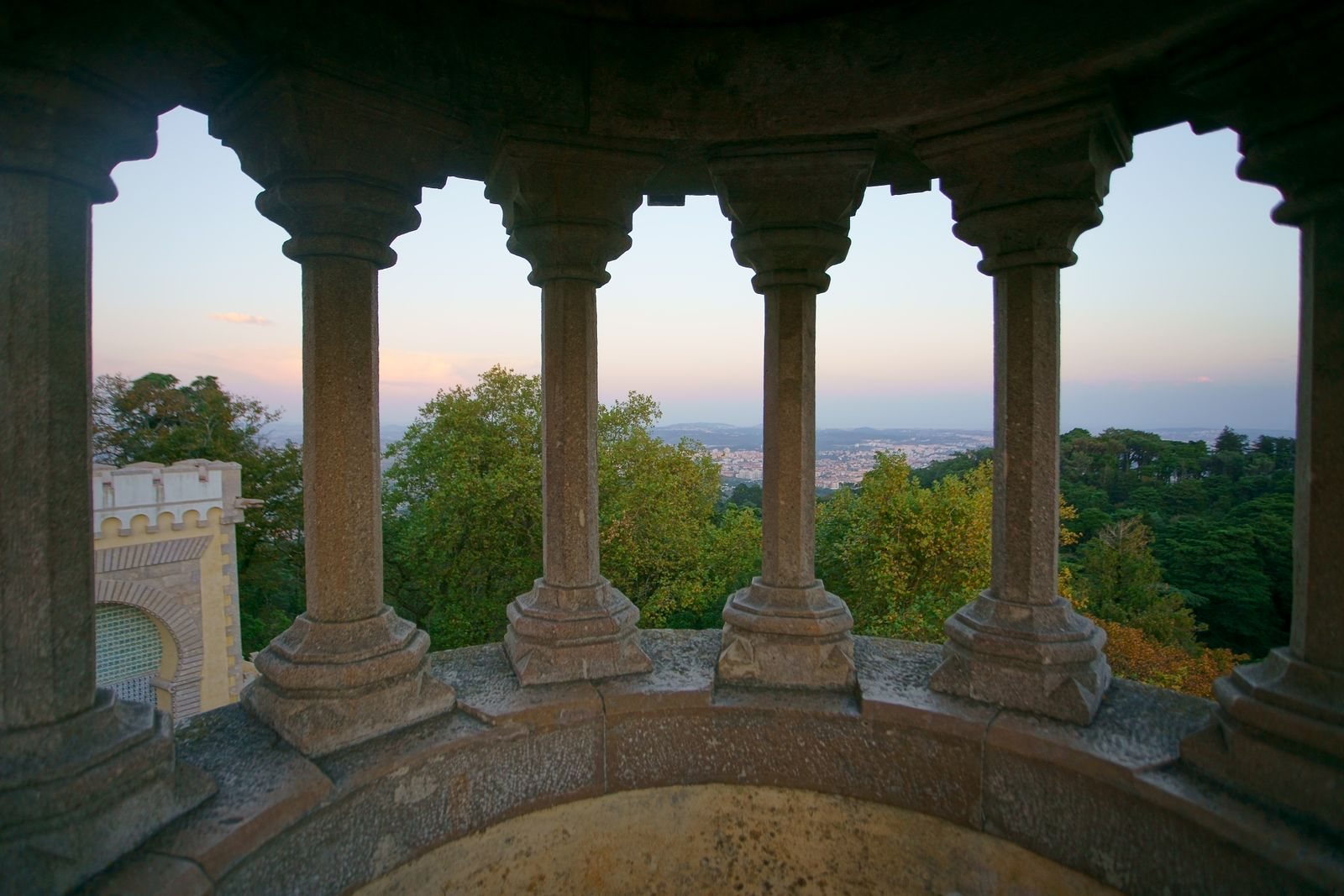
The famous one. A 19th-century Romanticist palace painted in canary yellow, terracotta red, and lilac, sitting on the highest peak with views to the Atlantic. The exterior is the draw and it is genuinely astonishing, all Moorish domes and Manueline stonework and a gateway shaped like a sea monster.
The interiors are worth seeing once but they are cramped and the one-way route moves slowly. Here is the thing worth knowing: the park ticket and the palace ticket are separate. The park alone gets you the exterior, the terraces, the best photographs, and the gardens, at a much lower price and with no interior queue. If you are short on time, park-only is the smart buy.
Book the earliest available entry slot. By 11am the ridge road is a solid line of tuk-tuks.
Quinta da Regaleira
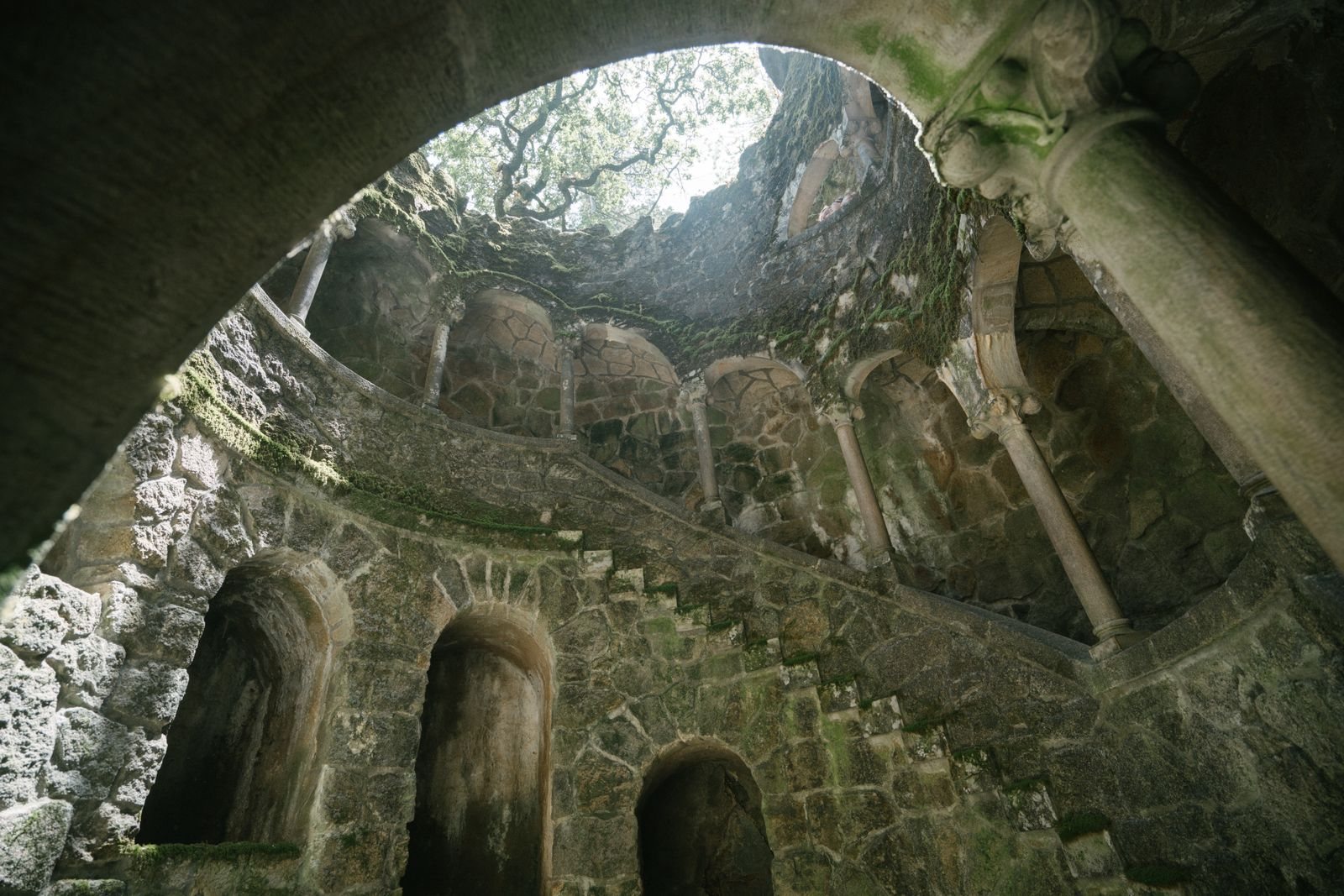
Our favorite, and the one we would keep if forced to pick one. A Gothic-revival mansion surrounded by a garden built as an initiatory landscape: grottoes, hidden tunnels, wells, and the Initiation Well, a nine-level inverted tower you descend by spiral staircase into a network of underground passages that pop you out behind a waterfall.
It is a place designed to be wandered, not toured. Give it two hours minimum. It is walkable from the historic center, which spares you the shuttle chaos.
Moorish Castle
The 8th-century hilltop fortification opposite Pena. The ruined walls run along the ridge and you walk them, with drops on both sides and views over the whole valley. It is the cheapest of the major sights, the least crowded, and the most physically demanding. If you like a view more than an interior, this beats Pena Palace.
National Palace of Sintra
The white palace with the two enormous conical chimneys, right in the town center. Oldest surviving royal palace in Portugal, and the tile work inside is exceptional. It is the easiest to reach and the shortest visit, roughly 45 minutes. Good filler if you have a gap, skippable if you do not.
Honorable mention: Monserrate
Twenty minutes out of town and consistently the least crowded of the palaces. An Indo-Gothic pleasure palace with a botanical garden that is arguably better than the building. If you are staying overnight and have a second day, go.
How to Actually Do Sintra Without Losing Your Mind
This is the section we wish we had read first.
Stay the night. This is the single biggest upgrade. Sintra as a day trip means arriving with the 9:30 train crowd and leaving with the 5pm crowd, which is exactly when everyone else is there. Stay one night and you get the town in the evening, when the day-trippers have gone and the fog rolls in, and you get to be first through the gates in the morning.
Book timed tickets online in advance. Pena in particular now uses timed entry and same-day slots routinely sell out. Buy direct from the Parques de Sintra site.
Go early or go late. The window before 10am and after 4pm is a different town.
Do not drive up the mountain. The road to Pena and the Moorish Castle is narrow, one-way in sections, and parking is essentially nonexistent. Locals have been vocal about the traffic and access has tightened. Park at the bottom or come by train, then use the 434 bus loop, a tuk-tuk, or your legs.
The 434 bus is a hop-on loop running town center to Moorish Castle to Pena and back. It is the standard solution and it works, but in peak season the queue for it can run 40 minutes. The 435 loop covers Regaleira, Seteais, and Monserrate.
Walk if the weather is decent. The uphill footpath from the historic center to the Moorish Castle takes 30 to 40 minutes through beautiful woodland and skips the bus queue entirely. It is steep. It is also the nicest part of the day.
Two sights per day, not four. Everyone tries for four. Nobody enjoys four.
Where to Stay in Sintra
Staying overnight puts you in a small, atmospheric hill town instead of a tour-bus parking lot. Boutique guesthouses and converted quintas fill the historic center and the lanes above it, and there are a handful of genuinely special heritage hotels in restored palaces and estates. Prices are higher than Lisbon for equivalent quality, but the tradeoff is worth one night.
If you want to split the difference, staying in nearby Colares or along the coast at Praia das Maçãs gets you cheaper rooms, beach access, and a ten-minute drive in.
Beyond the Palaces
Sintra pairs naturally with the coast just west of it. Cabo da Roca is the westernmost point of continental Europe, a windswept cliff with a lighthouse and a certificate you can buy proving you stood there. It is touristy and it is still worth the twenty minutes.
Praia da Ursa is a difficult-to-reach cove below dramatic sea stacks, reached by a steep unofficial path. Go only in dry conditions and with proper shoes.
Azenhas do Mar is a white village stacked down a cliff face above a tidal pool, and it makes a lovely late-afternoon stop.
In town itself, do not leave without eating a travesseiro at Piriquita, a flaky almond-cream pastry that is Sintra’s own contribution to the Portuguese pastry canon, and a queijada, the small cheese tart that has been made here since the Middle Ages.
When to Go
Spring and early autumn are best. April through early June and mid-September through October give you comfortable walking weather, green hills, and crowds that are heavy but survivable.
Summer is peak in every sense. Sintra stays cooler than Lisbon, which is exactly why everyone goes, and July and August queues are long. If you come then, book everything and start at opening.
Winter is the sleeper pick. Fewer people, dramatic fog, and palaces that look their absolute best half-hidden in cloud. It rains, and some days you will not see the view at all. We would still take it over August.
Mornings here are frequently misty regardless of season. That fog is part of the appeal, not a problem to solve.
Getting There
By train from Lisbon: the easiest option. Trains run from Rossio station roughly every 20 to 30 minutes and take about 40 minutes. A Lisboa Viva or Navegante card makes it cheap. Rossio is more convenient than Oriente for most visitors.
By car: fine for reaching Sintra, a headache above it. Park in one of the lots at the edge of town and go up on foot or by bus.
By tour: a guided day tour handles the logistics and usually bundles Cabo da Roca and Cascais. Worth considering if you have one day and no patience for bus queues.
What It Costs
Sintra is not expensive by western European standards, but ticket prices add up fast because each site is separately ticketed. Expect roughly 20 euros for Pena Palace with park access, around 10 to 12 euros for park only, about 12 euros for the Moorish Castle, and around 12 to 15 euros for Quinta da Regaleira. Combination tickets bundling two or three sites offer modest savings and are worth checking. The 434 bus loop runs about 8 euros for the day, a tuk-tuk up the hill is 10 to 15 euros, and a good lunch in town is 15 to 20 euros a head. Two sights, transport, and lunch lands most couples around 100 to 120 euros for the day.
Tips for First-Timers
- Wear real shoes. Everything here is uphill, cobbled, and often damp.
- Bring a layer. Sintra runs several degrees cooler than Lisbon, and the fog is properly cold.
- Eat before you go up the mountain. Food options at the palaces are limited and overpriced.
- Screenshot your tickets. Mobile signal on the ridge is unreliable.
- Do not trust “it is only 20 minutes away” mapping estimates in peak season. Add half again.
Where to Book
- Hotels: Booking.com’s Sintra listings run from simple guesthouses in the historic center to heritage properties in restored estates; book two to three months ahead for spring and autumn, since the town has limited inventory.
- Tours and activities: Viator’s Sintra tours include skip-the-line palace entries, full-day trips combining Sintra with Cabo da Roca and Cascais, and small-group options that avoid the big coach crush.
Our Honest Take
Sintra rewards planning more than almost anywhere we have been. Done badly it is a queue with a view. Done well, with an overnight stay, two sights instead of four, and an early start, it is one of the most purely enjoyable days in Portugal. Skip the interiors if you must, walk the Moorish Castle walls in the fog, and climb down the Initiation Well. That is the trip.
Planning more of Portugal? Pair this with our Porto travel guide, our best things to do in Lisbon roundup, and our Algarve travel guide, then map the whole route with our guide on how to plan a trip to Portugal.