Disclosure: This post contains affiliate links. If you book through our links, we may earn a small commission at no extra cost to you. Thanks for supporting Faceted Travel!
Table of Contents
- Step 1: Decide When to Go
- Step 2: Pick a Realistic Amount of Ground
- Step 3: Choose Your Regions
- Step 4: Book Flights, Then Trains
- Step 5: Book Your Stays
- Step 6: Set a Realistic Budget
- Step 7: Handle the Practical Stuff
- A Sample 10-Day France Itinerary
- Common France Planning Mistakes (We Made Most of Them)
- Where to Book
- Our Honest Take
France is the most visited country on earth, and it is still underrated. That sounds impossible, but here is what we mean: most first-time visitors see Paris, maybe Versailles, and go home, when the country behind the capital holds Alpine lakes, lavender plateaus, two separate coastlines, wine regions that each deserve a week, and villages that look invented for postcards. Planning a France trip well is mostly about resisting the urge to do everything, and this guide is the step-by-step process we use ourselves.
We have planned France trips around city breaks, mountain towns, and the Riviera, and made most of the classic mistakes at least once so you do not have to.
Step 1: Decide When to Go
Your dates shape everything else, so start here.
May, June, and September are the best all-around months almost everywhere in France: warm, long days, full opening hours, and crowds below the summer peak. September in particular is glorious, with harvest season in the wine regions and the Mediterranean at its warmest.
July and August bring guaranteed sun to the south and serious crowds everywhere. August is when the French themselves vacation: the Riviera and Atlantic coast are packed while Paris empties of locals and some small businesses close for weeks.
October through April is the value season. Paris is arguably at its most atmospheric in late fall and winter, Christmas markets light up Alsace in December, and ski season runs in the Alps. The countryside slows down and some rural hotels and restaurants close, so village-hopping itineraries need more checking in winter.
We wrote a full month-by-month breakdown in our best time to visit France guide, region by region.
Step 2: Pick a Realistic Amount of Ground
Here is the mistake that ruins more France itineraries than any other: treating the country like a checklist. France is roughly the size of Texas, and while the trains are fast, every base change burns half a day in packing, checkout, transit, and check-in.
Our rule: one region per week, two bases maximum per week.
- 5 to 7 days: Paris plus one side region. Paris with 2 nights in Normandy, or Paris with 3 nights in the Loire Valley, or fly open-jaw and split Paris and Nice.
- 10 days: Paris plus one southern region done properly. Paris, train south, then 5 nights split between the Riviera or Provence.
- 14 days: three regions if you use the fast trains and do not zigzag. Paris, the Alps or Lyon, then the south, flying home from Nice or Marseille.
Open-jaw flights (into Paris, home from Nice, or the reverse) are the single best itinerary trick in France. They cost little extra and save you a five-hour backtrack.
Step 3: Choose Your Regions
You cannot do them all, so here is the honest shorthand:
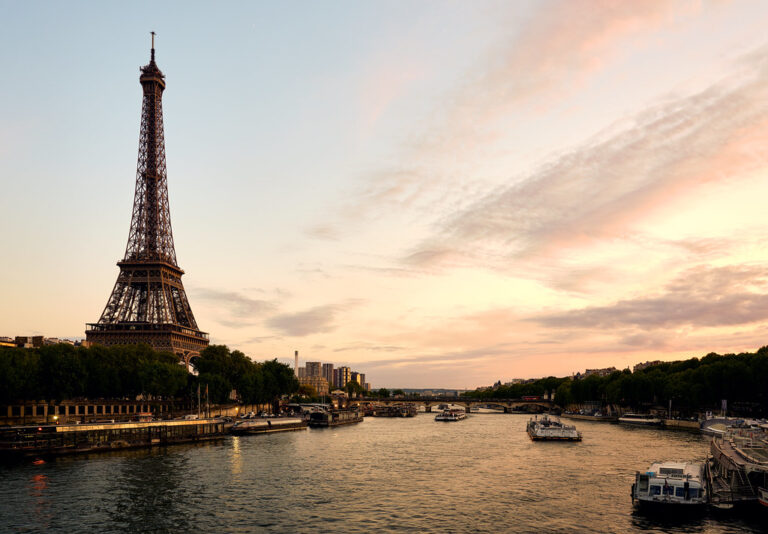
Paris. Non-negotiable on a first trip, and 3 to 4 nights is the right dose: enough for the icons plus a couple of neighborhoods, short enough that you leave wanting more.
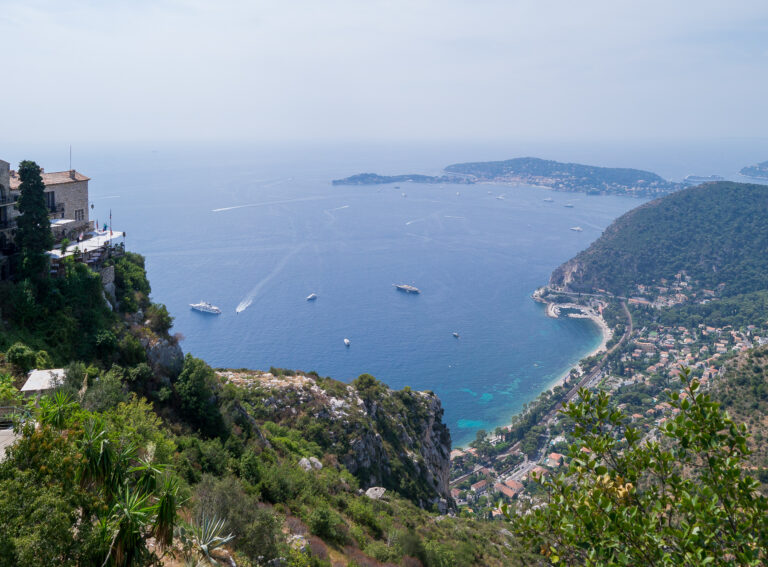
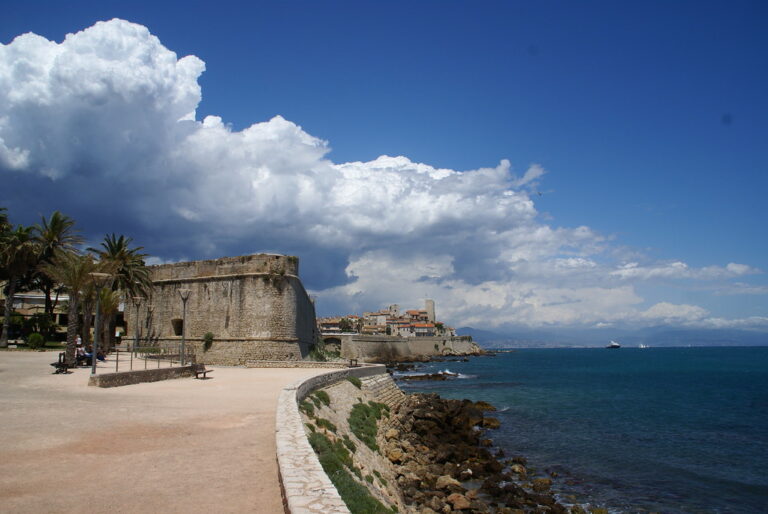
The French Riviera. Turquoise Mediterranean, golden light, and train-hoppable towns. Base in one town and day trip; the coastal rail line makes it effortless. Our Nice, France travel guide covers the hub city, and our Cannes, France travel guide covers its glossier neighbor. For value and charm, consider sleeping in Antibes between them.
The French Alps. Chamonix under Mont Blanc for the drama, and Annecy for the fairy-tale version: a turquoise lake wrapped in mountains with a canal-laced old town. We think Annecy is one of the most beautiful towns in Europe, and it pairs perfectly with Geneva flights or the Lyon train line.
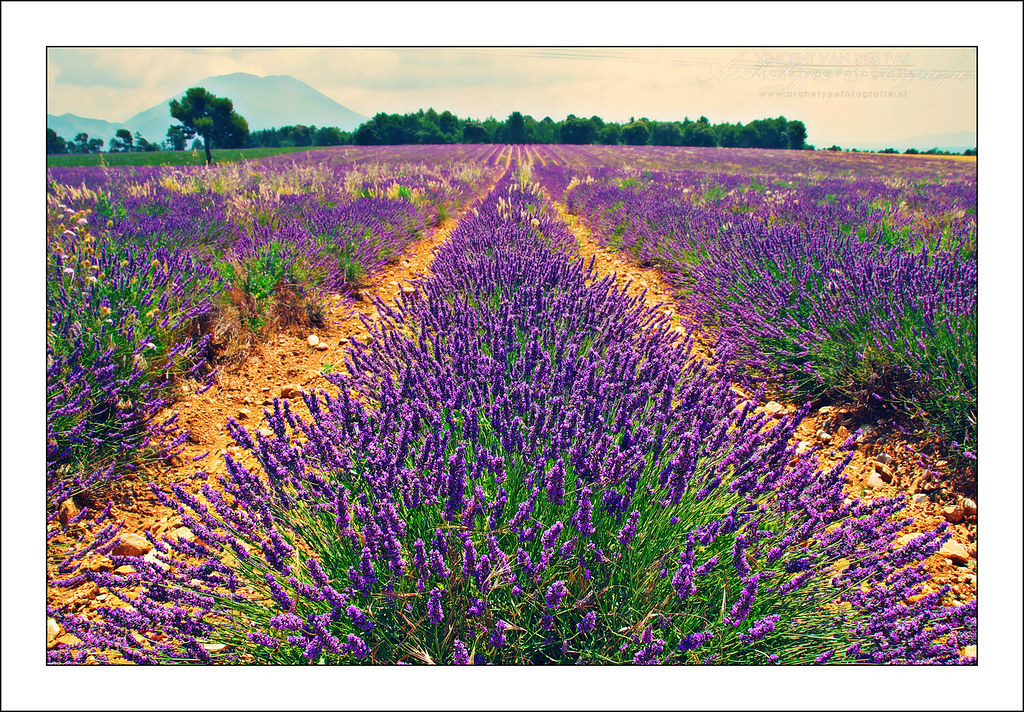
Provence. Lavender (late June to mid-July), hilltop villages, Roman ruins, and markets. You want a car here, the one region where driving beats the train decisively.
The Loire Valley. Château country, an easy add-on from Paris by train or car, best with 2 to 3 nights.
Normandy and Brittany. D-Day beaches, Mont-Saint-Michel, dramatic Atlantic coast, cider and oysters. Cooler and greener; wonderful in late spring and September.
Alsace. Half-timbered wine villages along the German border, at their peak in December’s Christmas markets and the fall harvest.
Lyon, Burgundy, and Bordeaux. For eaters and wine drinkers, each can anchor a trip on its own.
Step 4: Book Flights, Then Trains
Book the international flight first; everything else flexes around it. Paris (CDG) has the most options and the best fares from the US, with Nice (NCE) the strong second for southern itineraries. Compare open-jaw pricing before defaulting to round-trip Paris.
Then the trains. France’s TGV high-speed network is world-class: Paris to Lyon in 2 hours, Paris to Avignon in 2 hours 40, Paris to Nice around 6 (flying or an open-jaw route makes more sense for that one). Two things Americans consistently get wrong:
1. TGV fares work like airfares. They open about 3 to 4 months out, start cheap, and climb. Book at SNCF Connect (the official app and site) as soon as your dates are firm, and skip third-party markups. 2. Seat reservations are included on TGVs, but regional TER trains (like the Riviera coastal line) are hop-on with flat fares, no advance booking needed. Mixing the two is normal.
Rent a car only for the regions that need one: Provence, rural Normandy or Brittany, deep wine country, and the Loire if you want the small châteaux. You want a car for none of Paris and none of the Riviera main line. Book automatics early; manual transmissions dominate French rental fleets and automatics sell out.
Step 5: Book Your Stays
The French lodging mix runs from grand hotels to chambres d’hôtes (bed and breakfasts, often wonderful and cheap) to gîtes (vacation rentals, ideal for a week in one village).
Booking rules of thumb that have served us well:
- In Paris, prioritize arrondissement over hotel amenities. Districts 1 through 7 put the icons in walking range; the Marais (3rd and 4th) and Saint-Germain (6th) are our repeat picks.
- On the Riviera and in Provence in summer, book 3 to 6 months out. The good-value places go first.
- In villages, confirm check-in times and dinner options. Rural France closes early, and the last kitchen seating may be 8:30pm.
- Two-night minimums are common in the countryside in high season. This is another argument for fewer bases.
Step 6: Set a Realistic Budget
Rough per-person daily figures for a mid-range trip, before flights: Paris and the Riviera in high season run $200 to $300 per day for comfortable hotels, restaurant meals, and sights, while small-town and countryside France can drop to $120 to $180. Lunch is the great French budget hack: the fixed-price lunch menu (formule) at good restaurants costs half the dinner tab for much of the same cooking. Picnics from markets and bakeries are the other one; some of our best meals in France cost eight euros and came with a riverbank.
For a full cost breakdown of a comparable European trip, with real numbers on hotels, trains, food, and sights, see our guide to how much a trip to Europe costs; France sits close to those averages, cheaper than Switzerland, pricier than Spain or Portugal.
Step 7: Handle the Practical Stuff
Documents. US passports get 90 visa-free days; make sure yours is valid 3 months past your return date. Also check the current EU entry requirements before you fly, as Europe has been rolling out new electronic entry systems.
Money. Cards work nearly everywhere, including contactless on Paris transit. Carry modest cash for markets and village bakeries. Decline “convert to dollars” at every terminal; always pay in euros.
Phones. An eSIM data plan bought before you fly beats US carrier roaming for cost, and Google Maps plus the SNCF app cover almost all navigation.
Language. You do not need French, but the ritual matters: open every interaction with “Bonjour,” attempt one sentence, and the famous French coldness mostly evaporates. Walking into a shop without a greeting is the actual offense.
Insurance. A France trip usually stacks nonrefundable TGV fares, prepaid hotels, and transatlantic flights, exactly the profile worth protecting. Our best travel insurance for Europe guide covers what we actually buy and why.
A Sample 10-Day France Itinerary
Our default recommendation for a first trip that wants more than Paris:
- Days 1 to 4: Paris. Icons on days one and two (book the Louvre and Eiffel Tower ahead), neighborhoods on day three (Marais, Montmartre, Latin Quarter), day trip or museum depth on day four.
- Day 5: TGV south. Morning train to the Riviera; you are swimming by late afternoon.
- Days 5 to 9: The Riviera, one base. Day trips by coastal train: Nice’s old town and the Chagall museum, Cannes and the Îles de Lérins, Monaco, and a hill village like Èze. Build in one no-plans beach day; it will be the day you remember.
- Day 10: Fly home from Nice. Open-jaw, no backtracking.
Swap the Riviera block for Annecy and the Alps in summer, or Provence with a rental car, and the skeleton still works.
Common France Planning Mistakes (We Made Most of Them)
Booking TGV tickets late. We once paid triple for a Paris to Avignon train we could have booked for the price of lunch three months earlier. Set a reminder for when your travel window opens.
Changing hotels every night. Our first Provence trip had five bases in seven days. We saw a lot of rental car interior. Two bases would have shown us more of Provence, not less.
Scheduling museums for Mondays and Tuesdays. French museums close one day a week, split between Monday and Tuesday depending on the museum. Check every major sight against your specific days before locking the order of your itinerary.
Expecting dinner at 6pm. Most French kitchens open at 7:30pm and fill at 8:30. Fighting this is pointless; do as the French do and stretch the aperitif hour instead.
Underestimating August. If August is your only window, go, but book everything early, aim your itinerary north or into the mountains, and know that the Riviera will be operating at maximum density.
Skipping travel insurance on a trip full of prepaid bookings. France trips front-load costs into nonrefundable fares and hotel deposits more than most destinations. It is exactly the kind of trip insurance exists for.
Where to Book
- Hotels: Booking.com’s France listings cover everything from Paris grand dames to countryside chambres d’hôtes, with free cancellation filters that make early booking low-risk.
- Tours and activities: Viator’s Paris tours are the place to lock in skip-the-line Louvre and Versailles entries, and Viator’s Nice tours cover the Riviera’s boat trips and hill-village day tours.
- Trains: book TGVs directly at SNCF Connect as soon as dates firm up; fares only go up.
Our Honest Take
France rewards restraint. The trips of ours that worked best were the ones where we did less: one city, one region, long lunches, and a pace slow enough to notice things. The trips that disappointed were the ones built like scavenger hunts.
Pick your season, pick two bases, book the trains early, learn “Bonjour,” and leave slack in the schedule. France will fill it better than your itinerary would have.
Ready to go deeper? Start with the best time to visit France to pick your window, then build around our Nice, France travel guide for the Riviera or our Annecy, France travel guide for the Alps.
Keep Reading