Moab utah road trip — we’ve been researching and testing travel strategies for years, and this guide covers everything you need to know. This post contains affiliate links. If you book or buy something through our links, we may earn a small commission at no extra cost to you. Thanks for supporting Faceted Travel!
Table of Contents
- Why Moab Should Be on Your Road Trip List
- When to Visit Moab, Utah
- Getting to Moab
- Arches National Park: Don’t Skip the Classics
- Canyonlands National Park: The Wilder Side
- Beyond the Parks: What Else to Do in Moab
- Where to Eat in Moab
- Where to Stay in Moab
- Gear Up Before You Go
- Where to Book Your Moab Trip
- Moab Utah Road Trip: Final Tips
Table of Contents
- Why Moab Should Be on Your Road Trip List
- When to Visit Moab, Utah
- Getting to Moab
- Arches National Park: Don’t Skip the Classics
- Canyonlands National Park: The Wilder Side
- Beyond the Parks: What Else to Do in Moab
- Where to Eat in Moab
- Where to Stay in Moab
- Gear Up Before You Go
- Where to Book Your Moab Trip
- Moab Utah Road Trip: Final Tips
Table of Contents
- Why Moab Should Be on Your Road Trip List
- When to Visit Moab, Utah
- Getting to Moab
- Arches National Park: Don’t Skip the Classics
- Canyonlands National Park: The Wilder Side
- Beyond the Parks: What Else to Do in Moab
- Where to Eat in Moab
- Where to Stay in Moab
- Gear Up Before You Go
- Where to Book Your Moab Trip
- Moab Utah Road Trip: Final Tips
The red rock canyons rise up around you like something out of a fever dream — and you realize no photo has ever come close to capturing this. A Moab Utah road trip is one of those rare travel experiences that genuinely exceeds the hype, and we say that as people who’ve been here multiple times and still find ourselves planning the next trip back.
Moab sits in the heart of canyon country in southeastern Utah, flanked by two of America’s most spectacular national parks: Arches and Canyonlands. But the town itself — funky, outdoorsy, and surprisingly good for food — is also worth the trip. Whether you’re coming for a long weekend or a full week, this guide covers everything you need to know to plan the ultimate Moab road trip.
Why Moab Should Be on Your Road Trip List
Moab is one of those places that genuinely works for almost every type of traveler. Hardcore hikers love it for the strenuous canyon trails and slickrock scrambles. Mountain bikers make pilgrimages here for the legendary Slickrock Trail. Families come for ranger-led programs and awe-inspiring scenery that even the most screen-addicted kids can’t ignore. And for couples, the sunsets over the red rocks are downright cinematic.
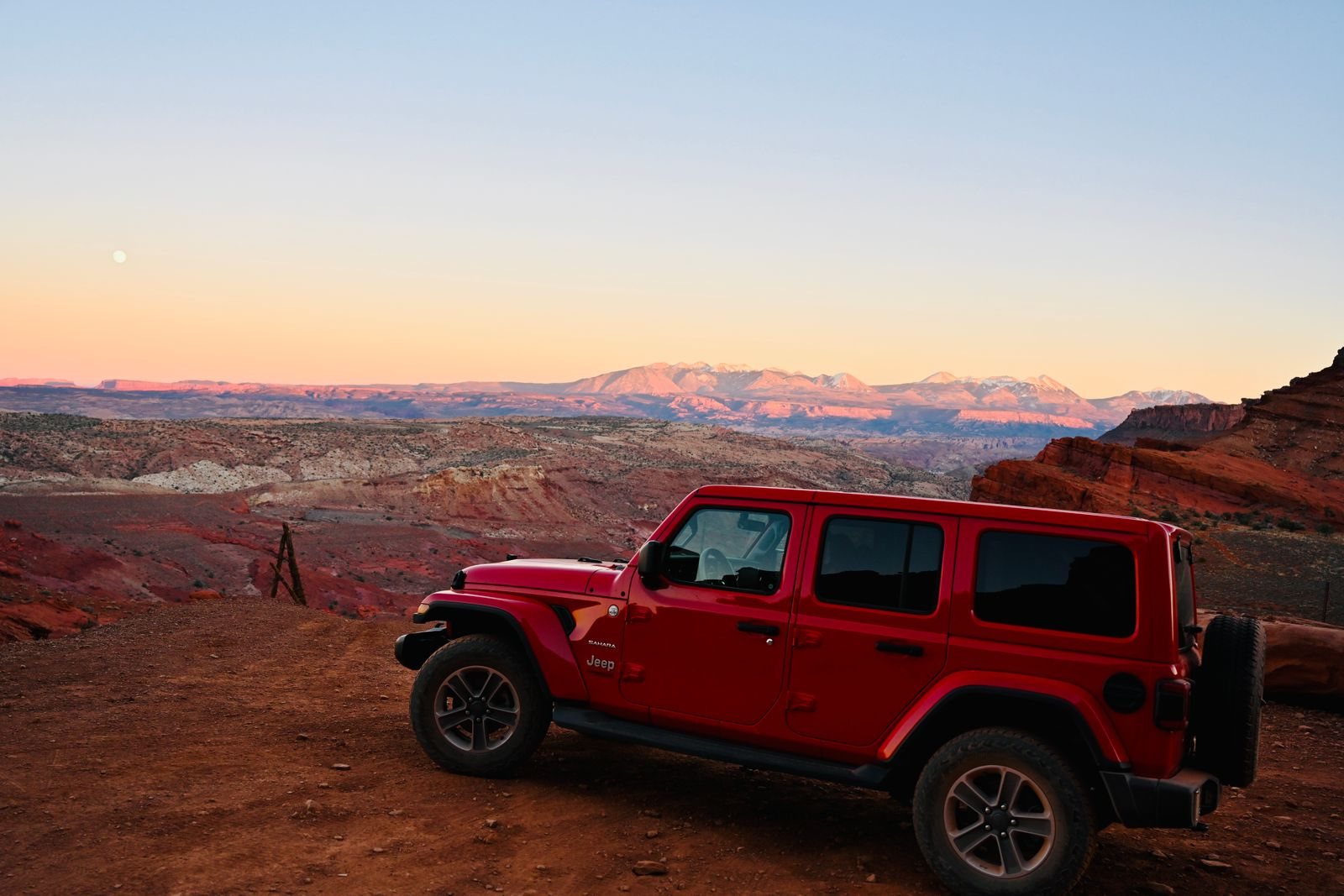
The town also serves as the jumping-off point for some seriously epic side trips — including Dead Horse Point State Park (one of the most dramatic overlooks in the entire American West) and the White Rim Road for those with 4WD vehicles and a spirit of adventure.
When to Visit Moab, Utah
Spring (March through May) and fall (September through November) are the sweet spots for a Moab Utah road trip. Temperatures are comfortable for hiking — typically in the 60s and 70s — and the light is absolutely stunning in those shoulder seasons. Wildflowers bloom in spring, and the canyon walls take on a deeper, richer color in autumn.
Summer is brutal. We’re talking 100°F+ temperatures that make afternoon hiking genuinely dangerous. If summer is your only option, go early morning (trails by 6am), take a long midday break, and plan water activities like the Colorado River for the hottest hours. Winter is actually underrated — the crowds disappear, the red rock looks stunning against snow, and temperatures are mild during the day — but some roads and trails may close.
Getting to Moab
Moab doesn’t have a major airport, so a road trip really is the best way to get here. The most common routes:
- From Denver: About 4 hours via I-70 West through the Rockies — one of the most scenic drives in America. This is how we always do it. If you’re doing a bigger Colorado + Utah road trip, check out our guide to the best day trips from Denver for ideas to combine into your itinerary.
- From Salt Lake City: About 3.5–4 hours via US-191 South.
- From Las Vegas: About 5 hours via I-15 North and US-191.
A rental car is essentially mandatory — you’ll want 4WD or at least AWD if you plan to explore any backcountry roads. Plan to fill up before entering canyon country; gas in Moab itself is more expensive than surrounding areas.
Arches National Park: Don’t Skip the Classics
Arches is the crown jewel of any Moab Utah road trip, and yes — it’s as spectacular as every Instagram photo suggests. The park contains more than 2,000 natural stone arches, the highest concentration anywhere on Earth.
The Iconic Hikes
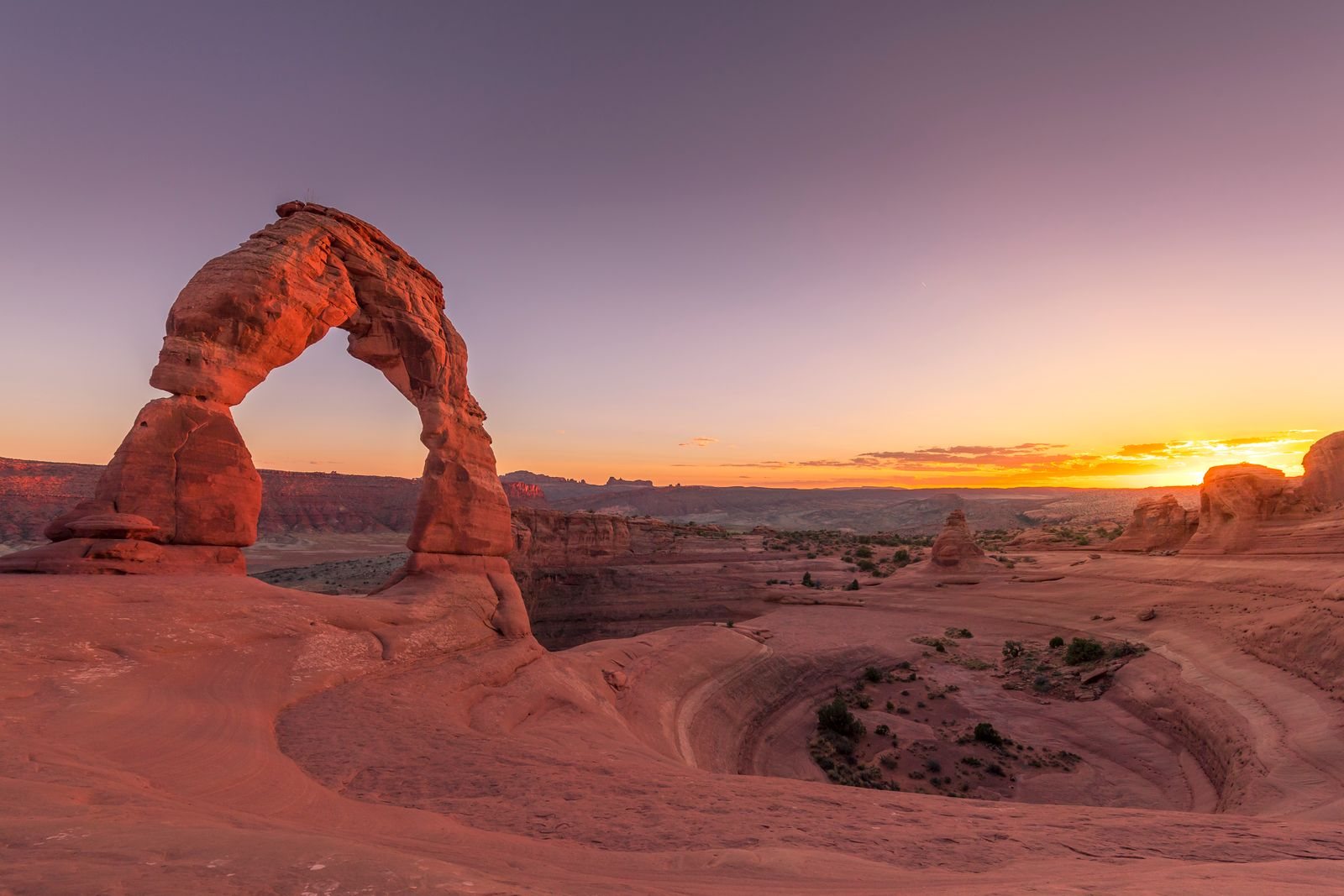
Delicate Arch Trail is non-negotiable. It’s 3 miles round-trip with 480 feet of elevation gain, and the payoff — standing in that natural amphitheater with the arch framing the La Sal Mountains — is one of the best moments in American hiking. Go early morning or late afternoon to avoid the worst heat and crowds. Timed entry reservations are now required from April through October; book these well in advance on recreation.gov.
The Windows Section is the best bang-for-your-buck short hike. The primitive loop (1 mile) takes you through North Window, South Window, and Turret Arch with minimal effort and maximum reward. Great for families or anyone who wants big views without a serious hike.
Devil’s Garden Trail is our pick for the best full-day hike in Arches. The primitive loop is 8 miles and passes Landscape Arch (one of the world’s longest natural arches), Double O Arch, and requires some scrambling on bare sandstone. Bring plenty of water and more snacks than you think you need.
Book a Jeep Tour
If you want to get into the backcountry without needing your own 4WD setup, a guided jeep tour is absolutely worth it. Local guides take you to spots that most visitors never see — hidden arches, ancient petroglyphs, canyon overlooks that aren’t on any trail map. We recommend booking through Viator’s Moab jeep and 4WD tours to compare options and read verified reviews before you go.
Canyonlands National Park: The Wilder Side
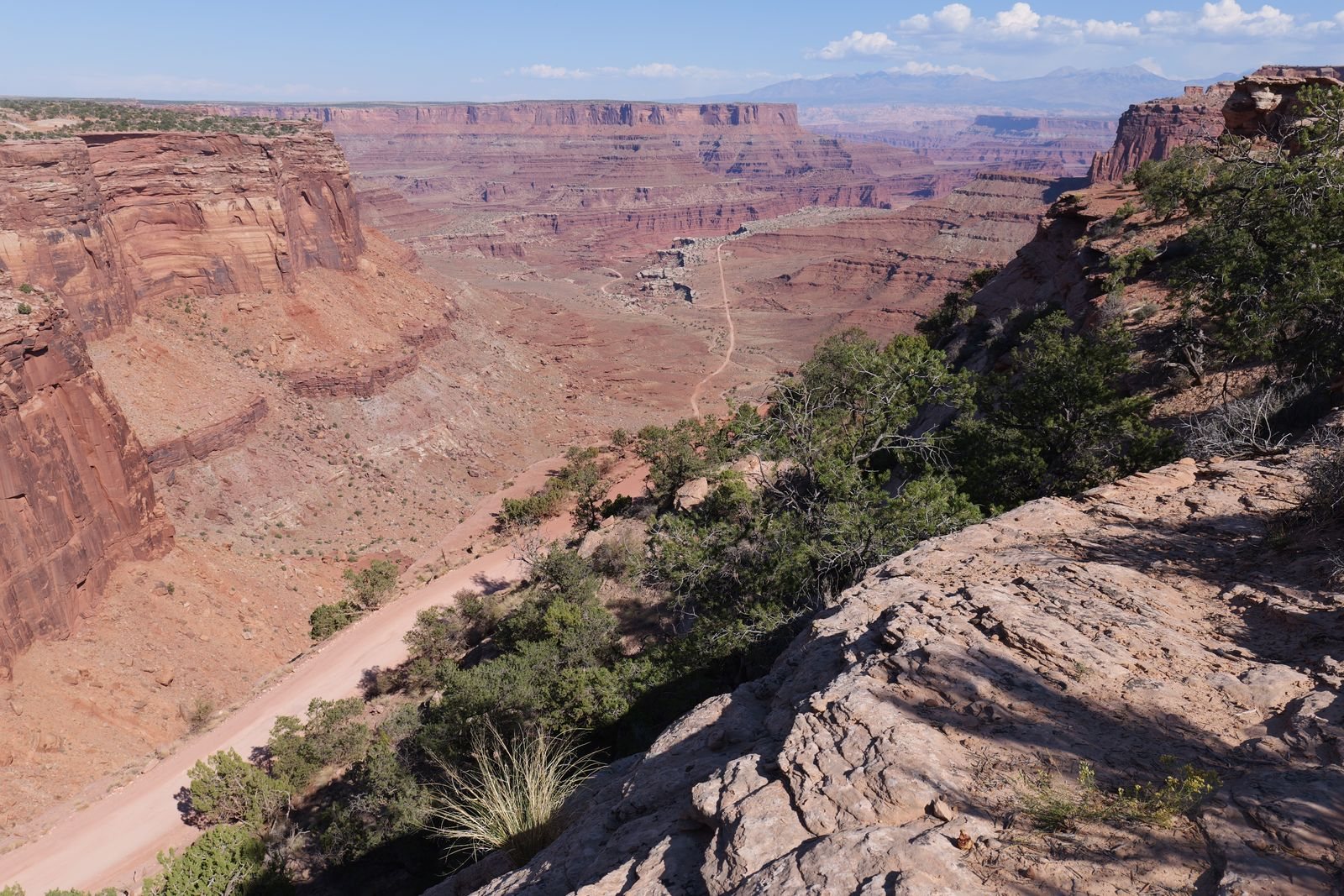
About 30 minutes from Moab, Canyonlands is bigger, wilder, and significantly less visited than Arches. The park is divided into four districts; Island in the Sky is the one most road trippers access.
Mesa Arch at sunrise is one of the most photographed moments in all of Utah — the arch frames the canyon below and the light goes impossibly orange. It’s just a half-mile round-trip hike. Get there 45 minutes before sunrise if you want a good spot (or any spot — it gets crowded).
Grand View Point is the best overlook in the park — a sweeping 360-degree panorama of the Colorado and Green River canyons that stretches for miles. The trail out to the point adds another mile and is mostly flat.
Dead Horse Point State Park is technically not in Canyonlands, but it’s right next door and the overlook there rivals anything in either national park. Don’t skip it.
Beyond the Parks: What Else to Do in Moab
Colorado River Activities
The Colorado River runs right through Moab and offers an excellent escape from midday heat. Half-day and full-day raft trips cover calm sections suitable for families, while sections upstream offer Class III–IV rapids for more adventurous paddlers. Book through Viator to compare river outfitters.
Mountain Biking
The Slickrock Trail is legendary — 12 miles of technical riding on sandstone that will challenge even experienced mountain bikers. Less experienced riders should check out the Bar M Loop (7.5 miles, mostly flat, great views) as an introduction to Moab’s backcountry terrain. Local bike shops rent high-end trail and e-bikes by the day.
Dark Sky Stargazing
Moab sits in one of the darkest night sky regions in the country. On a clear night, the Milky Way is visible with the naked eye, and the red rock silhouettes against a star-packed sky is something you won’t forget. Canyonlands is an International Dark Sky Park; drive out to the Grand View Point parking lot after dark for an unforgettable show.
Where to Eat in Moab
For a small town, Moab punches well above its weight on food. A few favorites:
- Moab Brewery — The go-to post-hike spot. Huge portions, solid burgers, great craft beer list. Expect a wait on weekends.
- Desert Bistro — Upscale and genuinely excellent. Worth booking ahead for a special evening. The lamb is outstanding.
- Eklectica Café — Beloved local breakfast spot. Cash only, quirky decor, and some of the best breakfast burritos we’ve had anywhere.
- Quesadilla Mobilla — A food truck that shouldn’t be as good as it is. Get there early; they sell out.
Where to Stay in Moab
Moab has a solid range of options from budget-friendly motels to upscale glamping and boutique hotels. A few approaches:
- In town — Most hotels and motels are on US-191 (Main Street), walking distance to restaurants and gear shops. Convenient and easy.
- Glamping / resort — Properties like Red Cliffs Lodge and Sorrel River Ranch sit along the Colorado River with stunning red rock views. Worth it for a splurge.
- Camping — The BLM land around Moab is legendary for free and low-cost dispersed camping. Sites at Arches and Canyonlands should be booked months in advance.
Search current availability and rates on Booking.com or Expedia.
Gear Up Before You Go
Moab is not the place to be underprepared. The terrain is rugged, the sun is intense, and conditions can change fast. A few things worth having:
- A quality hydration pack — critical for canyon hiking in any season
- Sun protection: hat, sunglasses, SPF 50+ sunscreen
- Trekking poles for the more technical hikes
- A camp kitchen setup if you plan to camp or do multi-day backcountry
REI Co-op in Salt Lake City or online is our go-to for gear; their expert staff can help outfit you for exactly what you’re planning.
Where to Book Your Moab Trip
- Hotels & lodges: Booking.com | Expedia
- Jeep tours & river rafting: Viator Moab Tours
- Hiking & camping gear: REI Co-op
- Travel insurance: Highly recommended for adventure travel — see our guide to the best travel insurance for international trips
Moab Utah Road Trip: Final Tips
- Book timed entry reservations for Arches as soon as they open (typically 4 months in advance for peak season)
- Fill your gas tank and water bottles before heading into the parks — services are limited inside
- Download offline maps before you go — cell service is spotty in canyon country
- Respect the cryptobiotic soil — the dark, lumpy crust on the desert floor takes decades to form and is destroyed in a single footstep. Stay on trails or slickrock
- Pack out everything — leave no trace principles apply especially strictly here
A Moab Utah road trip is one of those experiences that recalibrates your sense of scale and leaves you genuinely, deeply glad you made the drive. Whether this is your first time or your fifth, the canyon country of southeastern Utah never gets old. Start planning, book those timed entry passes early, and we’ll see you out on the red rock.
Planning resources: For the latest details, visit Arches National Park (NPS), Canyonlands National Park (NPS), and Discover Moab – official visitor guide.