Disclosure: This post contains affiliate links. If you book through our links, we may earn a small commission at no extra cost to you. Thanks for supporting Faceted Travel!
Table of Contents
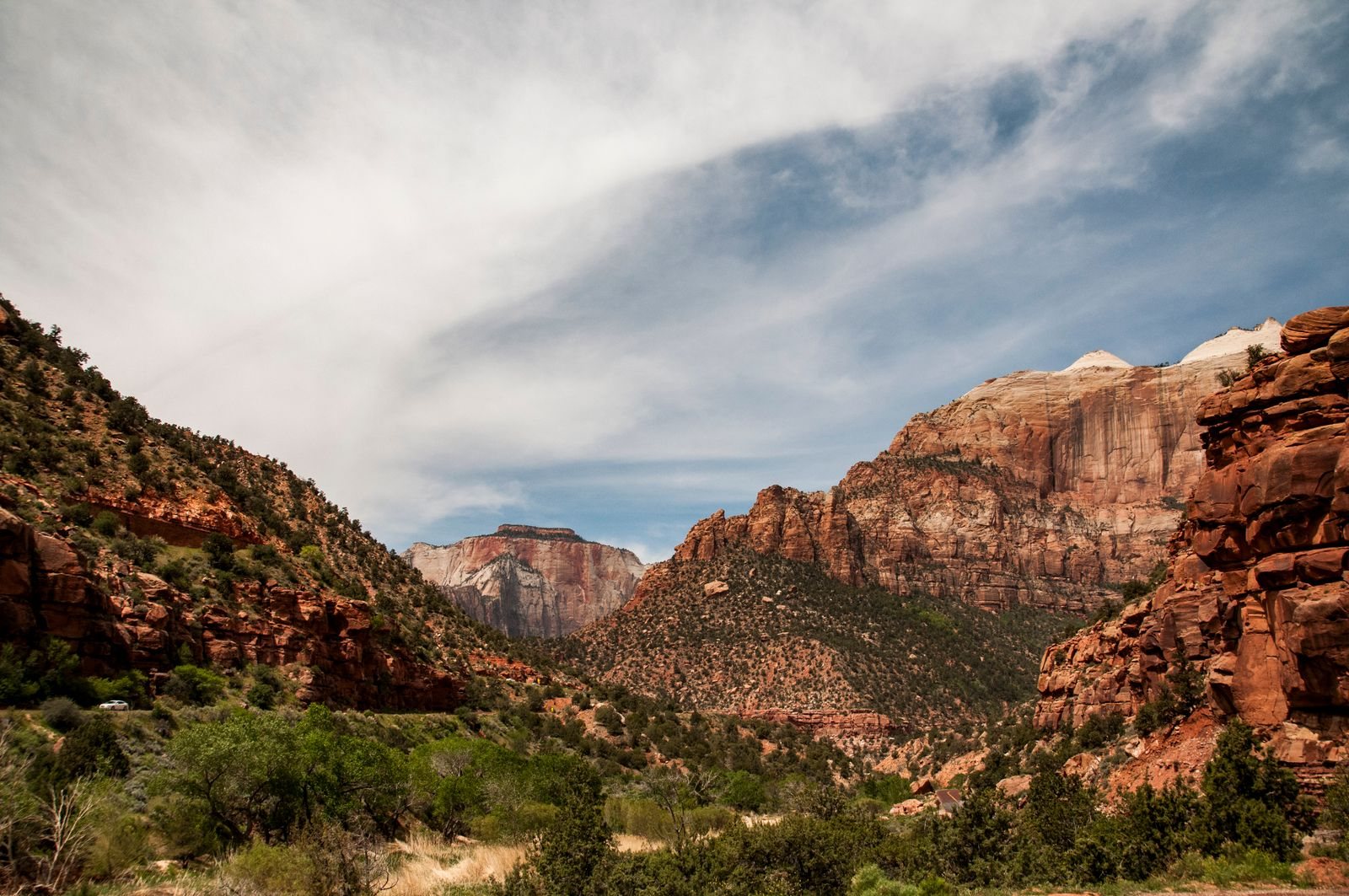
Standing in the Virgin River with canyon walls towering a thousand feet overhead on both sides, we finally understood why Zion is the national park everyone tells you about in a slightly breathless voice. Living in Denver, we are spoiled for mountain scenery, but Zion is something else entirely: a slot canyon cathedral carved in red and cream sandstone that makes you feel wonderfully small.
This Zion National Park travel guide covers the hikes (including how the Angels Landing permit lottery actually works), when to go, where to stay, and the mistakes we made so you do not have to. Zion is Utah’s busiest national park for good reason, but with the right plan, you can experience the magic without spending your trip in lines.
When to Visit Zion
Zion is open year-round, and every season has a personality.
Spring (March to May) brings rushing waterfalls, mild hiking temperatures, and blooming cactus. The catch: snowmelt often closes The Narrows in early spring when the river runs high.
Summer (June to August) is peak season and peak heat. Daytime temperatures regularly pass 100 degrees in the canyon. If you visit in summer, hike at dawn, spend midday in the river or the shade, and expect crowds.
Fall (September to November) is our pick. By October, temperatures settle into the 70s, the cottonwoods along the Virgin River turn gold, and The Narrows water level is usually ideal.
Winter (December to February) is the secret season. Crowds vanish, snow dusts the red cliffs, and you can drive the scenic canyon road in your own car since the shuttle pauses for the season. Some trails ice over, so bring traction spikes.
Getting to Zion and Getting Around
Zion sits in southwestern Utah, about 2.5 hours northeast of Las Vegas, which has the closest major airport. Most visitors fly into Vegas, rent a car, and drive up. The drive itself is a treat once you leave the interstate, and pairing Zion with a Vegas trip is a classic combination. If that is your plan, our Las Vegas travel guide covers the city side of the equation.
Here is the most important logistical fact about Zion: from roughly March through November, you cannot drive the Zion Canyon Scenic Drive in your own car. A free shuttle runs from the visitor center, stopping at all the major trailheads. The shuttle is efficient, but lines at the visitor center can stretch 45 minutes at midmorning in peak season.
The hack: stay in Springdale, the gateway town at the park entrance. A separate town shuttle runs the length of Springdale to the park’s pedestrian entrance, letting you skip the parking scramble entirely. Park your car at the hotel and forget about it.
The east side of the park, including the Zion-Mount Carmel Highway and its famous tunnel, stays open to private vehicles year-round and offers a completely different landscape of slickrock domes and bighorn sheep.
The Hikes That Define Zion
Angels Landing (Permit Required)
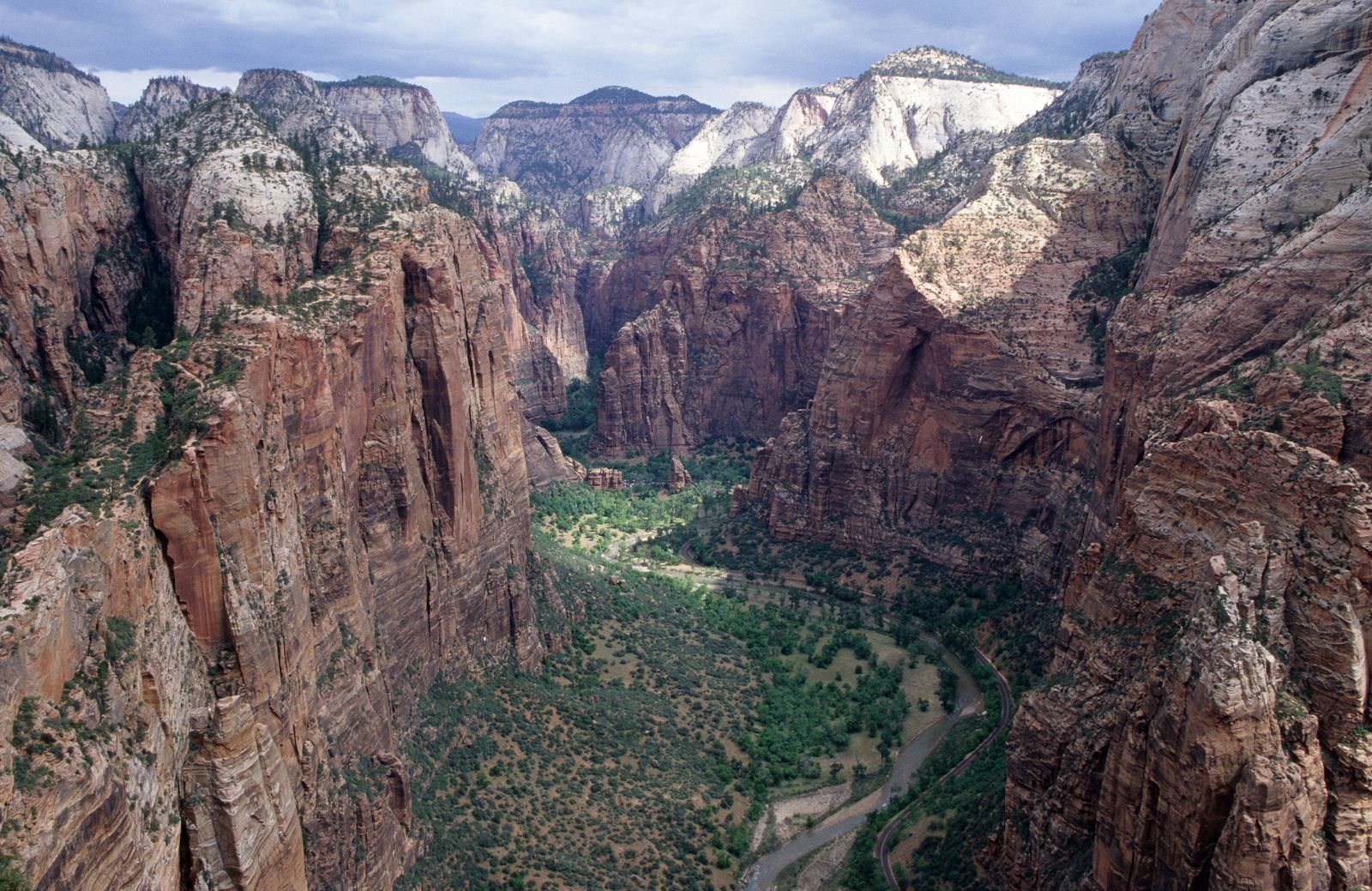
The most famous hike in the park, and the one with chains bolted into the rock for the final half mile along a knife-edge ridge. The views from the top are extraordinary. So is the exposure: sheer drops of over 1,000 feet on both sides.
Since 2022, Angels Landing requires a permit issued by lottery on recreation.gov. There are two ways in: a seasonal lottery months ahead, or the day-before lottery that opens at midnight and closes at 3pm Mountain Time the day before you want to hike. We got ours through the day-before lottery on the second try, so do not lose hope if you miss the seasonal window.
Honest advice: if you are uneasy with heights, hike to Scout Lookout instead. You get 80 percent of the views with none of the chains, and no permit is needed.
The Narrows
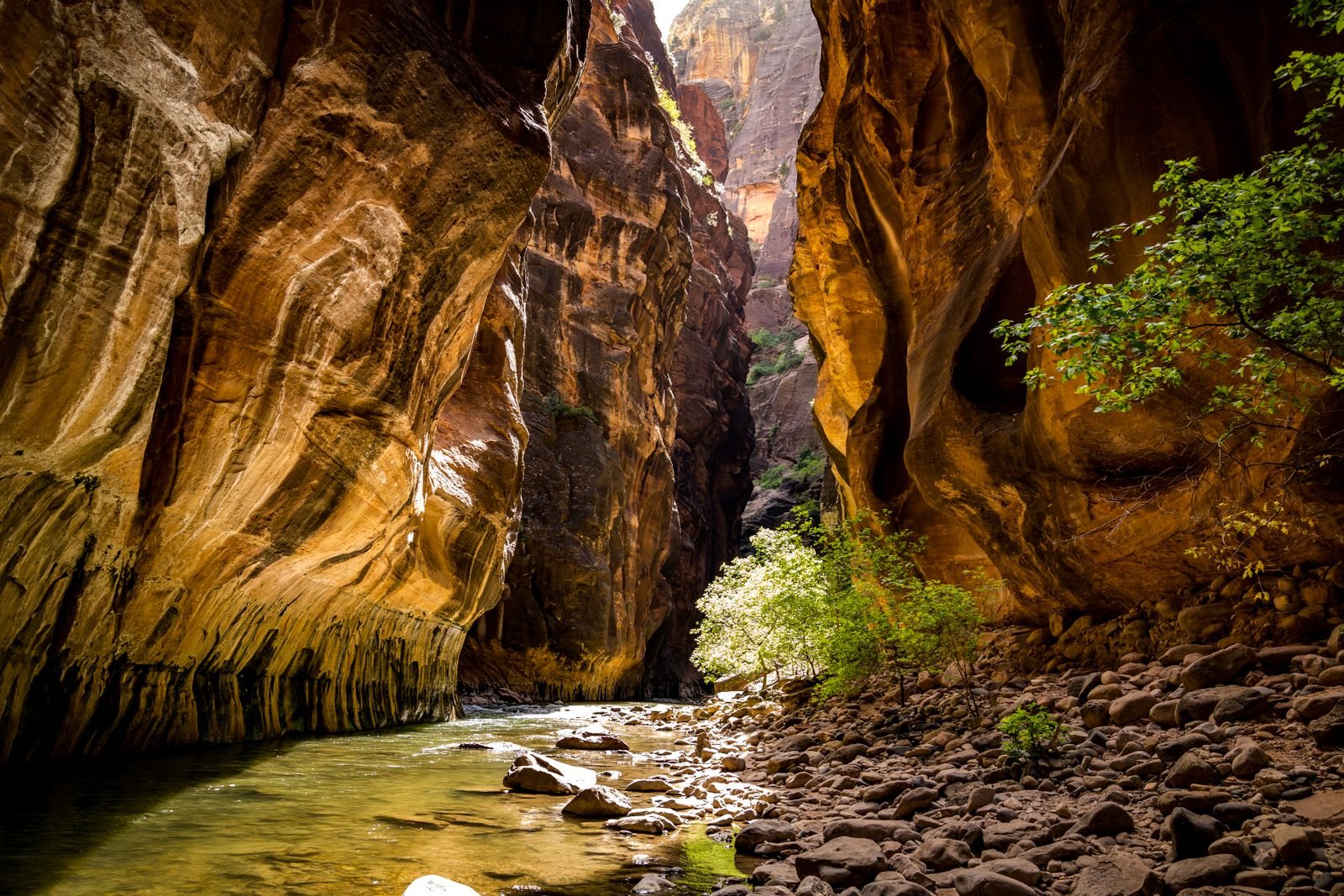
Our favorite hike in the park, full stop. The Narrows is the Virgin River itself: you hike in the water, upstream, between walls that narrow to 20 feet apart and rise nearly a thousand feet. There is no trail. The river is the trail.
Bottom-up day hiking from the Temple of Sinawava requires no permit. Go as far as you like and turn around; the best scenery (Wall Street) starts about two miles in.
Gear matters here. In any season except late summer, rent canyoneering boots, neoprene socks, and a wooden staff from one of the Springdale outfitters. The $30 rental transformed our experience compared to the soggy-sneaker hikers we passed. Check flash flood ratings before you go; the rangers post them daily, and you should take them seriously.
Hikes Without Permits or Nerves of Steel
- Emerald Pools. A family-friendly network of trails to waterfall-fed pools. Lower Pool is stroller-accessible.
- Canyon Overlook Trail. One mile round trip on the east side for a sunrise view down the entire canyon. The best effort-to-payoff ratio in the park.
- Riverside Walk. The paved path to the start of The Narrows, beautiful in its own right.
- Watchman Trail. Starts at the visitor center, ideal for sunset when the namesake peak glows red.
- Observation Point via East Mesa. Higher than Angels Landing, with a view looking down on it, and no chains. The East Mesa route is a moderate 7 miles round trip.
A Perfect 3-Day Zion Itinerary
Day 1: Arrive, settle into Springdale, ride the shuttle up-canyon to get oriented, walk the Riverside Walk, and catch sunset on the Watchman Trail. Enter the day-before lottery for Angels Landing.
Day 2: The Narrows. Rent gear the night before, catch one of the first shuttles, and beat both the crowds and the afternoon heat. Reward yourself with a burger and a local beer in Springdale.
Day 3: Angels Landing at dawn if you won the lottery (or Scout Lookout if not), then drive the Zion-Mount Carmel Highway in the afternoon, stopping at Canyon Overlook and the slickrock pullouts on the east side.
Have more time? Kolob Canyons, the park’s quiet northwestern section accessed off I-15, sees a fraction of the visitors and the Timber Creek Overlook at sunset is stunning.
Where to Stay
Springdale is the move for most visitors. The town sits directly at the park entrance, framed by the same red cliffs, with restaurants, outfitters, and the town shuttle. Cliffrose Springdale and the Cable Mountain Lodge are the premium picks with river frontage; Bumbleberry Inn and La Quinta cover the mid-range well.
Inside the park, Zion Lodge is the only option, and the location in the heart of the canyon is unbeatable. Book six months to a year ahead.
Camping: Watchman Campground takes reservations and fills months out. South Campground is first-come, first-served chaos in peak season.
Budget option: the towns of Hurricane and La Verkin, 25 minutes west, have chain hotels at half the Springdale price.
What to Eat in Springdale
For a town of 500 people, Springdale eats well. Oscar’s Cafe does enormous post-hike burritos and green chile cheeseburgers. King’s Landing Bistro is the date-night pick. Camp Outpost has fire-roasted everything and a great patio. And Springdale Candy Company’s ice cream line at 3pm is full of people who just finished The Narrows, all grinning.
Practical Tips We Learned the Hard Way
- Start everything early. First shuttles run around 6am in summer. The difference between a 6:30am and 9:30am start is the difference between solitude and a conga line.
- Hydrate like it is your job. The dry heat sneaks up on you. A liter per hour of hiking in summer is the ranger recommendation.
- The tunnel has rules. RVs and trailers need a paid escort through the narrow 1.1-mile Zion-Mount Carmel tunnel.
- Cell service is nearly nonexistent in the canyon. Download offline maps before you arrive.
- Combine parks. Bryce Canyon is 90 minutes away and the hoodoo amphitheater pairs perfectly with Zion’s canyon walls. Many travelers loop Zion, Bryce, and the Grand Canyon’s North Rim into one road trip. Our Moab Utah road trip guide covers the eastern side of Utah’s national park lineup if you want to extend into Arches and Canyonlands country.
How Many Days Do You Need in Zion?
We get this question constantly, so here is our honest answer. One day gives you a taste: ride the shuttle, walk Riverside Walk, and squeeze in one signature hike. Two days lets you do both The Narrows and Angels Landing (or Scout Lookout) without rushing. Three days is the sweet spot, adding the east side, sunset hikes, and room to breathe. Beyond three days, add Kolob Canyons, a canyoneering trip with a Springdale guide service, or a day trip to Bryce Canyon.
If Zion is part of a longer Utah road trip, give it more time than the other parks, not less. Bryce can be genuinely experienced in a day. Zion cannot, mostly because its best hikes each consume the better part of a day and the shuttle adds overhead to everything.
One scheduling tip: visit midweek if you possibly can. Zion’s visitation has doubled in the past decade, and the difference between a Tuesday and a Saturday in the canyon is dramatic, both for shuttle lines and for trail crowding. A Tuesday in October feels like a different park than a Saturday in July.
Zion with Kids
Zion is one of the best national parks for families, with a caveat: the famous hikes skew adventurous. Our family-tested lineup looks like this.
The Riverside Walk is paved, shaded, and ends at the river where kids can splash in the shallows. The Lower Emerald Pool trail is an easy 1.2 miles round trip to a waterfall that mists the trail. The Pa’rus Trail is a flat, paved path along the river near the visitor center, perfect for strollers and bikes, and one of the few trails in any national park where dogs are allowed.
Older kids (8 and up, in our view) handle the bottom section of The Narrows surprisingly well in summer when the water is warm and low. Rent them proper boots and a staff just like the adults; outfitters carry kid sizes.
The Junior Ranger program at the visitor center is excellent, and the museum’s ranger talks give kids context that makes the cliffs more than just big rocks. In Springdale, the candy shop and the swimming pools at most hotels handle the late-afternoon energy crash.
What to Pack for Zion
A few items make a disproportionate difference here:
- Sun protection. The canyon offers shade, but the east side and exposed trails do not. Hats, SPF, and sunglasses are mandatory equipment.
- Water capacity. At least 3 liters per person for any real hike. Refill stations sit at every shuttle stop.
- Layers. Desert mornings start 30 degrees cooler than afternoons. We start dawn hikes in a fleece and finish in t-shirts.
- Traction. Trail runners or hiking shoes with grippy soles handle the slickrock far better than fashion sneakers.
- A dry bag for phones and snacks if The Narrows is on your list.
Where to Book
These are the booking platforms we use for our own national park trips:
- Hotels: Booking.com covers Springdale and the surrounding gateway towns with free cancellation on most properties, which helps when you are juggling permit lotteries.
- Tours and experiences: Viator offers guided Narrows hikes, canyoneering trips, e-bike rentals, and Zion-Bryce combo tours from Las Vegas if you would rather not drive.
Final Thoughts
Zion demands a little more planning than most parks: permit lotteries, shuttle logistics, gear rentals, flash flood forecasts. Every bit of it is worth the effort. There is no feeling quite like wading upstream through Wall Street as the morning light bounces between the canyon walls, or watching the Watchman catch fire at sunset while the Virgin River murmurs past. Plan early, start earlier, and let the canyon do the rest.
Planning more mountain and desert adventures? Read our Yellowstone National Park travel guide for America’s first national park, our Banff National Park travel guide for the Canadian Rockies, and our Las Vegas travel guide for the city most Zion road trips begin in.