Disclosure: This post contains affiliate links. If you book through our links, we may earn a small commission at no extra cost to you. Thanks for supporting Faceted Travel!
Table of Contents
Almost every travel article about Podgorica opens by apologizing for it. We are not going to do that. Montenegro’s capital is not pretty in the way Kotor is pretty, and if you are on a seven-day coastal trip you can reasonably skip it. But we have now passed through Podgorica four times, spent two nights there on purpose, and come away thinking most travelers are making a mistake by treating it purely as an airport with a city attached.
Here is the honest version: what is actually here, how long to give it, and how to use it as the most efficient base in the country.
First, Why Podgorica Looks the Way It Does
Understanding this changes how you see the city. Podgorica was bombed more than seventy times in 1944 and essentially flattened. What got rebuilt was a socialist Yugoslav capital of wide boulevards and concrete apartment blocks, renamed Titograd until 1992. Then came independence in 2006 and a wave of glass-and-steel construction that has not really stopped.
So you are looking at three cities stacked on top of each other: a few Ottoman-era fragments, a mid-century planned capital, and a young European capital still figuring out what it wants to be. Once we understood that, the place got much more interesting to walk around.
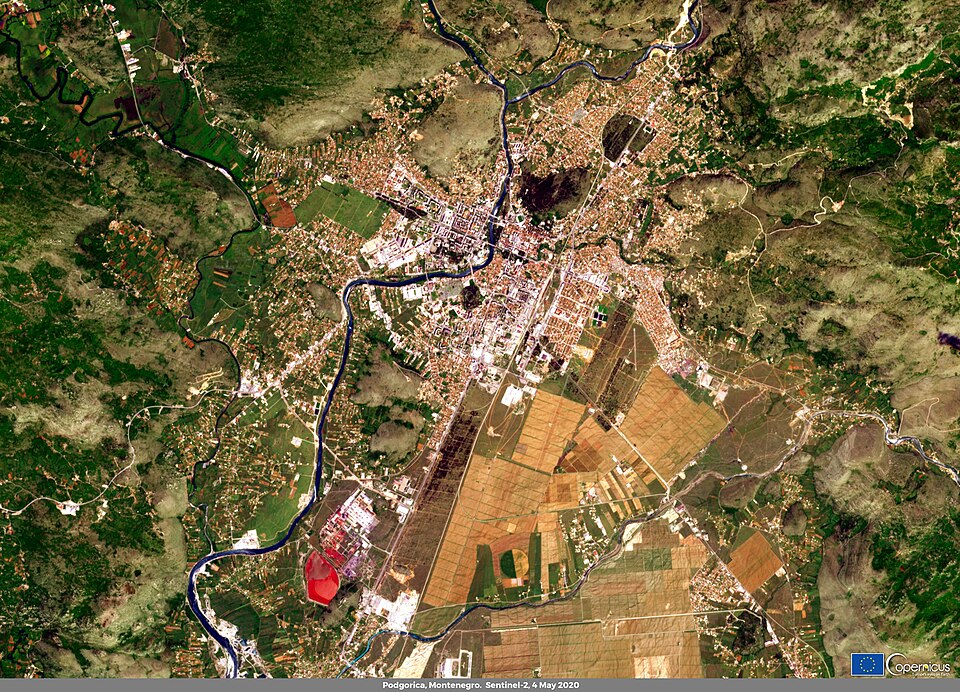
It also sits in a genuinely dramatic spot, in a broad plain where five rivers meet, with the Dinaric Alps rising to the north and Lake Skadar twenty minutes south.
Getting To and Around Podgorica
By air. Podgorica Airport (TGD) is about seven miles south of the center, roughly a fifteen-minute drive. It is the country’s main airport and typically the cheaper of the two, with Tivat being the other. Taxis into town are inexpensive and there is a train station at the airport with a handful of daily services.
By car. Podgorica is the road hub of Montenegro. Kotor is about ninety minutes, Budva about an hour, Ulcinj about ninety minutes, and Zabljak in the north around two and a half hours. The Sozina tunnel toward the coast saves a lot of time and costs a few euros.
By train. This is the sleeper hit. The Belgrade to Bar railway passes through Podgorica and the stretch north toward Kolasin crosses the Mala Rijeka viaduct, one of the highest railway bridges in Europe. Tickets cost a few euros. It is slow, the carriages are old, and the scenery is spectacular.
Getting around town. The center is walkable end to end in about thirty minutes. Taxis are cheap and metered, and rideshare apps have limited coverage. You do not need a car for the city itself, but you absolutely want one for everything around it.
What to Actually Do in Podgorica
Stara Varos, the Ottoman Quarter
The oldest surviving part of the city, on the east bank of the Ribnica. Narrow lanes, low stone houses, the Sahat Kula clock tower from the 1660s, and two working mosques. It takes maybe forty-five minutes to walk and it is the only place in Podgorica where the pre-war city is still legible.
The Ribnica Bridge and Ruins
Right below Stara Varos, the small Roman-foundation bridge and the ruins of the old fortress sit where the Ribnica meets the Moraca. It is a scruffy, unmanicured spot that locals use as a park, and it is one of our favorite corners of the city precisely because nobody has tidied it up.
Cathedral of the Resurrection of Christ
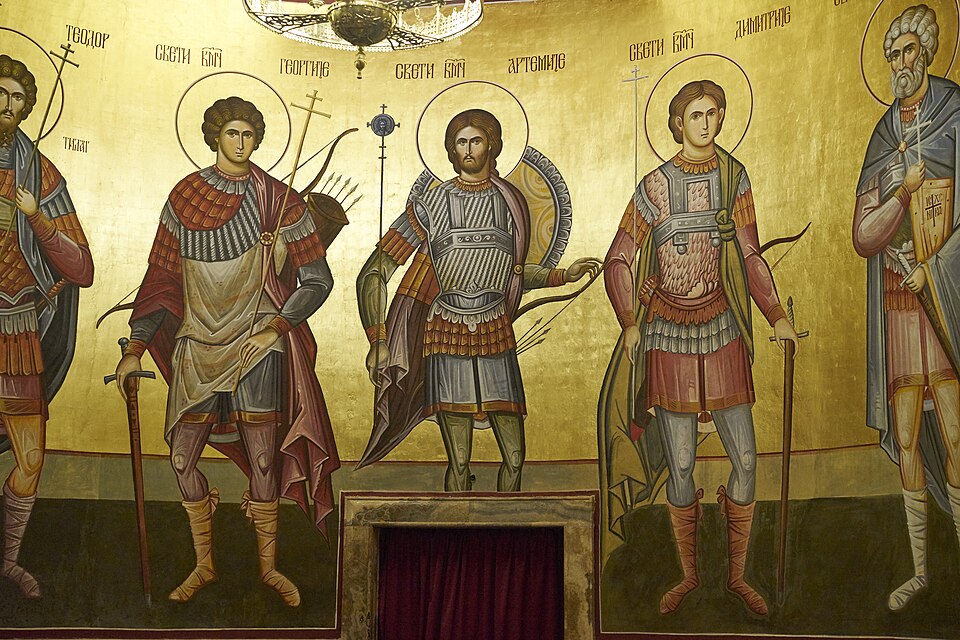
Completed in 2013 and unlike any Orthodox church we have seen. The exterior is white stone in a deliberately archaic Serbian-Byzantine style. The interior is covered floor to dome in dense, saturated frescoes, including a controversial one depicting Tito, Marx, and Engels in hell. Free to enter, dress modestly, and give it twenty minutes.
Millennium Bridge and the Moraca Riverbanks
The cable-stayed Millennium Bridge is the city’s signature modern structure and it looks best at night. More useful, though, are the paths along the Moraca. There are swimming spots in the river gorge right inside the city where locals go on hot afternoons, which is not a thing we have seen in any other European capital.
Njegos Park and the Petrovic Palace
A leafy park with the former royal residence of the Petrovic dynasty at its center, now the city’s contemporary art gallery. Rotating exhibitions, small permanent collection, cheap entry.
The Cafe Scene
This is genuinely the best reason to spend an evening. Njegoseva Street and the streets around it fill up in the early evening and stay full. Coffee is taken slowly and seriously. Prices are a fraction of what you pay on the coast. Sitting out with a coffee at 7pm watching an entire city do the same thing is our favorite Podgorica activity, and it costs about two euros.
Podgorica as a Base: The Real Argument
Here is where Podgorica earns its place in an itinerary. It is the most centrally located city in Montenegro, and several of the country’s best experiences are day trips from it.
- Lake Skadar National Park is twenty to forty minutes away depending on which access point you use. Boat trips, the Rijeka Crnojevica viewpoint, and the wine villages of Crmnica are all easy half-days.
- Ostrog Monastery is about an hour northwest and is the most visited site in the country away from the coast.
- Lovcen National Park and Cetinje, the old royal capital, are around an hour west on a spectacular mountain road.
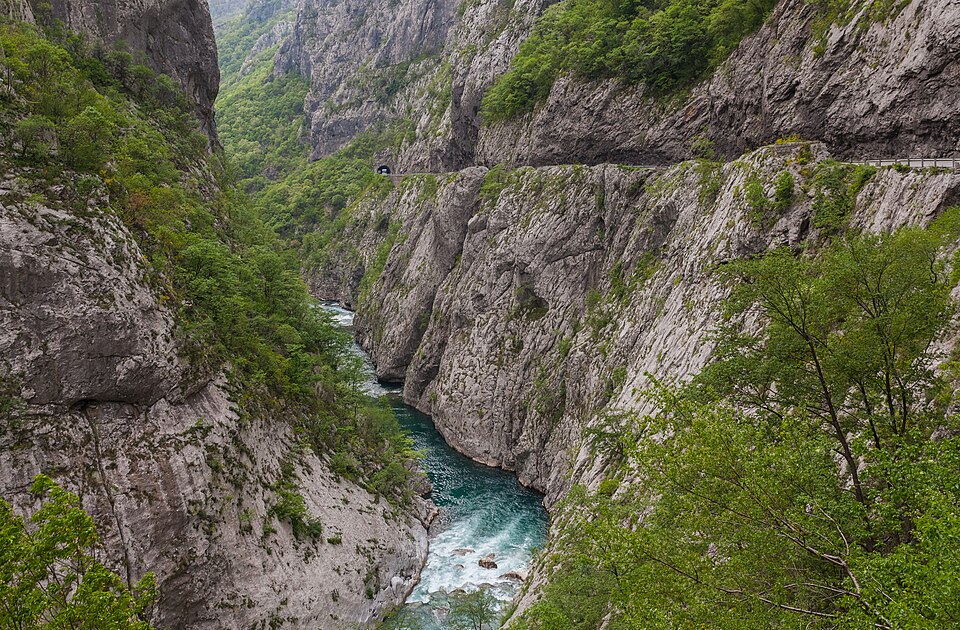
- The Moraca Monastery and Canyon sit directly on the road north, an easy stop en route to Durmitor.
- The coast at Budva or Bar is under an hour, so a beach afternoon is entirely realistic.
Accommodation runs materially cheaper here than anywhere on the coast in summer, and you are not fighting cruise-ship crowds. If you are driving the country anyway, two nights in Podgorica in the middle of the trip is a smart, cheap reset.
Where to Stay in Podgorica
City center, around Njegoseva and Slobode. Walkable to the cafes and restaurants, most of the better hotels are here, and it is where we would stay. Expect business hotels and modern apartments rather than character properties.
Near Stara Varos. Quieter, a bit more atmosphere, a ten-minute walk from the center.
Out toward the airport. Only worth it for an early flight. There is nothing to walk to.
Podgorica is a business-travel city, which means weekday rates can actually run higher than weekend rates. That is the opposite of the coast, and it is worth checking both.
Where to Book
- Accommodation: Booking.com has essentially complete coverage of Podgorica, including the apartment stock that dominates here. Look for properties within a ten-minute walk of Njegoseva Street.
- Tours and day trips: Viator runs the Lake Skadar boat trips, the Ostrog pilgrimages, and combined Cetinje and Lovcen tours out of Podgorica, which is useful if you would rather not drive the mountain switchbacks yourself.
We book European travel insurance for every trip like this, and we explain what we look for in our guide to the best travel insurance for Europe.
Eating and Drinking
Montenegrin food in the interior is heavier and more meat-forward than on the coast, and Podgorica is where you should eat it.
Order njeguski prsut (the smoked ham from the village below Lovcen), kacamak (a rich cornmeal and potato dish with cheese), japraci, and grilled meat in almost any form. The Lake Skadar carp and bleak show up on menus here too. Wine is dominated by Vranac, the local red, and the Plantaze winery just south of the city produces most of it.
Prices are the lowest of anywhere we ate in Montenegro. A full sit-down dinner with wine ran us well under what a lunch cost in Kotor.
Practical Things We Wish We Had Known
Money. Montenegro uses the euro despite not being in the eurozone. Card acceptance in Podgorica is good, better than in the smaller coastal towns, but cash is still king at the markets and in older cafes. ATMs are everywhere in the center and several charge no local fee.
Language. Montenegrin, which for practical purposes is mutually intelligible with Serbian and Croatian. English is widely spoken by anyone under about forty and in essentially every hotel and restaurant. Signage uses both Latin and Cyrillic scripts, and the mix is genuinely random, so knowing the Cyrillic alphabet for city names is quietly useful.
Safety. Podgorica felt as safe as any small European capital we have walked at night. Standard sense applies and nothing more.
The green market. The city market off Bratstva i Jedinstva is worth an hour on a Saturday morning. Local cheese, honey, prsut, and mountains of produce, at prices that will make you recalibrate what you think food should cost.
Sunday. A lot of the city genuinely closes. Cafes stay open, most shops do not. Plan a day trip instead.
Driving. Podgorica traffic is calmer than most Balkan capitals, but parking in the center is zoned and enforced. Most hotels have a lot or an arrangement, and it is worth confirming before you book if you have a rental.
Fuel and tolls. Fuel is cheaper than in Croatia and Italy, so fill up here before heading north or across a border. The Sozina tunnel toward Bar is the only real toll you will meet, and it takes cash or card.
Best Time to Visit Podgorica
Podgorica sits in a bowl and gets genuinely hot. July and August routinely pass 100°F, and it is regularly the hottest capital in Europe. If you are here in high summer, plan mornings and evenings and hide indoors from noon to five.
May, June, September, and October are the good months. Warm without being punishing, and the surrounding day trips are at their best. Winter is mild and wet, and the city keeps functioning normally since it is not a seasonal tourist town. Our best time to visit Montenegro guide breaks the whole country down month by month.
How Long to Stay
Half a day if you are just connecting through the airport. Walk Stara Varos, see the cathedral, have a coffee, leave.
One full day to see everything in the city without rushing.
Two nights if you are using it as a base for Lake Skadar and Ostrog, which we think is the smartest way to use it.
Podgorica is not going to be the highlight of your Montenegro trip, and we would not pretend otherwise. But it is cheap, central, genuinely lived-in, and it gives you a view of the country that the coast simply does not. Give it an evening. Sit outside with a coffee. You will like it more than you expect.
More Montenegro planning: Start with our complete guide to planning a trip to Montenegro and our Montenegro road trip itinerary for how to sequence the interior with the coast. If you are working out a budget, we broke down how much a trip to Montenegro actually costs.