Disclosure: This post contains affiliate links. If you book through our links, we may earn a small commission at no extra cost to you. Thanks for supporting Faceted Travel!
Table of Contents
- Why Visit Mount Rainier National Park?
- When to Visit Mount Rainier
- Getting to Mount Rainier
- The Best Things to Do in Mount Rainier
- Where to Stay Near Mount Rainier
- Where to Book
- Sample 2-Day Mount Rainier Itinerary
- How Many Days Do You Need at Mount Rainier?
- Practical Tips for Visiting Mount Rainier
- Is Mount Rainier National Park Worth Visiting?
The clouds broke apart just as we crested the last switchback on the Skyline Trail, and suddenly there it was: a wall of ice and rock so enormous it seemed to bend the sky around it. We stopped mid-sentence, both of us, because a mountain that big does something to your sense of scale that no photograph ever prepares you for. Below us, meadows ran gold and purple with wildflowers, and a ribbon of glacier poured down toward Paradise like frozen light.
We have stood beneath a lot of famous peaks over the years, and Mount Rainier still ranks among the most humbling. At 14,411 feet, this glaciated volcano dominates the Washington landscape for a hundred miles in every direction, and locals simply call it “the Mountain.” What surprised us most was how much the park rewards you the moment you step out of the car; you do not need to be a mountaineer to be moved here. This guide covers what we wish we had known before our first trip: when to go, where to stay, and the trails that make Rainier one of the great parks of the Pacific Northwest.
Why Visit Mount Rainier National Park?
Rainier manages to feel both accessible and genuinely wild. In a single day you can walk through old-growth forest where the trees predate European settlement, climb into subalpine meadows exploding with color, and stand within reach of active glaciers. It is the most heavily glaciated peak in the contiguous United States, and those rivers of ice feed the waterfalls and wildflower basins below.
What we love most is the contrast: hushed, ancient lowland forests thick with moss and cedar, then a few thousand feet up the world cracks open into sweeping alpine views with the summit overhead. Add the wildlife, the historic lodges, and the variety of things to do, and you have a park that keeps pulling us back. It also pairs beautifully with the rainforests and coastline of Olympic National Park.
When to Visit Mount Rainier
Timing matters more at Rainier than at almost any park we have visited: the mountain makes its own weather, and the high country stays buried in snow much of the year.
Summer (late June through September) is prime season. The high-elevation roads and trails finally clear of snow, the visitor centers open fully, and the meadows come alive. Wildflower season typically peaks from late July into August, when the subalpine slopes at Paradise and Sunrise turn into a riot of lupine, paintbrush, avalanche lily, and bear grass.
Fall (late September into October) brings crisp air, thinning crowds, and pockets of color. It is quieter, though the weather grows unpredictable and higher roads can close with the first snows.
Winter and spring transform Paradise into a snowshoeing and sledding wonderland, with the Nisqually entrance in the southwest open year-round (weather permitting). Just know that Sunrise and the high roads are closed, and access is limited to the lower, southern side.
One critical note: during peak summer, Rainier uses a timed-entry reservation system for the busiest corridors, including the Paradise and Sunrise areas. The rules and dates shift year to year, so check the National Park Service website and book as early as you can. On a clear July weekend these fill fast.
Getting to Mount Rainier
You will want a car, full stop. Public transit does not realistically serve the park, and the whole experience revolves around driving between viewpoints and trailheads spread across a large area.
From Seattle, the drive to the southwest (Nisqually) entrance near Ashford runs roughly 2 to 2.5 hours depending on traffic and where in the park you are headed. It makes a doable day trip, but we recommend at least one overnight so you are not racing the crowds and the light. Coming from the south, you are looking at a similar drive; our Portland, Oregon travel guide is worth a look if you want to add some Oregon time.
Choosing the right gateway shapes your visit. The Nisqually entrance near Ashford, in the southwest, is the main year-round gate and your access point for Longmire and Paradise. The White River / Sunrise entrance in the northeast opens only in summer and delivers you to the highest point reachable by car, with additional gates near the southeast and northwest corners. Because the roads wrap around Rainier rather than through it, driving side to side takes time, so we concentrate on one region per day.
The Best Things to Do in Mount Rainier
Paradise & the Skyline Trail
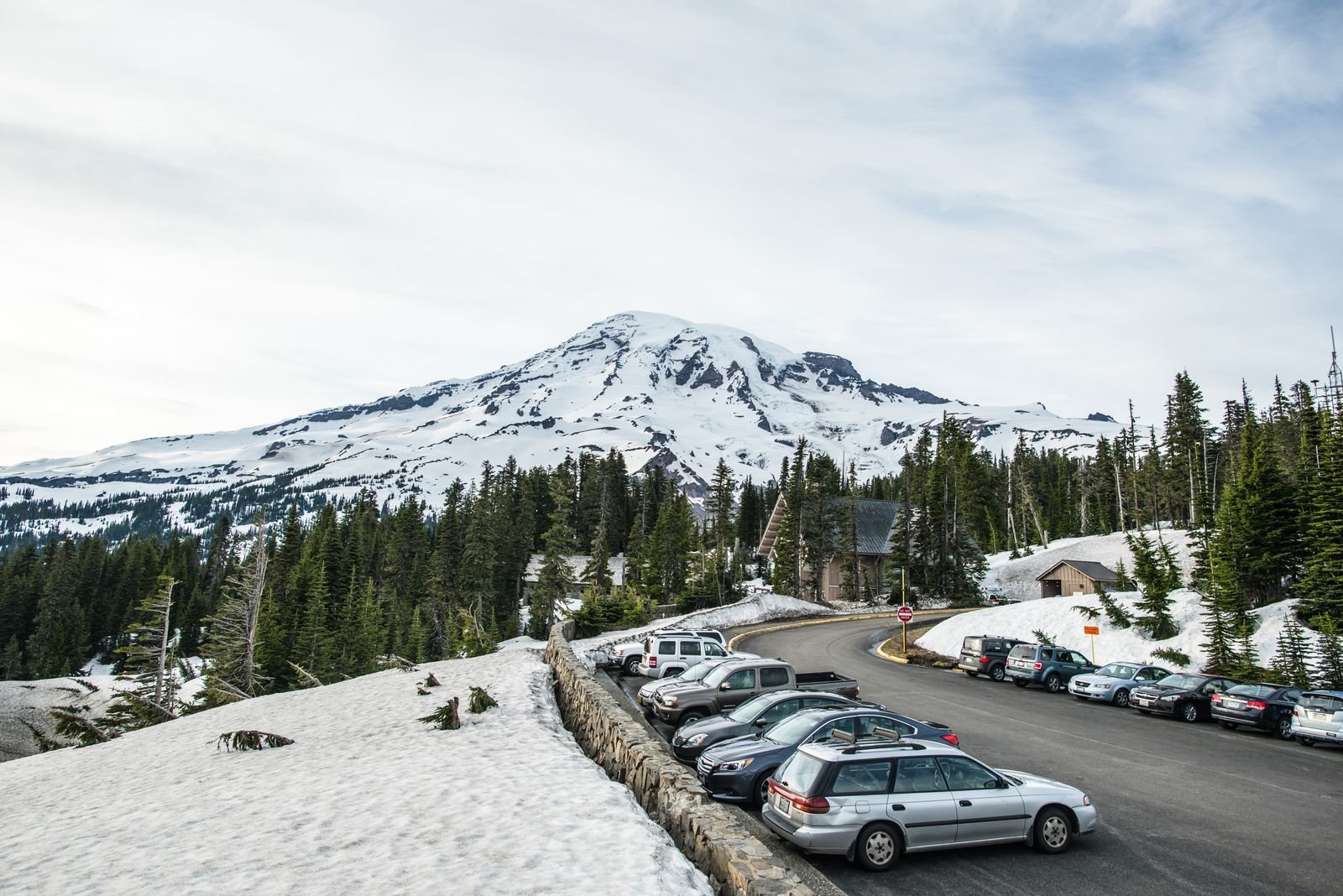
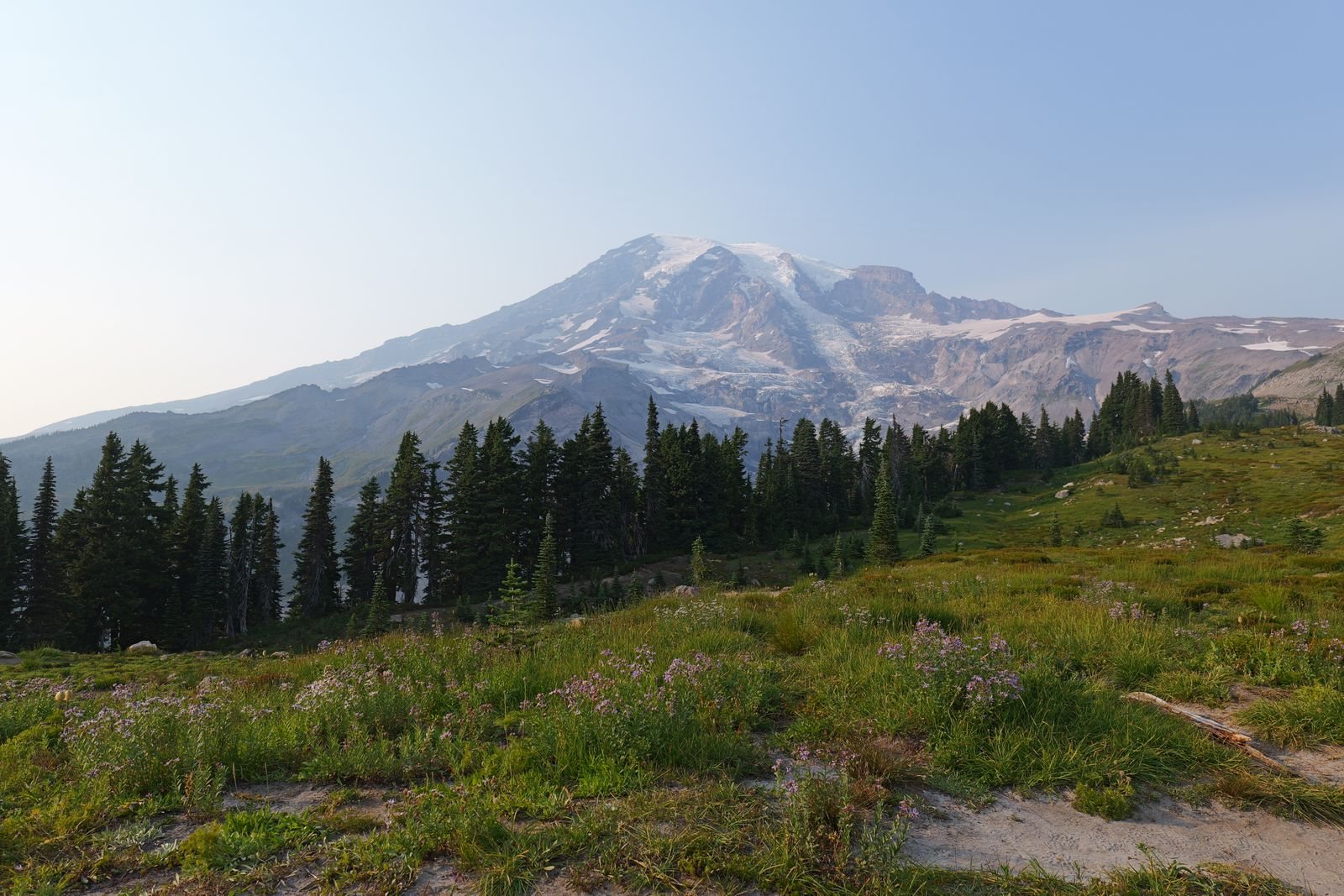
Paradise is the beating heart of the park, and if you have time for only one area, make it this one. Sitting on the south side around 5,400 feet, it is the most popular destination for good reason: jaw-dropping mountain views, the best wildflower meadows, and trails fanning out from the Henry M. Jackson Visitor Center.
The signature hike is the Skyline Trail, a roughly 5.5-mile loop that climbs into the high meadows and, on a clear day, serves up some of the finest scenery in the park, cresting at Panorama Point with the summit filling the northern sky. It is a workout with real elevation gain, but the paved lower loops offer a gentler taste of the meadows. Go early, since parking fills by mid-morning in summer.
Sunrise
If Paradise is the crown jewel, Sunrise is the quieter, higher counterpart too many visitors skip. At about 6,400 feet, it is the highest point in the park reachable by car, and the northeast perspective is completely different: you look across the vast Emmons Glacier, the largest glacier in the contiguous United States by area, sprawling down toward you.
Sunrise is open only in summer and typically opens later than Paradise once the road clears. The trails roll through open, tundra-like meadows with enormous views, and because it takes more effort to reach, it feels less crowded. We hiked toward the ridgelines and had long stretches nearly to ourselves in August.
Reflection Lakes
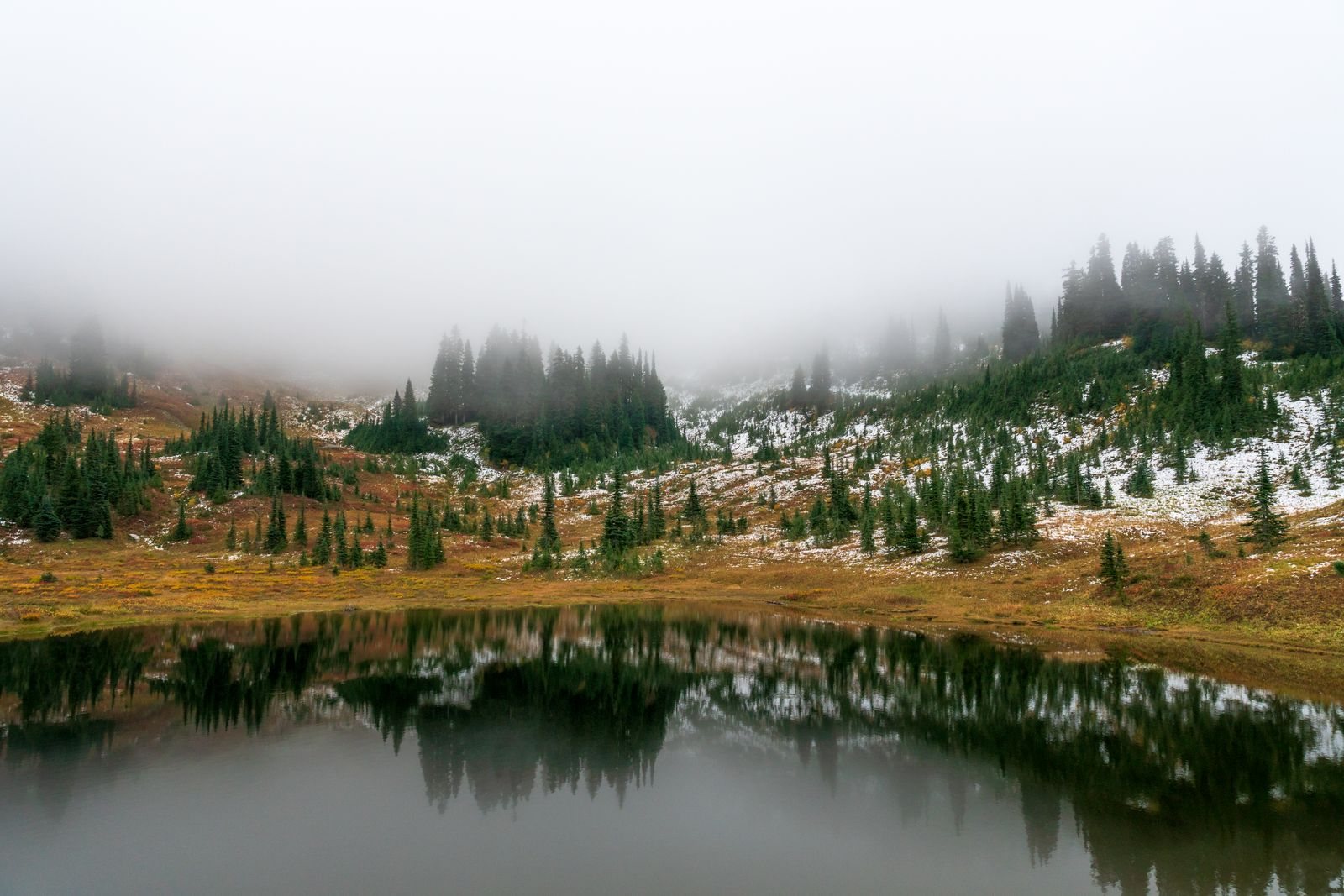
For one of the most iconic photos in the park, head to Reflection Lakes, a short drive from Paradise along the Stevens Canyon Road. On a still morning the lakes mirror the mountain almost perfectly, so it is worth an early alarm to catch the calm water, and the peak doubled in the glass, before the wind and the tour buses arrive.
Waterfalls (Christine & Narada)
Rainier’s glaciers feed a spectacular collection of waterfalls, and two of the easiest sit right along the road between the Nisqually entrance and Paradise. Christine Falls tumbles beneath a graceful stone bridge that frames it neatly under the arch. A little farther up, Narada Falls is the showstopper: a broad, powerful curtain of water dropping over a cliff, often wrapped in mist and, on sunny days, a rainbow. A short but steep trail leads to the lower viewpoint.
Old-Growth Forest
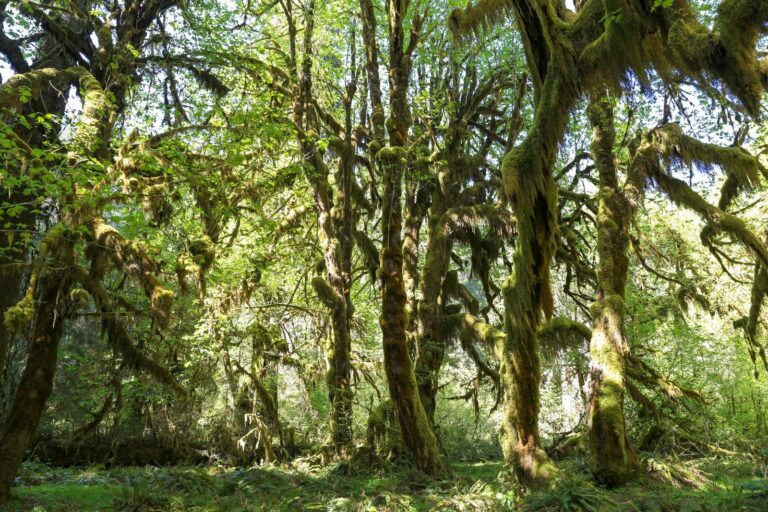
Before you climb into the meadows, give the ancient forest its due. The lower elevations protect groves of towering old-growth trees, enormous Douglas firs, western red cedars, and hemlocks that have stood for centuries. The Grove of the Patriarchs, in the southeast corner, is one of the most famous stands, home to genuinely massive trees on an island in the Ohanapecosh River. Access here has been affected by footbridge closures over the years, so check current conditions, but the broader Ohanapecosh area offers the same cathedral-like feeling of walking among giants.
Wildlife & Wildflowers
The wildflower display is why many people time their visit for late July and August: entire hillsides washed in purple lupine, magenta paintbrush, white avalanche lilies, and shaggy bear grass, all set against snowfields and blue sky. Please stay on the trails. These meadows are fragile, the growing season is short, and a single footprint off-trail can scar the slope for years.
For wildlife, keep your eyes open and your distance respectful. Hoary marmots are the comedians of the high country, whistling and lounging on rocks. You may spot mountain goats on distant ridgelines, black-tailed deer in the meadows, and, if you are lucky, black bears in the berry patches come late summer. We always carry binoculars.
Where to Stay Near Mount Rainier
Lodging takes planning, because options inside and around the park are limited and book up early.
Ashford & the Nisqually Gateway
The little town of Ashford, just outside the Nisqually entrance in the southwest, is the most convenient home base for exploring Paradise. You will find cabins, inns, small lodges, and vacation rentals, and the location lets you reach the trailhead early. It is our default for a Paradise-focused trip.
National Park Inn at Longmire & Paradise Inn
For a more atmospheric stay, the park’s two historic in-park lodges are hard to beat. The National Park Inn at Longmire is open year-round in a lovely forested setting on the southwest side, a cozy base with a rustic dining room. The grand Paradise Inn, a classic national-park lodge built in the early 1900s, sits right up in the meadows and is open seasonally in summer. Staying inside the park means you are there for sunrise and sunset when the crowds have gone. Both are popular, so reserve as far ahead as you can.
Packwood & Other Gateways
The town of Packwood, to the southeast, is a good option for exploring the Ohanapecosh and Sunrise sides or if Ashford is full, with motels, cabins, and rentals. Communities near the other gateways offer more beds, though services thin out the farther you get from the main corridors.
Where to Book
- Hotels: We use Booking.com to compare gateway hotels and in-park lodges, most with free cancellation.
- Tours and experiences: Viator has guided day tours from Seattle, wildflower hikes, and photography trips.
Sample 2-Day Mount Rainier Itinerary
Day 1: Paradise and the south side. Start early from Ashford and enter through Nisqually before the rush. Stop at Christine Falls and Narada Falls on the drive up, then spend the heart of the day at Paradise hiking the Skyline Trail (or the shorter meadow loops for something easier). In the afternoon, drive out to Reflection Lakes for the classic mountain-and-water view, and poke around Longmire on the way down. If you are staying inside the park, linger for sunset.
Day 2: Sunrise and the high country. Drive around to the northeast side and up to Sunrise (remember it is summer-only and opens later than you might expect). Hike into the open ridge meadows for the big Emmons Glacier views, pack a picnic, and take your time. If you have energy left and are routing toward the southeast, add an old-growth forest walk in the Ohanapecosh area to close the day.
How Many Days Do You Need at Mount Rainier?
You can see the highlights in a single long day if that is all you have. But our honest recommendation is two full days: one for the Paradise side and one for Sunrise, with time to actually hike rather than just pull over for photos. Two days also builds in a buffer for the weather, since the mountain is often socked in clouds and a second day dramatically improves your odds of catching it clear.
Three or four days would let you slow down, add the old-growth forests, and perhaps tackle a section of the legendary Wonderland Trail, the 93-mile loop that circles the entire mountain and ranks among the great backpacking routes in the country. For a first visit, though, two days hits the sweet spot.
Practical Tips for Visiting Mount Rainier
Reserve your timed entry. During peak summer, the busiest corridors require a timed-entry reservation. Rules change year to year, so check the National Park Service site and book the moment reservations open.
Start early, always. Parking at Paradise and Sunrise fills by mid-morning in summer. An early start means a spot, cooler air, calmer lakes, and quieter trails.
Dress in layers and expect weather. It can be sunny at the entrance and cold and wet up top. Bring a warm layer and rain protection even on a clear day.
Give the mountain a chance to appear. Rainier is frequently hidden in cloud. If it is socked in, be patient; we have watched it emerge dramatically after hours of gray.
Fill your tank and pack food. Services inside the park are limited, so handle gas in the gateway towns and carry water and snacks, especially for Sunrise.
Stay on the trails. The subalpine meadows are fragile and slow to recover, so keep to established paths.
Respect the wildlife. Keep your distance from marmots, deer, goats, and especially bears. Never feed animals, and store food properly.
Buy your park pass ahead. An entrance pass (or the America the Beautiful annual pass) is required, and sorting it beforehand saves time.
Is Mount Rainier National Park Worth Visiting?
Without a doubt. Rainier delivers an astonishing range within a compact footprint: ancient forests, thundering waterfalls, glaciers you can nearly touch, and wildflower meadows that stop you in your tracks. Yes, it takes planning around timed entry and the weather, and the summer crowds are real. But stand at Paradise on a clear day with the peak blazing overhead and the meadows in full bloom, and every bit of that effort melts away. It recalibrates your sense of what a mountain can be, and we cannot recommend it more highly.
Exploring more of the Pacific Northwest? Pair Mount Rainier with our guides to Seattle and Olympic National Park, and if you love the national parks, do not miss our Glacier National Park guide.