Disclosure: This post contains affiliate links. If you book through our links, we may earn a small commission at no extra cost to you. Thanks for supporting Faceted Travel!
Table of Contents
- When to Visit Glacier
- How the Vehicle Reservation System Works
- Driving the Going-to-the-Sun Road
- The Best Hikes in Glacier
- Many Glacier and the Other Corners
- Wildlife and Safety
- Where to Book Your Glacier Trip
- Where to Stay
- A Perfect 3-Day Glacier Itinerary
- Practical Tips We Learned the Hard Way
- How Many Days Do You Need in Glacier?
We have seen a lot of mountains living in Denver, but nothing prepared us for the first time the Going-to-the-Sun Road rounded a bend and the whole Glacier valley opened up below us. Turquoise lakes, hanging valleys, peaks still streaked with snow in July, and a mountain goat standing on the guardrail like it owned the place. Glacier National Park in northern Montana is, hands down, one of the most jaw-dropping places we have ever driven through.
This Glacier National Park travel guide covers when to go, how the vehicle reservation system actually works, the must-do drives and hikes, where to stay, wildlife safety, and the planning mistakes we made so your trip is smoother than ours.
When to Visit Glacier
Glacier’s season is short and weather-dependent, which makes timing the single most important part of planning.
Summer (July to early September) is the only time the full Going-to-the-Sun Road is reliably open, since the alpine section is buried in snow most of the year and plows do not finish clearing it until late June or early July. This is peak season: wildflowers, open trails, and every visitor service running, but also the biggest crowds and the vehicle reservation requirement.
Late September to early October is our favorite window. The crowds thin, the larches turn gold, the air is crisp, and the road is usually still open until the first big snow. It is a gamble on weather, but when it pays off, it is magic.
Spring (May to June) brings roaring waterfalls and green valleys, but the upper road is still closed by snow. You can explore the lower elevations and the valley lakes.
Winter (November to April) transforms Glacier into a silent, snowbound wilderness. Most services close and the high road is shut, but snowshoeing and cross-country skiing in the lower park are spectacular if you are prepared.
How the Vehicle Reservation System Works
This is the part that trips up first-timers, so read carefully. During peak season (roughly late June through September), Glacier requires a timed-entry vehicle reservation to drive certain corridors, most importantly the Going-to-the-Sun Road, during daytime hours. These are separate from your park entrance pass.
Reservations are released on recreation.gov, with a block available months ahead and another batch released the day before at 7pm Mountain Time. They go fast. We snagged ours through the day-before release on our second attempt, so do not panic if you miss the early window.
The workaround we used on one day: enter the corridor before the reservation window starts (very early morning) or after it ends in the evening. Entering before 6am also rewards you with empty pullouts and the best light. Always check the current year’s rules on the park website, because the system changes year to year.
Driving the Going-to-the-Sun Road
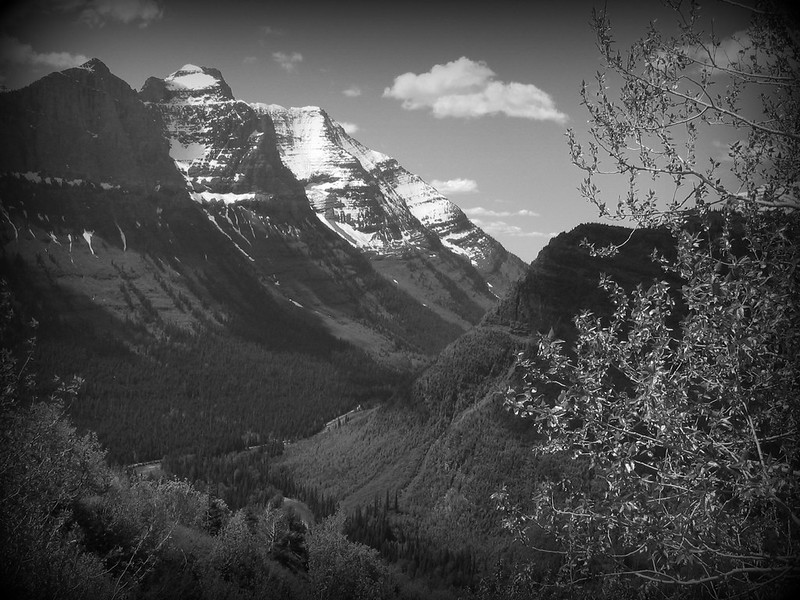
The Going-to-the-Sun Road is the reason most people come, and it deserves the hype. This 50-mile engineering marvel climbs from the valley floor up and over Logan Pass at the Continental Divide, clinging to cliffsides with waterfalls spilling onto the pavement.
Allow at least half a day to drive it one way with stops, more if you hike. Our favorite pullouts and stops:
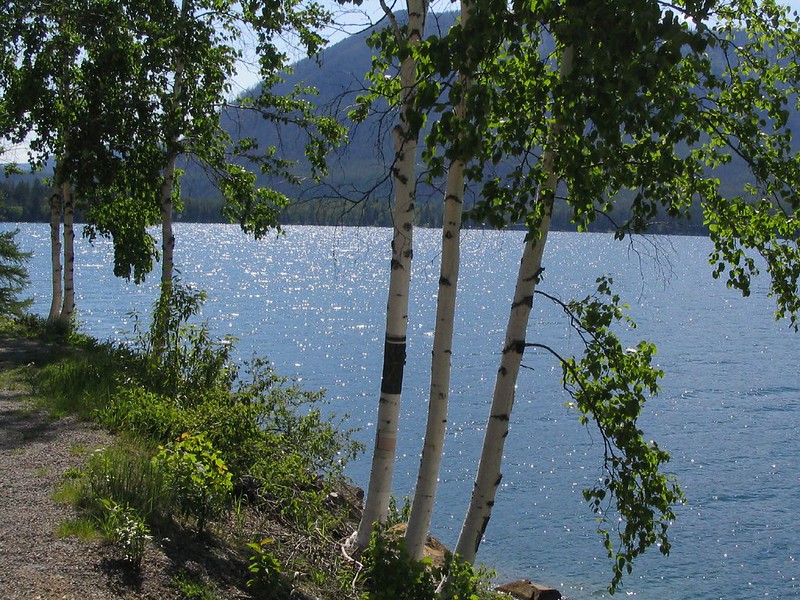
- Lake McDonald, the largest lake in the park, with its famous multicolored pebbles. Calm mornings give mirror reflections.
- The Loop, a hairpin switchback with a big view and a trailhead.
- Bird Woman Falls overlook, a thundering cascade across the valley.
- Logan Pass, the high point, with the visitor center, mountain goats, and two of the best hikes in the park.
- Jackson Glacier Overlook, one of the few spots you can see an actual glacier from the road.
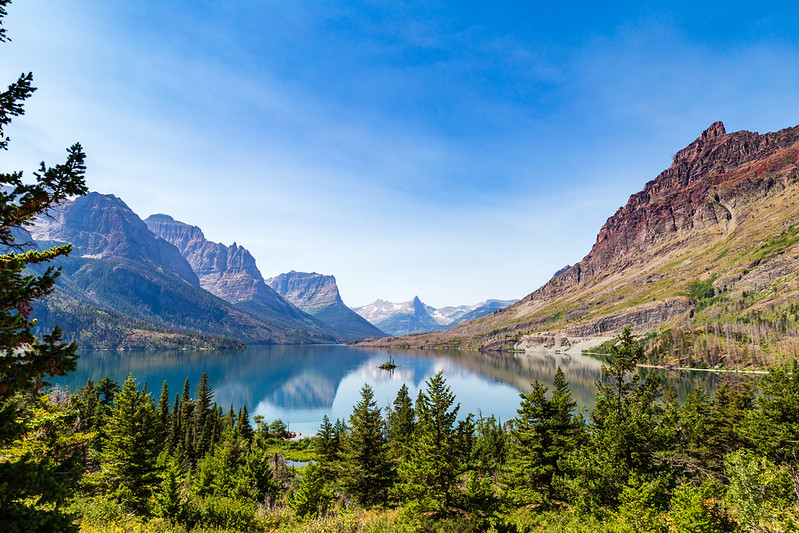
- Saint Mary Lake and Wild Goose Island, the most photographed view in the park, glowing at sunrise.
A tip we are glad we followed: vehicles longer than 21 feet or wider than 8 feet are not allowed on the alpine section. If you have an RV, take the free park shuttle, which runs the length of the road in summer and lets you car-free your whole day.
The Best Hikes in Glacier
Glacier is a hiker’s park, with over 700 miles of trails. These are the ones worth planning around.
Hidden Lake Overlook
Starting right at Logan Pass, this 2.7-mile round trip on a boardwalk and trail climbs through alpine meadows to an overlook above a stunning lake, with mountain goats and bighorn sheep often grazing nearby. The most bang for your buck in the park.
Highline Trail
Also from Logan Pass, this is the iconic Glacier hike: a relatively flat traverse along the Garden Wall with nonstop views (and a famous narrow ledge section early on, with a cable to hold). You can do an out-and-back or the full 11.8-mile point-to-point to The Loop and take the shuttle back. One of the best day hikes we have ever done.
Avalanche Lake
A 4.5-mile round trip through old-growth cedar forest to a lake ringed by waterfalls. More sheltered and family-friendly, and gorgeous even on a cloudy day.
Grinnell Glacier
Over in the Many Glacier area, this strenuous 11-mile round trip leads to a milky turquoise glacial lake at the foot of an actual glacier. It is a commitment, but many visitors call it the single best hike in the park. A boat shuttle across two lakes can shave off a few miles.
Many Glacier and the Other Corners
Most people see the Going-to-the-Sun Road and leave. Do not be most people.
Many Glacier, on the park’s east side, is the wildlife and hiking heart of Glacier, home to the historic Many Glacier Hotel on Swiftcurrent Lake, the Grinnell Glacier trail, and frequent grizzly and moose sightings. It is our favorite area in the whole park.
Two Medicine, in the southeast, is quiet, dramatic, and far less crowded, with great hiking and a scenic lake boat tour.
The Goat Haunt and North Fork areas are remote and rugged for travelers who want true solitude.
If big mountain scenery is your thing, Glacier pairs naturally with our Banff National Park travel guide just across the Canadian border (the two parks together form the Waterton-Glacier International Peace Park) and our Yellowstone National Park travel guide a day’s drive south.
Wildlife and Safety
Glacier is grizzly country, and that is not a marketing line. We carried bear spray on every hike, made noise on the trail, and never hiked alone in the early morning or evening. Buy or rent bear spray locally (you cannot fly with it), keep it accessible on your belt, and know how to use it. Give all wildlife a wide berth, especially the seemingly tame mountain goats and bighorn sheep at Logan Pass. Never feed anything, and store food properly at your campsite or vehicle.
The mountain weather changes fast. We started a hike in sun and finished in sleet. Layers, rain gear, and more water than you think you need are non-negotiable here.
Where to Book Your Glacier Trip
Hotels and Lodges: Search Glacier-area hotels on Booking.com. The historic in-park lodges (Lake McDonald Lodge, Many Glacier Hotel) book up to a year ahead; the gateway towns of West Glacier, St. Mary, and Whitefish have more options.
Tours & Activities: Browse Glacier tours on Viator including the iconic Red Bus tours, guided hikes, boat tours, and rafting trips on the Middle Fork.
Getting Here Cheaply: The closest airport is Glacier Park International (FCA) near Kalispell; Amtrak’s Empire Builder also stops at West Glacier. Our guide to finding cheap flights covers fare strategies.
Travel Insurance: Remote terrain, grizzly country, and unpredictable mountain weather make this a smart trip to insure. See our travel insurance guide.
Where to Stay
Inside the park, the historic lodges (Lake McDonald Lodge on the west side, Many Glacier Hotel and Rising Sun on the east) put you in the heart of the scenery and let you start hikes before the crowds arrive. Book six months to a year out.
West Glacier and Apgar are the most convenient gateway base for the Going-to-the-Sun Road’s west entrance.
St. Mary is the eastern gateway, closest to Logan Pass coming from that side and to Many Glacier.
Whitefish, a charming resort town about 40 minutes from the west entrance, has the best range of restaurants and hotels and makes a comfortable, lively base.
Camping: Glacier’s campgrounds are spectacular and competitive. Some take reservations on recreation.gov (book the moment they release), and a few remain first-come, first-served.
A Perfect 3-Day Glacier Itinerary
Day 1: Enter early via the west side, drive Going-to-the-Sun Road with stops at Lake McDonald and the pullouts, and hike Hidden Lake Overlook from Logan Pass. Catch sunset at Lake McDonald.
Day 2: The Highline Trail from Logan Pass (start early for parking and light), then shuttle back. Or, if you prefer something gentler, Avalanche Lake through the cedars.
Day 3: Drive to the east side and spend the day in Many Glacier: hike toward Grinnell Glacier (or take the boat shuttle to shorten it), watch for grizzlies and moose, and soak in the view from the Many Glacier Hotel porch.
Practical Tips We Learned the Hard Way
- Get your vehicle reservation sorted first. Without it, you cannot drive the main road during the day in peak season. Set a reminder for the day-before release at 7pm Mountain.
- Start at dawn. Logan Pass parking fills by 7 to 8am in summer. Early starts mean parking, light, and wildlife.
- Carry bear spray and know how to use it. Buy it locally; you cannot fly with it.
- Fuel up and pack food. Services inside the park are limited and pricey. Cell service is nearly nonexistent, so download offline maps.
- Layer for everything. Mountain weather swings from sun to sleet in an hour, even in July.
- The full road opens late. Do not plan a June trip expecting the alpine section; it often does not open until early July.
How Many Days Do You Need in Glacier?
Two days lets you drive the Going-to-the-Sun Road and squeeze in one or two signature hikes, but it will feel rushed. Three days is our sweet spot: one for the road and Logan Pass hikes, one for a bigger hike like the Highline, and one for the east side and Many Glacier. Four or five days lets you add Two Medicine, a boat tour, and the slower mornings that make a mountain trip feel like a vacation instead of a checklist.
Glacier is wild, vast, and weather-ruled, so build in flexibility and do not try to see it all. Pick a couple of unforgettable hikes, drive the road slowly, and let the scenery do the rest.
For more big-mountain and national park inspiration, pair Glacier with our guides to Banff National Park, Yellowstone National Park, and Zion National Park for the ultimate outdoor road trip.