Disclosure: This post contains affiliate links. If you book through our links, we may earn a small commission at no extra cost to you. Thanks for supporting Faceted Travel!
Table of Contents
The question we get asked about Bosnia more than any other is whether it is safe, and the honest answer is that it is safer than almost everyone expects and safer than most of the places those same people travel without hesitating. What trips visitors up is not danger. It is that the last time Bosnia was in the news for most Americans, it was a war zone, and that image has never been updated.
That war ended in 1995. The people who ask us about safety are usually picturing a country that has not existed for thirty years. We have driven Bosnia twice, walked Sarajevo after dark, parked a rental car on side streets in Mostar, and the only thing that ever went wrong was a parking ticket we probably deserved. Here is what is actually worth knowing, including the two things that genuinely do require attention.
The Short Answer
Bosnia and Herzegovina is a safe country for tourists. Violent crime against visitors is rare, the numbers are comparable to or better than most Western European countries, and the everyday feeling on the street in Sarajevo, Mostar or Banja Luka is calm and unremarkable. We have never felt less safe there than we do walking around downtown Denver.
The two real cautions are landmines in specific rural areas well away from anywhere tourists normally go, and mountain driving that demands more from you than an interstate does. Both are manageable. Neither should keep anyone home.
Crime: What to Actually Expect
Petty theft is the realistic risk, and it looks the way it looks everywhere in Europe. Pickpocketing happens in crowded places: the Bascarsija bazaar in Sarajevo on a summer afternoon, the bridge crowd in Mostar at midday, busy trams and bus stations. The usual habits are enough. Front pocket, zipped bag, do not leave a phone on a cafe table while you look at something else.
Car break-ins are worth one extra thought because so many people road trip here. Never leave luggage visible in a parked car, especially at trailheads and waterfall parking areas where thieves know cars sit unattended for hours. Use the trunk, and load it before you arrive rather than in the lot. This is standard advice for southern Europe generally and Bosnia is not worse than Croatia or Italy on this score.
Violent crime involving foreigners is genuinely uncommon. Scams are milder than in a lot of tourist economies: the main ones are taxi drivers who do not run the meter and currency exchange places with terrible rates. Agree on a taxi fare before you get in, or use a ride app in Sarajevo. Change money at banks or ATMs rather than the exchange windows near the main sights.
Landmines: The Real Caution, In Proportion
This is the one that deserves a straight answer rather than reassurance. Bosnia still has contaminated land left over from the war. Demining has been going on continuously for three decades and the remaining suspected area keeps shrinking, but it has not reached zero and it will not for years yet.
Here is the part that matters for you: contaminated areas are in rural land, former front lines, and abandoned villages. They are not in cities, not in the old towns, not on any established hiking trail, not at any of the waterfalls or national park sites tourists visit. Marked areas carry red and yellow signs and skull markers. The rule is simple and absolute: stay on paved roads, marked paths and clearly used ground, and do not wander into fields, ruins, abandoned houses or unmarked forest.
If you follow that one rule, your risk is effectively zero. We have hiked and driven all over the country without ever knowingly being near a marked area, because the places travelers go and the places that are still contaminated barely overlap. Where this becomes a live consideration is off-trail hiking and rural exploring, and if that is your plan, go with a local guide who knows the ground. Do not freelance it.
Driving in Bosnia
We think the driving deserves more caution than the crime does, and almost nobody asks about it.
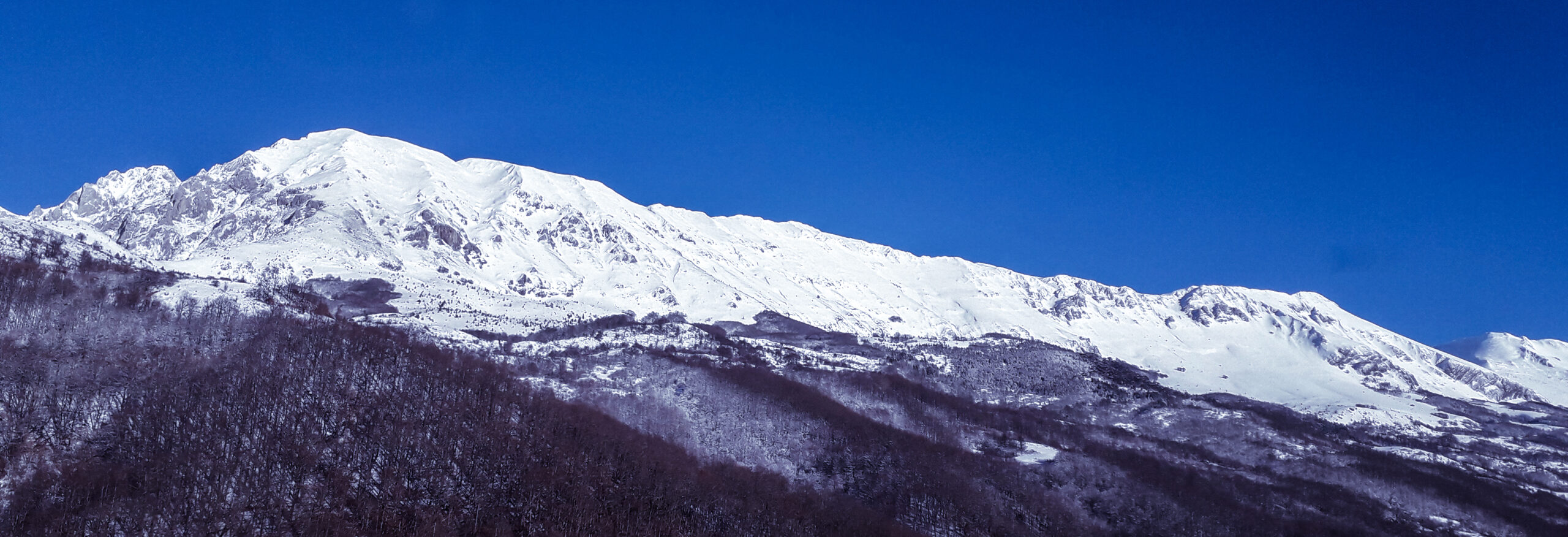
Bosnia has very little motorway. Most of your driving will be two-lane mountain road with no shoulder, frequent blind curves, and a guardrail situation that ranges from adequate to theoretical. The roads themselves are mostly in decent condition. The challenge is the geometry and the local driving culture, which involves confident overtaking on curves that you would not attempt.
Practical rules that have served us well: build your itinerary on hours, not kilometers, because 120 kilometers can easily be three hours. Do not drive mountain roads at night if you can avoid it, because unlit curves plus oncoming high beams is genuinely unpleasant. Let fast drivers pass rather than trying to match them. Keep the tank above half, since gas stations thin out badly in the interior. And if you are coming in winter, know that snow tires are legally required from November through April and that mountain passes close.
We lay out the route logic in detail in our Bosnia and Herzegovina road trip itinerary, including which drives are worth the time and which are not.
Is Sarajevo Safe?
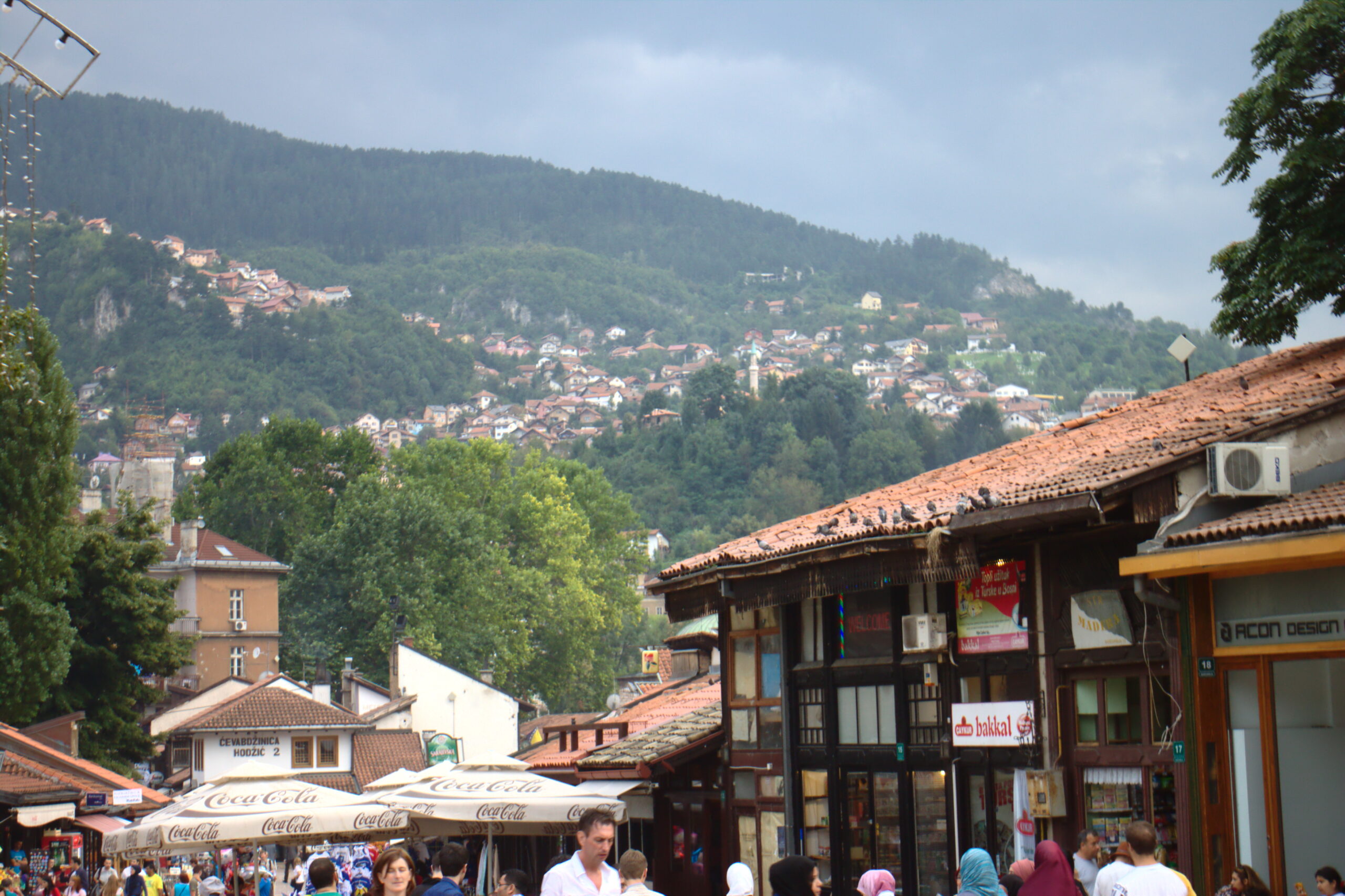
Yes, and it is one of our favorite cities to walk at night in Europe. The old town stays busy late, families are out, the cafe culture runs until midnight, and there is no part of the tourist core that felt sketchy to us after dark.
Two small Sarajevo-specific notes. Stray dogs exist and are mostly harmless but can move in packs at night on the outskirts; do not approach or feed them. And the city sits in a bowl that traps air pollution badly in winter, which is a health consideration rather than a safety one but it is real. If you have asthma, January and February in Sarajevo can be rough. Our best time to visit Bosnia and Herzegovina guide covers the seasonal tradeoffs.
The war history is everywhere in Sarajevo and it can be emotionally heavy in a way that catches people off guard. The tunnel museum, the Sarajevo Roses, the scarred buildings on Sniper Alley. That is not a safety issue, but it is worth going in prepared rather than treating it as light sightseeing.
Is Mostar Safe?
Mostar is safe, and its main risk is that it gets extremely crowded between about 10am and 4pm when the Dubrovnik and Split day trip buses arrive. Crowded means pickpocket conditions on the bridge and in the bazaar lanes.
The bigger Mostar caution is the obvious one: do not jump off the bridge. People die doing this. The local divers train for years, know the current and the depth, and the drop is 24 meters onto water that is very cold. Tourists who try it get seriously hurt. Watch, tip the diver, do not participate.
Mostar is also a good base rather than just a stop. We cover the radius in the best day trips from Mostar.
Politics, Ethnic Tension and Protests
Bosnia’s politics are complicated and periodically tense. The country is divided into two entities, the Federation and Republika Srpska, and there are recurring political standoffs that generate alarming headlines about secession and instability. Occasional protests happen in Sarajevo and Banja Luka.
In thirty years, none of this has translated into danger for tourists. Protests are political and not directed at foreigners. The practical advice is the same as anywhere: do not join a demonstration, walk away from one rather than toward it, and check your government’s travel advisory before you go if a story has been in the news.
What we would add is a social note rather than a safety one. Ethnicity, religion and the war are live, painful subjects. Locals will often talk about them openly and generously if they raise the topic. Let them raise it. Do not ask people which side they were on, and do not offer opinions about who was responsible for what. It is their history, not a conversation topic.
Health, Water and Emergencies
Tap water is safe to drink in Sarajevo, Mostar, Banja Luka and the other main towns. In remote villages, ask or stick to bottled.
Pharmacies are widespread and pharmacists are helpful and often speak some English. Hospital care in the main cities is adequate for ordinary problems, but Bosnia is not in the EU, so an EHIC card does nothing and a serious emergency may mean evacuation to Croatia or Austria. This is the single strongest argument for travel insurance on a Bosnia trip.
The emergency number is 112 and it works. Police is 122, ambulance 124.
Tick-borne encephalitis is present in forested areas, so if you plan serious hiking in spring or summer, long trousers and a tick check at the end of the day are sensible.
Solo and Women Travelers
Bosnia gets consistently good reports from solo women travelers and matches what we have observed. Street harassment is mild by regional standards, guesthouse hosts are protective in a way that is more sweet than intrusive, and the cafe culture makes sitting alone in public entirely normal. The usual night-time judgment applies, but nothing about Bosnia calls for extra caution beyond what you would use in Spain or Portugal.
Money and Practical Safety
The currency is the convertible mark, KM or BAM, pegged to the euro at roughly 1.96 to 1. Euros are accepted in some tourist businesses at a poor rate, so get marks. Cards work in cities and larger restaurants, but cash is still king in villages, at park entrances, for parking and at small guesthouses. Carry more cash than you would in Croatia.
Use bank ATMs rather than the standalone machines in tourist areas, and always decline the machine’s offer to convert to your home currency. For what a trip actually costs, we broke it down in how much does a trip to Bosnia and Herzegovina cost.
Where to Book
- Accommodation: Search Bosnia and Herzegovina stays on Booking.com. Family guesthouses consistently outperform hotels here on both value and hospitality.
- Tours: Browse Bosnia and Herzegovina tours on Viator. If the driving worries you, a guided day trip removes the issue entirely and the guides are excellent on history.
- Insurance: This is the one we would not skip, given that Bosnia is outside the EU health system and mountain roads are part of the trip.
Our Take
Bosnia is not a risky destination. It is an under-visited one with an outdated reputation, and the gap between what people fear and what they find is the widest of anywhere we have traveled in Europe. The practical safety brief fits on an index card: stay on marked ground, drive the mountain roads like they deserve respect, keep your bag zipped in the crowded spots, do not jump off the bridge, and carry insurance because you are outside the EU.
Do that and you get one of the most hospitable countries in Europe, at prices that have not caught up to the quality, with a fraction of the crowds one border away. That trade is not close.
Planning a trip? Start with how to plan a trip to Bosnia and Herzegovina for the full framework, then read our Sarajevo travel guide and Mostar travel guide for the two cities most first-time visitors build a trip around.