Disclosure: This post contains affiliate links. If you book through our links, we may earn a small commission at no extra cost to you. Thanks for supporting Faceted Travel!
Table of Contents
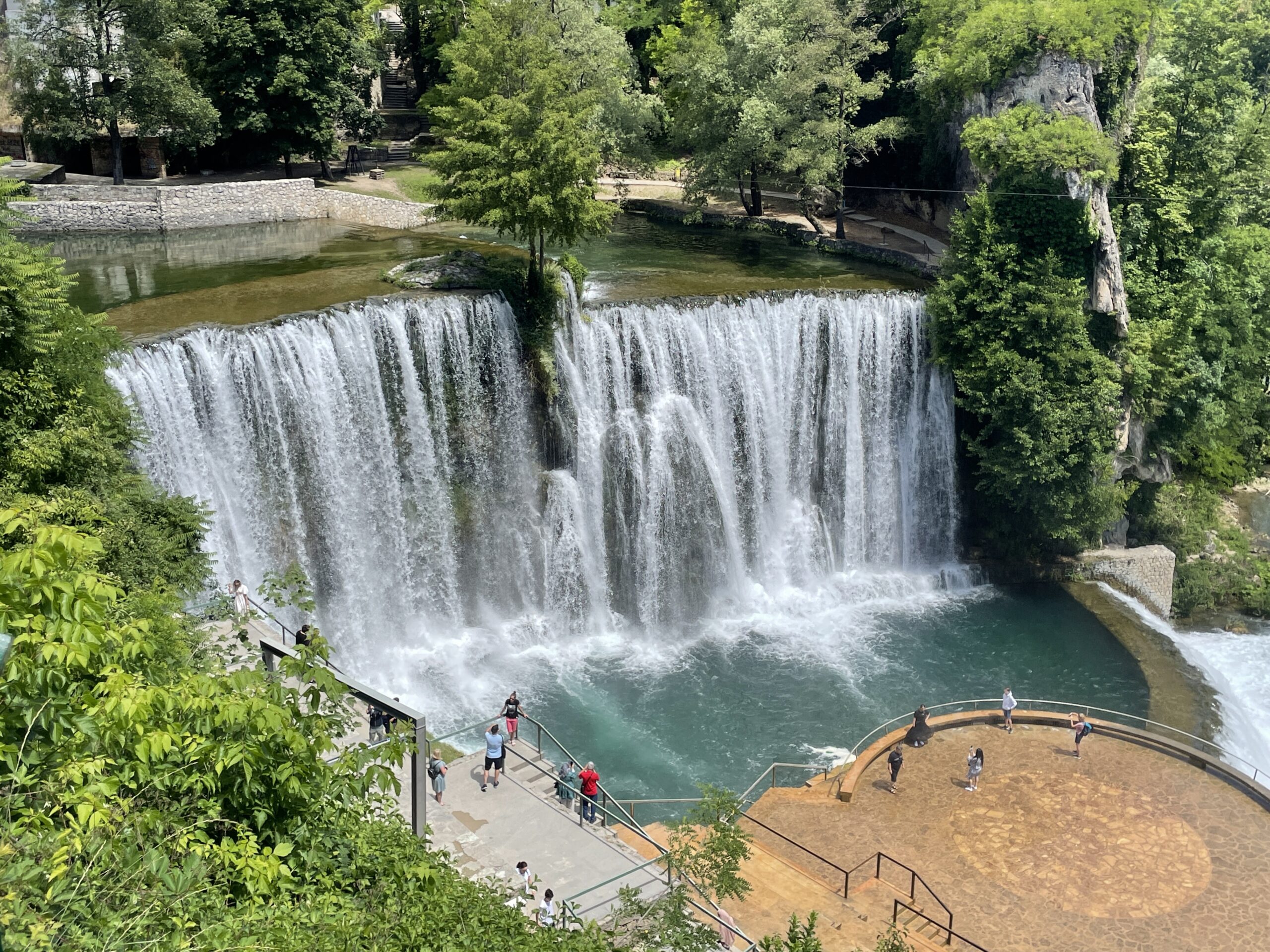
There is a 70 foot waterfall in the middle of Jajce. Not on the edge of town, not a twenty minute walk away. In the middle, where the Pliva river drops into the Vrbas directly below the old town walls, so that the first thing you hear when you park is falling water.
Towns do not usually come with a waterfall attached, and the fact that this one does and is still largely unvisited is the best argument we can make for central Bosnia. Add a hilltop fortress, catacombs cut into rock, two lakes ringed with miniature wooden watermills, and the room where Yugoslavia was founded, and Jajce packs more into a small place than anywhere else in the country.
Why Jajce Is Worth the Detour
Jajce sits between Sarajevo and the northwest, which means it is not on the way to the coast and most itineraries drop it. Three reasons not to.
The waterfall is genuinely remarkable. The Pliva Waterfall is one of very few in the world that falls in a town center, and there is a viewing platform at the base where you feel the spray.
The layering of history is unusual even for the Balkans. A medieval Bosnian royal town, an Ottoman fortified city, Austro Hungarian buildings, and the 1943 founding of socialist Yugoslavia, all inside about a square mile.
The Pliva lakes are quietly lovely. Two lakes just west of town with a cluster of twenty odd tiny wooden watermills, a swimming area and a boathouse. On a warm afternoon it is one of the most relaxed places in Bosnia.
What Jajce is not: a nightlife town, a food destination, or a place that needs three days. One night is the sweet spot.
Getting to Jajce
From Sarajevo: About 2.5 hours by car, northwest via Travnik. Buses run several times daily and take about 3 to 3.5 hours.
From Mostar: About 3.5 hours by car, most sensibly via Sarajevo or through the central highlands.
From Banja Luka: About 1.5 hours. This is the easiest approach from the north.
From Bihac and Una National Park: About 2.5 to 3 hours. A natural pairing, and the two of them together make a strong northwest loop.
By car is much better. The Pliva lakes and watermills are three miles west of town and there is no useful public transport to them. Buses will get you to Jajce itself but not around it. Our Bosnia road trip itinerary builds Jajce in as an overnight between Sarajevo and Una.
Parking: Easy and cheap. There are lots near the waterfall and near the fortress entrance.
What to Do in Jajce
The Pliva Waterfall
Start here. The Pliva drops roughly 70 feet into the Vrbas right beneath the old town, and there is a paid viewing area at the base with a path and platforms that get you close enough to feel the mist. Entrance is a couple of dollars.
Best light is morning, when the sun comes over the ridge and hits the falls straight on. Late afternoon puts it in shadow.
The waterfall’s shape changed after the 1990s, when flooding and war damage altered the drop. Older photos show a slightly different profile, which is worth knowing if you have seen vintage images.
You can also view it free from the bridge and from the road on the far bank, though the platform is worth the small fee.
Jajce Fortress
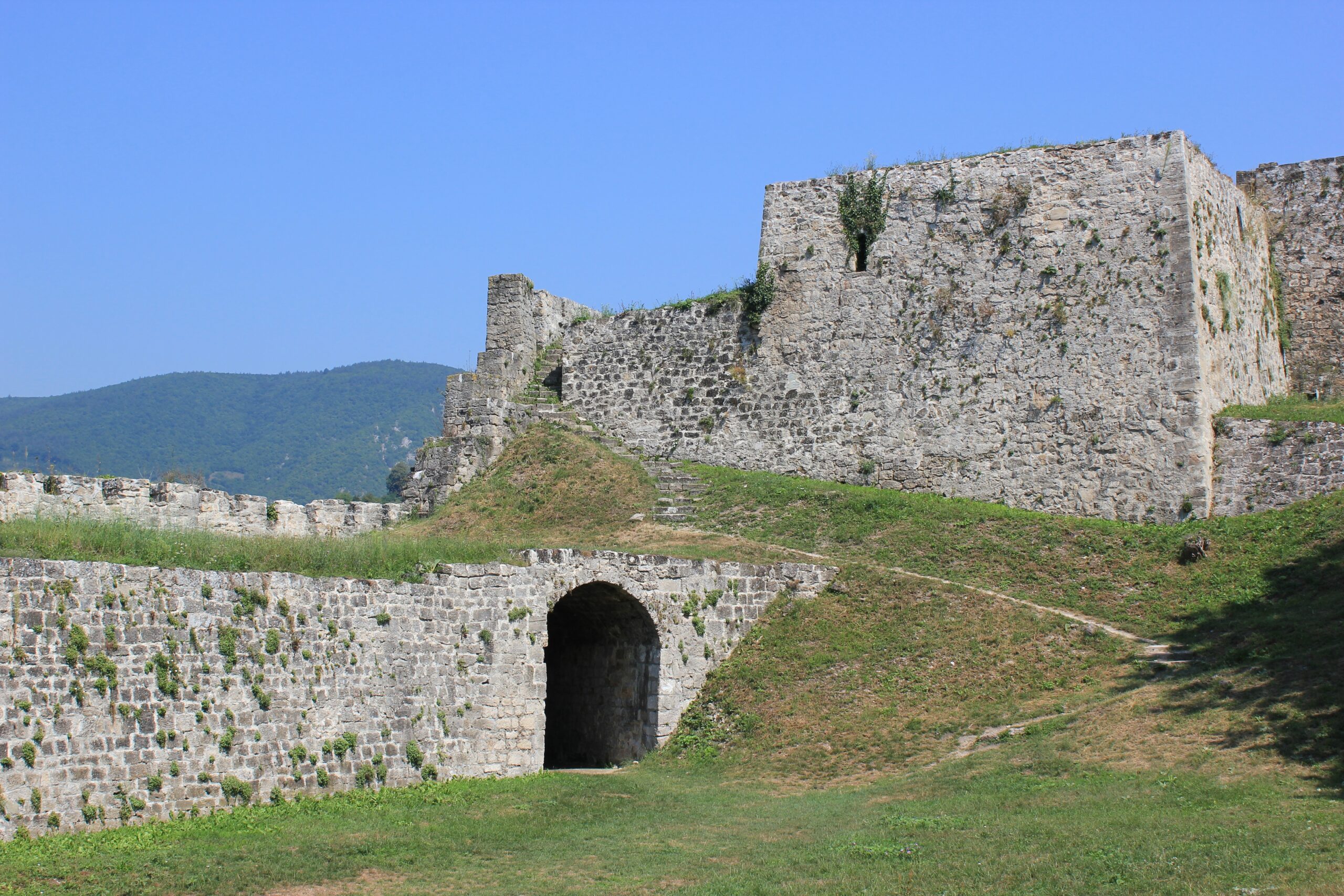
The fortress crowns the hill above the old town, and the walk up through the stepped lanes is half the pleasure. The walls are medieval, built by the Bosnian kings, later extended by the Ottomans, and the interior is largely open ground.
Go for the view. From the ramparts you look down on the terracotta roofs, the two rivers meeting, and the ridgelines of central Bosnia in every direction. Entrance is a few dollars and it takes about 15 minutes to walk up from the center.
Wear real shoes. The stone is uneven and polished slick in places.
The Catacombs
A 15th century underground chamber carved directly into rock, built as a mausoleum for the noble Hrvoje Vukcic Hrvatinic and never finished. It is small, cold, unadorned and genuinely atmospheric, with a carved sun and moon above the altar.
Fifteen minutes, a dollar or two, and a caretaker with a key. Ask at the tourist office if it is locked.
The AVNOJ Museum
In November 1943, delegates met in a gymnasium in Jajce and laid the foundation of socialist Yugoslavia. The room is preserved more or less as it was, complete with the original seating and banners.
Whatever you think of the politics, it is a striking piece of twentieth century European history sitting in an ordinary building in a small town, and it takes half an hour. The Sarajevo guide covers the other end of that century.
The Pliva Lakes and the Watermills
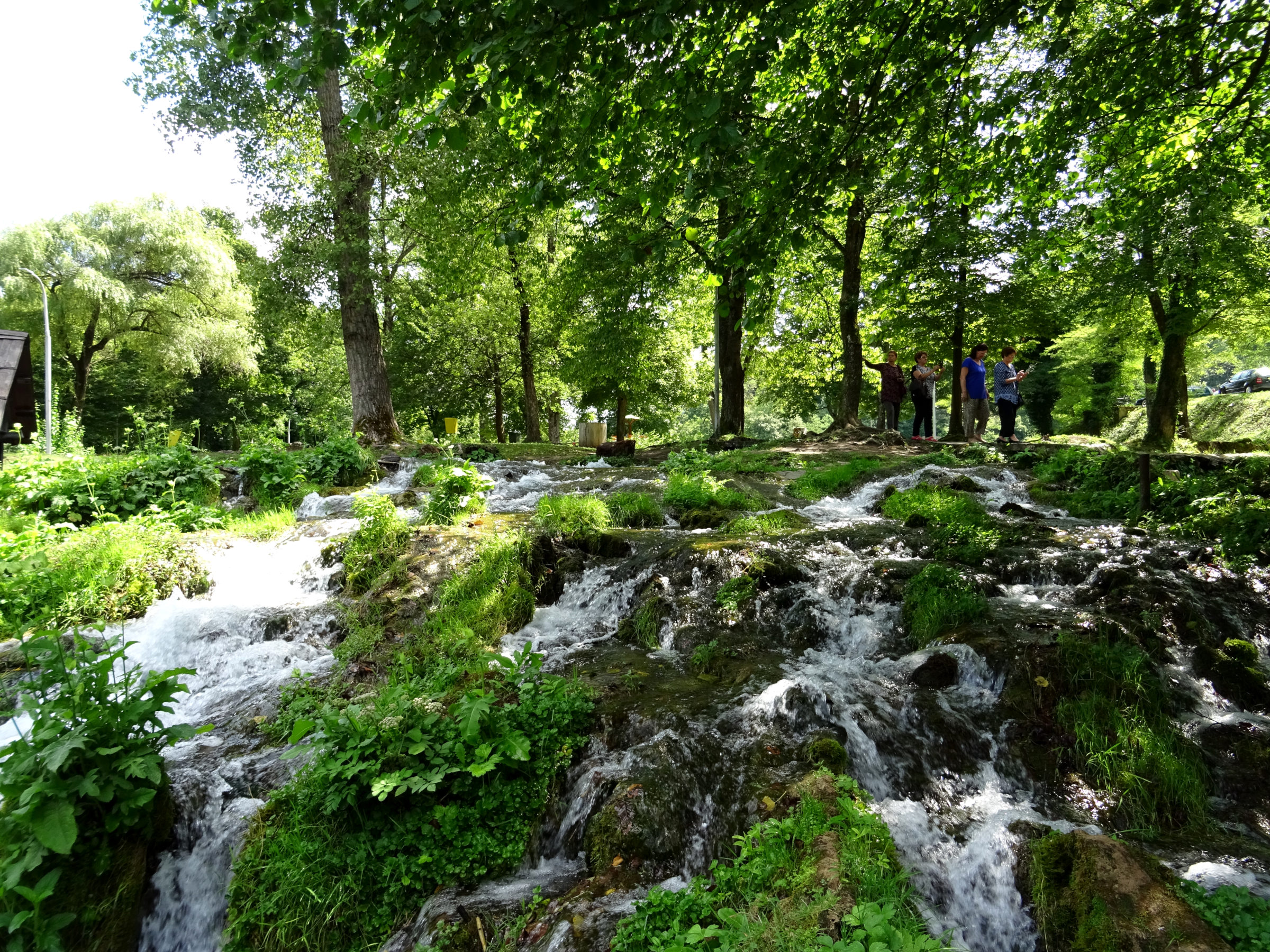
Three miles west of town, the Pliva widens into two lakes, Veliko and Malo Plivsko jezero. Between them sits the sight most people come away remembering: a cluster of roughly twenty tiny wooden watermills, most of them small enough to look like doll houses, stepped across a shallow channel.
They were working mills, built communally so that each family had its own. Now they are a protected ensemble and one of the most photographed spots in Bosnia that almost no foreign visitor has heard of.
The lakes also have a swimming area, kayak and pedal boat rental, and lakeside restaurants. In July and August this is where Jajce spends its afternoons.
Timing: the watermills photograph best in the late afternoon and early evening, with the light coming down the valley.
The Esma Sultanija Mosque and the Old Town
The old town is small and layered. The 18th century Esma Sultanija mosque was destroyed in the 1990s and carefully rebuilt from original plans, the Church of St Mary and St Luke’s bell tower sit half ruined near the center, and the Ottoman Bear Tower and city gates survive in stretches.
An hour of unhurried walking covers it. There is no admission for most of it.
Jajce’s History in Five Minutes
It helps to know why a town this small has this much packed into it, because the answer explains every sight in it.
Jajce was the last capital of the medieval Kingdom of Bosnia, and its position at the meeting of two rivers under a defensible hill is the reason. The fortress you climb is that kingdom’s, and the catacombs were commissioned by one of its most powerful nobles. In 1463 the last Bosnian king was captured and executed by the Ottomans just outside town, which is the moment medieval Bosnia ends.
The Ottomans then held Jajce for four centuries, which is where the mosques, the bear tower, the hammam and the town’s shape come from. The Austro Hungarians arrived in 1878 and added the administrative buildings and the first industry.
Then, in November 1943, delegates from across occupied Yugoslavia met here and declared the framework of a new federal state. For a few days this small mill town in central Bosnia was the political center of a country that would last for almost fifty years.
The 1990s war damaged the town badly and displaced most of its population, and the rebuilding of the Esma Sultanija mosque from original drawings is one visible result of the recovery. You are looking at a place that has been the seat of a kingdom, an Ottoman frontier fort, the birthplace of a republic and a front line, all inside a square mile.
Where to Eat
Jajce is not a food destination and we would not pretend otherwise, but you will eat well and cheaply.
- Cevapi and burek at the grills in the center, $4 to $7
- Trout from the Pliva, best at the lakeside restaurants, $9 to $14
- Grilled meats and stews at the family restaurants near the fortress path, $8 to $12
- Coffee in a copper set for about a dollar
The lakeside restaurants by the watermills are the most pleasant setting in the area, especially at dinner in summer.
Where to Stay
Jajce is inexpensive even by Bosnian standards, which are already the lowest on this side of the Balkans.
- Guesthouses and family pensions: $28 to $50 for a double, usually with breakfast
- Small hotels in the center: $45 to $80
- Lakeside and cabin style stays near the Pliva lakes: $40 to $75
Compare options on Booking.com for Jajce. Staying in the center puts the waterfall, fortress and old town on foot, which is the right call unless you specifically want to be at the lakes.
Should you overnight? Yes, if you can. Jajce does empty out in the evening, and the combination of the waterfall sound, the fortress lit on the hill and a $25 dinner for two is the whole experience. Full numbers are in how much a trip to Bosnia and Herzegovina costs.
When to Visit
Central Bosnia is cooler and wetter than Herzegovina, which changes the calculus if you are coming up from Mostar.
- Best: May, June, September. Green, comfortable, and the waterfall carries good volume.
- Also good: July and August. Warm, and the lakes and swimming come into their own. Highs in the 80s rather than Herzegovina’s mid 90s.
- Shoulder: April and October. Cool and quiet, and spring meltwater makes the falls dramatic.
- Winter: Cold, snowy and very quiet. Pretty, but the lakes are shut down and the fortress path can be icy.
Our best time to visit Bosnia guide has the regional breakdown, which matters more in this country than in most.
Practical Notes
Currency: Convertible marks (BAM). There are ATMs in the center. Many small places are cash only.
Time needed: A full afternoon and a morning covers everything comfortably. Four hours covers the waterfall, fortress and catacombs if you are passing through.
Walking: The old town is steep and cobbled. The fortress climb is short but genuinely uphill.
Language: Bosnian, and English is patchier here than in Sarajevo or Mostar. A few words go a long way and people are exceptionally welcoming.
Roaming: Outside the EU, so check your plan.
Combining: Jajce pairs naturally with Travnik, about 45 minutes southeast, which has a colorful mosque and its own fortress and makes a good coffee stop on the drive from Sarajevo.
A Perfect 24 Hours in Jajce
Afternoon: Arrive, park, and walk straight down to the waterfall platform. Then up through the old town to the fortress for the late light over the valley. Catacombs on the way back down.
Evening: Drive out to the Pliva lakes for dinner by the water, with a walk among the watermills at golden hour.
Next morning: The AVNOJ museum, a second look at the falls in morning sun when they are lit properly, coffee in the center, and out by eleven toward Una National Park or Sarajevo.
That is the town at its best, and it costs less than a single dinner in Dubrovnik.
Where to Book
- Accommodation: Search Jajce stays on Booking.com. Family guesthouses in the center are the best value and the hosts tend to be remarkable.
- Tours: Browse Bosnia and Herzegovina tours on Viator. Day trips from Sarajevo that bundle Jajce with Travnik exist and work well if you are not driving.
- Insurance: Mountain roads and a non EU country make coverage sensible. See is travel insurance worth it.
Our Take
Jajce is the town we recommend to people who have already decided Bosnia is worth a week and are wondering what to do with the middle of it. It is not the headline that Mostar is or the gut punch that Sarajevo is. It is smaller and stranger than both: a waterfall in the town square, a rock cut mausoleum nobody finished, twenty doll sized watermills on a lake, and the room where a country was invented.
Give it one night. Watch the falls in the morning light. Then drive northwest toward Una and tell people you found the best small town in Bosnia, because you probably did.
Keep reading: The Bosnia road trip itinerary shows exactly where Jajce fits in a longer route, the Bosnia trip planner covers logistics for the whole country, and our Sarajevo guide covers the city most people pair it with.