Disclosure: This post contains affiliate links. If you book through our links, we may earn a small commission at no extra cost to you. Thanks for supporting Faceted Travel!
Table of Contents
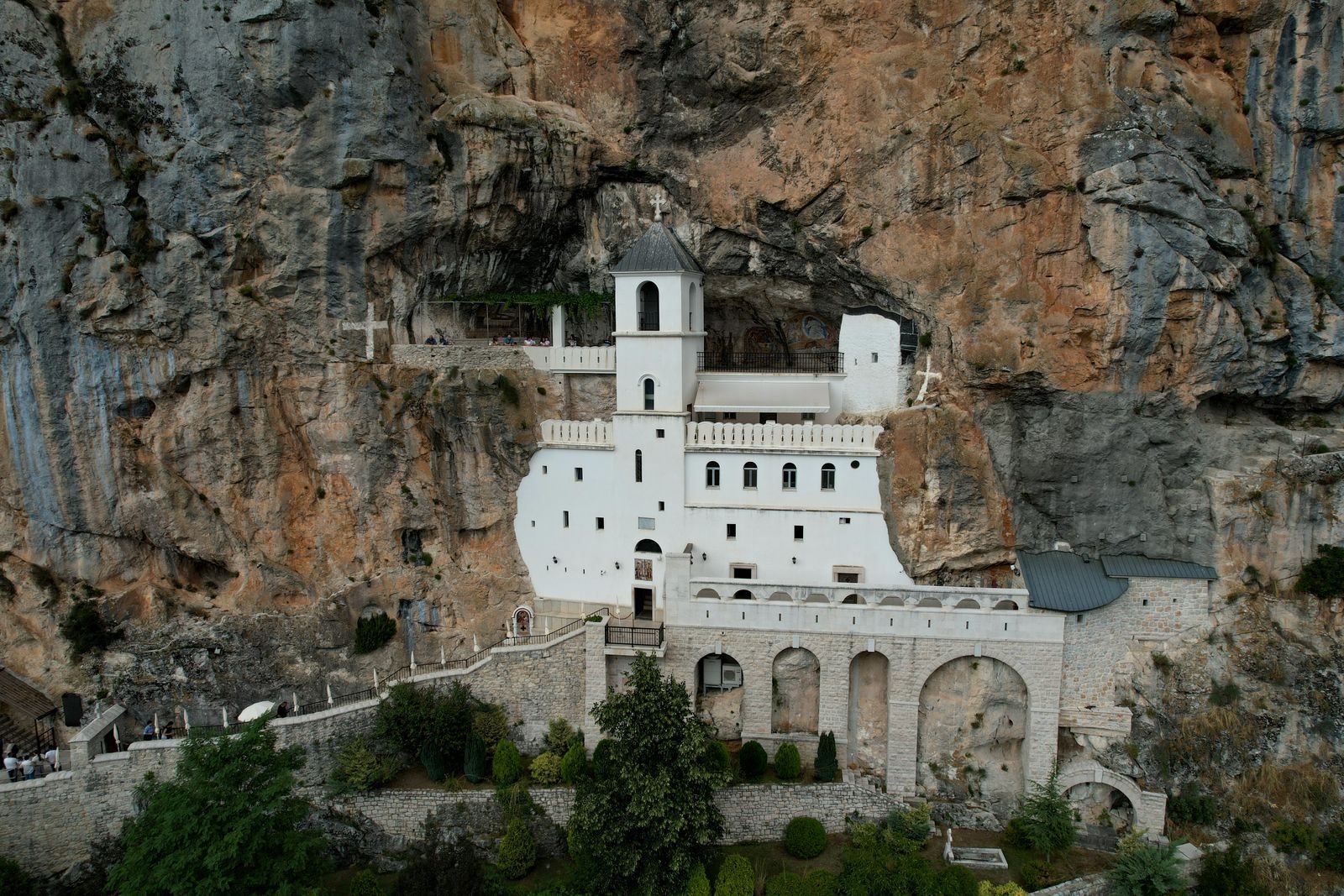
You come around a bend on a road that has been switchbacking up a mountainside for twenty minutes, and there it is: a white building embedded in a vertical cliff face, four hundred meters straight up, looking less like architecture and more like something that grew out of the rock. Ostrog Monastery is the most visited place in Montenegro that is not a beach, and unlike almost every other headline sight in this country, it is not on the coast.
We have visited twice, once as a rushed day trip from Budva and once properly, staying overnight nearby and arriving at seven in the morning. The difference between those two visits was so large that most of this guide is really about how to do the second version.
What Ostrog Actually Is
Ostrog was founded in the seventeenth century by Saint Basil of Ostrog, a bishop who fled Ottoman advances and settled in caves in the Ostroska Greda cliff. He died here in 1671, and his relics are still in the Upper Monastery. That is the reason for everything you will see: Ostrog is one of the most important pilgrimage sites in the Orthodox world, and it draws Orthodox, Catholic, and Muslim pilgrims alike, which is unusual and worth sitting with for a moment.
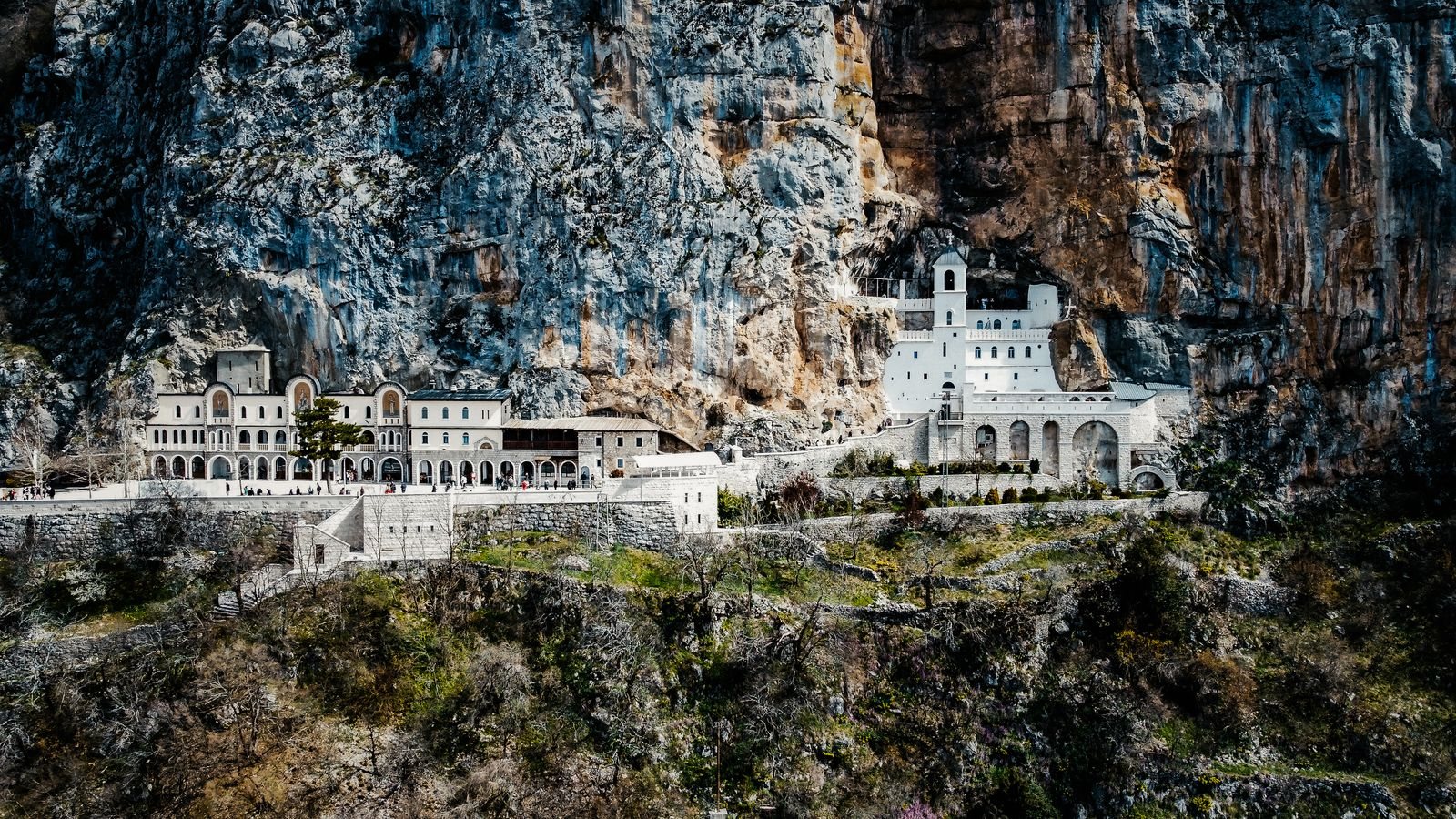
The complex has two parts. The Lower Monastery sits in trees at the bottom of the climb, with a church, a spring, guest lodging, and parking. The Upper Monastery, the one in every photograph, is five kilometers up by road or a steep two kilometer walk up a shaded path. The Upper Monastery is built into the cliff itself, and its two small cave chapels are frescoed directly onto the rock walls.
It is important to understand that this is a working monastery and an active pilgrimage site, not a museum. Monks live here. People come here to pray for sick relatives. Some pilgrims walk the last stretch barefoot. Treat it accordingly.
How to Get to Ostrog Monastery
Ostrog sits inland, in the Bjelopavlici valley between Podgorica and Niksic, and getting there is the main logistical question.
From Podgorica it is about 50 minutes by car, and this is the easiest approach.
From Kotor or Budva it is roughly two hours each way, which is why the day trip version is so tiring. From Kotor you can either go over the Lovcen road, which is spectacular and slow, or through the Sozina tunnel and up, which is faster and duller. Our Lovcen National Park and Cetinje guide covers the mountain route if you want to combine the two.
From Zabljak and Durmitor it is about two hours south, which makes Ostrog a very natural stop when you are coming back down from the mountains toward the coast. That is how we would sequence it, and it is how we built it into our Montenegro road trip itinerary.
The road up
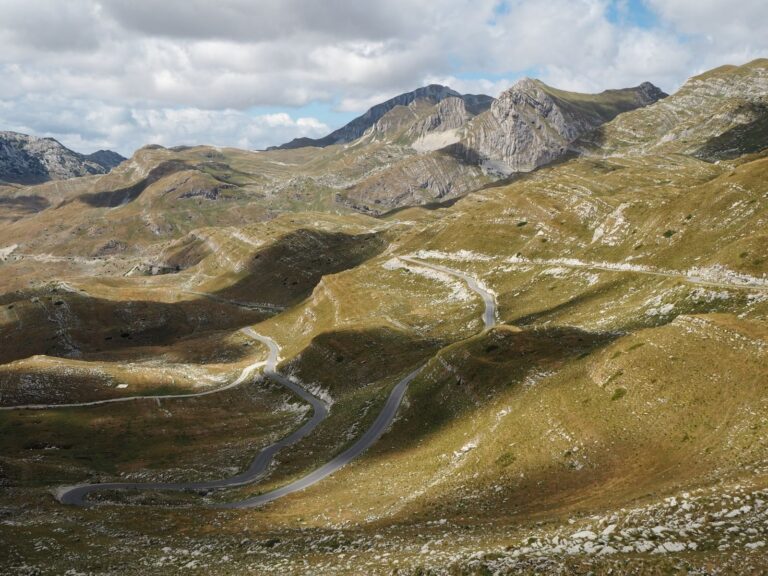
The final stretch from the highway to the Upper Monastery is a narrow, one and a half lane road with hairpins and a long drop on one side. There are passing places, and drivers are used to it, but if steep mountain roads worry you, park at the Lower Monastery and walk the pilgrim path instead. In peak summer the upper parking lot fills completely by mid morning and traffic backs up on those hairpins, which is its own kind of unpleasant.
Organized tours run daily from Kotor, Budva, and Podgorica and usually pair Ostrog with the old capital at Cetinje or with a Skadar Lake cruise. If you would rather not drive that road, this is a perfectly good option.
When to Go, and Why Timing Is Everything
This is the part that matters most.
Go early. Seven to nine in the morning. By ten thirty in summer, the Upper Monastery courtyard is shoulder to shoulder, the queue for the reliquary chapel can be forty minutes, the parking is gone, and the atmosphere that makes Ostrog remarkable has been replaced by crowd management. At seven thirty on our second visit there were maybe fifteen people on the terrace, the valley below was full of mist, and a monk was sweeping the courtyard. It was completely different.
Avoid major Orthodox feast days unless you specifically want the pilgrimage experience, which is genuinely moving but involves enormous crowds. May 12 is Saint Basil’s day and it is the biggest of the year, with pilgrims walking from Niksic overnight.
Season: the monastery is open year round. Spring and autumn are ideal, with mild temperatures for the walk up and thin crowds. Summer is hot in the valley, often over 35C, and the crowds peak. Winter can bring snow and ice on the access road, so check conditions. Our best time to visit Montenegro guide sets this in the context of a whole trip.
What to Expect When You Arrive
Park, then walk up the last stretch to the Upper Monastery on foot. The white facade you have seen in photographs is right in front of you, pressed into the rock, with a terrace looking out over the entire Bjelopavlici valley. The view alone justifies the drive.
Inside are two cave churches. The Church of the Presentation holds the relics of Saint Basil, and this is where the queue forms. It is tiny, the ceiling is low, the frescoes are painted straight onto the cave wall, and monks are usually present. The Church of the Holy Cross sits above it, smaller still, with seventeenth century frescoes.
There is no entry fee. Donations are accepted and a small shop sells candles, icons, and honey.
Dress code, and it is enforced
Shoulders and knees covered for everyone. No shorts, no tank tops, no short skirts. Women are not required to cover their heads but it is appreciated in the chapels. In summer we have watched people get turned away at the door in shorts, so carry a light layer and a scarf in your bag if you are coming straight from the beach. Photography is not permitted inside the chapels.
There is a vine growing out of bare rock beside the entrance and a small spring where pilgrims collect water. Both have their own traditions. Watch what people do before you do anything.
Walking the Pilgrim Path
If you have the time and the legs, park at the Lower Monastery and walk up. The path leaves from behind the Lower Monastery church and climbs about two kilometers through oak and hornbeam, mostly on stone steps, gaining roughly three hundred meters. It takes forty five minutes to an hour going up and about half that coming down.
We did this on our second visit and it changed the whole experience. The road version delivers you to a parking lot. The path version means you arrive slightly out of breath, having passed pilgrims coming the other way, some of them elderly, some of them barefoot, all of them saying good morning. Whatever your relationship to the religion, arriving on foot makes sense of the place in a way that arriving by car does not.
Practical notes: the path is shaded for most of its length, which matters enormously in July. Wear shoes with grip, because the stone steps are polished smooth in places. Bring more water than you think you need. And if you are visiting on a feast day, expect the path to be busy from before dawn.
A Little History Worth Knowing Before You Go
Saint Basil, or Vasilije, was born in Herzegovina in 1610 and became Metropolitan of Zahumlje. He came to Ostrog around 1665, fleeing Ottoman pressure, and lived out his last years in the caves here with a small community of monks. His relics were found incorrupt seven years after his death, which is what turned the site into a pilgrimage destination.
What we find genuinely remarkable is that Ostrog is venerated across religious lines. Catholic and Muslim pilgrims come here too, and have for centuries, in a part of the world where that is not the default. In the Second World War the monastery sheltered people of all three faiths. Knowing that before you walk into the cave chapel changes what you notice.
The Upper Monastery you see today was largely rebuilt after a fire in 1923 that destroyed nearly everything except the two cave churches, which survived because they are literally carved into the mountain.
How Long to Allow
Two hours at the monastery itself is comfortable: the walk up, the two chapels, time on the terrace, and a coffee. If you walk the pilgrim path from the Lower Monastery, add ninety minutes round trip and bring water, because it is a genuine climb with steps.
From the coast, the full day is six to eight hours door to door. That is why we recommend combining it with something else rather than driving four hours for a two hour stop.
What to Combine It With
Cetinje, the old royal capital, is an hour southwest and pairs naturally: two very different pieces of Montenegrin identity in one day.
Lake Skadar is about an hour south, and a monastery morning followed by an afternoon boat through the water lilies is one of the best inland days in the country. We wrote up the practical side in our Lake Skadar National Park guide.
Niksic is 25 minutes northwest, and while it is not a tourist town, it has the country’s biggest brewery and a genuinely local feel.
Durmitor and the Tara Canyon are two hours north, which makes Ostrog the perfect first or last stop on a mountain leg. Our Durmitor National Park guide has the details.
Where to Stay
Most people visit Ostrog as a day trip, and that is fine. But if you want the early morning version, sleep nearby.
The Lower Monastery offers simple pilgrim lodging, usually shared, free or by donation, first come first served. It is a real experience if that appeals to you, and it is genuinely basic.
Danilovgrad, 25 minutes away, is the practical option with normal guesthouses and apartments and easy morning access.
Podgorica is 50 minutes away with the widest choice of hotels and the country’s main airport.
We stayed in Danilovgrad, left at six forty five, and were on the terrace before the first tour bus. That is the whole trick.
Where to Book
We book our Montenegro accommodation through Booking.com, which covers the small guesthouses in Danilovgrad and the Bjelopavlici valley that you will not find anywhere else. If you are doing the early morning plan, filter for free cancellation and book the night before you want to visit, not the night after.
For guided day trips from Kotor, Budva, or Podgorica that include Ostrog, and for the combinations with Cetinje or a Skadar Lake cruise, we use Viator. These are worth considering purely because someone else drives that mountain road.
Is Ostrog Worth the Trip?
Yes, if you go early and treat it as a destination rather than a photo stop. Rushed at midday from the coast, in a queue, in the heat, it is a two hour building visit that cost you a full day of your holiday. Arrived at seven thirty, with mist in the valley and the courtyard nearly empty, it is one of the most atmospheric places in the Balkans, and easily the most memorable thing we did away from the Montenegrin coast.
The cliff does not change. Your experience of it depends almost entirely on what time you set your alarm.
If you are planning a Montenegro trip, start with how to plan a trip to Montenegro for the logistics and budget, then look at our guides to Kotor and Lovcen National Park and Cetinje, which combine well with Ostrog on an inland loop.